 Sudden Valley Siding
 Decks Built for the Way Lake Whatcom Actually Behaves
A deck on Lake Whatcom isn't just an outdoor living space — it's the transition point between a house and a steep, wooded, water-adjacent lot that spends a good chunk of the year wet. Homes here weren't built on flat, dry suburban pads. Many sit on graded slopes above the water, under tree cover that never fully dries out, with soil that holds moisture long after the rain stops. A deck that works in a subdivision across town doesn't automatically work here. The framing, the fasteners, the drainage, and the decking material all need to account for what this specific setting throws at them, year after year.
We build and replace decks throughout Sudden Valley and around the lake, and most of what we see go wrong on older decks traces back to the same handful of decisions: a ledger board that was never properly flashed, decking laid tight with no room to shed water, or a structure that wasn't engineered for the slope it sits on. None of that shows up on day one. It shows up in year five or eight, usually as soft framing, black streaking, or a deck that's developed a noticeable bounce.
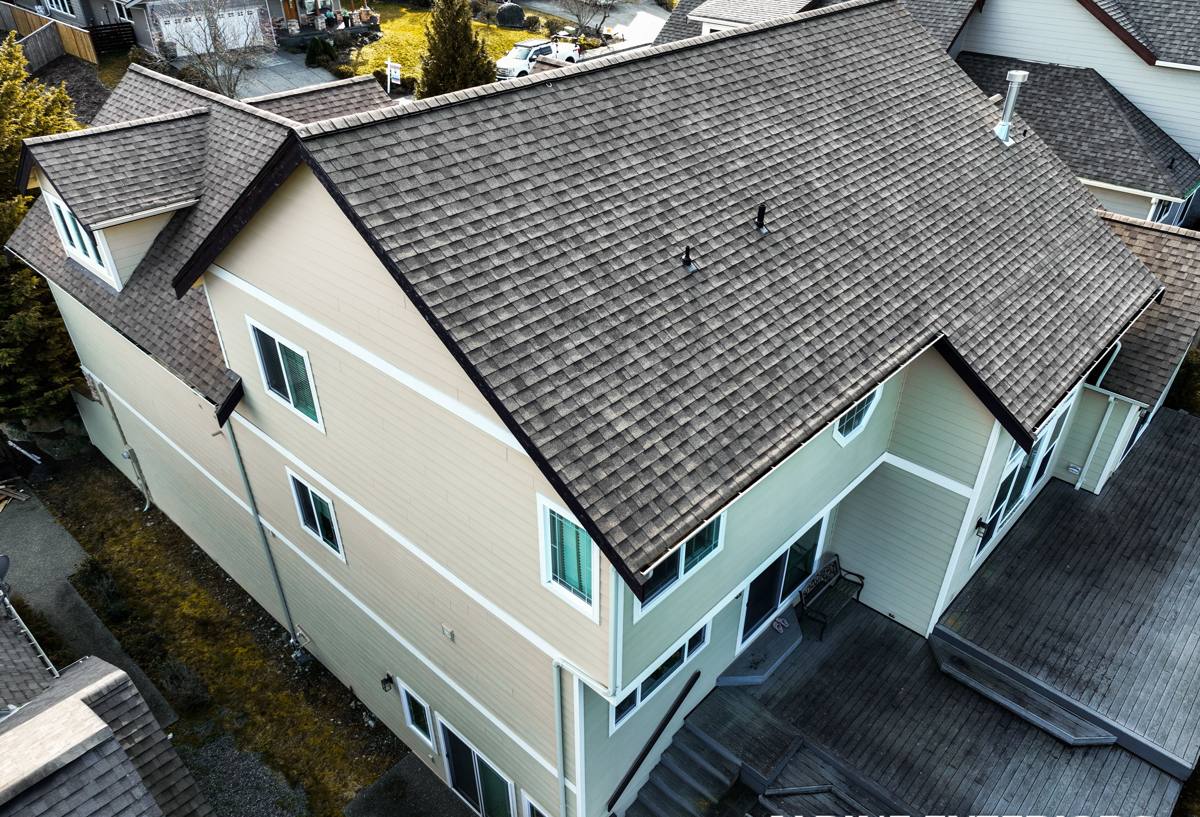
What Whatcom County's Climate Does to a Deck
Whatcom County gets a long, wet stretch from fall through spring, and the moisture-laden marine air off the Puget Sound region keeps humidity high even between rain events. Around the lake, tree canopy and shade add to that — surfaces stay damp longer than they would in open sun, and that's exactly the condition moss and algae need to take hold. Left unaddressed, moss doesn't just look bad. It holds water against decking boards and fasteners, and on wood surfaces it accelerates rot from the top down instead of the bottom up, which is often the last place people think to check.
A few things make the biggest difference in how a deck holds up here:
- Gapping between boards wide enough to let water drain and air move underneath
- Fasteners and structural hardware rated for sustained wet exposure, not just treated lumber compatibility
- Ledger flashing that actually sheds water away from the house rim joist, not just caulk at the seam
- A decking material matched to how much shade and standing moisture the specific spot gets
- A maintenance rhythm that accounts for a real moss season, not a once-a-summer wash
Sloped and Lakefront Lots Change the Engineering
Ledger Attachment and Water Intrusion
Where a deck attaches to the house is the single most common failure point we find on older Whatcom County decks, and it's almost always a water problem, not a structural one. If the ledger board is bolted to the rim joist without correct step flashing tucked behind the siding or house wrap, water works its way behind the ledger over time. On a sunny, dry lot that might take a decade to cause real damage. On a shaded lake lot, it happens faster. Correct ledger flashing is not optional trim work — it's the detail that decides whether the rim joist and subfloor behind it are still sound in fifteen years.
Footings on Grade Changes
Many lots around the lake step down toward the water, sometimes steeply. That means footings at different points along the same deck can carry very different loads and sit at different depths, and a deck that's partly ledger-attached and partly freestanding needs to be engineered as one connected system, not built board by board on the fly. We check frost depth, soil conditions, and grade before we ever cut a post, and on steeper sites we'll often recommend a freestanding structure set on its own footings rather than leaning on the house at all — it isolates the deck's movement from the house framing entirely.
Choosing a Decking Material for This Climate
There's no single right answer here — it depends on how much shade the deck gets, how much upkeep the owner wants to do, and the look they're after. What matters is picking with eyes open, especially for a lake lot where shade and moisture are more constant than most places.
| Material | Moisture behavior | Upkeep in a moss-prone spot | Typical lifespan |
|---|---|---|---|
| Pressure-treated lumber | Resists rot when sealed; absorbs water if finish lapses | Needs re-sealing every 1-2 years in shaded areas | 10-15 years with upkeep |
| Cedar | Naturally decay-resistant, but surface grays and can hold moss if not cleaned | Annual wash, periodic stain/seal | 15-20 years with upkeep |
| Composite decking | Won't rot, but can still grow surface moss/mildew in constant shade | Periodic cleaning, no sealing needed | 25-30+ years |
| PVC/capped polymer | Fully moisture-resistant surface | Lowest upkeep; occasional wash | 25-30+ years |
The framing underneath matters as much as the surface material. We won't put a premium composite or PVC deck board on top of framing that isn't properly flashed and drained — the top of the deck can look flawless for years while the structure underneath is quietly failing. Whatever surface a homeowner chooses, the structure gets built to the same standard.
Railings, Views, and Code
Most Lake Whatcom decks are built at least partly for the view, and railing choice affects that more than people expect. Washington's residential code requires a guardrail at 36 inches minimum for most decks once they're a certain height above grade, with baluster spacing that keeps a 4-inch sphere from passing through. Beyond that minimum, the choice is really about how much railing gets in the way of the lake:
- Standard vertical baluster rail — most economical, widest range of styles
- Horizontal cable rail — keeps sightlines open, popular on lakefront decks, needs periodic tension checks
- Glass panel rail — clearest view, highest cost, needs regular cleaning in a shaded, damp spot
Whatever the style, the posts and connections behind it matter more than the finish — a railing system is a life-safety component, and on a lakefront deck with a real drop below it, we don't cut corners on post attachment to save a step.
Permits and the Lake Whatcom Watershed
Lake Whatcom is the primary drinking water source for a large part of Whatcom County, and that comes with a layer of permitting attention that doesn't apply to a deck project across town. Depending on proximity to the shoreline and the scope of the work, a project can fall under county shoreline or critical-area review in addition to a standard building permit. None of this should scare a homeowner off building a deck — it just means the paperwork needs to be handled correctly and early, not discovered halfway through a build. We pull the required permits and handle the county inspection process as part of the job, and on lots close to the water we check whether shoreline setback rules apply before design work goes final, not after.
Our Process
- On-site visit — we look at the slope, drainage, shade pattern, and how the deck connects to the house before recommending anything
- Design and material selection — layout, railing style, and decking material matched to the site and the homeowner's maintenance preference
- Permitting — we handle the Whatcom County permit application and any shoreline/critical-area review the site requires
- Framing and flashing — footings set to grade and frost depth, ledger flashed correctly where the deck attaches to the house
- Decking, railing, and finish work — installed with drainage gaps and corrosion-resistant fasteners throughout
- Final walkthrough — we go over the finished deck and a realistic maintenance schedule before we consider the job done
Keeping a Deck Looking Good Through Moss Season
A well-built deck still needs some seasonal attention in this climate. A simple annual routine catches problems while they're small:
- Sweep debris and standing leaves off the deck surface before fall rains set in
- Wash down moss and algae buildup in shaded corners at least once a year — don't let it sit through a whole winter
- Check that gaps between boards are still clear and draining, not clogged with debris
- Inspect the ledger flashing and house connection point for any staining or soft spots
- Re-seal wood decking on the schedule the finish product calls for, before graying turns to actual weathering
- Check railing posts and cable tension once a year, especially after a hard winter
Why a Crew That Already Works Lake Whatcom Matters
Building here isn't the same as building on a flat inland lot. We already know which slopes need engineered footings instead of standard ones, what Whatcom County's inspectors look for on a ledger connection, and how fast moss actually moves in on a shaded lake-facing deck versus a sun-exposed one. That's not something a crew figures out on the homeowner's project — it's something they should already know walking in. It shows up in fewer surprises during permitting, framing that's sized right for the site the first time, and a deck that's still solid well past the point where a shortcut version would be showing problems.
If you're planning a new deck or replacing one that's past its best years, we're happy to come take a look and talk through what your specific lot needs. There's no cost and no pressure to get a straight answer — just fill out the form below to get started.