 Sudden Valley Siding
 Metal Roofing Built for Deming's Weather, Not a Showroom
Deming sits in a part of Whatcom County where the roof over your head works harder than it does in most places. You get moisture rolling in off the water and pushing up the valleys, driving rain that comes in sideways more often than straight down, and long stretches of gray, damp weather that give moss all the time it needs to take hold. A roof here isn't just shedding water on a sunny afternoon — it's managing near-constant dampness for months at a stretch. Metal roofing, installed correctly for this specific climate, handles that load better than most other roofing materials on the market. Installed carelessly, it can trap moisture, corrode at the fasteners, or fail at the exact seams that were supposed to keep water out.
This page is about one thing: standing seam and exposed-fastener metal roofing for homes in and around Deming. Not a general overview of metal roofing everywhere — what it actually takes to do this job right on a house sitting in Whatcom County's marine-influenced weather pattern.
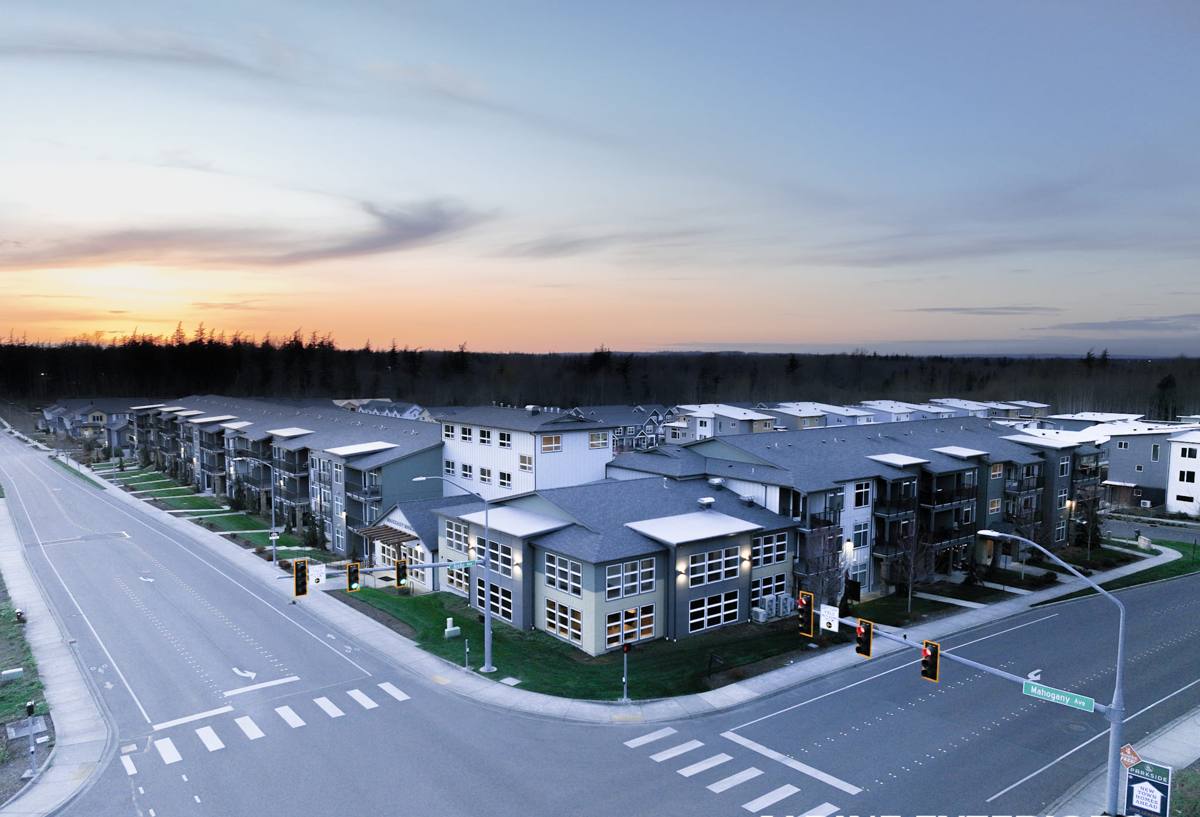
Why Local Climate Changes the Job
Salt Air and Corrosion
Homes closer to the water deal with airborne salt that settles on every exterior surface, including the roof. Salt exposure accelerates corrosion at any point where metal is exposed, cut, or fastened — which is exactly why fastener choice, panel coating, and cut-edge treatment matter more here than they would inland. A metal roof that's rated for a dry climate and installed with generic hardware will show rust streaks at the screws years before it should.
Driving Rain
Wind-driven rain doesn't just fall on a roof — it gets pushed sideways and can work its way under laps, around penetrations, and into any gap that a fair-weather installation might get away with. Panel overlap, sealant placement, and flashing detail all need to assume water will be tested from more than one direction, not just from straight overhead.
Moss Season
Whatcom County's damp season runs long, and moss doesn't need much encouragement to establish itself — especially in shaded valleys, on north-facing slopes, and anywhere debris collects. Moss holds moisture directly against roofing material for extended periods, and on the wrong roofing product that's a slow path to rot or granule loss. Metal roofing doesn't feed moss the way organic-surfaced materials do, but panel design, slope, and edge detail still affect how well a roof sheds debris and dries out between storms.
Why Metal Roofing Fits Deming Homes
Metal roofing has a real advantage in this climate profile, but it's worth being honest about why, rather than just saying "metal is better."
- Steep, consistent panel lines shed rain and snowmelt faster than materials that rely on granule friction or overlapping shingles to slow water down.
- A properly coated metal surface gives moss and moisture very little to grip onto, compared to organic roofing surfaces.
- Concealed-fastener standing seam systems have fewer exposed penetration points for wind-driven rain to exploit.
- Metal holds its finish and structural integrity over decades of freeze-thaw cycling and repeated wet-dry swings, which is the normal rhythm of a Whatcom County winter and spring.
- Lighter-weight panel systems reduce structural load compared to some heavier roofing materials, which matters on older Deming-area homes with roof framing that wasn't built with heavy modern materials in mind.
None of that means every metal roofing product is interchangeable, or that installation quality stops mattering once you've picked metal over another material. It doesn't. A poorly installed metal roof in this climate will still leak, still corrode, and still trap moisture at bad details — it just takes longer to show it, which can actually make the problem worse by the time it's found.
Standing Seam vs. Exposed-Fastener: What We Recommend and Why
We install both systems, and the right choice depends on the roof's exposure, slope, and how long you plan to own the home. Here's how we walk homeowners through that decision.
| Factor | Standing Seam | Exposed-Fastener |
|---|---|---|
| Fastener exposure | Concealed clips, no exposed screws through the panel face | Screws penetrate the panel face directly |
| Wind-driven rain resistance | Higher — fewer penetration points for water to find | Adequate on well-detailed installs, more dependent on gasket condition over time |
| Long-term maintenance | Very low — no exposed fasteners to re-seat or reseal | Fastener gaskets typically need inspection and occasional replacement over the roof's life |
| Upfront cost | Higher material and labor cost | Lower upfront cost |
| Best fit | Full exposure, water-view, or long-term ownership | Lower-slope accessory roofs, outbuildings, budget-conscious full re-roofs |
For a primary home roof facing prevailing weather in the Deming area, we typically recommend standing seam. For detached garages, shops, or covered porch roofs with less direct exposure, exposed-fastener systems are a legitimate, more affordable option — as long as they're detailed and maintained properly.
What Correct Installation Actually Involves
The panels themselves get the attention in most conversations about metal roofing, but the details around the panels are what actually determine whether the roof performs for 40-plus years or starts causing problems in year eight.
Underlayment
Given how much moisture this region deals with, we don't treat underlayment as an afterthought. A high-temperature, self-adhered underlayment at eaves, valleys, and penetrations gives the roof a real second line of defense if wind-driven rain ever gets past the panel seams — which, over decades, it eventually will at some point on any roof.
Flashing and Penetrations
Chimneys, vents, and skylights are where most roof leaks actually start, metal or otherwise. Flashing needs to be formed and layered correctly — not just caulked over — so it sheds water by design rather than relying on sealant that will degrade over the years.
Fastener and Clip Selection
Given the salt air exposure common closer to the water in Whatcom County, we match fasteners and clips to the coating system on the panels themselves. Mismatched metals at fastener points cause galvanic corrosion — a slow, avoidable failure that shows up as rust bleeding from screws or clips years before the panels themselves would ever fail.
Ventilation
A metal roof that traps warm, moist attic air underneath it is inviting condensation problems on the underside of the panels. Proper ridge and soffit ventilation keeps that moisture moving instead of settling — especially important during Whatcom County's long damp season when outdoor humidity is already high.
Slope and Drainage Detail
Valleys, transitions, and low-slope sections need extra attention in a driving-rain climate. We pay particular attention to valley width and lining on Deming-area homes, since valleys are where water volume concentrates fastest during a heavy storm.
Our Process, Start to Finish
- On-site assessment: We walk the roof (or inspect from a lift when steep or unsafe to walk), check the decking, existing flashing, ventilation, and any signs of past moisture intrusion — not just the surface layer.
- Honest scope and estimate: You get a clear breakdown of what needs to happen and why, including where standing seam versus exposed-fastener makes sense for your specific roof.
- Tear-off and deck inspection: Old roofing comes off and the decking underneath gets inspected for rot or soft spots before anything new goes down — moisture damage found now is far cheaper to fix than moisture damage found later.
- Underlayment and flashing: High-temp self-adhered underlayment at vulnerable areas, properly formed flashing at every penetration and transition.
- Panel installation: Panels run, seamed, or fastened to manufacturer spec, with attention to proper overlap and fastener spacing for wind and rain resistance.
- Final walkthrough: We review the finished roof with you, point out any maintenance items worth knowing about, and answer questions before we consider the job done.
Why a Crew That Already Works Deming Matters
A roofing crew that's only worked drier inland climates will make different assumptions than one used to Whatcom County's rain-and-moss cycle. That shows up in small decisions — how much underlayment coverage is enough, how valleys get detailed, how aggressively ventilation gets addressed — that don't seem important until a few wet winters have gone by. Working regularly in and around Deming means we're not guessing at how this specific weather pattern treats a roof over time; we're building to what we've actually seen hold up and what hasn't.
It also means faster, more realistic scheduling. Metal roofing installation has weather windows — panels, sealants, and underlayment products all have workable conditions, and a crew familiar with the local forecast pattern plans around that instead of rushing a job into weather that compromises it.
Maintenance: What a Metal Roof Actually Needs
One of the real advantages of metal roofing in this climate is how little ongoing maintenance it needs compared to other materials — but "little" isn't "none."
- Clear debris (needles, leaves, moss fragments) from valleys and around penetrations once or twice a year, especially after fall storms.
- Check gutters and downspouts stay clear so water isn't backing up against the roof edge.
- Have flashing and sealant points visually checked every few years, particularly around chimneys and skylights.
- Watch for any staining or streaking at fasteners, which can be an early sign of coating wear or a mismatched hardware issue.
- Trim back overhanging branches that keep sections of the roof shaded and slow to dry — the same conditions that encourage moss growth.
What This Costs
Metal roofing costs more upfront than asphalt shingles, largely because of material and the skilled labor standing seam systems require. Where it earns that cost back is in lifespan and reduced maintenance — a well-installed metal roof in this climate can outlast two or three shingle roof replacements over the same period. Final pricing depends on roof size, pitch, complexity (valleys, dormers, penetrations), and whether you choose standing seam or exposed-fastener panels. We walk through all of that in the on-site estimate rather than quoting blind over the phone, because two roofs of the same square footage can have very different actual costs depending on complexity.
If you're weighing a metal roof for a Deming-area home, we're glad to come take a look and talk through what your specific roof needs — no pressure, no obligation. Use the form below to request a free estimate.