 Sudden Valley Siding
 Why Cordata Decks Wear Out Faster Than the Brochures Suggest
Decks in the Cordata area take a beating that homeowners from drier parts of the country never have to think about. You're dealing with three things working against your deck at the same time: salt-tinged marine air moving in off the Sound, long stretches of driving, wind-blown rain rather than gentle vertical rainfall, and a moss season that can stretch from October well into April in a wet year. None of those factors alone would ruin a deck quickly. Together, they compound. Wind-driven rain gets pushed sideways into joints, fastener heads, and end grain that a standard roof overhang or gentle rain would never reach. Salt air accelerates corrosion on fasteners and hardware, which is often the actual reason a deck starts failing structurally years before the decking boards look bad. And moss and algae hold moisture against wood and composite surfaces for months at a stretch, which keeps wood fiber wet enough, long enough, for rot to take hold in framing that never gets a proper chance to dry out between storms.
A deck built to a generic national spec, without those specifics in mind, tends to show real trouble in the 12-18 year range in this part of Whatcom County — sometimes sooner if the original build skipped flashing at the ledger or used undersized, non-marine-rated fasteners. A deck built correctly for this climate can go a lot longer than that before a full replacement is warranted.
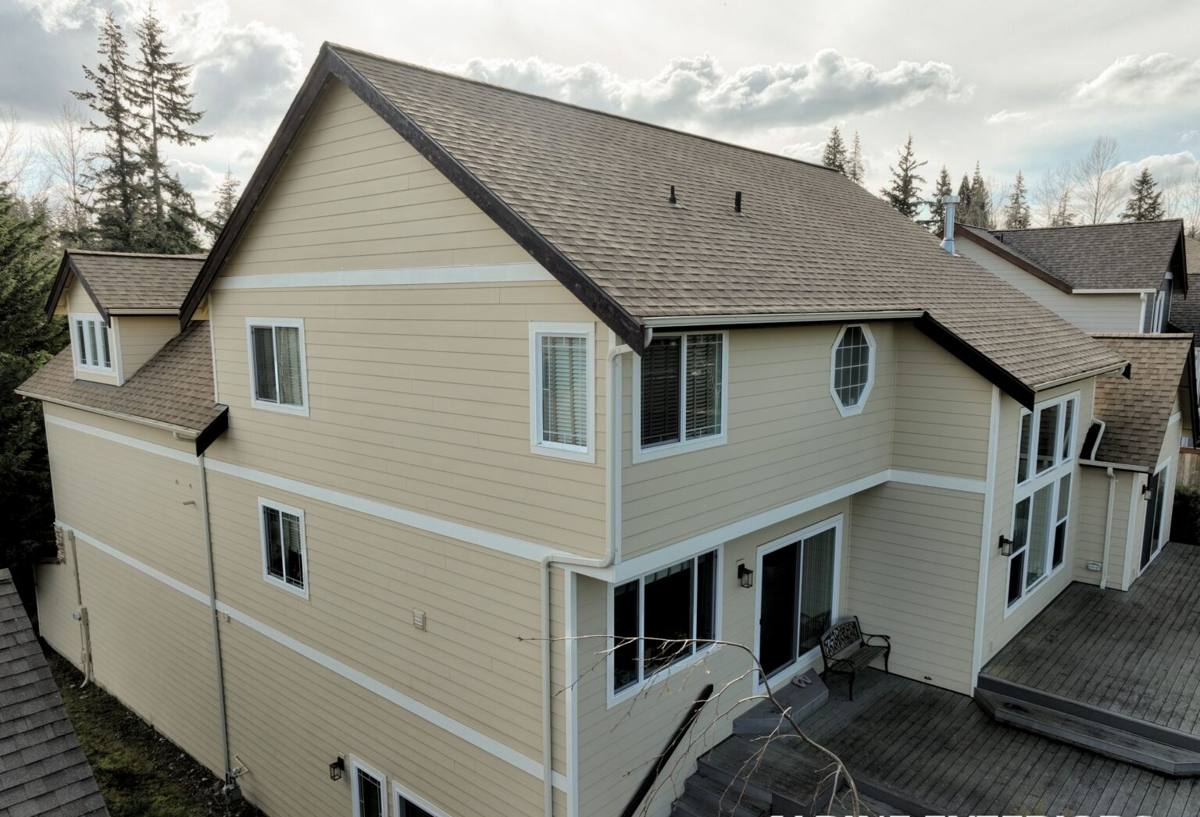
Repair, Restore, or Replace? Reading the Signs
Not every tired-looking deck needs a full teardown. But there's a point where patching individual boards or sistering a few joists is just delaying a bigger job and spending money that won't show up in the final result. Here's how we sort it out on a walkthrough:
- Surface graying or minor splintering only — usually a cleaning, sanding, and refinishing job, not a replacement.
- Soft or spongy spots when you press with a boot heel — localized rot, worth investigating further before deciding on repair vs. replace.
- Rust streaking around fastener heads or ledger bolts — a red flag for corroded hardware, common in salt-air exposure, and often means the connection itself needs attention, not just cosmetic fixes.
- Persistent moss or black-green staining that returns within weeks of cleaning — a sign the deck isn't drying properly between rain events, which points to a drainage or ventilation problem underneath, not just a surface issue.
- Ledger board separation, visible gaps, or a deck that feels like it moves slightly under load — a structural concern that should be looked at right away, and usually the tipping point toward full replacement.
- Framing built before 2000 without visible joist tape, flashing, or coated fasteners — even if it looks fine today, this is often original construction that predates the code and hardware standards we build to now.
If what we find is mostly cosmetic, we'll tell you that directly — a repair or refinish is a fraction of the cost of a replacement and there's no reason to talk you into more work than the deck needs.
What a Correct Deck Replacement Actually Involves
"Deck replacement" gets used loosely in this trade to mean anything from swapping the top boards to a full teardown-and-rebuild. A correct replacement in this climate means addressing everything below the walking surface, not just what's visible:
Ledger and Structural Connection
The ledger board — where the deck attaches to the house — is the single most common point of failure we find on decks that are otherwise still standing. It needs proper flashing that directs water away from the house framing, not caulk alone, and lag bolts or through-bolts rated for the load and spaced to current structural standards. This is also where corrosion from salt-laden air shows up first if the original hardware wasn't coated or stainless-rated.
Framing and Joists
We check joist spacing against current span tables for the decking material you're choosing — composite and PVC decking often need tighter joist spacing than solid wood to avoid deflection over time. Any joist showing rot, checking, or insect damage gets replaced, not sistered and hoped for.
Fasteners and Hardware
This is where corner-cutting shows up years later as rust streaks and loose boards. In a marine climate, standard galvanized fasteners aren't enough for long-term performance — we use stainless steel or heavy hot-dip galvanized hardware rated for coastal exposure, along with joist tape or a comparable flashing membrane on top of every joist to keep water out of the wood fiber itself.
Drainage and Airflow Underneath
A deck that traps moisture underneath is a deck that grows moss and rots framing regardless of how good the top boards are. Proper grading, gaps for airflow, and in some cases a below-deck drainage system make a real difference in how long the structure lasts through a wet Whatcom County winter.
Decking Surface
The board material itself matters, but it's the last decision in the process, not the first — a beautiful composite deck on rotten framing with corroded fasteners is still a bad deck.
Decking Material Comparison for This Climate
| Material | Moisture Behavior | Maintenance | Typical Lifespan Here |
|---|---|---|---|
| Pressure-treated wood | Absorbs and releases moisture readily; prone to cupping and checking with repeated wet-dry cycles | Annual cleaning, periodic staining/sealing | 10-15 years before boards need replacing |
| Cedar | Naturally moisture- and rot-resistant, but still needs sealing to hold up to constant driving rain | Regular sealing, moss treatment | 15-20 years with upkeep |
| Capped composite | Resists moisture absorption well; the capped surface prevents moss and algae from taking hold in the material itself | Periodic washing, minimal sealing | 25-30 years |
| PVC decking | Fully moisture-resistant, does not absorb water into the board | Occasional washing | 25-30+ years |
We don't push one material on every job. Wood costs less up front and has a warmer look that some homeowners want to keep. Composite and PVC cost more initially but hold up better against the specific combination of salt air, sustained wet weather, and moss that this area sees — the tradeoff is a real one, not a marketing point, and we'll walk through it honestly based on your budget and how long you plan to be in the home.
How Our Process Works
- On-site assessment. We check the ledger, framing, and existing hardware — not just the surface — before quoting anything, so the estimate reflects what's actually under the boards.
- Written scope and estimate. You get a clear breakdown of what's being replaced, what materials are proposed, and why — no vague "deck replacement" line item.
- Permitting. Most full deck replacements in Whatcom County require a permit, especially when structural framing or the ledger connection is being altered. We handle that process rather than leaving it to you.
- Demo and structural rebuild. Old decking and, where needed, framing come out; new ledger flashing, joists, and hardware go in to current structural standards.
- Decking installation. Boards are installed to the manufacturer's fastening and spacing specs for the material chosen, with attention to drainage and airflow underneath.
- Final walkthrough. We go over the finished deck with you, point out anything you should know for maintenance, and make sure you're satisfied before calling the job done.
Permits, Code, and Whatcom County Considerations
A full deck replacement — particularly one that touches the ledger connection, footings, or overall framing — generally falls under Whatcom County building permit requirements. Decks over a certain height or attached to the home typically need inspection at the framing stage before decking goes down, and again at final. Skipping this isn't a shortcut worth taking: it can create real problems at resale, with insurance claims, or if something fails down the line. We factor permitting and inspection scheduling into the project timeline from the start rather than treating it as an afterthought.
What Affects the Cost of a Deck Replacement
| Factor | Why It Matters |
|---|---|
| Deck size and shape | Square footage and complexity (multiple levels, angles, stairs) drive labor and material quantities |
| Framing condition | Rotted joists or a failed ledger connection add structural rebuild costs beyond surface replacement |
| Decking material | Wood costs less upfront; composite and PVC cost more but reduce long-term maintenance and replacement cycles |
| Railing and stairs | Code-compliant railing height and baluster spacing, plus stair rebuilds, are often bundled into a full replacement |
| Site access | Elevated decks, tight side-yard access, or decks over sloped ground can add labor time |
| Permit and inspection scope | Structural changes typically require permitting, which adds time and a modest cost but protects you long-term |
We give a firm written estimate before work starts, based on what we actually find in the framing — not a rough guess that changes once demo begins.
Keeping a New Deck Performing Through Whatcom County Winters
- Sweep debris and standing leaves off the deck regularly through fall — trapped moisture under leaf litter is one of the fastest ways to start moss growth.
- Wash the surface at least once or twice a year to interrupt moss and algae before it establishes, especially on shaded or north-facing sections.
- Check railing posts and stair connections annually for any looseness — this is often the first sign of a fastener or connection issue, well before it becomes a safety concern.
- For wood decking, plan on resealing on the manufacturer's recommended schedule rather than waiting until the wood looks visibly gray.
- Keep gutters and downspouts near the deck clear so runoff isn't being directed onto or under the deck structure.
- Trim back vegetation that shades the deck surface and keeps it damp longer than open areas nearby.
Why a Crew That Already Works Cordata Makes a Difference
A deck replacement isn't just a materials question — it's a question of whether the crew doing the work understands what this specific stretch of Whatcom County throws at a structure over time. A contractor who mostly works drier inland regions may not think twice about fastener grade or ledger flashing detail, because in their normal working conditions it doesn't matter as much. Around Sudden Valley and Cordata, it does. We've seen what happens to decks here that were built to a generic spec, and we build differently because of it — better hardware, real attention to drainage and airflow, and framing decisions that account for a long wet season rather than an occasional rainstorm. That's not a sales pitch; it's just what holds up here.
If your deck is showing its age, or you're not sure whether it needs a repair or a full replacement, we're glad to take a look and give you an honest read. Reach out for a free, no-pressure estimate using the form below.