 Sudden Valley Siding
 Composite Decking Built for the Columbia Area's Weather, Not Against It
If you own a home in the Columbia area near Sudden Valley, you already know what the outdoors does to an untreated deck. Salt-laden air off the water, long stretches of driving rain through fall and winter, and a moss season that seems to start earlier every year all work together on any exposed wood surface. A deck built without that reality in mind will show it within a few seasons — soft boards, black-green staining in the shaded corners, fasteners that back out, and a finish that needs to be stripped and redone more often than anyone wants to deal with. Composite decking, installed correctly for this specific climate, is one of the few upgrades that actually reduces the amount of upkeep a homeowner has to do rather than adding to it.
This page is about one thing: composite decking for homes in Columbia specifically, not a generic decking overview. The framing, drainage, fastening, and board selection choices that make sense here are shaped by what Whatcom County throws at a deck year-round, and by what we've seen go wrong on jobs where those factors were ignored.
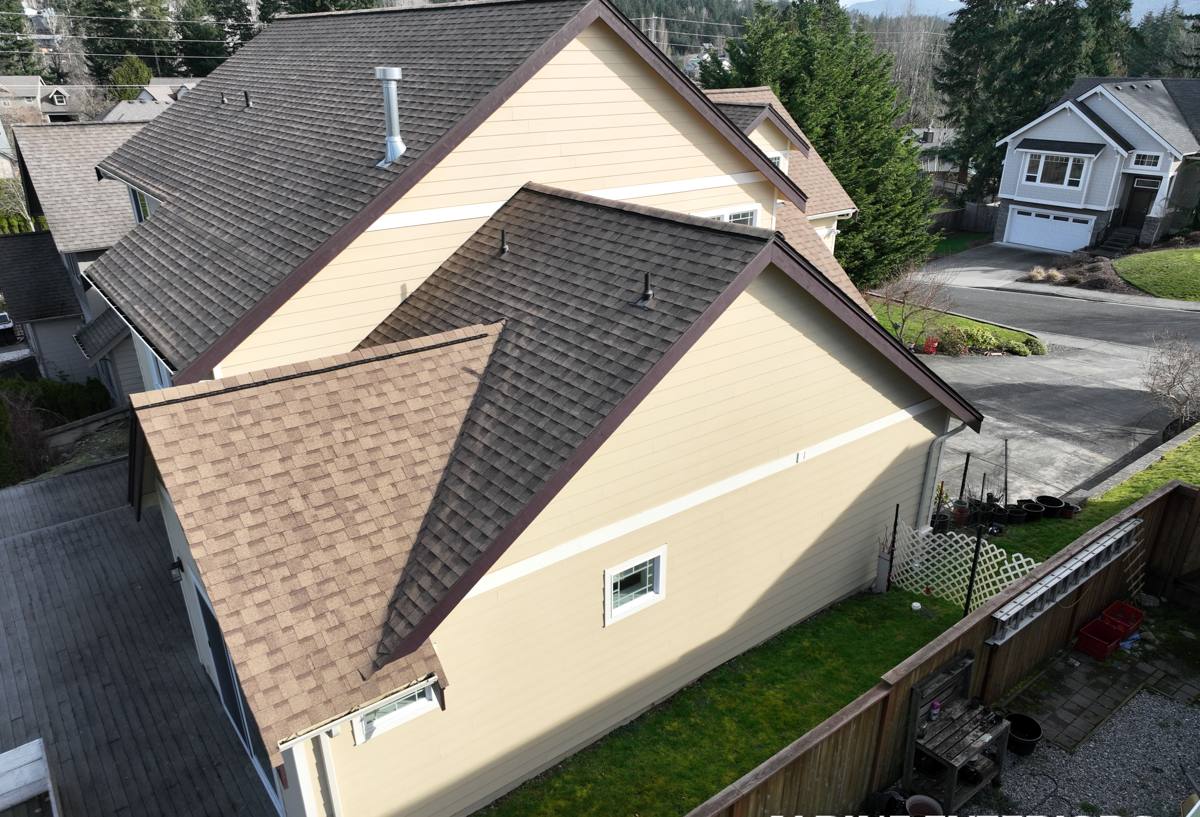
What Columbia's Climate Actually Does to a Deck
Three conditions matter most for decking in this part of Whatcom County, and they interact with each other:
- Salt air: Even set back from the water, homes in this area get periodic exposure to salt-carrying air, which accelerates corrosion on any exposed metal fasteners, brackets, or hardware that isn't rated for it.
- Driving rain: Wind-driven rain doesn't just fall straight down — it gets pushed under railings, into board gaps, and against the house where the deck ties in, which is exactly where rot and moisture intrusion start on wood-framed structures.
- Extended moss season: Cool, damp conditions for much of the year mean any horizontal surface that doesn't drain and dry quickly becomes a moss and algae host. On wood decking that means a slick, degrading surface. On composite, it means a maintenance headache if the wrong board or the wrong installation approach was used.
None of these conditions are unusual for the region — they're just consistently present, which is the point. A deck here isn't dealing with one bad storm season; it's dealing with this pattern every single year for as long as the deck stands.
Why This Changes How a Deck Should Be Built
The board material matters, but it's not the only variable. A composite deck with poor substructure drainage or the wrong fastener hardware will still fail early in this climate, just in different ways than a wood deck does. Getting composite decking right in the Columbia area means treating moisture management as the design priority from the framing up, not just picking a good board and calling it done.
Why Composite Decking Makes Sense Here
Composite decking isn't the right call for every homeowner or every budget, and we'll say that plainly. But for this specific climate, it solves problems that wood decking structurally can't:
- It doesn't absorb moisture the way wood fibers do, which removes the swell-and-shrink cycle that loosens fasteners and opens gaps over time.
- Quality composite boards resist mold and algae growth far better than untreated or even sealed wood, which matters directly given the area's moss season.
- There's no annual sanding, staining, or sealing schedule — a real advantage for homeowners tired of losing a weekend every spring to deck maintenance.
- Color and texture hold up under UV and salt exposure better than paint or stain finishes on wood.
The trade-off is upfront cost and the fact that composite still needs a correctly built, well-drained substructure underneath it — composite decking is not a "install and forget the framing" product.
What a Correct Composite Deck Installation Involves
Substructure and Drainage First
Before a single composite board goes down, the framing and ledger connection need to be built to shed water, not trap it. That means proper flashing at the house connection, joist spacing appropriate to the board manufacturer's span rating, and airflow underneath the deck so moisture doesn't sit against the frame. In a climate with this much sustained rain, an under-deck drainage or gap detail isn't optional — it's what keeps the framing dry for the life of the deck.
Fastener and Hardware Selection
Salt air corrodes standard fasteners faster than most homeowners expect. We use corrosion-resistant, coastal-rated fastening systems and hardware on decking in this area — not because every home is beachfront, but because the air quality here over a 15-20 year deck lifespan justifies it. Cutting corners on hardware is one of the most common causes of early deck failure we see on re-inspections.
Board Gapping and Ventilation
Composite boards need to be gapped correctly for expansion and, just as importantly, for drainage and airflow between boards. Too tight, and water sits on the surface and in the fastener channels, feeding algae growth. Too loose, and the deck feels unfinished and debris collects between boards. Getting the gap right, and consistent, board to board and run to run, takes experience with the specific product being installed.
Railing and Edge Details
Driving rain finds the weak points at railings, stair stringers, and board ends first. Correctly flashed and capped edges, along with railing hardware that matches the fastener standard used on the decking itself, keep water from getting a foothold at these transition points.
Comparing Decking Options for This Climate
| Material | Moisture Resistance | Moss/Algae Resistance | Ongoing Maintenance | Typical Lifespan Here |
|---|---|---|---|---|
| Pressure-treated wood | Moderate — absorbs and releases moisture | Low without regular treatment | Annual cleaning, periodic staining/sealing | 10-15 years with upkeep |
| Cedar | Moderate — naturally rot-resistant but still absorbs water | Moderate | Regular sealing to maintain appearance and resistance | 12-18 years with upkeep |
| Composite decking | High — minimal absorption | High with quality boards | Occasional washing, no sealing/staining | 20-30 years, manufacturer-dependent |
These are general patterns, not guarantees — actual lifespan depends heavily on installation quality, substructure drainage, and how consistently a deck is cleaned regardless of material. A poorly installed composite deck can underperform a well-built wood deck, which is why installation quality matters as much as the material choice itself.
What Affects Composite Decking Cost
Costs vary based on several factors, and we'll walk through actual numbers for your specific deck during a free estimate rather than quoting a number that doesn't apply to your situation. Broadly, the main cost drivers are:
| Factor | Why It Matters |
|---|---|
| Deck size and shape | More complex layouts (curves, multiple levels, angled cuts) increase labor and material waste |
| Board tier/manufacturer | Composite lines range from entry-level capped composite to premium multi-layer boards with longer warranties |
| Substructure condition | Reusing sound existing framing costs less than a full tear-out and rebuild |
| Railing system | Composite or aluminum railing systems cost more than basic wood railing but resist this climate better |
| Site access and height | Elevated decks or difficult access sites add labor time |
Our Process for Columbia Composite Deck Projects
- On-site assessment: We look at your existing deck or build site, check drainage patterns, sun/shade exposure, and any moisture issues already present.
- Honest scope and estimate: You get a clear breakdown of what needs to happen — framing repair or replacement, board tier options, railing choices — with real cost ranges, not a lowball number that grows once work starts.
- Substructure work: Any needed framing repair, flashing, or drainage correction happens before decking goes down. We don't install composite boards over a substructure we wouldn't stand behind.
- Installation: Boards, fasteners, and railing go in to manufacturer spec, with the gapping and hardware choices appropriate to this climate.
- Final walkthrough: We go over care basics with you — mainly just periodic washing — and answer any warranty questions on the specific product installed.
Why Hiring a Crew That Already Works in This Area Matters
A contractor who mostly builds decks somewhere drier, or somewhere without this level of coastal air exposure, is going to make different default choices — standard fasteners instead of coastal-rated hardware, less attention to under-deck drainage, board gapping tuned for a climate that doesn't have a moss season like ours. Those aren't dramatic mistakes on day one. They show up two or three years in, as staining, corrosion, or soft spots that shouldn't be there yet on a deck that age.
Working regularly on siding and exterior projects throughout Sudden Valley and the surrounding Whatcom County area means we're dealing with this exact combination of salt air, rain, and moss conditions on every job, not occasionally. That's not a marketing point — it's just what shapes the material and hardware decisions we make by default, because we've seen what happens when they're skipped.
Signs an Existing Deck Needs Attention
- Dark green or black staining that returns quickly after cleaning, especially in shaded corners
- Soft or spongy spots underfoot, particularly near the house connection or stair stringers
- Fasteners that have backed out, rusted, or show corrosion staining on the board surface
- Gaps between boards that have widened, narrowed, or become uneven over time
- Standing water that doesn't drain off within an hour or two of rain stopping
- Railing posts that feel loose or have visible gaps at the base
If you're seeing any of these on a wood deck, it's worth a conversation about whether a composite rebuild makes more sense than another round of repairs and refinishing.
If you're considering composite decking for your home in the Columbia area, we're happy to take a look and give you a straightforward, no-pressure estimate — what it would take, what it would cost, and whether it's the right call for your specific deck and budget. Use the form below to get started.