 Sudden Valley Siding
 Board & Batten Siding Around Lake Whatcom
Lake Whatcom's shoreline and the wooded hillsides around Sudden Valley have a look that a lot of homeowners want to lean into — cabin-style rooflines, deep eaves, and vertical siding lines that fit the tree cover instead of fighting it. Board and batten is the siding style that delivers that look, and it's one of the most requested profiles we install on homes in this part of Whatcom County. But board and batten is also a style that punishes a sloppy installation faster than plain horizontal lap siding does, especially in a setting this shaded and this wet. This page is about what it actually takes to get board and batten right on a Lake Whatcom home, not just what it costs to hang boards on a wall.
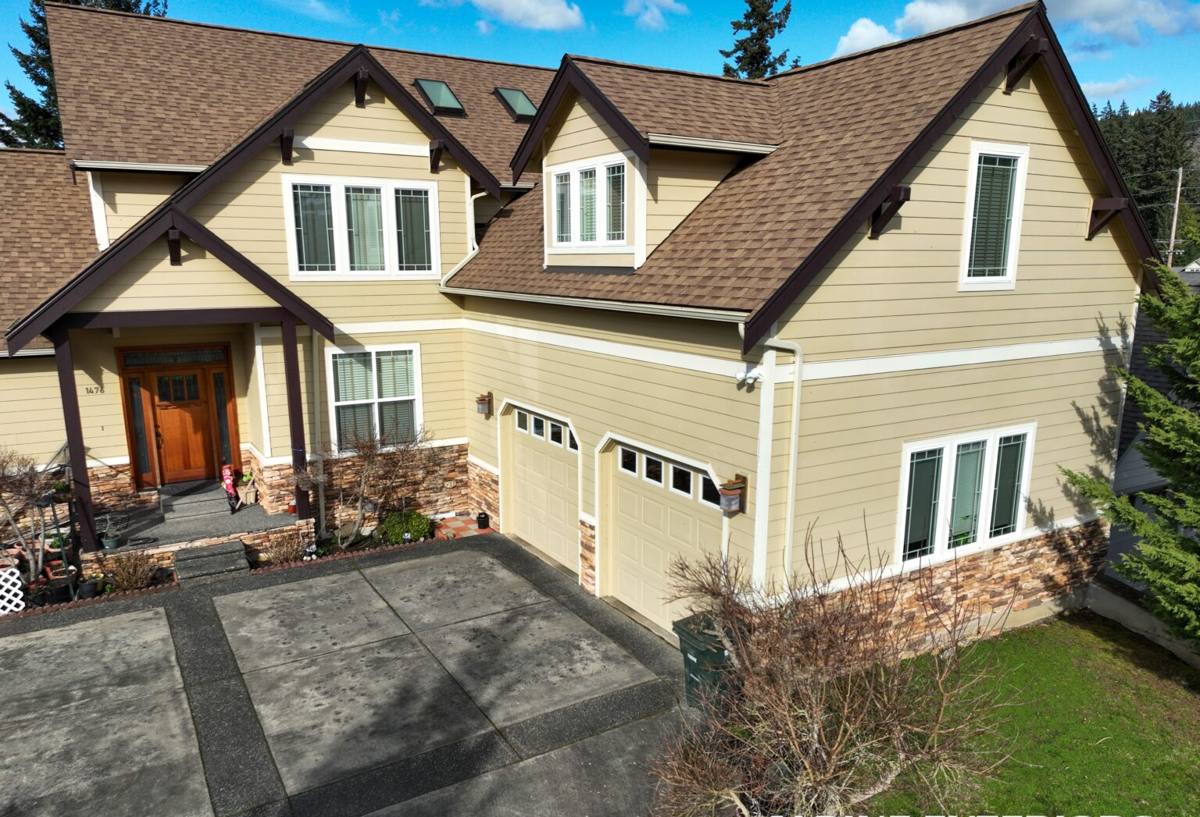
What This Setting Does to Vertical Siding
Lake Whatcom sits inland from Bellingham Bay, but the air here is still marine-influenced — damp, mild, and slow to dry out compared to drier parts of the state. Add in the tree canopy that shades most Sudden Valley lots for a good part of the day, and you get long stretches where siding, especially anything facing the lake or tucked under fir and cedar cover, simply doesn't get direct sun to dry it out after a storm. Whatcom County's driving rain — wind-driven, coming in sideways off the water more often than most homeowners expect — finds every gap in a wall assembly that wasn't detailed correctly. And moss season here isn't a two-week event; on shaded, north-facing walls it can run most of the year.
Vertical siding has a specific vulnerability in this kind of climate: every seam runs with the water instead of across it. On a horizontal lap wall, gravity does some of the work shedding water off each course. On a board and batten wall, water can run straight down a seam and sit against the substrate if the batten isn't sealed and gapped correctly. That's not a reason to avoid the style — it's a reason to make sure whoever installs it understands the difference.
Where Problems Actually Show Up
- Batten seams facing the prevailing weather side of the house, where wind-driven rain gets pushed into the joint
- North- and lake-facing walls that stay damp longest under tree shade, where moss and algae take hold first
- Bottom courses near grade, decks, and covered porches where splash-back and reduced airflow keep the wall wet
- Inside corners and window returns, where two vertical runs meet and flashing gets skipped on rushed jobs
Why Board & Batten Specifically Suits — and Challenges — This Look
Board and batten reads well against the timber-and-stone aesthetic a lot of Lake Whatcom homes are built around, and it pairs naturally with steep rooflines and covered entries. It also breaks up large wall planes in a way flat lap siding doesn't, which matters on homes with tall gable ends facing the water. The trade-off is that it has fewer built-in drainage paths than lap siding, so more of the wall's weather resistance depends on what's happening behind the boards — the water-resistive barrier, the flashing, and whether there's a gap for air and moisture to move.
None of that is a reason to skip board and batten on a home in this setting. It's a reason to treat the installation as a system, not a decorative layer.
What a Correct Board & Batten Installation Involves
The Wall System Behind the Boards
Before any siding goes up, the wall needs a properly lapped water-resistive barrier and correctly flashed windows, doors, and penetrations. On a vertical siding wall in a climate this wet, we install furring strips to create a drainage gap — a rainscreen — behind the boards. That gap lets any water that gets past the surface drain and dry out instead of sitting against the sheathing, which matters even more here than on drier east-side installations because walls under tree cover simply don't get the chance to flash-dry the way a sun-exposed wall does.
Panel Layout and Fastening
Vertical panels or boards need to be fastened per the manufacturer's engineering — correct nail spacing, correct penetration depth into framing, and starter strips set level so the whole wall reads straight from the ground up. Battens go over the panel seams with enough coverage to shed water and enough gap behind them for that seam to breathe rather than trap moisture.
Corners, Trim, and Transitions
Outside corners, inside corners, and the transition from siding to trim, roofline, or foundation are where board and batten jobs succeed or fail. Each of those needs its own flashing detail — caulk alone is not a substitute for flashing, and on a wall that already deals with driving rain and long damp stretches, that distinction matters more than it would somewhere drier.
James Hardie Board & Batten Options
We install James Hardie fiber cement exclusively, and board and batten is one of the styles Hardie's product lineup handles well. Depending on the look a homeowner wants, that generally means HardiePanel vertical siding run with cedar-look or smooth battens, or Hardie Artisan siding for a more refined, tighter-reveal vertical look on entries and feature walls. Both are manufactured as part of Hardie's HZ10 product line, engineered for the Pacific Northwest's moisture and freeze-thaw pattern rather than a generic national spec. The factory-applied ColorPlus finish matters more on a vertical wall than people expect — it's baked on rather than field-applied, so the color holds evenly across every board and batten without the touch-up seams that field-painted siding eventually shows.
Fiber cement also doesn't feed moss and algae growth the way wood-based sidings can, which is a real advantage on the shaded, damp walls that are common around Sudden Valley's tree-covered lots. It won't eliminate moss — nothing fully does in this climate — but it gives the wall a surface that's easier to keep clean and doesn't break down from the growth sitting on it.
Comparing Board & Batten Material Options
| Material | How It Handles This Climate | Long-Term Consideration |
|---|---|---|
| James Hardie fiber cement | Non-combustible, holds paint/finish, resists moisture-driven warping | Factory finish and HZ10 engineering; installation detail still critical |
| Cedar or primed wood | Traditional look, but absorbs moisture in shaded, damp conditions | Needs regular refinishing and is more vulnerable to rot and moss staining |
| Vinyl board and batten | Low material cost, but seams and panels can flex or gap in driving rain and wind | Not repairable in sections the way fiber cement is; can fade and grow brittle over time |
| LP SmartSide | Engineered wood strand product, lighter than fiber cement | Wood-based core is more sensitive to sustained moisture exposure than fiber cement |
We don't install vinyl, LP SmartSide, or wood-based board and batten — that's a standard we hold across every job we take, not just a preference for this one. In a climate that keeps walls wet longer than most of the state, we'd rather stand behind one product we know performs than offer options we wouldn't put on our own homes.
Our Process for Lake Whatcom Projects
- Walk and assess — we look at sun exposure, tree cover, drainage, and which walls take the worst of the weather before we talk product or price
- Remove and inspect — old siding comes off and we check the sheathing underneath for any moisture damage before covering it back up
- Rebuild the water-resistive barrier and flashing — this is the step that determines whether the wall performs for the next several decades
- Install furring and drainage gap — critical for vertical siding in a shaded, high-rainfall setting
- Install Hardie panels, boards, and battens — fastened and spaced to manufacturer spec, corners and trim flashed individually
- Final walkthrough — we go over the finished wall with the homeowner before calling the job done
Why a Crew That Already Works This Neighborhood Matters
Sudden Valley and the homes around Lake Whatcom have their own pattern of problems — shaded north walls, wind funneling off the water, driveways and lots with limited staging room, and HOA or community guidelines that some neighborhoods here follow. A crew that's already worked this area knows to check those things before a bid goes out, not after material is on order. It also means we've already seen how board and batten performs on the specific wall orientations common in this community, which shapes decisions like batten spacing and where extra flashing attention goes.
Keeping Board & Batten Siding Performing Long-Term
- Rinse moss and organic buildup off shaded walls before it has a chance to hold moisture against the surface
- Keep gutters clear so overflow doesn't run down wall sections during heavy rain
- Trim back branches and shrubs that keep any wall section from ever fully drying
- Walk the exterior once a year and check caulking at trim, corners, and penetrations for cracking or gaps
- Address any soft spots or discoloration early rather than waiting for a full section to fail
If you're weighing board and batten for a home near Lake Whatcom, we're happy to walk the property, look at how sun and shade actually hit your walls, and give you a straight answer on what it would take to do the job right. The estimate is free and there's no pressure — just fill out the form below.