 Sudden Valley Siding
 New-Construction Windows in Sunnyland: What "Doing It Right" Means
New-construction windows are a different job than a replacement window drop-in. They install with a nailing flange directly into the rough opening before siding, house wrap, and trim go on, which means the window becomes part of the building's water management system rather than sitting inside an existing one. For a Sunnyland new build, addition, or major remodel, that first install is the one chance to get flashing, sealing, and drainage sequencing right before the wall is closed up. Get it wrong and the mistake gets buried behind siding for years.
We work new-construction window installs across the Sudden Valley area, including homes going up or being expanded in and around Sunnyland. That means we're not learning the local building patterns, framing quirks, or inspection expectations on your job — we already know them.
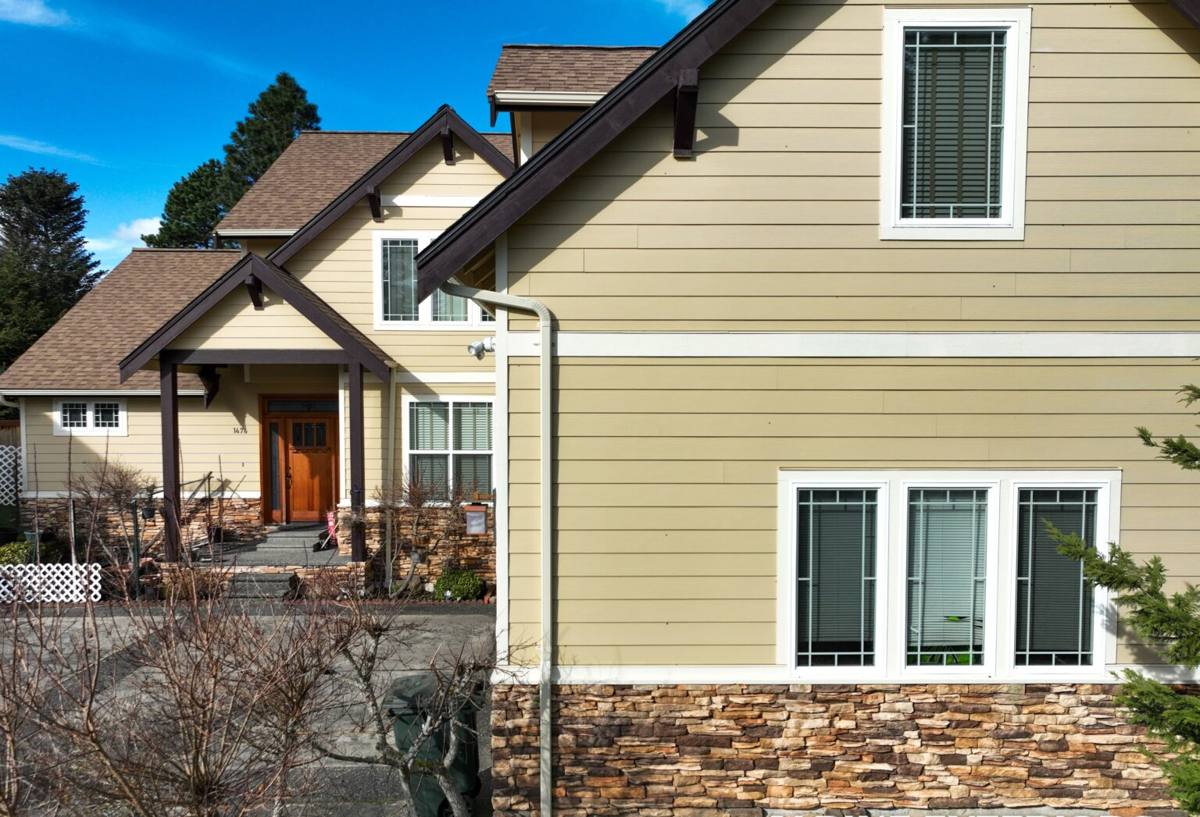
Why Whatcom County's Climate Demands Careful Window Installation
Western Whatcom County gets a specific combination of weather that hits window openings harder than most parts of the country. Understanding it is the difference between a window that performs for decades and one that starts showing problems in five years.
Driving Rain
Wind-driven rain doesn't just fall on a window — it gets pushed sideways and upward under sills and around trim. A window opening that relies on caulk alone to keep water out will eventually fail here. New-construction installs need mechanical water shedding built into the opening itself: proper sill pan flashing, correctly lapped house wrap, and flashing tape sequenced so every layer sheds water down and out, never in.
A Long Moss Season
Mild, damp conditions for much of the year mean moss and algae growth is a near-constant pressure on north-facing and shaded exposures, which is common for wooded lots around Sudden Valley and Sunnyland. Moss holds moisture against trim and window edges longer than open sun would allow, so the sealants, trim materials, and flashing details around a window need to tolerate sustained dampness, not just occasional rain events.
Salt Air Influence
Proximity to Bellingham Bay and the broader Puget Sound airshed means salt-laden air is part of the regional exposure profile for exterior materials. Salt air accelerates corrosion on unprotected fasteners and lower-grade hardware, and it can degrade certain sealants and finishes faster than an inland climate would. Window and flashing hardware selection matters more here than in a dry climate.
New-Construction vs. Replacement Windows: Know the Difference
| Factor | New-Construction Window | Replacement (Insert) Window |
|---|---|---|
| Installation method | Nailing flange fastened to sheathing, fully integrated with WRB and flashing | Fits inside existing frame, relies on the old frame's condition |
| Best used for | New builds, additions, full wall re-siding projects | Existing homes keeping current siding and trim |
| Water management | Built into the wall assembly from scratch — highest control | Limited by what's already there |
| Access to structure | Full view of rough opening, sheathing, framing before closing wall | No access to hidden structure |
| Long-term performance in wet climates | Strongest option when installed correctly | Good, but only as strong as the existing frame |
If you're building new or opening up a wall for an addition around Sunnyland, new-construction windows give you the best shot at a genuinely weathertight opening for the life of the home — but only if the install sequence is followed correctly.
What a Correct New-Construction Window Install Involves
There's a specific order of operations that makes or breaks water performance. Skipping steps or doing them out of order is the single biggest cause of window-related leaks we see in framed walls.
- Rough opening check. Confirming the opening is square, level, and sized correctly before the window ever shows up on site.
- Sill pan flashing. A sloped, sealed pan under the window sill so any water that gets past the window has a path back outside instead of into the framing.
- Weather-resistive barrier (WRB) integration. House wrap or building paper lapped correctly around the opening in shingle fashion — top layer always overlapping the layer below it.
- Window flange sealing. Flashing tape or a compatible sealant bedding the nailing flange to the WRB on the sides and top, left open at the bottom so any trapped moisture can drain out.
- Fastening. Corrosion-resistant fasteners at manufacturer-specified spacing — important given regional salt air exposure on fastener hardware.
- Shimming and squaring. The window body shimmed plumb, level, and square in the opening so the sash operates correctly and doesn't bind or leak at the corners.
- Insulation and air sealing. Low-expansion foam or backer rod around the perimeter gap — never packed solid, which can bow the frame.
- Interior and exterior trim. Finished last, after the water management layers underneath are already doing their job.
Every one of those steps is invisible once siding and trim are on. That's exactly why the crew doing it matters more than the window brand you choose.
Choosing the Right Window for Sunnyland's Exposure
Frame material and glazing package both affect how a window holds up to the driving rain, moss-season dampness, and salt air common to this area.
| Consideration | Why It Matters Here |
|---|---|
| Frame material (vinyl, fiberglass, wood-clad) | Fiberglass and quality vinyl resist moisture absorption and swelling better than bare wood in a consistently damp climate |
| Glazing / low-E coating | Helps with the Pacific Northwest's overcast-heavy, mild-but-cool climate — comfort and condensation control matter more than extreme heat resistance here |
| Hardware and fastener grade | Corrosion-resistant hardware holds up better given regional salt air influence |
| Sill design | A sloped, well-drained sill sheds driving rain instead of pooling it against the frame |
| Warranty structure | Understand what's covered on the glass unit versus the frame versus installation — they're often separate |
We don't push one brand as a blanket answer. We'll walk through trade-offs honestly — maintenance burden, moisture behavior over time, and how a given product's warranty actually reads — so you're choosing based on how the window performs here, not a sales pitch.
Our Process for New-Construction Window Installation
- Site walk and rough opening review — checked against window specs before installation day, catching sizing or framing issues early
- Flashing and WRB sequencing — done in the correct shingle-lap order every time, no shortcuts because "it's just going to get covered anyway"
- Manufacturer-specified fastening and sealing — matched to the product's actual install instructions, not a generic approach applied to every brand
- Square and plumb verification — checked before final fastening, not assumed
- Photo documentation of hidden layers — so you have a record of the flashing and sealing work once trim and siding close it up
- Final walkthrough — operation, seals, and trim checked together before we call the job done
Common Mistakes We See in New-Construction Window Installs
Most window leaks trace back to a handful of repeatable errors, not bad luck or bad windows:
- House wrap lapped backwards or out of shingle order at the head of the opening
- Sealant used to "waterproof" the bottom flange instead of leaving a drainage gap
- Fasteners driven at the wrong spacing or into a window's factory-drilled holes without matching manufacturer torque guidance
- Windows shimmed out of square, causing long-term hardware wear and sash binding
- No sill pan flashing at all — relying on caulk as the only defense against driving rain
Checklist: What to Ask Before Hiring a New-Construction Window Installer
- Do you install sill pan flashing on every window, every time?
- How do you sequence house wrap and flashing tape around the rough opening?
- What fastener type do you use, and is it rated for coastal or salt-influenced air?
- Will I get photos of the flashing and sealing work before trim and siding go on?
- Have you installed new-construction windows in this area before, and can you speak to how the local climate factors into your approach?
- What does the warranty actually cover — glass, frame, or installation labor?
Why a Crew That Already Works Sunnyland Matters
New-construction window installation is unforgiving of shortcuts because the mistakes disappear behind finished walls for years before they show up as a stain, a soft spot, or a drafty room. A crew that already works in and around Sudden Valley and Sunnyland has already seen how driving rain, moss-season dampness, and salt-influenced air behave on homes in this specific area — not a generalized national average. That local pattern recognition shows up in small decisions: where extra flashing attention goes on a north-facing wall, which fastener grade holds up over time here, how sill details need to handle sustained damp exposure rather than occasional storms.
If you're planning new construction, an addition, or a wall opened up for a remodel in Sunnyland, we're happy to walk the site, talk through window options honestly, and give you a clear, no-pressure estimate for the work. There's a form below — reach out and we'll set up a time to take a look.