 Sudden Valley Siding
 What Sunnyland's Climate Does to Siding Over Time
Homes in Sunnyland sit in a stretch of Whatcom County where three things wear on exterior siding at the same time: salt-laden air moving in off the water, driving rain that hits walls sideways instead of falling straight down, and a damp season that stretches on long enough to give moss and algae a real foothold. Any one of these would shorten the life of the wrong siding material. Together, they're the reason siding choices that work fine in a dry inland climate often disappoint homeowners here within a decade or two.
Salt Air and Slow Metal Corrosion
Airborne salt doesn't just affect homes right on the waterfront. It travels, settles on exterior surfaces, and slowly attacks anything it touches, especially exposed fasteners, unprotected trim edges, and metal flashing that isn't detailed correctly. Over years, that corrosion shows up as rust streaking, loosening fasteners, and failure points at seams.
Driving Rain and Wind-Driven Moisture
Rain that comes straight down is relatively easy for any siding to shed. Rain that's pushed sideways by wind is a different problem — it gets forced up under laps, into butt joints, and behind trim if those details aren't built correctly the first time. In a climate where wind-driven rain is a normal weather event rather than an occasional storm, small installation shortcuts turn into moisture problems much faster than they would in a milder climate.
A Long Moss and Algae Season
Shaded walls, tree cover, and extended damp stretches all favor moss and algae growth. Untreated wood and some engineered wood products give these organisms something to grab onto and feed on. Siding that resists moisture absorption at the surface simply gives moss less to work with, which matters over a long moss season rather than just a few wet weeks a year.
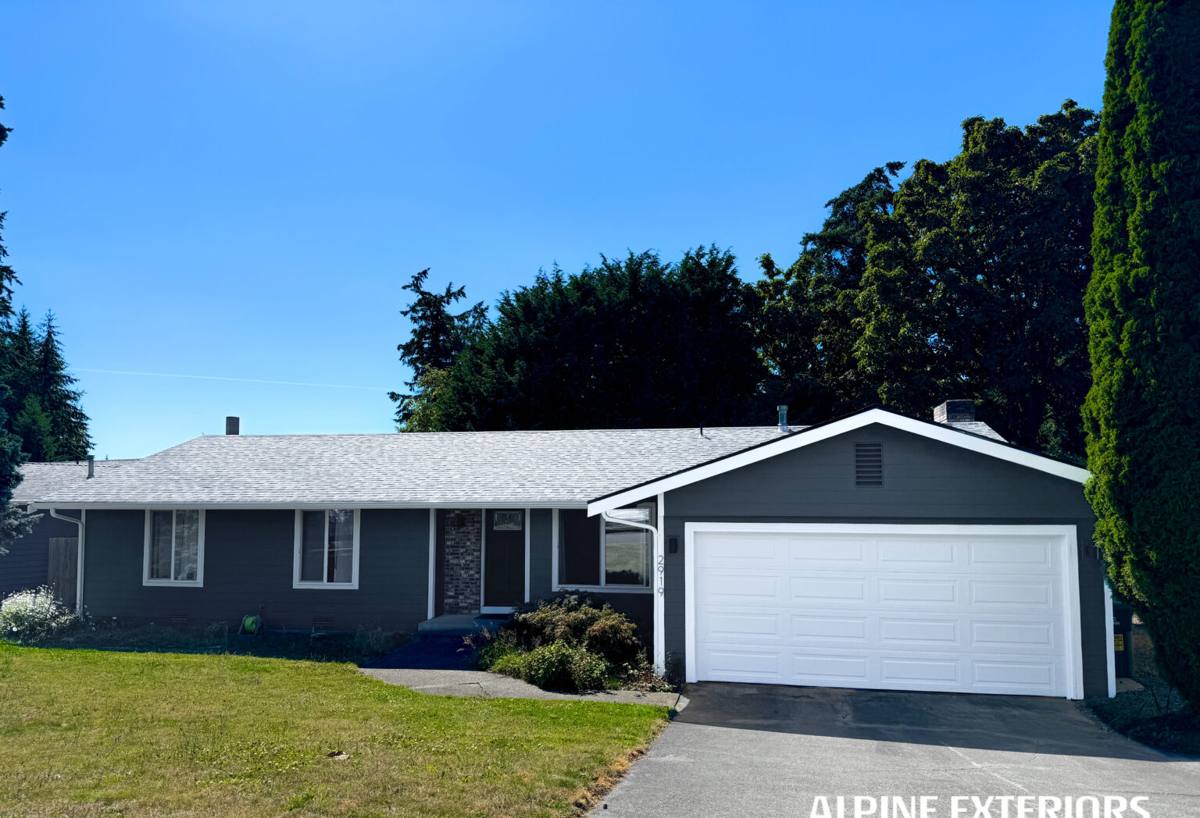
Why Fiber Cement Holds Up Where Other Materials Struggle
Fiber cement siding is made from cement, sand, and cellulose fibers, then cured into a rigid, dimensionally stable board. It doesn't absorb water the way wood-based products can, it doesn't expand and contract with humidity swings the way vinyl does, and it won't rot, warp, or feed insects. For a neighborhood dealing with salt air, driving rain, and a long moss season all at once, that combination of moisture resistance and dimensional stability is exactly what the siding needs to do its job for decades instead of years.
None of that means every fiber cement product performs the same way once it's on the wall. The base material matters, but so does the factory finish, the specific product line, and — just as much — how carefully it's installed.
Why We Install Only James Hardie Products
We standardized on James Hardie siding and don't install LP SmartSide, vinyl, Cemplank, Allura, primed spruce, or cedar. That's a deliberate professional standard, not a sales preference, and it comes down to three things.
HZ5 Engineered for This Climate Zone
Hardie engineers its fiber cement products for specific climate zones rather than selling one board everywhere. The HZ5 formulation is built for regions with cold, wet weather patterns similar to what Whatcom County sees — repeated freeze-thaw cycles layered on top of near-constant moisture exposure. That's a more relevant engineering target for Sunnyland than a generic all-climate product.
ColorPlus Factory Finish
Hardie's ColorPlus finish is baked on in a controlled factory environment rather than field-applied with a brush and roller. A factory finish cures more evenly, adheres better, and resists fading and moisture intrusion at the surface better than most site-applied paint jobs — which matters directly in a climate where moss and algae are looking for any surface imperfection to colonize.
Warranty That Actually Transfers
Hardie backs its siding with a long, non-prorated limited warranty, and the ColorPlus finish carries its own separate finish warranty. Because both are transferable to a subsequent homeowner when the product is installed to spec, the coverage still has value if the house sells — something that matters more in a market where buyers are increasingly asking direct questions about exterior condition and remaining siding life.
What a Correct Fiber Cement Install Requires Here
Fiber cement is only as good as its installation. In a climate this wet, the details that get skipped on a rushed job are exactly the details that cause problems first.
Clearances and Flashing
Hardie's specifications call for minimum clearances between siding and roof lines, deck surfaces, and grade. Kickout flashing has to be installed anywhere a roofline meets a sidewall to direct water away from the wall assembly instead of letting it run down behind the siding. Skipping or shortcutting these details is one of the most common causes of hidden moisture damage behind otherwise good-looking siding.
Fastening and Joint Treatment
Fasteners need to be the correct type and length, driven at the correct pattern and depth — not overdriven, not underdriven, and placed where Hardie's install guide specifies. Butt joints need to be treated correctly, whether that's a factory-primed joint, a proper sealant, or a flashed joint, so wind-driven rain can't work its way behind the plane of the siding.
The Water-Resistive Barrier and Rain Screen Gap
Behind the siding itself, a correctly lapped water-resistive barrier and properly integrated flashing at every penetration — windows, doors, vents, hose bibs — do most of the real work of keeping a wall assembly dry. Where conditions call for it, a rain screen gap gives any moisture that does get past the cladding a way to drain and dry out instead of sitting against the sheathing.
Our Process for a Sunnyland Fiber Cement Project
- On-site assessment of existing siding, trim, and any signs of moisture damage or rot in the wall assembly before we quote anything.
- Full removal of the old siding rather than installing over it, so we can inspect and repair sheathing and framing that's hidden underneath.
- Correction of any rot, soft sheathing, or damaged flashing found during tear-off before new material goes on.
- Installation of a code-compliant water-resistive barrier with correctly lapped and taped seams.
- Installation of James Hardie siding, trim, and accessories to manufacturer specifications for fastening, clearances, and joint treatment.
- Final flashing, caulking, and trim detail work at windows, doors, and penetrations.
- Walkthrough and punch list with the homeowner before we consider the job finished.
Fiber Cement vs. Other Siding Materials in This Climate
| Material | Moisture/Rot Resistance | Moss and Algae Resistance | Maintenance in This Climate |
|---|---|---|---|
| James Hardie Fiber Cement | High — won't rot or absorb water like wood | Good, especially with factory ColorPlus finish | Occasional washing; no repainting on the standard finish cycle |
| Vinyl Siding | Doesn't rot, but can warp or crack in temperature swings and impacts | Moderate — surface texture can trap grime | Low, but panels can't be spot-repaired without color mismatch |
| Cedar or Primed Wood | Vulnerable to rot and moisture absorption if finish isn't maintained | Lower — organic surface, especially in shade | Regular refinishing and inspection needed |
| LP SmartSide / Engineered Wood | Better than raw wood, but still wood-based and finish-dependent | Moderate, depends on finish condition | Finish and edge-sealing need to be monitored over time |
What Drives the Cost of a Fiber Cement Job
Every home is different, so we don't quote a number until we've walked the property, but a few factors consistently move the price of a fiber cement siding project up or down.
| Cost Factor | Why It Matters |
|---|---|
| Tear-off and disposal of existing siding | Removing old material and hauling it off adds labor before new siding can start |
| Sheathing or framing repair | Rot or moisture damage found during tear-off has to be fixed before new siding goes on |
| Home size and wall complexity | More corners, gables, and dormers mean more cutting, trim work, and labor hours |
| Siding profile and trim package | Lap size, panel vs. plank, and trim detail level all affect material and labor cost |
| Site access | Steep lots, limited staging area, or difficult truck access can add time |
As a broad reference point, fiber cement siding installed to manufacturer spec often falls somewhere in the range most contractors quote nationally for quality installs — but the only way to know your real number is a proper on-site estimate, since the factors above can move it meaningfully in either direction.
Checklist: Is It Time to Re-Side Your Sunnyland Home
- Visible moss or algae buildup that returns quickly after cleaning
- Soft spots, bubbling, or cracking in existing wood or engineered wood siding
- Peeling or chalking paint that needs refinishing more often than it used to
- Gaps opening at trim, corners, or butt joints
- Rising energy bills that suggest the wall assembly is no longer performing
- Visible rust staining around fasteners or metal trim
- Any past water intrusion or repair work behind the siding that you want addressed properly this time
Why Local Experience in Sudden Valley and Sunnyland Matters
A crew that already works this part of Whatcom County knows how differently this climate treats a wall compared to a drier region. That shows up in small decisions — how much clearance to leave at grade, where kickout flashing actually needs to go on a given roofline, which walls in a given orientation are going to see the most moss growth and need extra attention to detail during installation. It also means we're not learning wind-driven rain behavior or moss patterns on your project; we've already seen how they play out on homes nearby.
If your home is in a community with design review or covenant guidelines, we're also used to working within that process rather than treating it as an afterthought.
If you're considering fiber cement siding for your Sunnyland home, we're happy to walk the property, look at what your current siding is telling us, and put together a free, no-pressure estimate — no obligation, just a straight answer on what your home actually needs.