 Sudden Valley Siding
 Windows Built for Sunnyland's Weather, Not Just Its View
Homes in and around Sunnyland sit close enough to open water and tree cover that they take a different kind of beating than houses further inland. You get salt-laden air moving in off the bay, long stretches of driving rain angled by wind, and a moss season that can run most of the year in the shadier lots. Windows here don't just need to look good — they need to seal, drain, and shed water correctly for years without babysitting. That's the standard we build to on every custom window job in this area, not just the ones near the water.
A "custom window" job means the unit is sized, configured, and detailed for the actual opening and actual wall assembly on your house — not a stock size with shims and extra caulk to make it fit. That distinction matters more in Whatcom County than in drier climates, because a sloppy fit is exactly where water finds its way into the wall.
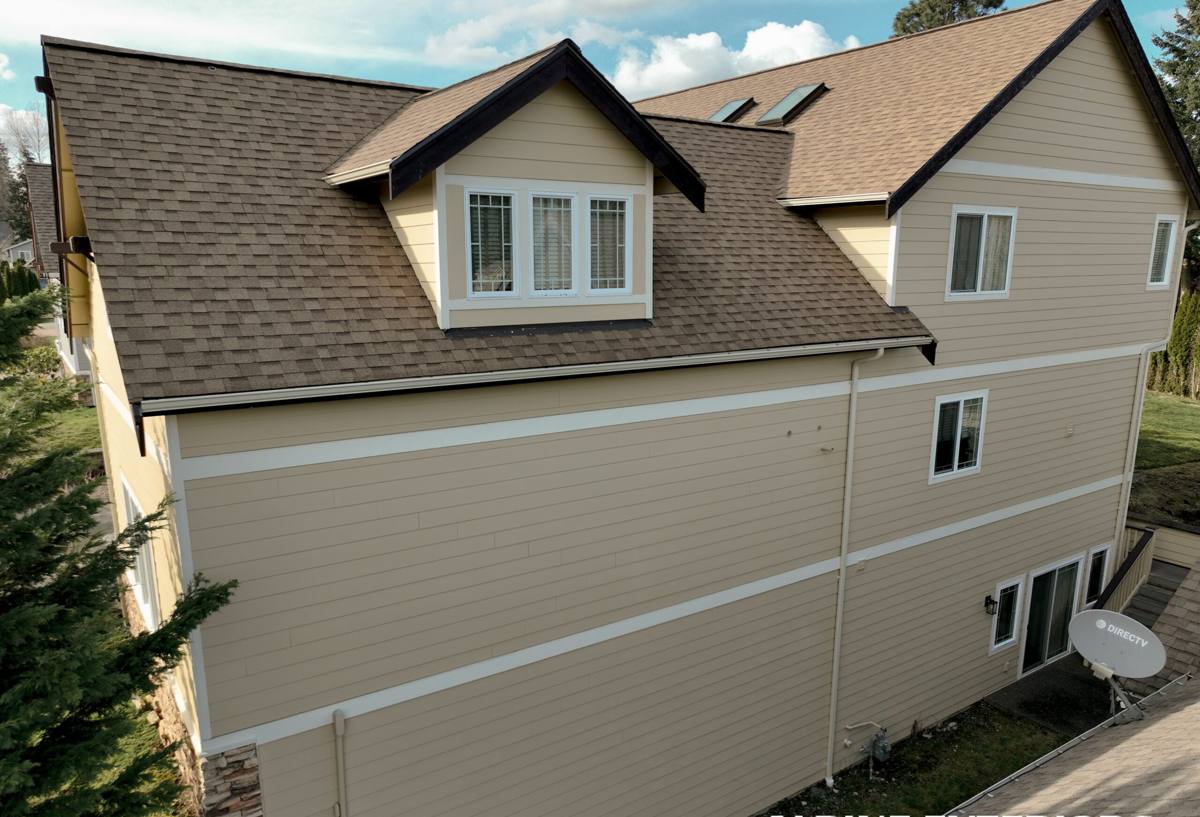
What Sunnyland's Microclimate Actually Does to a Window
Salt Air and Metal Fatigue
Salt in the air accelerates corrosion on unprotected fasteners, hardware, and some aluminum components. It doesn't destroy a window overnight, but over ten or fifteen years it will find every weak point — a screw that wasn't stainless, a cladding seam that wasn't sealed, a hinge that wasn't rated for coastal exposure. We spec hardware and fasteners with that exposure in mind rather than treating every install the same regardless of location.
Driving Rain, Not Just Rain
Wind-driven rain doesn't fall straight down — it gets pushed sideways and up under trim, sills, and flashing laps. A window that's watertight in a calm rain can still leak in a storm if the flashing sequence at the head, jambs, and sill isn't layered correctly (each piece overlapping the one below it, shingle-style, so water always drains outward). This is the single most common cause of hidden water damage we find behind older windows in this area, and it's a workmanship issue, not a product issue.
Moss, Shade, and Slow-Drying Wood Trim
Lots with heavy tree cover — common around Sudden Valley and the surrounding Whatcom County hillsides — stay damp longer after every rain. Moss and algae growth on sills and trim isn't just cosmetic; it holds moisture against the surface and, on wood trim, accelerates rot if the wood isn't properly primed and back-primed before install. We factor sun exposure and drainage into the trim material and detailing choices for each opening, not just the window unit itself.
Signs Your Current Windows Are Losing the Fight
- Soft or discolored wood trim around the frame, especially at the bottom corners
- Persistent fogging or a visible haze between panes (failed seal on double- or triple-glazed units)
- Drafts you can feel with a hand near the sash even when the window is latched
- Paint or caulk that's cracking and separating from the frame within a couple of years of being redone
- Moss or black staining that keeps coming back on the sill no matter how often it's cleaned
- Visible daylight or gaps around the frame from outside
- Windows that are hard to open, close, or lock without extra force
Any one of these can be a minor fix. Several together usually means the window's seal or flashing has failed and it's time to look at replacement rather than another round of caulk.
What a Correct Custom Window Installation Involves
The window itself is maybe half the job. The other half is everything around it — and that's where most of the long-term performance actually gets decided.
- Remove and inspect. Old window and trim come out, and we check the sheathing, sill, and framing underneath for rot or prior water damage before anything new goes in. This is the step that gets skipped in a rushed job, and it's the step that matters most.
- Repair the opening. Any soft framing or damaged sheathing gets addressed before the new window goes in. Installing a good window into a compromised opening just hides the problem, it doesn't fix it.
- Flash the opening correctly. Sill pan flashing first, then jamb flashing, then head flashing — each lapped over the one below so water always sheds outward and down, never into the wall.
- Set and shim the window plumb, level, and square. An out-of-square window stresses the frame, binds the sash, and creates gaps that no amount of caulk fixes permanently.
- Seal and insulate the perimeter with the right materials for the gap size — not just spray foam everywhere, which can bow thin frames if overused.
- Trim, prime, and finish with materials and detailing suited to sun and moisture exposure at that specific opening.
Window Types and Frame Materials — Honest Trade-Offs
There's no single "best" window for this climate — the right choice depends on the wall, the exposure, and what you're trying to solve. Here's how the common options actually compare for a Whatcom County coastal microclimate.
| Frame Material | Moisture Behavior Here | Maintenance | Best Fit |
|---|---|---|---|
| Vinyl | Won't rot or corrode; performs consistently in salt air and rain | Low — occasional cleaning | Most budget-conscious full replacements |
| Fiberglass | Excellent — very stable, resists moisture and temperature swings well | Low | Larger openings or areas with more direct weather exposure |
| Wood (clad exterior) | Good if cladding and flashing are done right; interior wood stays protected | Moderate — exterior largely maintenance-free, interior finish occasionally refreshed | Homes wanting a wood interior look without full wood-exterior upkeep |
| Solid wood | Requires diligent upkeep in driving rain and salt air; failure-prone if neglected | High — regular repainting/sealing | Historic or character homes where owners commit to the upkeep |
| Aluminum (uncoated) | Prone to corrosion and condensation in this exposure unless thermally broken and properly coated | Moderate to high | Rarely our first recommendation for direct coastal exposure |
We'll walk through which option fits your specific openings and budget rather than pushing one material for every house — a shaded north wall and an exposed lakeside wall on the same home can reasonably call for different answers.
Glass, Gas Fill, and Condensation
Double-pane windows with a low-E coating and argon gas fill are the practical baseline for this climate — they cut heat loss and reduce interior condensation on cold, damp mornings, which is common here given how much humidity sits in the air for much of the year. Triple-pane adds another layer of performance and is worth discussing for north-facing rooms or homes closer to the water where wind exposure is higher, but it comes at a real cost premium that doesn't always pay back on every wall of a house.
If you're seeing condensation between the panes (not on the inside surface, which is a humidity issue, but actually inside the glass unit), that's a sealed-unit failure — the argon has escaped and the insulating gap is compromised. That's a glass problem, not something that responds to caulking or weatherstripping.
A Quick Cost-Factor Checklist
- Opening size and whether framing repair is needed — the biggest swing factor in labor cost
- Frame material chosen (vinyl generally lowest, fiberglass and clad wood higher)
- Number of operable panels vs. fixed glass
- Custom shapes or non-standard sizes vs. common rectangular openings
- Glass package — standard double-pane low-E vs. triple-pane or specialty coatings
- Trim and exterior finish work required to match the rest of the house
Our Process, Start to Finish
We measure every opening on-site rather than working off assumptions — no two houses in Sunnyland or the wider Sudden Valley area sit at the same exposure, and the right detailing for a shaded, tree-covered wall is genuinely different from a wall that takes wind and rain straight off the lake. From there:
- We inspect existing framing and flashing before quoting, so the estimate reflects what your house actually needs, not a generic number
- We give you a written scope covering materials, flashing method, and finish work — no surprises mid-job
- Install happens efficiently to limit how long the opening is exposed to weather
- We clean up and walk the finished openings with you before calling the job done
Why Local Experience on This Specific Terrain Matters
Anyone can install a window on a calm, dry day in a mild climate. What separates a durable install from one that leaks in three years is understanding how wind-driven rain actually behaves against a specific wall, how much shade a lot gets and for how long, and how salt exposure changes what hardware and fasteners hold up. A crew that works Sudden Valley and Sunnyland regularly has already seen how these homes age under this exact combination of moisture, wind, and tree cover — and builds the job around that instead of a one-size-fits-all approach.
If your windows are drafty, fogged, staining with moss, or just original to a house that's due for an upgrade, we'd rather look at the actual openings than guess over the phone. Reach out for a free, no-pressure estimate — use the form below and we'll set up a time to take a look.