 Sudden Valley Siding
 Windows Built for Happy Valley's Weather, Not Just the Showroom
Happy Valley sits close enough to Lake Whatcom and the surrounding tree cover that its homes deal with a specific mix of conditions: damp air that lingers for months, wind-driven rain that finds every gap in old flashing, and enough shade and moisture to keep moss and algae established on north-facing walls and trim most of the year. Windows in this pocket of Sudden Valley don't fail because homeowners bought a bad brand. They fail because the installation didn't account for how much water this area actually sees, or because the original units were never rated for the temperature swings and humidity load a Whatcom County home carries year-round.
An energy-efficient window replacement here has to do two jobs at once: cut heat loss through the glass and frame, and keep water from ever reaching the wall assembly behind it. Get the first part right and get the second part wrong, and you end up with a window that saves a little on the power bill while quietly rotting the framing around it. We treat both as equally important on every Happy Valley job.
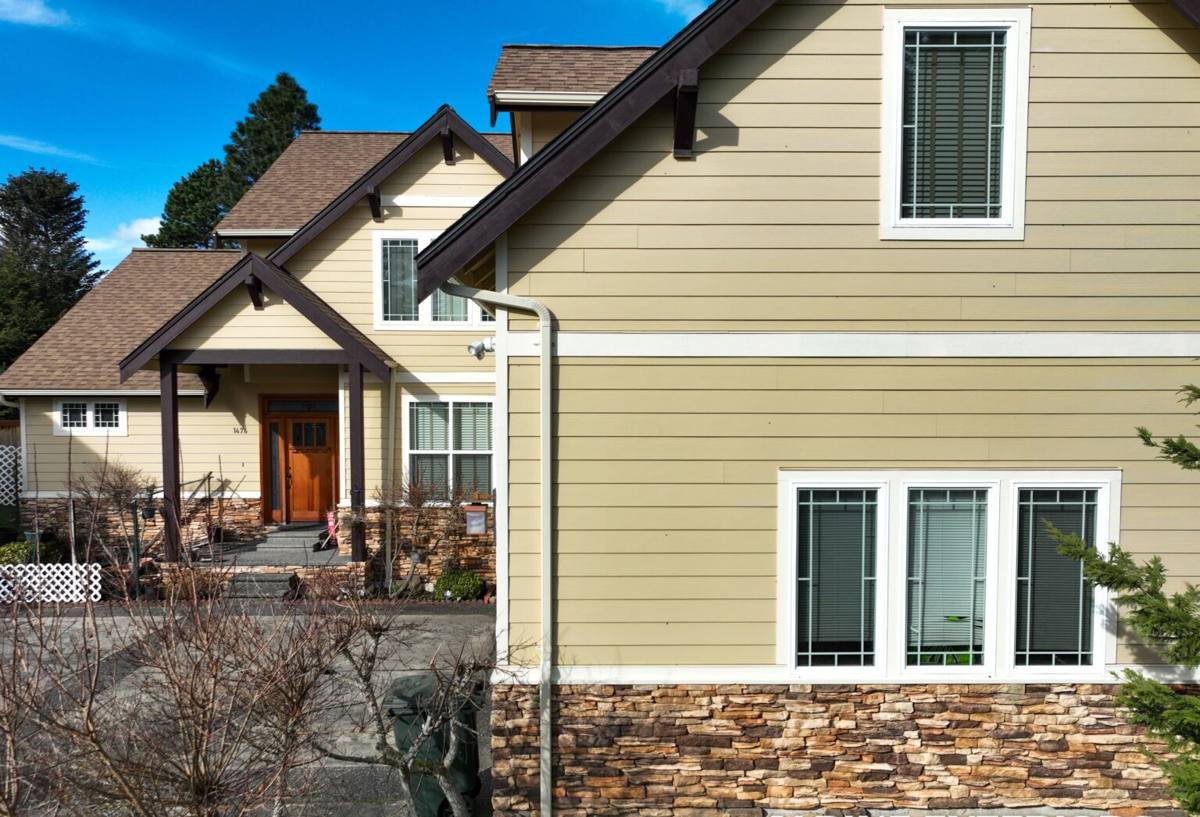
What "Energy-Efficient" Actually Means for This Climate
Marketing language around windows gets vague fast — "energy star," "low-e," "double pane" get tossed around without explaining what they actually change for a house in this specific climate. Here's what matters for Sudden Valley specifically:
U-Factor Over Everything Else
Western Washington isn't a brutal-winter climate, but it is a long, mild, wet one — which means windows spend more months of the year losing heat slowly than they spend blocking intense summer sun. U-factor (how much heat escapes through the window) matters more here than solar heat gain coefficient, which is the number Southwest and Southeast markets tend to chase. A window dialed in for Arizona sun control isn't the right spec for a Whatcom County living room.
Low-E Coatings That Handle Overcast Light
Low-emissivity coatings reduce heat transfer without darkening the glass — important here because Happy Valley doesn't get the harsh, constant direct sun that makes tinted glass worth the trade-off. You want the coating doing its job on cloudy, mild days, which is most of them.
Frame Material and Moisture Behavior
Frame choice affects more than insulation value — it affects how the window handles a decade of damp air and driving rain. Vinyl and fiberglass frames resist moisture intrusion and don't require repainting. Wood-clad frames look good but demand more upkeep in a climate this wet, and any lapse in that maintenance shows up as rot at the sill first. We'll walk through the honest trade-offs for your specific elevation and exposure rather than pushing one frame type across the board.
| Factor | Why It Matters in Happy Valley / Sudden Valley |
|---|---|
| U-Factor (0.30 or lower recommended) | Controls heat loss through long mild winters and cool damp shoulder seasons |
| Frame material | Vinyl/fiberglass resist moisture and salt-air corrosion better than bare wood or aluminum |
| Flashing and sill pan detail | Driving rain off the lake and prevailing winds force water where old installs never sealed |
| Weep hole and drainage design | Keeps trapped moisture from feeding moss and rot inside the frame cavity |
| Glass coating (low-E) | Reduces heat loss on overcast days, which make up most of the year here |
Salt Air, Driving Rain, and Moss: The Three Things That Wear Windows Out Here
Salt Air and Metal Hardware
Even inland from the immediate coast, moisture-laden air off the Sound and lake systems carries enough salt to accelerate corrosion on lower-grade window hardware — hinges, locks, and screws. Over years, corroded hardware is what makes a window hard to open, hard to lock, or lets it sag in the frame. We spec corrosion-resistant hardware as standard, not an upgrade.
Driving Rain and Wind-Loaded Water
Rain in this area rarely falls straight down — wind pushes it sideways into window assemblies, which is exactly the condition that exposes a weak flashing detail. A window can have a great energy rating and still leak if the sill pan, head flashing, and water-resistive barrier tie-in weren't done correctly. This is almost always where older, poorly-installed windows fail — not the glass, the install.
Moss and Sustained Shade Moisture
The tree cover and lake-adjacent humidity that make Happy Valley a pleasant place to live also mean moss and algae get a long runway on shaded siding, trim, and window sills. Left alone, moss holds moisture directly against wood trim and vinyl frames, which shortens their life and stains the exterior. Part of a correct window job includes making sure trim and sill details shed water fast enough that moss doesn't get an easy foothold right at the window.
What a Correct Installation Actually Involves
The window unit itself is maybe half the job. The other half is everything around it — and in a climate like this, that other half determines whether the installation lasts.
- Remove old unit and inspect the rough opening for hidden water damage or rot before anything new goes in
- Repair or replace any compromised framing, sheathing, or water-resistive barrier found during removal
- Install a sloped sill pan so any water that gets past the window drains outward, not into the wall
- Flash the head, jambs, and sill in the correct shingle-lap order so water is directed down and out at every layer
- Set the new window plumb, level, and square, with proper shim spacing for the frame material
- Seal and insulate the gap between frame and rough opening — not overfilled with foam, which can bow vinyl frames
- Finish exterior trim and caulking to shed water and resist moss growth at the sill and casing
- Test operation, locks, and weep holes before calling the job done
Skipping any of these steps is how a homeowner ends up with a window that looks fine for two or three years and then starts showing soft trim or interior staining. In a climate that stays damp as long as this one does, shortcuts show up fast.
Our Process for a Happy Valley Window Replacement
1. On-Site Assessment
We look at each window's exposure — which walls take the most wind-driven rain, which sit in constant shade, which show early signs of moss or trim wear — and use that to prioritize the job and flag any framing concerns before we quote.
2. Straightforward Estimate
You get a clear breakdown of unit cost, installation, and any framing repair work found during assessment — no vague allowances that turn into surprise change orders once the old windows come out.
3. Careful Removal and Opening Inspection
This is the step that matters most in a wet climate. We don't install a new window over a rotten sill or damaged sheathing — we address it first, every time.
4. Correct Flashing and Installation
Sill pan, flashing sequence, shimming, and sealing done to manufacturer spec and matched to what this climate demands, not a generic checklist.
5. Final Walkthrough
We check operation, weather sealing, and trim finish with you before we consider the job complete.
Why a Crew That Already Works Sudden Valley Matters
Window installation looks similar on paper everywhere in the country. What's different is the judgment calls — how much flashing overlap is enough for this specific wind and rain pattern, which frame materials actually hold up under a Whatcom County damp season, where moss is likely to become a problem again in three years if trim details aren't done right. A crew that works Sudden Valley regularly has already seen how these specific conditions age a window installation, good and bad, on other homes in the area. That's not something you can fully substitute with a generic install checklist, no matter how experienced the installer is elsewhere.
We're not asking you to take shortcuts on trust — we're happy to explain the reasoning behind every material and flashing decision on your specific home, and to point out where a previous installation on your house may already be showing early signs of the moisture issues common in this area.
Signs Your Current Windows Are Already Losing the Fight
- Visible condensation between panes (failed seal, lost insulating gas)
- Soft or discolored trim and sill wood, especially on shaded or north-facing walls
- Persistent moss or algae growth right at the window sill or casing
- Drafts you can feel near the frame on windy, rainy days
- Windows that stick, won't latch fully, or have visibly corroded hardware
- Noticeably higher heating costs compared to similar-sized homes nearby
Any one of these on its own isn't necessarily urgent. Several together, especially moss plus soft trim, usually means water has already been getting behind the window for a while.
Get a Straight Answer for Your Home
Every home in Happy Valley sits a little differently — some get more direct wind off the lake, some sit deep in tree shade, some have already had one round of window work that may or may not have been done right. If you'd like an honest look at what your windows need and what a correct fix would actually involve, request a free, no-pressure estimate using the form below.