 Sudden Valley Siding
 Storm Damage Roof Repair Built for Lake Whatcom
Homes around Lake Whatcom take a different kind of beating than homes out on the flats. The tree canopy that makes Sudden Valley feel private and quiet also drops limbs on roofs during windstorms, holds shade and moisture on north-facing slopes, and feeds a moss problem that never really goes away. Add in the driving rain that rolls through Whatcom County most of the year and the occasional gust off the water, and you've got a roof that's working harder than most people realize until something fails.
This page is about one job: repairing storm-damaged roofs on Lake Whatcom and Sudden Valley homes correctly, not just patching them so they stop leaking for a season. There's a real difference between the two, and it usually shows up again at the worst possible time — during the next storm.
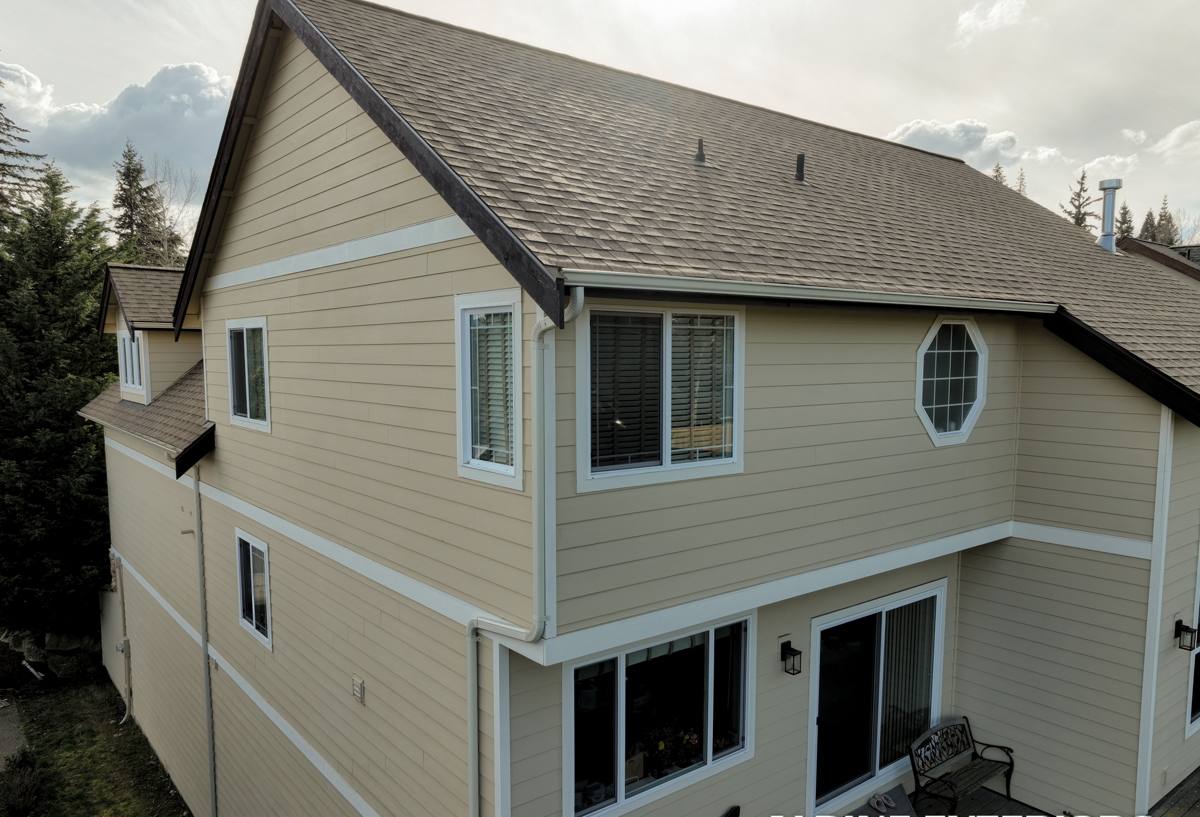
Why This Climate Is Hard on Roofs
Whatcom County doesn't get the dramatic hail or tornado damage some parts of the country deal with. What it gets instead is persistent, grinding wear: long stretches of rain, wind that funnels across the lake and through the trees, and damp, marine-influenced air that drifts in off the Salish Sea and settles into low-lying, tree-shaded properties. None of that sounds as dramatic as a hailstorm, but over a few seasons it does just as much damage.
Moss Is a Symptom, Not Just a Cosmetic Problem
A lot of homeowners think of moss as an appearance issue. On a Sudden Valley roof shaded by fir and cedar most of the day, moss holds moisture against the shingle surface, lifts tab edges, and works its way under flashing over time. By the time it's visibly thick, it's often already compromised the layer underneath. Storm damage repair on a mossy roof isn't complete if the moss itself isn't addressed — otherwise the same failure point just reopens.
Wind and Falling Limbs
The bigger acute risk here is wind combined with tree cover. A windstorm doesn't have to be severe to knock a limb loose from a tall fir that's been stressed by a wet winter, and a limb doesn't have to be huge to punch through shingles, crack decking, or tear flashing loose at a valley or chimney. This is the single most common storm-damage call we get in this area, more so than wind-lift alone.
Driving Rain and Wind-Driven Intrusion
When wind pushes rain sideways instead of straight down, water finds its way under shingle edges, around vent boots, and through any flashing that's even slightly compromised. A roof that would shed a calm rain without issue can leak during a wind-driven storm from the exact same point of damage. That's why storm repair inspections after a wind event need to check more than just the obvious impact spot.
What a Correct Storm Damage Repair Actually Involves
A rushed repair covers the hole. A correct one addresses everything the storm affected, including damage that isn't visible from the ground or even from a quick look on the roof.
Full Assessment Before Any Repair Starts
We look at the impact area, but also the decking underneath it, the surrounding shingles for wind stress or lifted tabs, the flashing at any nearby valley, chimney, or vent, and the attic side for water staining that shows a leak has already been active longer than the storm itself. Storm damage often extends past the spot that's obviously broken.
Matching Materials, Not Just Covering Gaps
Repairs should use shingles or roofing material that match the existing roof in type, weight, and as close to color as the current product line allows. A patch that doesn't match structurally can create a new weak point even if it looks fine at first glance.
Flashing and Underlayment Get Checked, Not Assumed
Most leaks that reappear after a "repair" come from flashing or underlayment that wasn't actually replaced — just re-covered. Valleys, chimney step flashing, and vent boots are common failure points after wind or impact damage, and they need to be inspected and redone properly, not just resealed with caulk.
Structural Decking Repair When Needed
If a limb strike or long-term moisture has compromised the plywood or board decking underneath, that has to be replaced before new roofing goes back down. Shingles installed over soft or rotted decking will fail again, often faster than the original damage took to develop.
Signs Your Roof May Have Storm Damage
Storm damage isn't always obvious. Some of it shows up inside the house weeks after the weather event that actually caused it.
- Granules collecting in gutters or at downspout outlets after a windstorm
- Shingles that look lifted, curled, or creased, especially on the side of the roof facing prevailing wind
- A new or growing water stain on a ceiling or in the attic after a storm
- Visible dents, cracks, or missing sections after a limb fall or wind event
- Flashing that looks bent, separated, or pulled away at a valley, chimney, or vent
- Moss or dark streaking that's thickened noticeably after a wet stretch, especially on shaded slopes
- Daylight visible through the roof deck from inside the attic
If you notice any of these after a storm, it's worth getting a roof looked at before the next round of rain, not after a leak has already made its way inside.
Common Storm Damage Types Around Lake Whatcom
| Damage Type | Typical Local Cause | What Repair Involves | Urgency |
|---|---|---|---|
| Limb strike / impact | Wind-stressed trees near tree-lined lots | Decking inspection, shingle replacement, flashing check | High — often needs a temporary cover same-day |
| Wind-lifted or missing shingles | Gusts funneling through the valley and off the water | Re-securing or replacing affected shingles and adjacent tabs | High if underlayment is exposed |
| Wind-driven rain intrusion | Sideways rain during storm systems | Flashing, vent boot, and edge repair; interior moisture check | Moderate to high depending on interior damage |
| Moss-related deterioration | Heavy tree shade and prolonged dampness | Moss removal, damaged shingle replacement, zinc or copper strip installation | Lower urgency, but worsens if ignored |
| Flashing separation | Age combined with wind and thermal movement | Full flashing replacement at the affected joint | Moderate — common source of hidden leaks |
Our Process for Storm Damage Repair
1. Inspection and Honest Assessment
We start with a full look at the roof, not just the damaged section, and tell you plainly what we find — including if the damage is minor enough that a repair genuinely is the right call, not an upsell toward a full replacement.
2. Documentation
We photograph and note the damage clearly enough to support an insurance claim if you're filing one, including the condition of surrounding areas so the adjuster sees the full picture, not just the obvious hole.
3. Temporary Protection
If there's active exposure, we get a tarp or temporary cover in place quickly to stop further water intrusion while the repair plan and any insurance steps are worked out. This matters most in tree-covered, low-traffic areas where a small leak can go unnoticed and get worse fast.
4. The Repair Itself
Matching materials, correct flashing work, decking replacement where needed, and moss treatment if that's contributing to the failure. We don't consider a storm repair finished until the underlying cause is addressed, not just the visible symptom.
5. Follow-Up
We check our own work after the next significant rain where practical, especially on repairs done during an active storm season, to confirm the fix is holding under real conditions rather than just a dry-day inspection.
Repair vs. Replacement: How We Help You Decide
| Factor | Repair Usually Makes Sense | Replacement Is Worth Discussing |
|---|---|---|
| Age of roof | Roof is well within its expected service life | Roof is already near the end of its expected life |
| Extent of damage | Damage is localized to one area | Damage is spread across multiple slopes or sections |
| Underlying decking | Decking is sound outside the repair zone | Widespread rot or soft decking found during inspection |
| Moss and moisture history | First significant moisture issue on an otherwise healthy roof | Long-term moss and moisture damage found under multiple sections |
| Material availability | Matching shingles are still available for a clean patch | Original product is discontinued and won't match acceptably |
We'll always give you our honest read on which side of that table your roof falls on. A repair that's done right can add years of service to a roof that doesn't need full replacement, and we'd rather tell you that than sell you more work than you need.
Why It Matters to Hire a Crew That Already Works This Area
A lot of Sudden Valley properties sit inside the community's gated boundaries, which means access and any exterior work often involves coordinating with the community association rather than just showing up. A crew that already works here knows how that process typically goes and isn't figuring it out for the first time while your roof is exposed to weather.
There's also the physical layout to consider. Steep, wooded, and sometimes narrow driveways are common around the lake, and setting up safely for a roof repair on a tree-covered, sloped lot takes different planning than a flat suburban roof. Knowing which slopes hold moss the longest, which orientations take the worst wind, and how tree cover on a specific street tends to behave in a windstorm comes from doing this work here repeatedly, not from a general roofing background alone.
Finally, response time matters more in a community with a mix of full-time residents and part-time or seasonal homes. A leak in a home that isn't checked daily can sit unnoticed and do real damage before anyone catches it. A local crew that's easy to reach and familiar with the area can usually get eyes on a problem faster than one coming from farther away.
Insurance and Storm Claims: What Homeowners Should Know
Most homeowner policies cover sudden storm damage — a limb strike, wind-lifted shingles, wind-driven rain intrusion — but coverage details, deductibles, and what counts as "sudden" versus gradual wear vary by policy and insurer. We're not your insurance company, but we can document damage clearly, describe what caused it as best we can determine, and give you a written scope of repair that an adjuster can review. Long-term issues like moss deterioration built up over several seasons are less likely to be treated as a storm claim than acute wind or impact damage, which is one more reason not to let moss and minor moisture problems sit unaddressed.
If you've got storm damage on a Lake Whatcom or Sudden Valley roof, or you just want an honest look after a windy stretch, we're glad to come take a look. The estimate is free, there's no pressure attached to it, and you'll get a straight answer about what's actually going on up there — just fill out the form below to get started.