 Sudden Valley Siding
 Storm Damage Roof Repair Built for South Hill Conditions
South Hill sits close enough to Lake Whatcom and the surrounding tree cover that homes here take a different kind of beating than roofs out on open ground. Wind funnels through the tree line and drops branches without warning, driving rain off the water finds every weak seam, and the long gray stretch from October through April keeps roofs wet far longer than most manufacturers ever tested their products for. When a storm does damage here, it rarely looks catastrophic from the driveway. That's the problem. A lifted shingle tab, a cracked pipe boot, or a dented ridge cap doesn't announce itself, but it gives water a path in, and by the time a stain shows up on a ceiling the damage has usually been building for weeks.
We work on roofs in and around South Hill regularly, which means we're not guessing at what Whatcom County weather does to a roof over time. We know which exposures take the worst wind-driven rain, which roof pitches hold onto moss the longest, and which repair shortcuts fail first once winter sets back in. This page covers what a proper storm damage roof repair actually involves in this specific area, so you know what to expect whether you're dealing with damage from last week's windstorm or a slow leak that's been developing since last season.
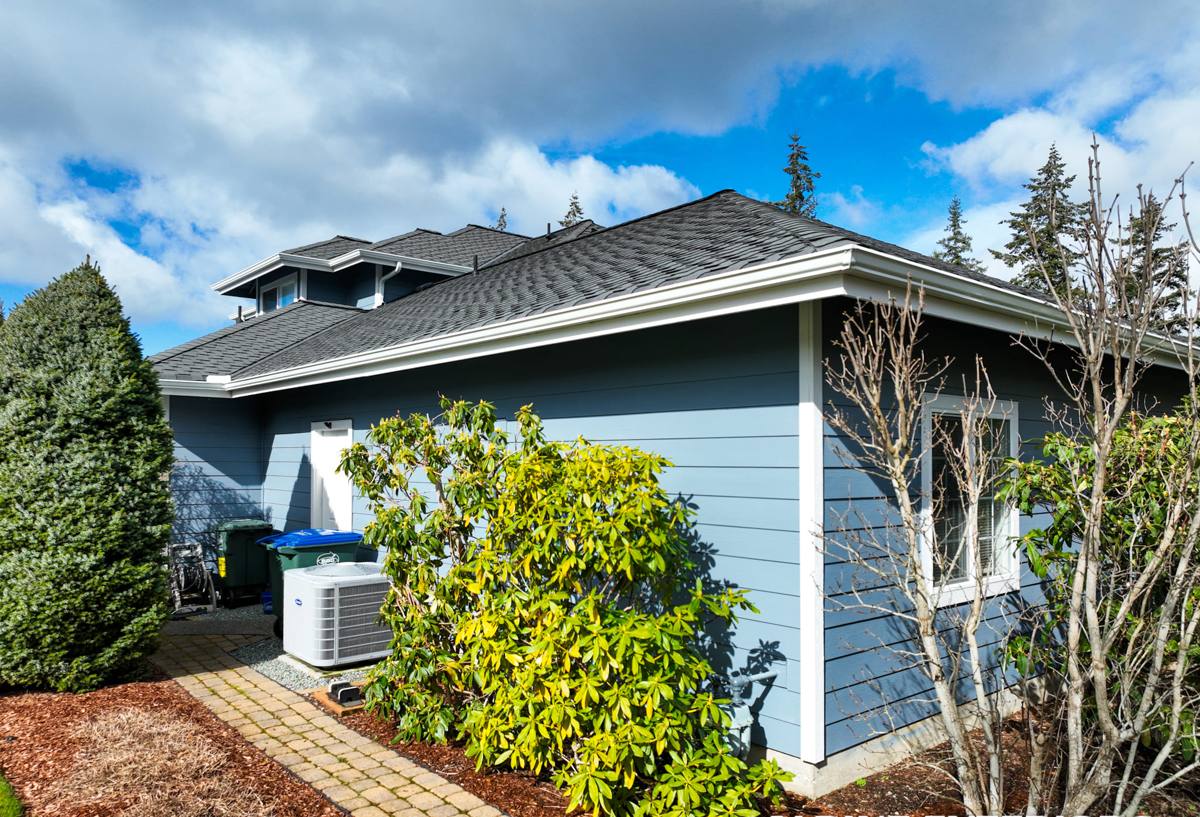
Why South Hill Roofs Take Storm Damage Differently
Wind Exposure Off the Lake and Through the Trees
South Hill's mix of open lake-facing exposure and dense tree cover creates two different wind problems. On the lake side, gusts hit roofs directly and can lift shingle edges or peel back ridge and hip caps, especially on older roofs where the sealant strips have already weakened from age and UV exposure. On the tree-covered side, the risk is impact damage — falling limbs, wind-thrown debris, and the occasional whole tree during a bad blow. Both types of damage need a different repair approach, and both are common enough here that we check for them as a matter of routine, not just after a named storm event.
Moss, Shade, and a Long Wet Season
Whatcom County's damp climate and South Hill's tree canopy combine to give moss an unusually long growing season on north-facing and shaded roof planes. Moss itself isn't just cosmetic — it holds moisture directly against the shingle surface, works its way under tabs as it grows, and physically lifts material over time. A roof with active moss growth is more vulnerable to storm damage than a clean one, because the shingles underneath are already softened and less able to seal back down after a gust lifts them. Storm damage repair in this area almost always includes an honest look at moss and drainage, not just the obvious damaged spot.
Driving Rain and Flashing Failure
Salt-influenced air off the lake and the region's characteristic sideways rain put extra stress on flashing — the metal and sealant details around chimneys, skylights, roof-to-wall transitions, and vent penetrations. Flashing doesn't fail in a dramatic way. It corrodes, the sealant dries and cracks, and driving rain starts finding its way behind it during storms with strong horizontal wind. A lot of what looks like "storm damage" after a bad weather event is really flashing that was already marginal and finally got tested hard enough to leak.
What a Correct Storm Damage Repair Actually Involves
A repair that only patches the visible spot is a repair that calls us back out in six months. Doing it right means understanding why that spot failed and whether the same conditions exist anywhere else on the roof.
- Full roof walk, not just a look at the reported problem area — storms rarely damage just one spot
- Check of all flashing points: chimney, skylights, wall transitions, and every roof penetration
- Inspection of ridge and hip caps for lifted or missing sections from wind uplift
- Moss and debris assessment on shaded and north-facing planes
- Underlayment and decking check wherever shingles have been displaced or torn
- Gutter and downspout check, since storm debris and moss runoff both clog drainage fast in this area
- Matching repair materials to the existing roof's age, style, and manufacturer where possible
Skipping any of these steps is how a homeowner ends up with a repaired shingle next to an unrepaired flashing detail that leaks in the next storm. We treat the inspection as part of the job, not an upsell.
Our Process for South Hill Storm Damage Calls
1. Assessment
We start with a full inspection, including areas away from the reported damage. In South Hill's tree-heavy lots, this usually means checking gutters and valleys for accumulated debris and moss buildup that wouldn't be obvious from the ground.
2. Honest Explanation
We walk you through what we found in plain terms — what's storm damage, what's pre-existing wear that the storm exposed, and what's simply cosmetic and doesn't need repair. If a section of roof is sound, we say so.
3. Repair Plan and Materials
For most storm damage, we repair rather than replace — matching shingle type, color, and installation pattern as closely as the existing roofing allows. If damage is widespread or the roof is near the end of its service life, we'll tell you that too, rather than layering repairs onto a roof that needs a bigger conversation.
4. The Work Itself
Repairs are done with attention to the details that matter in this climate: proper shingle sealing so tabs don't lift again in the next windstorm, correct flashing reinstallation with fresh sealant, and cleanup of moss or debris that contributed to the original failure.
5. Follow-Up
We check our own work holds up, especially through the first heavy rain after the repair. A repair that doesn't survive driving rain wasn't done right the first time.
Repair vs. Replacement: How to Tell the Difference
Not every storm-damaged roof needs full replacement, but not every roof should be repaired indefinitely either. Here's how we think through that decision with homeowners.
| Factor | Points Toward Repair | Points Toward Replacement |
|---|---|---|
| Roof age | Under 15 years, in otherwise good condition | Near or past the manufacturer's expected service life |
| Damage extent | Localized to one section or a few isolated spots | Widespread across multiple roof planes |
| Moss and moisture history | Minor, addressed with cleaning and maintenance | Long-term moss growth has degraded shingle integrity broadly |
| Underlayment and decking | Dry and intact where inspected | Soft spots, rot, or repeated water intrusion found during inspection |
| Repair history | First or second repair on this roof | Roof has needed repeated storm repairs in recent years |
This is a general guide, not a diagnosis — the only way to know for sure is a hands-on inspection of your specific roof.
Insurance and Storm Damage Claims
If a storm has caused damage significant enough to consider a homeowner's insurance claim, documentation matters. We provide clear, dated photos and a written description of the damage we find, which your insurance adjuster can use alongside their own inspection. We're not a public adjuster and don't handle the claim itself, but we can speak to what we observed on the roof in terms an adjuster or insurance company will recognize. Getting an inspection soon after a storm — before rain has a chance to worsen the damage — generally makes for a cleaner claims process.
Why Local Experience in South Hill Matters
A roofing crew that mostly works elsewhere in Whatcom County or beyond doesn't necessarily know that a particular South Hill street sits in a wind corridor off the lake, or that certain lots hold shade — and moss — nearly year-round because of mature tree cover. That knowledge changes how we inspect a roof and what we look for beyond the obvious damage. We've seen how storm patterns in this specific area tend to hit roofs, and we bring that pattern recognition to every inspection, not just a generic checklist.
Working locally also means we're not driving in from out of the area for a follow-up if something needs a second look after the next storm rolls through. That matters in a climate where the weather doesn't give a roof much of a break between one storm and the next.
Maintenance That Reduces Future Storm Damage
Storm damage repair is reactive by nature, but a few habits reduce how often you need it:
- Have moss removed and treated before it spreads across shaded roof planes
- Keep gutters and downspouts clear, especially after fall leaf drop and windstorms
- Trim back tree limbs that overhang the roofline where safely possible
- Get an inspection after any significant windstorm, even if no leak is visible yet
- Address minor flashing wear before it becomes an active leak point
None of this eliminates storm risk in a climate like ours, but it narrows the gap between what a storm can do and what your roof can absorb without damage.
Get an Honest Look at Your Roof
If a recent storm has you wondering about your roof, or you've noticed a stain, a lifted shingle, or debris that's been sitting up there longer than it should, it's worth having it looked at before the next wet spell rolls in off the lake. We offer free, no-pressure estimates for South Hill homeowners — we'll tell you plainly what we find, what needs attention now, and what can wait. Use the form below to get started.