 Sudden Valley Siding
 Siding in South Hill Has to Answer to the Weather, Not Just Look Good
Homes in the South Hill area near Sudden Valley sit inside one of the wetter, greener corners of Whatcom County. That's part of what makes the area desirable — mature trees, filtered light, a slower pace than the coast. It's also exactly the environment that punishes the wrong siding choice. Salt-tinged marine air moves through this part of Washington for much of the year, driving rain comes sideways more often than most homeowners expect, and shade plus moisture add up to a moss season that can run eight or nine months. Siding here isn't just a weather barrier; it's a material that has to shed constant moisture, resist mildew and moss colonization, and hold its finish through repeated freeze-thaw swings without cracking, delaminating, or feeding rot into the wall behind it.
This page is specifically about James Hardie fiber cement siding installed on South Hill homes — not a general siding overview. If you're comparing options or getting quotes for a South Hill property, this is what a correctly done Hardie job looks like here, and why it holds up better than the alternatives we get asked about most.
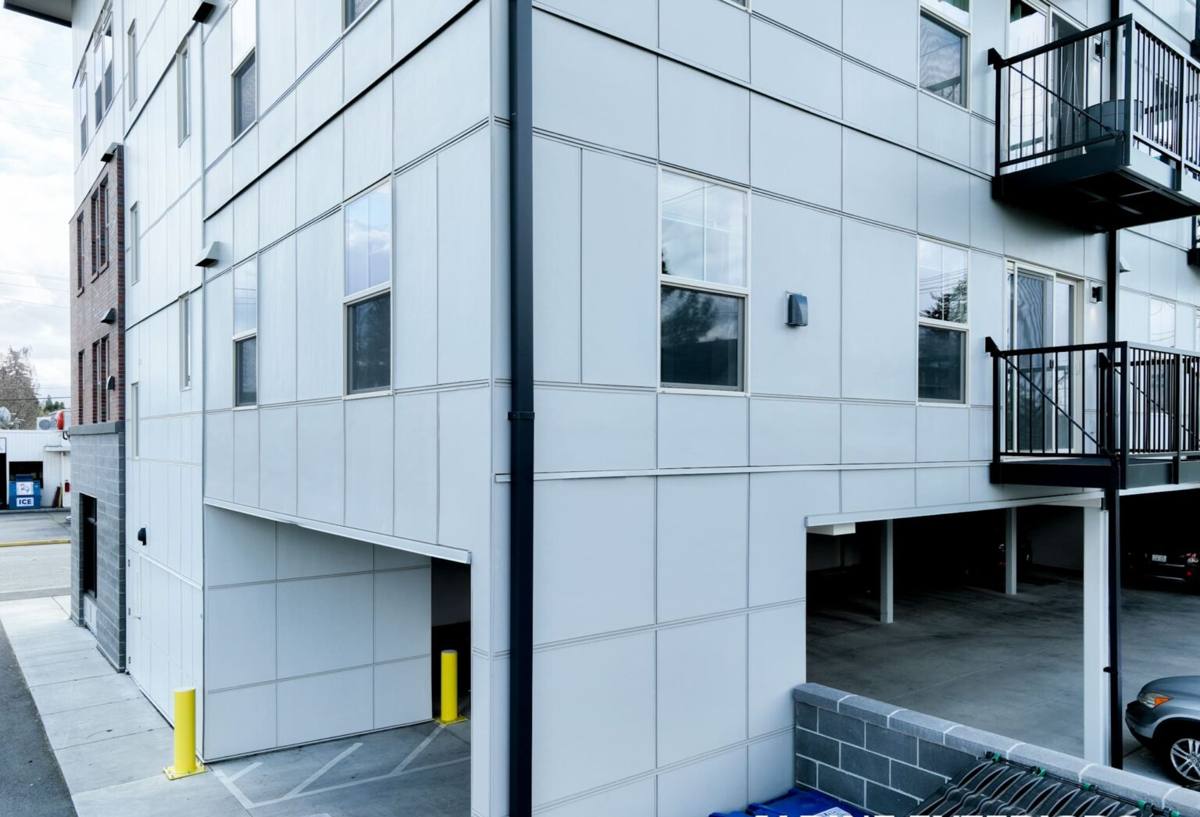
What This Climate Actually Does to Siding Over Time
Before talking about the product, it's worth being specific about the failure modes we see repeatedly on homes in this area, because they explain every decision in a correct installation:
- Moss and algae staining on north- and shade-facing walls, especially under tree canopy or roof overhangs that block sun and airflow
- Trapped moisture behind siding where house wrap, flashing, or fastening was done wrong — this is the single biggest cause of rot, and it's an installation failure, not a product failure
- Paint and coating breakdown from repeated wet-dry and freeze-thaw cycling, which is worse on field-painted wood and lower-grade composite products than on factory-cured finishes
- Caulk and joint failure where wood-based or vinyl products expand and contract with moisture and temperature, opening gaps that let water in
- Edge and bottom-course deterioration near grade, gutters, and downspouts, where splash-back keeps siding wet longer than the rest of the wall
None of these are exotic problems. They're the normal, predictable result of putting the wrong material — or the right material installed carelessly — on a home that sits in a wet, shaded, marine-influenced microclimate for decades.
Why We Install James Hardie and Nothing Else Here
We standardized on James Hardie fiber cement siding for every home we work on, including South Hill, and we don't install vinyl, LP SmartSide, or untreated wood siding. That's not a marketing position — it's a maintenance-and-longevity call based on what actually survives this climate without babying:
| Material | How it handles this climate | Long-term maintenance burden |
|---|---|---|
| James Hardie fiber cement | Non-combustible, engineered moisture resistance, factory-cured ColorPlus finish resists fading and doesn't rely on field paint | Low — periodic wash for moss/algae, no repainting cycle on ColorPlus products |
| Vinyl siding | Doesn't rot, but expands/contracts with temperature swings, can warp, and seams open over time letting moisture behind it | Low upfront, but replacement (not repair) is often the only fix once it fails |
| LP SmartSide / engineered wood | Wood-based core is more moisture-sensitive than fiber cement; edges and cut ends need diligent sealing to avoid swelling | Moderate — depends heavily on installer's attention to sealing and flashing detail |
| Cedar / primed spruce | Attractive but needs a maintained paint or stain film to stay water-resistant; moss and mildew take hold quickly in shade | High — repainting or restaining on a recurring cycle, plus rot risk if maintenance lapses |
This isn't a claim that other products can't be installed correctly or that they fail on every home. It's why, given the specific combination of moisture, shade, and salt air common in this area, we've chosen to put our name behind one system we can install to a consistent standard and warranty every time.
The James Hardie System We Use on South Hill Homes
James Hardie engineers its fiber cement formulations by climate zone. Homes in this part of Washington fall into what Hardie designates the HZ5 zone — product formulated for damp, moderate climates with real freeze-thaw cycling, as opposed to the hot-humid formulation used in the deep South. That distinction matters: it's the difference between a product tuned for this region's actual weather and one that just happens to be sold nationally.
What's typically specified
- HardiePlank lap siding in a smooth or cedarmill texture — the most common choice for South Hill homes, giving a traditional lap look without a wood maintenance cycle
- ColorPlus factory finish — baked-on color with a stronger bond than field-applied paint, plus a paint warranty backed by the finish process itself
- HardieTrim for corners, fascia, and window/door surrounds so the whole envelope — not just the field siding — is fiber cement
- HardiePanel or HardieShingle as accent material where a home's design calls for a texture change, common on gables or entry features
Color and texture choices are practical decisions here as much as aesthetic ones — darker, matte finishes tend to show less moss-shadowing on shaded elevations, while lighter colors show algae streaking sooner and need washing more often to stay looking clean.
What a Correct Installation Actually Involves
The siding material is only half the equation. Most of the failures we get called to diagnose on other contractors' work trace back to installation shortcuts, not the product itself. A correct James Hardie job on a South Hill home includes:
- A weather-resistive barrier installed and lapped correctly behind the siding, with all penetrations properly flashed
- Proper clearance between the bottom edge of siding and grade, decking, and roof lines — this single detail prevents most wicking-related rot
- Correct fastener type, spacing, and depth per Hardie's published installation specs, not "close enough" nailing
- Butt joints and trim seams caulked and treated per manufacturer spec, not left to rely on the caulk alone
- Kick-out flashing at every roof-to-wall intersection so runoff is directed away from the siding field, not down behind it
- A rainscreen gap where conditions call for it, giving any incidental moisture a way to drain and dry instead of sitting against the wall
James Hardie's product warranty assumes installation to their written specifications. Skip these details and you can void the very warranty that's part of why you chose the product — which is why installer discipline matters as much as the brand name on the box.
How Our Process Works
1. On-site assessment
We walk the home, check current siding and sheathing condition, look for existing moisture damage (especially at grade lines, deck ledgers, and roof intersections), and note shade patterns that drive moss growth on specific elevations.
2. Scope and product plan
We spec the HardiePlank profile, texture, and ColorPlus color, plus matching trim, and identify any sheathing or framing repair needed before new siding goes on — this gets flagged and priced up front, not discovered mid-job as a surprise change order.
3. Tear-off and prep
Old siding comes off, sheathing is inspected and repaired as needed, and a new weather-resistive barrier goes on correctly lapped, with flashing detailed at every window, door, and roofline before the first course of Hardie goes up.
4. Installation to spec
Siding, trim, and accents go on following Hardie's fastening and clearance requirements, with joints and penetrations sealed per manufacturer detail — not a generalized "siding install," but this specific system installed the way it's engineered to perform.
5. Final walkthrough
We review the finished job with the homeowner, confirm clearances and flashing details are visible and correct, and go over basic care — mainly periodic washing to keep moss and algae from taking hold in shaded areas.
Why a Crew That Already Works This Area Matters
Siding installation quality isn't uniform across contractors, and it isn't uniform across regions either. A crew that mostly works drier inland climates doesn't necessarily think about kick-out flashing, rainscreen detailing, or moss-prone shade patterns the same way a crew that works Whatcom County's damp, tree-covered lots does every week. Working repeatedly in and around Sudden Valley and South Hill means we're not guessing at how a given elevation will behave — we've seen how these lots drain, where moss tends to establish, and which details actually matter versus which are just extra steps for their own sake. That local pattern recognition is what keeps a siding job from becoming a maintenance problem five years in.
What Drives Cost on a South Hill Siding Job
| Cost factor | Why it matters |
|---|---|
| Home size and story count | More square footage and staging for two-story walls both add labor time |
| Tear-off and disposal | Removing existing siding (especially old wood or damaged material) adds labor and dump costs before install even starts |
| Sheathing or framing repair | Hidden moisture damage found during tear-off is priced separately since it can't be scoped until old siding is off |
| Trim and accent complexity | Homes with more corners, gables, and trim details take more precise cutting and fitting than a simple rectangular elevation |
| Product line and texture | HardiePlank, HardiePanel, and HardieShingle carry different material and labor costs depending on texture and coverage |
| Site access | Tree cover, slope, and tight lot lines common in this area can affect staging and material handling time |
We won't quote a broad number without seeing the home, but these are the real variables — not padding — that separate one South Hill quote from another.
A Homeowner's Checklist Before Signing a Siding Contract
- Ask specifically which fiber cement product line and ColorPlus color are being quoted, in writing
- Confirm who is responsible for flashing detail at rooflines, windows, and doors — this should never be left vague
- Ask how existing moisture or rot damage will be identified, priced, and communicated if found during tear-off
- Get the manufacturer warranty terms in writing, and ask whether the installer is a recognized Hardie installer
- Ask how many similar jobs the crew has completed in this specific area or climate, not just in general
- Clarify what maintenance (if any) is expected from you afterward, and get it in plain language
If you're weighing siding options for a South Hill home or just want a straight answer on what a correct James Hardie installation would involve and cost for your specific house, we're glad to take a look. The estimate is free, there's no pressure, and you'll get a clear answer either way — just fill out the form below.