 Sudden Valley Siding
 Why South Hill Windows Need to Work Harder Than the National Average
Window manufacturers write their energy ratings and installation instructions for a generic climate that doesn't really exist anywhere in the Pacific Northwest, and it certainly doesn't exist in South Hill. Homes here deal with salt-laden air moving off the water, driving rain that comes in sideways during winter storms, and a moss season that can stretch for the better part of the year on shaded lots. That combination is hard on windows in ways that dry, inland climates never test for.
Salt air accelerates corrosion on hardware, fasteners, and lower-grade metal components. Driving rain finds every gap in flashing and sealant that a calmer climate would never expose. And constant moisture around a home's exterior — the kind that feeds moss on a roof or siding — also keeps window sills, tracks, and frames damp longer than they should be. None of this means South Hill homes need exotic products. It means they need windows and installation details chosen and executed with this specific climate in mind, not swapped in from a spec sheet written for Arizona or Denver.
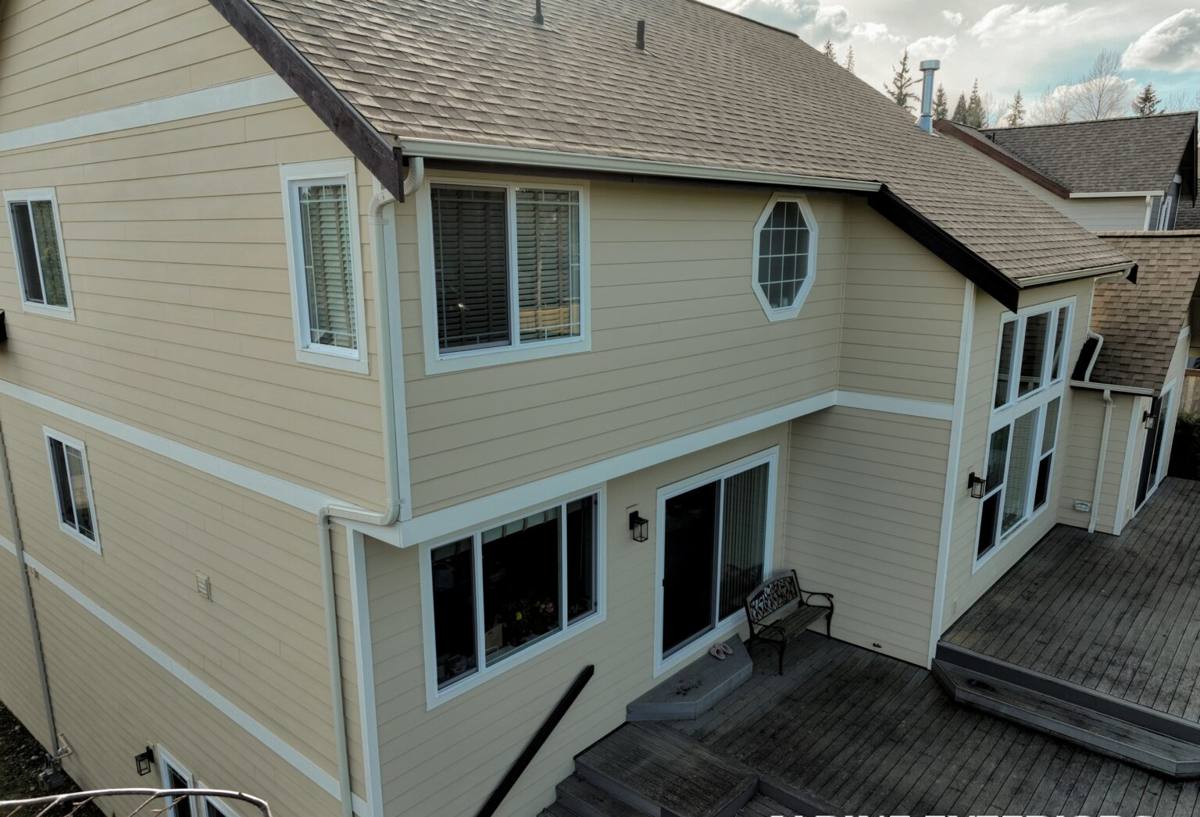
What "Energy-Efficient" Actually Means for a Home Here
Energy efficiency in a marine climate like Whatcom County isn't just about summer heat gain — it's mostly about keeping conditioned air in and cold, wet air out for the seven or eight months a year when heating is running. A few numbers matter more than others for our conditions:
- U-factor — how much heat escapes through the window. Lower is better, and it matters more here than solar heat gain since we don't get intense, prolonged summer sun.
- Air infiltration rating — how much air leaks around the sash and frame under wind pressure. This one is directly tied to driving-rain performance, since air leaks and water leaks usually share the same weak points.
- Condensation resistance — how well the frame and glass resist interior fogging and sill moisture during cold, damp stretches, which is a real comfort and mold-prevention issue in this climate.
Solar heat gain coefficient still matters, but it's a secondary consideration for most South Hill homes compared to homes in sunnier regions. A window package chosen around the right priorities will feel noticeably different in a January windstorm than one chosen off a generic "energy star" sticker alone.
Signs Your Current Windows Are Costing You More Than They Should
Most homeowners don't replace windows because of one dramatic failure — they replace them because a slow list of small problems finally adds up. Around South Hill, the pattern usually looks like this:
- Condensation forming between panes, which means the seal has failed and the insulating gas is gone.
- Sills that stay damp or show soft, discolored wood days after a storm has passed.
- Visible daylight or a draft you can feel with your hand along the frame edge.
- Hardware that's stiff, corroded, or won't latch tight anymore.
- A noticeable difference in room temperature near the window compared to the rest of the house.
- Moss or algae staining building up on the exterior sill or frame faster than on the rest of the house.
Any one of these can usually be explained away. Two or three together, especially on the side of the house that takes the worst weather, usually means the windows are past the point where caulk and weatherstripping fixes actually solve anything.
Why This Matters More on Certain Sides of a South Hill Home
Exposure direction changes everything. A window facing the prevailing weather takes far more direct rain and wind pressure than one that's sheltered by the house itself or by mature trees. We look at orientation before we ever talk product, because the same window model can perform very differently depending on which wall it's going into.
What a Correct Installation Actually Involves
The window unit itself is maybe half of what determines long-term performance. The other half is installation detail, and this is where corners get cut on rushed jobs. A correct install in this climate includes:
- Removing the old unit and fully inspecting the rough opening for hidden rot or moisture damage before anything new goes in.
- Repairing any damaged framing or sheathing found — not covering it up.
- Installing flashing that actually sheds water downward and outward, layered correctly with the house wrap or building paper, not just caulked over the top.
- Setting the window level, plumb, and square, then securing it per the manufacturer's actual fastening schedule.
- Insulating the gap between the frame and rough opening properly — not overpacked, not left hollow.
- Sealing the interior and exterior with the correct sealants for each surface, since interior air-sealing and exterior weatherproofing are two different jobs with two different products.
- Reinstalling or replacing trim and touching up siding so the water management of the whole wall assembly is restored, not just patched around the window.
Skipping the flashing detail or rushing the insulation step is the single most common cause of window failures we see when we're called out to diagnose a leak or a draft in a home that had windows replaced within the last several years.
Window Materials and Types: What Holds Up in This Climate
There's no single "best" window material — there's a best fit for a given home, budget, and exposure. Here's how the common options compare for a South Hill property dealing with salt air, wind-driven rain, and persistent damp:
| Material | Strength Here | Trade-Off |
|---|---|---|
| Vinyl | Good moisture and corrosion resistance, no painting, solid value | Can look less premium; quality varies a lot by manufacturer tier |
| Fiberglass | Very stable in temperature swings, strong, low maintenance, handles moisture well | Higher upfront cost than vinyl |
| Aluminum-clad wood | Attractive interior wood look with a protected exterior face | Needs quality cladding and good detailing to avoid moisture getting to the wood core; more maintenance sensitivity |
| Bare wood | Classic look, works well in fully protected or covered locations | Highest maintenance burden in a wet, salt-air climate; not our default recommendation for exposed walls |
We don't push one brand or material on every job. What we do insist on is being straightforward about which option fits a given wall's real exposure, rather than defaulting to whatever has the best margin or the flashiest sales pitch.
Our Process, Start to Finish
1. Walkthrough and Assessment
We look at each window individually — exposure, current condition, any signs of past water intrusion — rather than quoting a blanket price for "the whole house." South Hill homes often need a mixed approach: some windows are fine to leave, others need attention now.
2. Straightforward Estimate
You get a written breakdown by window, with material options and honest pros and cons for each, not a single bottom-line number with no explanation of what's driving the cost.
3. Installation
Old units come out, openings get inspected and repaired as needed, new units go in with full flashing and sealing detail, and trim is restored to match.
4. Cleanup and Walkthrough
We clean up the work area and walk the job with you before we call it done, checking operation, seals, and finish on every window installed.
What Drives Cost on a Project Like This
| Factor | Why It Matters |
|---|---|
| Number and size of openings | More straightforward per-window pricing, but larger units cost more in material and labor |
| Material chosen | Vinyl, fiberglass, and clad-wood sit at different price points for good reason |
| Condition of the rough opening | Hidden rot or water damage found during removal adds repair scope |
| Exposure and access | Upper-story or hard-to-reach windows on exposed walls take more time and care |
| Trim and siding tie-in | Matching existing trim or siding profiles affects finish work time |
We'd rather walk you through these factors on your specific home than quote a generic per-window number that doesn't hold up once we're actually on site.
Why It Matters to Hire a Crew That Already Works South Hill
A crew that works this area regularly has already seen how a given wall orientation, roofline, or lot handles weather over time — which sides of houses take the worst of the driving rain, where moss buildup tends to signal a bigger moisture problem, and which older installation habits from decades past tend to fail first. That local pattern recognition is the difference between a window job that just looks finished and one that's actually built to hold up through another wet Whatcom County winter.
It also means straightforward accountability. We're not a crew passing through — if something needs a follow-up look after the first real storm season, we're a call away, not a name on an out-of-town invoice.
Simple Maintenance That Extends Window Life Here
- Rinse salt residue and grime off frames and glass a couple of times a year, especially on wind-exposed sides.
- Clear debris and moss from sills and tracks before it holds moisture against the frame.
- Check and re-caulk any hairline gaps in exterior sealant before winter storm season starts.
- Operate hardware periodically so latches and hinges don't seize from disuse and dampness.
- Watch for early condensation between panes — it's the clearest early sign of seal failure.
If you're weighing whether your South Hill home's windows are due for replacement or just need better care, we're happy to take a look and give you a straight answer either way. Reach out for a free, no-pressure estimate using the form below.