 Sudden Valley Siding
 Why Silver Beach Homes Take a Beating on Their Exterior Walls
Silver Beach sits in a pocket of Whatcom County where wind-driven moisture, salt-laden air, and shade from mature evergreens combine into one of the harder environments in the region for exterior siding. It's not any single factor that wears a house down here — it's the combination, repeated year after year, that separates a siding job that lasts three decades from one that starts failing in eight or ten years.
Driving rain is the first issue. Storms coming off the water don't fall straight down here; they come in sideways, which means siding has to shed water that's being pushed sideways and upward into laps, corners, and trim joints, not just water running down a flat wall. Any installation that treats flashing and water-resistive barrier detailing as optional is going to leak eventually — usually behind the siding, where nobody sees it until the sheathing is already soft.
Salt air is the second. Even homes that aren't right on the water pick up airborne salt that settles on siding, trim, and fasteners. Over time that accelerates corrosion on anything not rated for it and slowly degrades paint films and coatings that weren't engineered to hold up in a marine-influenced climate.
The third is moss and organic growth. Whatcom County's long wet season, paired with shaded lots and tree cover common around Silver Beach, keeps siding damp for extended stretches. Moss, algae, and mildew take hold fastest on porous or absorbent siding materials, and once established they hold moisture against the wall, which compounds the rot risk that rain and humidity already create.
None of this means Silver Beach homes are doomed to constant siding trouble. It means the material and the installation both have to be chosen with these three conditions in mind, not with a generic "any siding will do" approach.
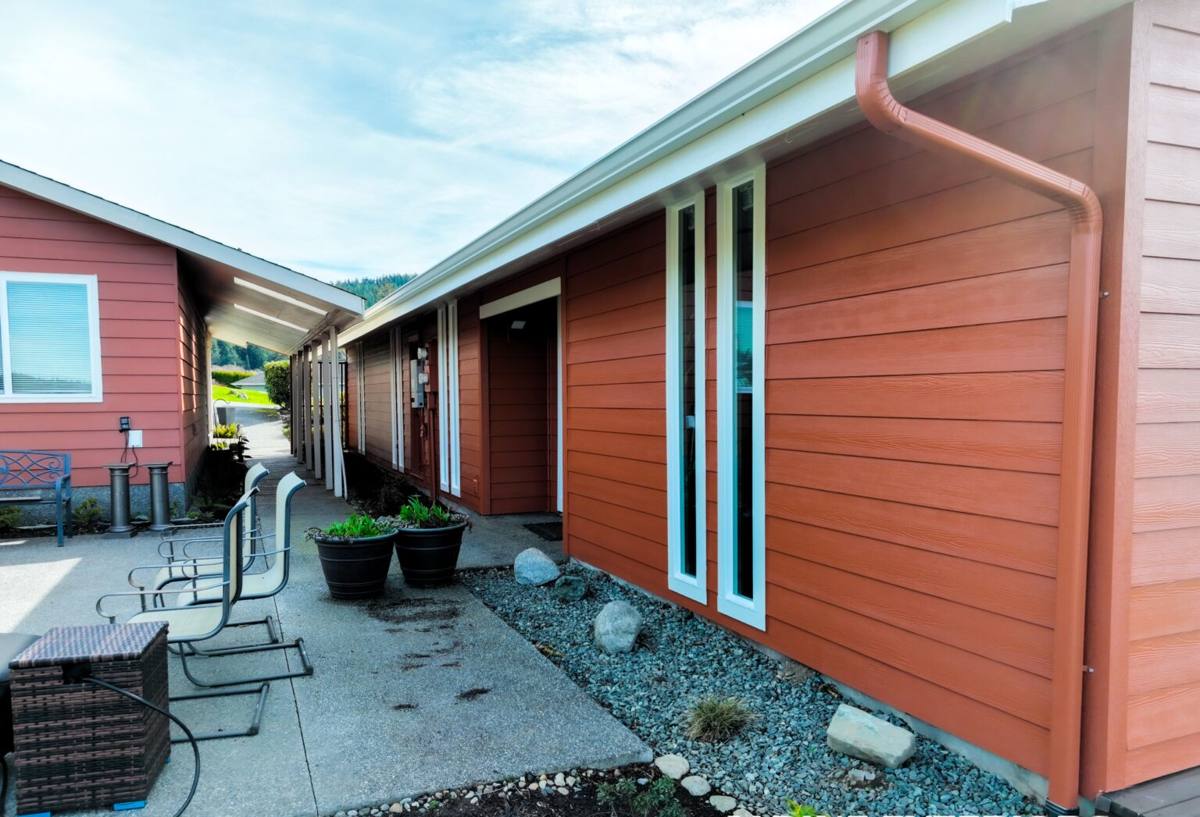
What "Correct" Siding Installation Actually Means Here
Siding installation is often talked about as if it's just cladding — panels or boards fastened to a wall. In a climate like this, the siding itself is only part of the system. What actually keeps water out of the wall assembly is a layered approach, and every layer matters.
The Water-Resistive Barrier (WRB)
Behind every piece of siding should be a continuous, properly lapped weather-resistive barrier. This is the backup layer that catches any moisture that gets past the siding itself. In a driving-rain environment, gaps, tears, or improperly shingled laps in this barrier are one of the most common causes of hidden rot.
Flashing at Every Penetration
Windows, doors, hose bibs, light fixtures, deck ledgers, and roof-to-wall transitions all need properly integrated flashing that directs water out and away from the wall assembly — not just caulk over a gap. Caulk fails; flashing, installed correctly, doesn't rely on adhesion to keep water out.
Correct Fastening and Clearances
Fastener type, spacing, and depth all affect how siding performs over decades, especially in salt-influenced air where the wrong fastener corrodes and eventually lets panels work loose. Ground clearance and clearance from roof lines, decks, and patios also matter — siding installed too close to grade or to a horizontal surface stays wet longer and invites the moss and rot problems already common here.
Ventilation Behind the Cladding
A rainscreen gap or proper ventilation path lets any moisture that does get behind the siding dry out instead of sitting against the sheathing. This is especially important on shaded elevations, which are common on wooded Silver Beach lots.
Get any one of these wrong and the siding material itself almost doesn't matter — water will find its way in. Get them all right, and the material choice becomes the difference between a good result and a great one.
Why We Install Only James Hardie Fiber Cement
We made a decision as a company to install one siding system — James Hardie fiber cement — and to turn down jobs where a homeowner wants something else. That's not a marketing position, it's a practical one, built around what actually holds up in conditions like Silver Beach's.
Fiber cement is non-combustible, which matters given wildfire smoke seasons and ember exposure across the Pacific Northwest. It doesn't absorb moisture the way wood-based siding does, which directly addresses the moss and rot risk from our long wet season. And it holds paint and factory finish far longer than wood substrates, which matters when salt air is chewing through coatings faster than it would inland.
We specifically don't install a few common alternatives, and we think homeowners deserve an honest reason why:
Vinyl Siding
Vinyl is inexpensive and low-maintenance in mild climates, but it expands and contracts significantly with temperature swings, can crack in cold snaps, and isn't rated for the same fire performance as fiber cement. In driving rain and wind, vinyl's overlapping panel system also relies more heavily on a well-executed WRB behind it, since the panels themselves aren't a tight water barrier.
Engineered Wood (LP SmartSide) and Primed Spruce or Cedar
Wood-based products, even engineered ones with treated strand board cores, are still wood at their core. In a climate with this much sustained moisture and shade, wood substrates are more sensitive to edge swelling, moisture wicking at cut ends, and the moss/algae growth that thrives on organic surfaces. Cedar in particular is a beautiful, traditional Pacific Northwest material, but it demands a maintenance commitment — refinishing, sealing, and moss treatment — that many homeowners underestimate until they're a decade in.
Cemplank and Allura
These are also fiber cement products and share some of Hardie's core advantages over vinyl and wood. We standardized on James Hardie specifically for its factory ColorPlus finish process, its climate-engineered HZ5 product line built for Pacific Northwest moisture exposure, and its transferable warranty structure — consistency we can stand behind on every job rather than mixing systems.
James Hardie's HZ5 Line and Why It Fits This Area
James Hardie engineers its siding by climate zone, and the HZ5 line is built for wetter, more humid regions like Western Washington. It's formulated to resist moisture-related damage and organic growth better than a generic fiber cement product not matched to the region. Paired with ColorPlus Technology — a factory-applied, baked-on finish rather than field-applied paint — the color coat holds up longer against fading and chalking from sun and salt air exposure, and it comes with its own finish warranty separate from the substrate warranty.
Our Installation Process for Silver Beach Homes
- Site and wall assessment: We inspect existing siding, sheathing condition, and moisture exposure patterns specific to the lot — sun, shade, wind direction, and proximity to water or heavy tree cover.
- Removal and substrate inspection: Old siding comes off and we check the sheathing underneath for rot or soft spots before anything new goes up. This step catches problems that are invisible from the outside.
- WRB and flashing installation: A continuous, correctly lapped water-resistive barrier goes on, with flashing integrated at every window, door, and penetration before siding starts.
- Rainscreen or ventilation detailing: Where appropriate for the wall assembly, we build in a drainage gap so any incidental moisture behind the siding can dry out rather than sit against the sheathing.
- Hardie panel or plank installation: Fastened to manufacturer spec — correct fastener type, spacing, and clearance from grade, roofline, and horizontal surfaces.
- Trim, caulking, and touch-up: Factory-finished trim and touch-up paint matched to ColorPlus color for a clean, uniform result at cut ends and fastener heads.
- Final walkthrough: We review the completed work with the homeowner and point out anything they should watch for or maintain going forward.
Signs a Silver Beach Home May Need New Siding
- Moss or dark streaking that returns quickly after cleaning, especially on shaded walls
- Soft or spongy spots when pressed gently, particularly near the bottom of walls or below windows
- Paint that's peeling, bubbling, or chalking faster than expected
- Visible warping, cupping, or gaps opening between boards or panels
- Rising energy bills that may point to compromised insulation behind failing siding
- Musty smells or visible staining on interior walls that share an exterior wall with problem siding
Any one of these on its own might just need a repair. Several at once, especially on a home more than 15-20 years old with its original siding, usually means it's time to look at full replacement rather than patching around ongoing problems.
What Affects the Cost of a Siding Installation
| Factor | Why It Matters |
|---|---|
| Home size and wall complexity | More corners, gables, and dormers mean more cutting, flashing, and labor time |
| Existing wall condition | Rotten sheathing found during tear-off adds repair work before new siding can go on |
| Siding profile (lap, shingle, panel) | Different Hardie profiles carry different material and installation labor costs |
| Trim and detail work | Corner boards, window trim, and accent details add material and precision time |
| Site access | Steep lots, limited driveway access, or dense tree cover common around Silver Beach can slow staging and scaffolding |
| Removal and disposal | Tear-off and haul-away of old siding is typically priced separately from new installation |
We won't quote a number without seeing the home — every one of these factors shifts the estimate, and a fair quote depends on an actual walk-around, not a phone guess.
What to Look for When Hiring a Siding Contractor in This Area
- Ask whether the crew is a James Hardie-trained or preferred installer, not just someone who's "installed it before"
- Confirm they'll inspect and address sheathing condition before installing new siding, not just cover over it
- Ask specifically how they handle WRB and flashing detailing — a vague answer here is a red flag
- Check that they're licensed and insured to work in Washington State
- Get the warranty terms in writing, both the manufacturer's product warranty and the contractor's labor warranty
- Ask how they've handled similar homes in wet, shaded, or wind-exposed lots near the lake
A crew that's worked in and around Sudden Valley and the Silver Beach area already understands the wind patterns, moisture load, and moss pressure specific to this stretch of Whatcom County. That local familiarity shows up in the details — where they add extra flashing, how they handle ventilation on shaded walls, and how they set expectations for maintenance afterward.
Maintaining Your Siding After Installation
Even the right material installed correctly benefits from basic upkeep in this climate. A yearly rinse to clear pollen, salt residue, and early moss growth keeps the ColorPlus finish looking sharp and prevents organic buildup from taking hold. Keeping gutters clear and functioning reduces the volume of water running down walls during heavy rain events. And a periodic visual check around window trim, corner boards, and the base of the walls catches small issues — a cracked caulk joint, a loose piece of trim — before they become water intrusion problems.
Fiber cement doesn't need the refinishing schedule that cedar or primed wood does, but it isn't zero-maintenance either. The upkeep is lighter and less frequent, which is exactly the trade-off most homeowners are looking for after dealing with a wood or vinyl system that demanded more attention.
Get a Free Estimate for Your Silver Beach Home
If your siding is showing signs of wear, or you're planning ahead for a replacement, we're happy to take a look and walk you through what we see — no pressure, no obligation. Fill out the form below to schedule a free estimate.