 Sudden Valley Siding
 Why Silver Beach Roofs Age Differently Than Roofs Inland
Silver Beach sits close enough to open water and the marine weather patterns of Whatcom County that roofs here take a different kind of beating than a roof twenty minutes inland. It's not one dramatic thing that wears a roof out — it's the combination: salt-laden air moving in off the water, long stretches of driving rain, and a moss season that can run most of the year in the shaded, damp spots every lot seems to have. A roofing system that was built for a drier climate, or installed without these conditions in mind, tends to show its age early: granule loss, soft spots at the eaves, and moss creeping under the shingle tabs long before the roof has earned retirement.
Salt Air and Metal Components
Salt in the air doesn't just affect siding and outdoor furniture — it accelerates corrosion on exposed metal roofing components. Nails, flashing, vent boots, and gutter hardware that aren't rated for coastal exposure can start rusting years before the shingles themselves fail. Once fasteners weaken or flashing corrodes and opens a seam, water finds its way in well before there's any obvious sign from the ground.
Driving Rain and Wind-Driven Water
Storms that come through this part of Whatcom County often bring rain at an angle, not straight down. That matters because it pushes water sideways under shingle edges, around chimneys, and into valleys — places a roof built to a bare-minimum code spec can leak even when every shingle looks intact. Roof replacements here need to plan for wind-driven water, not just vertical rainfall.
Moss: The Slow, Quiet Damage
Moss loves exactly what this area provides — shade, moisture, and mild temperatures. Left alone, it holds water against the roofing surface, lifts shingle edges, and works its way into fastener holes and seams. By the time moss is visibly thick, it's usually already done some damage to the surface underneath it, not just sitting on top.
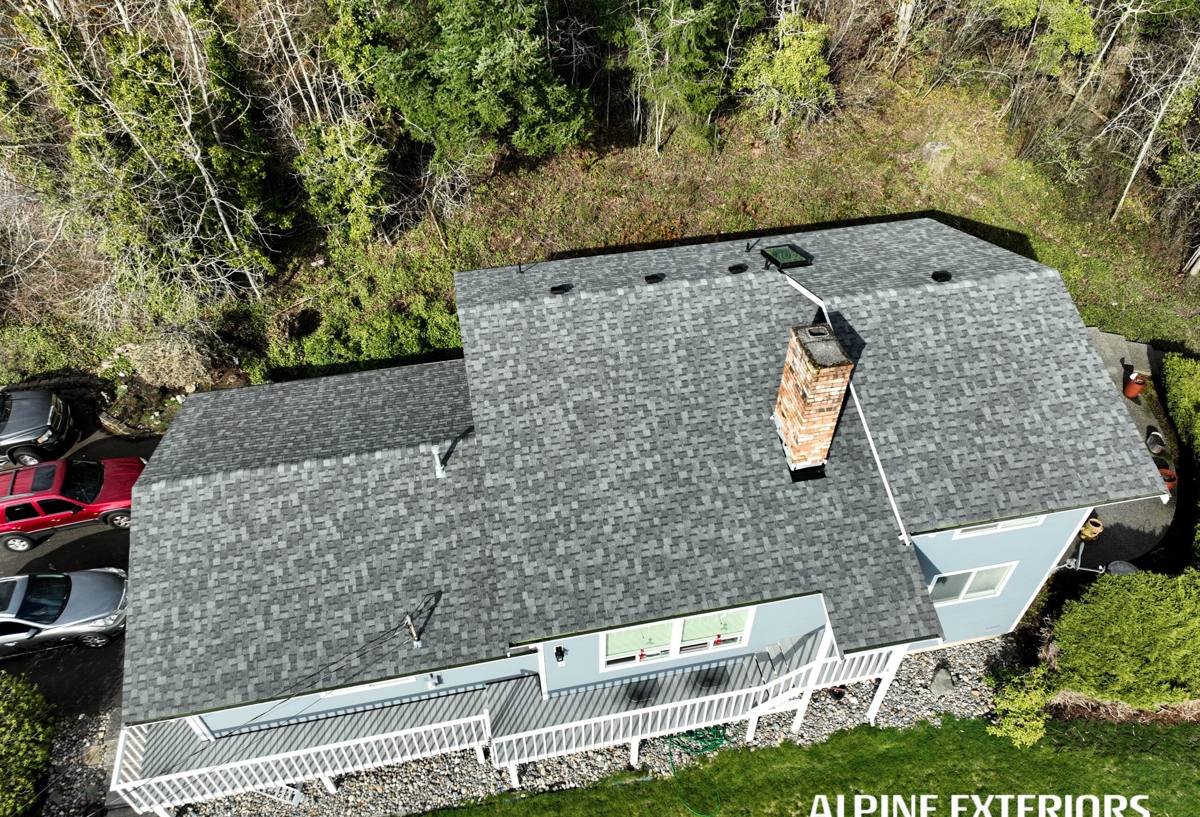
Signs a Silver Beach Roof Needs Replacement, Not Another Repair
Repair makes sense when the damage is localized and the rest of the roof still has useful life left. Replacement makes sense when the roof is failing broadly, even if it doesn't look dramatic from the driveway. Here's what we look for when deciding which category a roof falls into:
- Granules collecting in gutters or at downspout outlets in more than a light dusting
- Shingles that are curling, cupping, or cracking across multiple slopes, not just one patch
- Moss or algae established across large sections rather than a corner or two
- Soft or spongy decking felt underfoot during an inspection walk
- Daylight visible through the roof deck from inside the attic
- Repeated leaks around the same penetration (chimney, vent, skylight) even after prior patch repairs
- A roof already at or past the manufacturer's expected service life for its material and exposure
- Rising energy bills tied to poor attic ventilation or insulation gaps at the roofline
If two or three of these show up together, a full replacement is usually the more honest recommendation — patching a roof that's failing structurally just delays a bigger repair bill later.
What a Correct Roof Replacement Actually Involves
A roof replacement is more than swapping old shingles for new ones. In a climate like this one, the parts you don't see matter as much as the finished surface.
Full Tear-Off and Deck Inspection
We remove the existing roofing down to the deck rather than layering over old material. That's the only way to actually see the plywood or OSB underneath, check for rot or delamination from years of moisture exposure, and replace any compromised sections before new material goes down. Skipping this step just seals existing problems under a new surface.
Underlayment and Water Protection
Given how much wind-driven rain this area sees, underlayment choice matters. Self-adhered ice-and-water membrane at eaves, valleys, and around penetrations gives a second line of defense in exactly the spots where wind-driven water tends to get pushed. Synthetic underlayment across the rest of the deck holds up better than old-style felt in a damp climate over the life of the roof.
Ventilation
Proper intake and exhaust ventilation keeps moisture from building up in the attic, which matters a great deal in a marine climate. Poor ventilation traps humidity, which can rot decking from underneath even when the roofing surface above looks fine — and it also shortens shingle life by trapping heat.
Flashing and Detail Work
Chimneys, skylights, wall-to-roof transitions, and valleys are where the vast majority of leaks originate — not the open field of shingles. Correct step flashing, counterflashing, and valley metal, installed with corrosion-resistant fasteners suited to a salt-air environment, is what actually keeps water out over time.
Choosing a Roofing Material for This Climate
There isn't one universally "best" roofing material — the right choice depends on the home, the budget, and how much long-term maintenance the owner wants to take on. Here's an honest comparison for a coastal Whatcom County property:
| Material | Moss/Moisture Resistance | Typical Lifespan | Maintenance Burden |
|---|---|---|---|
| Architectural asphalt shingle | Good with proper ventilation and periodic cleaning | 25–30 years | Moderate — benefits from moss treatment every few years |
| Standing seam metal | Excellent shedding, sheds moss growth naturally on slope | 40–50+ years | Low, but requires coastal-rated fasteners and coatings |
| Cedar shake | Attractive but moisture-sensitive without diligent upkeep | 20–30 years with maintenance | High — needs regular treatment in a damp climate |
We're upfront with homeowners about trade-offs rather than pushing one product. Metal roofing costs more up front but sheds moss and water well and needs less attention over decades. Asphalt shingle remains the most common choice because it balances cost, appearance, and performance when installed correctly with the right underlayment and ventilation. Cedar shake looks great but asks more of the homeowner in a climate this damp, and we say so plainly rather than oversell it.
Our Roof Replacement Process
1. On-Site Inspection and Estimate
We walk the roof and the attic where accessible, check the deck condition, ventilation, and flashing points, and put together a written estimate that spells out material, scope, and price — no vague allowances.
2. Material Selection
We go over the options above in plain terms so the decision fits the home and the budget, not just what's easiest to install.
3. Permitting
Roof replacements typically require a permit through the local jurisdiction. We handle that paperwork so it isn't left to the homeowner.
4. Tear-Off, Deck Repair, and Installation
Full removal, deck inspection and repair as needed, underlayment, flashing, ventilation, and the new roofing surface — installed in that order, not shortcut.
5. Cleanup and Final Walkthrough
Magnetic sweep for stray nails, full debris removal, and a walkthrough so the homeowner sees the finished work and understands what was done and why.
What Roof Replacement Costs Depend On
We won't quote a number without seeing the roof, but the main cost drivers are consistent from job to job:
| Factor | Why It Matters |
|---|---|
| Roof size and number of slopes | More square footage and complexity means more material and labor |
| Pitch and access | Steeper or harder-to-access roofs take longer and require more safety setup |
| Deck condition | Rot found during tear-off adds material and labor to repair before new roofing goes on |
| Material choice | Asphalt, metal, and cedar sit at very different price points, as shown above |
| Number of penetrations | Chimneys, skylights, and vents each need individual flashing work |
Most straightforward asphalt shingle replacements on a typical single-family home fall into a broad mid-range bracket; metal and complex rooflines push higher. We'd rather give a firm number after walking the roof than a rough figure that changes once we're up there.
Why Local Experience in Silver Beach Matters
A crew that already works this stretch of Whatcom County knows which details actually matter here versus what a generic install manual assumes. That means expecting wind-driven rain at valleys instead of treating it as a rare event, knowing which fastener and flashing metals hold up against salt air over the long run, and recognizing moss buildup patterns that come from the specific tree cover and shade common around Sudden Valley and Silver Beach lots. It also means being available for the follow-up maintenance visits that keep a roof performing as designed — not just showing up once for the install and disappearing.
Maintaining a New Roof in This Climate
A correctly installed roof still benefits from basic upkeep in a climate this damp:
- Clear moss and debris from the roof surface and gutters at least once a year, more often under heavy tree cover
- Keep gutters and downspouts flowing freely so water isn't backing up under the eaves
- Trim overhanging branches to reduce shade and debris buildup that feed moss growth
- Have flashing points checked periodically, especially after major storms
- Address small leaks immediately rather than waiting for them to spread to decking
None of this is complicated, but skipping it is how a well-installed roof loses years off its expected lifespan in a marine climate.
If your Silver Beach or Sudden Valley home is showing signs of roof wear, or you just want an honest read on how much life is left in the one you have, we're happy to take a look. The estimate is free, there's no pressure, and you'll get a straight answer either way — just fill out the form below to get started.