 Sudden Valley Siding
 Why Roofs Around Silver Beach Take Extra Punishment
Homes near Silver Beach and Sudden Valley sit in a stretch of Whatcom County where the roof rarely gets a break. Moist, salt-tinged air drifting in off the water combines with long stretches of steady rain, heavy tree cover, and short winter days that never quite dry a roof out. It's a good climate for evergreens and a hard one for asphalt shingles, wood trim, and metal flashing. Roofs here don't usually fail all at once — they fail slowly, one weak seam or one patch of moss at a time, until a small problem turns into a stain on the ceiling.
Moss Is a Slow, Steady Threat
Shade from surrounding trees and near-constant moisture make this a prime environment for moss and algae growth. Moss doesn't just sit on top of shingles — it roots into the granule surface, holds water against the roofing material long after the rain stops, and lifts shingle edges just enough to let wind-driven rain sneak underneath. A roof that looks mossy but otherwise fine from the ground can already have soft decking underneath.
Wind-Driven Rain Finds Every Weak Seam
Rain here doesn't always fall straight down. Wind off the water can push it sideways and even slightly upward at eaves, valleys, and around anything that penetrates the roof — chimneys, vents, skylights. Over time, that pressure finds any gap in flashing, any nail that's backed out, or any shingle that's curled from age and moss. Those are almost always the spots we find a leak starting.
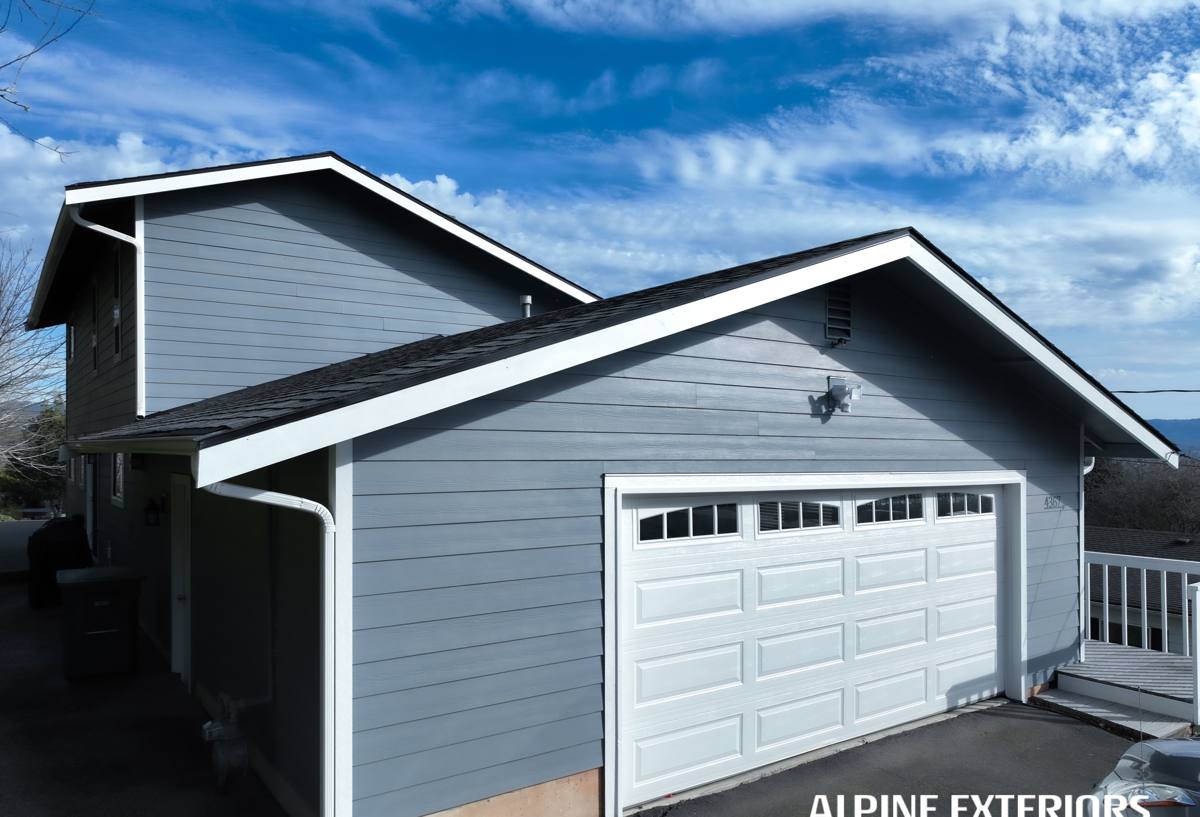
The Repair Calls We Get Most Often in This Neighborhood
Most of the repair work we do around Silver Beach falls into a handful of recurring categories. Knowing which one you're dealing with helps set expectations for the fix.
| Issue | What Causes It Here | Typical Fix |
|---|---|---|
| Moss buildup on shingles | Shade, moisture, and slow drying between rains | Careful removal, treatment, and inspection for damage underneath — not just a pressure wash |
| Leaking valleys | Heavy water volume concentrated in the valley during storms | Replace valley flashing and underlayment, not just caulk over the gap |
| Flashing failure around chimneys and vents | Metal fatigue, sealant breakdown from constant damp | Re-flash with new step and counter-flashing, proper sealant, not a surface patch |
| Curled or lifted shingle edges | Age combined with sustained moisture and moss root intrusion | Spot-replace affected shingles and address the moisture source |
| Soft or spongy decking | Long-term hidden moisture from a slow leak | Cut out and replace the damaged decking before re-covering |
| Gutter overflow staining fascia | Debris and moss buildup clogging gutters during heavy rain | Clear gutters, correct pitch, repair or replace damaged fascia |
What an Honest Roof Repair Actually Involves
There's a real difference between a repair that fixes the problem and one that just covers it up. A quick patch on top of a leak might stop the drip for a season, but if the underlying cause — trapped moisture, failed flashing, rotted decking — isn't addressed, the same leak comes back, usually worse. A correct repair starts with finding where water is actually getting in, which is often several feet away from where the stain shows up inside, since water travels along rafters and decking before it drips.
A proper repair also means matching materials as closely as possible so the patch doesn't stand out or create a new weak point, replacing underlayment where it's been compromised, and checking ventilation in the attic space, since poor airflow traps moisture and accelerates moss and rot from the inside.
- The contractor inspects beyond the visible leak point, including the attic side of the roof deck
- Any soft, delaminated, or rotted decking is cut out and replaced — not just covered
- Flashing is replaced, not just re-sealed with caulk
- Underlayment or ice-and-water membrane is restored in the repaired section
- Shingles or roofing material used for the patch reasonably match the existing roof
- Moss and debris are cleared from the surrounding area, not just the repair zone
- You get a clear explanation of what caused the failure, in plain language
Repair or Replace? How We Help You Decide
Not every roof problem in this area needs a full replacement, and not every leak can be permanently solved with a patch. The right call depends on the roof's age, how widespread the damage is, and whether the underlying materials are still sound.
| Factor | Repair Usually Makes Sense | Replacement Should Be Considered |
|---|---|---|
| Roof age | Well within its expected service life | Nearing or past the typical lifespan for its material |
| Extent of damage | Isolated to one area — a valley, a vent, a section of shingles | Multiple areas failing independently, or widespread moss and granule loss |
| Decking condition | Solid, dry decking around the damaged area | Soft or rotted decking found in more than a small, contained spot |
| Number of past repairs | First repair, or an isolated second one | A pattern of repeat leaks in different spots over a few years |
| Overall goal | Extending the life of a roof with years left in it | Stopping a cycle of recurring repair costs |
We'll always tell you honestly which category your roof falls into rather than defaulting to the more expensive option. Plenty of roofs around Silver Beach just need a targeted repair and a bit of maintenance to keep going for years.
How We Handle a Silver Beach Roof Repair Call
- Inspection. We look at the roof from the ground, on the roof itself where it's safe to walk, and from the attic side when accessible, tracing water paths rather than assuming the leak starts where it shows up inside.
- Written estimate. You get a clear explanation of what's wrong, what we recommend, and what it costs before any work starts — no surprise add-ons once we're up there.
- The repair itself. We remove moss and damaged material, replace decking and flashing as needed, and rebuild the section to shed water the way the rest of the roof does.
- Cleanup. Old material, moss debris, and any nails or scraps are cleared from the roof and yard before we leave.
- Follow-up. If anything about the repair doesn't hold up as expected, we come back and make it right.
Materials and Methods We Use — and Why
In a climate this wet and moss-prone, some choices simply hold up better than others. We favor sealed, self-adhering waterproof underlayment in valleys and around penetrations — the places where standard felt underlayment is most likely to be overwhelmed by driving rain. For moss control, zinc or copper strips installed near the ridge let rain carry trace metal ions down the roof surface, which slows regrowth over time without chemical treatments that need to be reapplied every year.
We're also careful about ventilation. A roof deck that can't breathe traps moisture underneath the shingles, which shortens the life of any repair regardless of the materials used on top. Where attic ventilation is inadequate, we'll flag it as part of the repair conversation, because fixing the leak without addressing airflow just delays the next one.
We don't chase every new roofing product that comes along. Our standard is to use materials with a proven track record in wet, marine-influenced climates like this one, installed the way the manufacturer specifies rather than shortcut methods that save time but shift risk onto the homeowner down the road.
Keeping a Repaired Roof Sound Year-Round
A good repair buys you time, but a few habits stretch that time further, especially given how long the wet season runs here.
- Clear gutters and downspouts before the fall rains set in, and again mid-winter if trees are dropping needles or leaves nearby
- Have moss growth treated or removed before it spreads across a full slope, not after
- Trim back branches that overhang the roof to cut down on shade and debris buildup
- Walk the attic with a flashlight once or twice a year looking for new water stains, especially after a hard storm
- Get a roof looked at after any major windstorm, even if nothing looks obviously wrong from the ground
Why Local Experience Around Sudden Valley and Silver Beach Matters
Roof problems in this part of Whatcom County follow patterns that a crew working here regularly comes to recognize quickly — which slopes hold moss longest, which roof styles tend to trap moisture at the valleys, and how fast a small leak can turn into a decking problem given how much of the year the roof stays damp. That familiarity means less time spent diagnosing and more time spent actually fixing the problem correctly the first time. It also means we're not learning the terrain, the typical construction of homes in the area, or the local weather patterns on your dime.
If you're dealing with a leak, missing shingles, or a moss problem that's gotten past the point of a simple cleaning, we're happy to take a look and give you a straight answer about what it needs. Reach out for a free, no-pressure estimate using the form below, and we'll walk the roof and tell you honestly what we find.