 Sudden Valley Siding
 Why Silver Beach Roofs Age Differently Than Roofs Inland
Silver Beach sits close enough to Lake Whatcom and the broader Whatcom County marine climate that its roofs take on a different kind of wear than a roof twenty miles inland. The air here carries more moisture almost year-round, wind off the lake and the Sound pushes rain sideways into eaves and valleys, and shaded, tree-lined lots hold onto damp longer after a storm passes. None of that is dramatic on its own, but stacked together over years, it's exactly the combination that shortens the life of a poorly installed asphalt shingle roof.
We're not describing a coastal hurricane climate — this is steady, grinding moisture exposure. Shingles don't usually fail here because of one big event. They fail because water and organic growth found a weak point in the underlayment, the flashing, or the ventilation, and worked at it for a few winters. That's the mindset we bring to every Silver Beach roof: build for the slow damage, not just the visible damage.
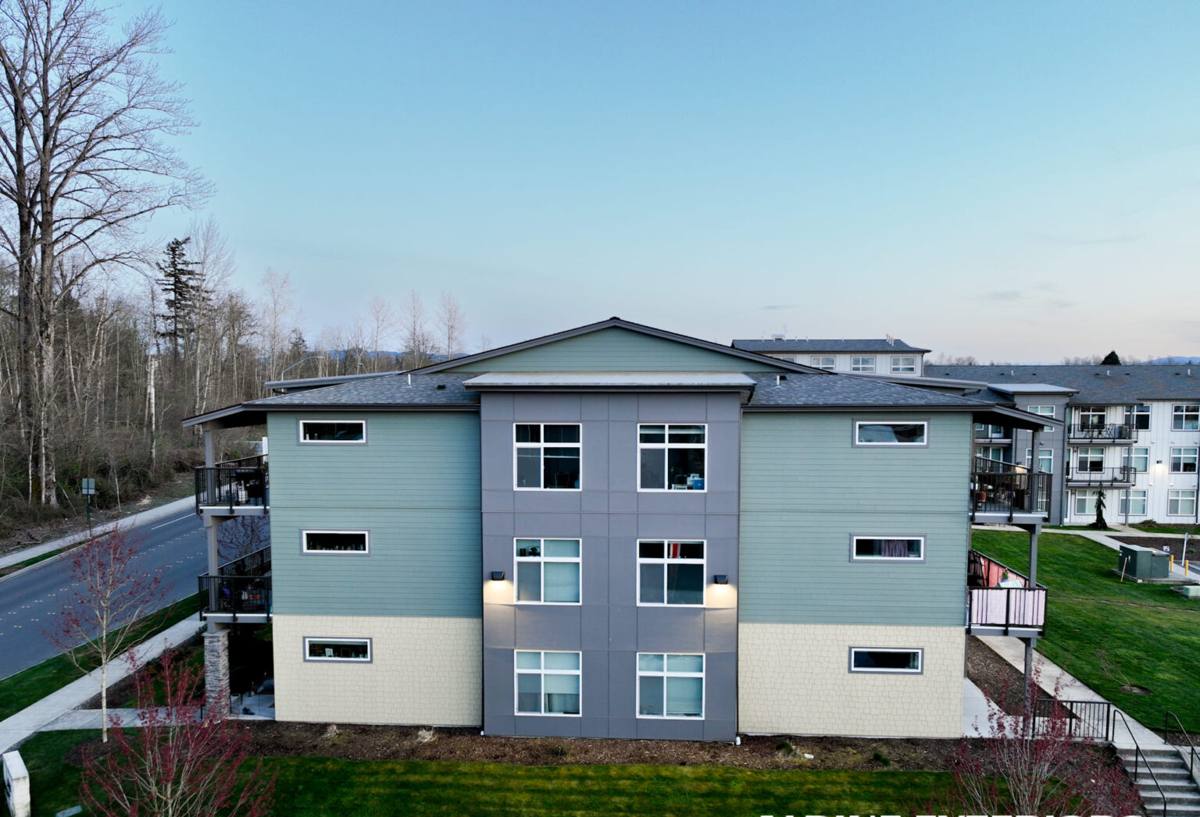
What Asphalt Shingle Roofing Needs to Hold Up Here
Moisture Management Below the Shingles
Shingles are the visible layer, but the underlayment and flashing underneath do most of the real work of keeping water out. In a climate with this much sustained dampness, we treat ice-and-water shield membrane at eaves, valleys, and around penetrations (vents, chimneys, skylights) as standard practice, not an upgrade. Those are the spots where wind-driven rain and slow-moving water find their way under a shingle edge.
Attic Ventilation
A roof that traps warm, moist attic air underneath it will grow moss and algae faster and rot decking from below, even if the shingles up top look fine. Balanced intake and exhaust ventilation matters as much here as the shingle brand you choose — it's one of the most overlooked factors in how long a Whatcom County roof actually lasts.
Shingle Grade and Granule Quality
Cheaper, lightweight shingles lose their granules faster under constant damp-dry cycling, and once granules wear thin, the asphalt underneath degrades quickly in UV and moisture. For this climate, we lean toward mid-to-upper-tier architectural shingles with algae-resistant (copper- or zinc-infused) granules as the baseline, not the exception.
Signs a Silver Beach Roof Needs Attention
- Dark streaking or green-black growth concentrated on the shaded, north-facing slope
- Moss visibly lifting shingle edges, even in small patches near valleys or the roof's lower courses
- Granules collecting in gutters or at downspout outlets after normal rain, not just after wind events
- Soft spots or slight sagging when walked (or visibly, from the ground, along a ridge line)
- Daylight or water staining visible in the attic near vent boots, chimney flashing, or skylights
- Shingle edges curling or cupping, especially on slopes that get the most afternoon sun
Any one of these on its own isn't necessarily an emergency. Several at once, especially combined with the roof's age, usually means it's time for a real inspection rather than another patch.
What a Correct Asphalt Shingle Roofing Job Involves
A full replacement done right, on a home like yours in Silver Beach, generally follows this sequence:
- Tear-off and decking inspection. Old shingles and underlayment come off completely so the deck underneath can actually be checked — not covered over. Soft, delaminated, or water-stained plywood gets replaced before anything new goes down.
- Underlayment and ice-and-water membrane. Synthetic underlayment across the field, with self-adhering membrane at eaves, valleys, and penetrations, given how much of this region's damage starts at those transition points.
- Flashing. New step flashing at walls and chimneys, new valley flashing where applicable, and properly lapped vent boots. Reused or rusted flashing is one of the most common causes of a "new roof" that still leaks in year two.
- Ventilation check and correction. Intake and exhaust are balanced where the attic allows it, since a new roof over bad ventilation just repeats the same moss and moisture problems on a delay.
- Shingle installation. Proper nailing pattern and exposure per manufacturer specification — this is where warranty coverage is won or lost, since most manufacturer warranty denials trace back to installation error, not product defect.
- Cleanup and final walk-through. Magnetic sweep for nails, gutter check, and a walk-through so you know exactly what was done and why.
Shingle Options: What Actually Fits This Climate
| Shingle Type | Moisture & Moss Behavior | Typical Lifespan Here | Best Fit |
|---|---|---|---|
| 3-tab (economy) | Lower granule mass, wears faster under constant damp-dry cycling | Shorter end of range | Budget-limited projects, secondary structures |
| Architectural / dimensional | Heavier mat, better moisture resistance, holds granules longer | Mid-to-long range | Most Silver Beach homes — our standard recommendation |
| Algae-resistant (AR) architectural | Copper/zinc granules actively slow moss and algae growth on shaded slopes | Mid-to-long range, better appearance retention | Heavily shaded lots, north-facing roof planes |
| Impact-resistant (Class 4) | Reinforced mat resists granule loss from debris and branch strikes | Long range | Lots with overhanging trees, homes seeking possible insurance credits |
We're not going to tell you a 3-tab shingle is a bad product — for the right budget and structure, it's a reasonable choice. But for a primary home in this climate, we generally steer clients toward architectural shingles with algae-resistant granules, because the labor cost of installation is the same either way; the difference in material cost is usually smaller than most homeowners expect relative to how much longer the roof holds its appearance and performance.
Cost Factors Worth Understanding Before You Get Quotes
| Factor | Why It Moves the Price |
|---|---|
| Roof pitch and access | Steeper slopes and limited ladder/equipment access add labor time and safety measures |
| Number of layers to remove | Tear-off of multiple existing layers costs more than a single-layer tear-off |
| Decking condition | Rotten or soft plywood found during tear-off means real repair, not a hidden shortcut |
| Roof complexity | Valleys, dormers, skylights, and chimneys all add flashing detail and time |
| Shingle tier chosen | Economy vs. architectural vs. impact-resistant material pricing |
| Ventilation upgrades | Adding or correcting intake/exhaust vents is inexpensive during a tear-off, costly after |
We won't quote a broad number here without seeing the roof, because pitch, layers, and decking condition swing the price more than the shingle choice does. What we will say honestly: the lowest bid on paper is rarely the lowest cost over ten years if it skips underlayment upgrades or flashing replacement to hit that number.
Living With a Long Moss Season: Maintenance Between Roofs
Even a correctly installed roof needs some upkeep in this part of Whatcom County. A few habits go a long way:
- Keep gutters clear so water isn't backing up under the lowest shingle courses
- Trim back branches that overhang the roof — less shade and debris means slower moss growth
- Have moss physically removed (not just chemically killed and left on the roof) every year or two on shaded slopes
- Use zinc or copper strips near the ridge as ongoing moss suppression on north-facing planes
- Schedule a walk-through inspection after any major windstorm, not just annually
Why a Crew That Already Works Silver Beach Matters
Roofing crews who mainly work drier inland climates sometimes under-spec underlayment and ventilation because they don't see the consequences of that decision for a few years. A crew that regularly works Silver Beach and the surrounding Sudden Valley area already knows which slopes hold moss longest, which valley details tend to leak if flashing is rushed, and how local permitting and inspection actually works — so there's no learning curve at your expense. That familiarity also means faster response if weather delays a project or a storm exposes an issue mid-job, since we're not driving in from across the county to deal with it.
What "Correct Installation" Really Protects
Manufacturer warranties on shingles sound reassuring, but most of them are pro-rated and hinge on proof of correct installation — proper nailing, proper ventilation, proper underlayment. A roof installed to spec protects both the shingle warranty and, more importantly, your decking and interior from the slow water damage that shows up two or three winters after a rushed job. We install to manufacturer specification as a baseline, not an add-on, because that's what actually keeps the warranty valid if you ever need it.
If your Silver Beach roof is showing moss, granule loss, or you're simply due for an honest look before another wet season sets in, we're happy to walk the roof with you and tell you straight what it needs — no pressure, no upsell. Use the form below to request a free estimate.