 Sudden Valley Siding
 Why South Hill Siding Wears Out Differently
South Hill sits close enough to Lake Whatcom and the Sudden Valley shoreline that homes here take on a specific mix of punishment: salt-tinged, moisture-laden air off the water, long stretches of driving rain pushed sideways by wind, and a shade-and-moisture combination that keeps moss and algae active for most of the year. None of these are extreme events. They're slow, constant, and cumulative — which is exactly why siding failure in this neighborhood tends to sneak up on homeowners rather than announce itself.
Siding that looks fine from the street can be failing behind the surface. Wood-based products swell and dry repeatedly through Whatcom County's wet season, opening seams a fraction of a millimeter at a time. Vinyl gets brittle in the cold snaps and can pull loose at the nailing hem after enough wind-load cycles. Moss doesn't just look bad — it holds moisture against the wall assembly longer than open air ever would, and that moisture is what actually does the damage.
Replacing siding in South Hill isn't just a cosmetic decision. Done right, it's a chance to correct whatever water-management mistakes were built into the original installation and put a material on the wall that's engineered for exactly this kind of climate.
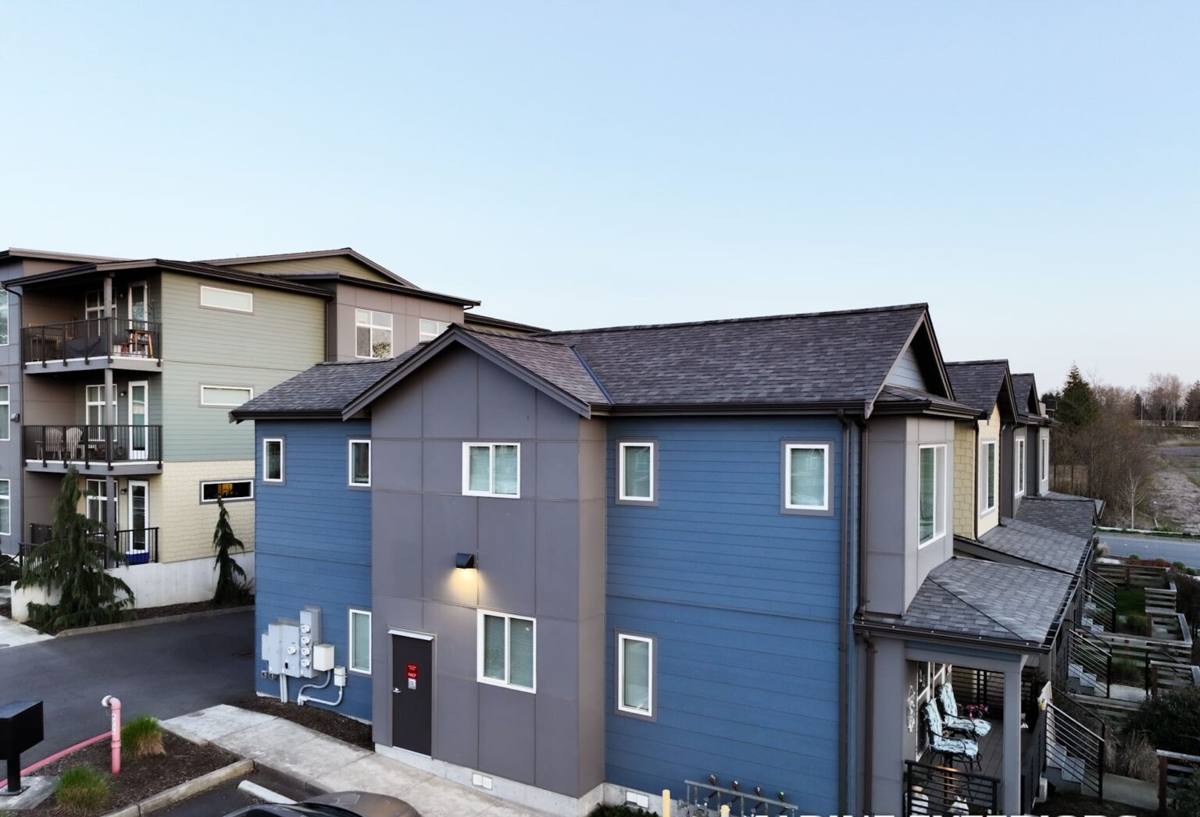
What a Correct Siding Replacement Actually Involves
A siding replacement is not just stripping old panels and nailing up new ones. The work that matters most happens in the layers you never see once the job is finished.
Full Tear-Off, Not Overlay
We remove the old siding down to the sheathing on every job. Installing new siding over old material traps moisture that's already gotten in and hides rot that needs to be found and fixed, not buried.
Inspecting and Repairing What's Underneath
Once the wall is exposed, we check the sheathing, framing, and any existing water-resistive barrier for soft spots, staining, or fastener corrosion — all common findings on homes that have been through a few decades of this area's wet seasons. Damaged sheathing gets replaced before anything new goes up.
Weather-Resistive Barrier and Flashing
A new drainage plane and properly lapped flashing at every window, door, and penetration is what actually keeps driving rain out of the wall. This detailing matters more in South Hill than in drier parts of the state, because wind-driven rain finds gaps that vertical rain never would.
Rainscreen or Furring Where It's Needed
On exposures that catch the most weather, a small air gap behind the siding lets moisture that does get past the cladding dry out instead of sitting against the wall. It's a detail that costs little at installation time and pays for itself in decades of extra service life.
Fastening and Finish Work to Manufacturer Spec
Fiber cement siding has specific fastener patterns, clearances, and caulking requirements. Skipping or shortcutting these is the single most common cause of premature siding failure we see when we're called out to look at another contractor's work.
Our Process, Start to Finish
- Inspection and estimate: We walk the exterior, check for hidden moisture damage, and give you a written scope and price — no pressure, no upsell script.
- Material and color selection: We help you pick the right James Hardie product line and ColorPlus finish for your home's exposure and style.
- Tear-off and structural check: Old siding comes off, sheathing gets inspected, and any repairs are documented and priced before we move forward.
- Weather barrier and flashing installation: This is the step that determines whether the job lasts 10 years or 40.
- Siding installation: Installed to manufacturer spec — correct fastener spacing, clearances, and joint treatment.
- Final walkthrough: We go over the finished work with you before we consider the job done.
Material Comparison for South Hill Conditions
| Material | Behavior in Salt Air & Driving Rain | Moss/Algae Resistance | Long-Term Maintenance |
|---|---|---|---|
| James Hardie fiber cement | Non-combustible, dimensionally stable, holds up to wind-driven rain when installed with proper flashing | Factory finish resists staining better than raw wood or vinyl over time | Occasional wash; ColorPlus finish is not a paint job you'll be redoing |
| Vinyl siding | Can warp or loosen at fastening points under repeated wind load; seams are a weak point in driving rain | Grime and algae show quickly on lighter colors | Low upkeep but panels can crack in cold snaps and aren't repairable piece by piece |
| LP SmartSide (engineered wood) | Wood-based core is more moisture-sensitive at cut edges and seams | Requires diligent caulking and coating maintenance to keep moisture out | Edge sealing and repainting cycles are an ongoing commitment |
| Cedar or primed spruce | Attractive but the most moisture-sensitive option in a wet, shaded climate | Most prone to moss and mildew without frequent treatment | Regular refinishing, sealing, and spot repairs are part of ownership |
What Drives the Cost of a South Hill Siding Job
| Factor | Why It Matters Here |
|---|---|
| Home size and wall complexity | More corners, gables, and window trim mean more cutting, flashing, and labor time |
| Condition of the sheathing underneath | Hidden rot from years of moisture exposure adds repair scope you won't see until tear-off |
| Siding profile and finish choice | Lap width, texture, and ColorPlus color all affect material pricing |
| Trim and accessory work | Corner boards, fascia, and soffit work are often bundled into a full siding job |
| Site access | Steep lots, tree cover, and tight setbacks near the lake are common around South Hill and can affect staging and labor |
We give real, project-specific numbers after an inspection — not a rough guess pulled from a national average that has nothing to do with Whatcom County labor and material costs.
Signs Your South Hill Home Needs Siding Replacement
- Persistent moss or dark staining that returns within weeks of cleaning
- Soft or spongy spots when you press on the siding, especially near the bottom courses
- Visible warping, bowing, or gaps at panel seams
- Paint that's peeling or bubbling repeatedly in the same spots year after year
- Rising heating bills that point to a wall assembly no longer doing its job
- Siding installed more than 20–25 years ago, especially wood-based or vinyl products
- Visible rot or discoloration at corners, window trim, or where siding meets the foundation
Why We Only Install James Hardie
We don't carry vinyl, LP SmartSide, Cemplank, Allura, primed spruce, or cedar — not because those products don't have a place in the market, but because we decided years ago to put our name behind one system we can stand behind fully in this climate. James Hardie fiber cement is non-combustible, dimensionally stable in wet-dry cycling, and its factory-applied ColorPlus finish is engineered to hold color and resist the kind of moisture exposure South Hill homes see every winter. The HZ5 product line in particular is built for climates with sustained moisture and freeze-thaw activity, which describes Whatcom County well.
Hardie also backs its product with a strong, transferable warranty — a real asset if you ever sell the home. Installing one product system consistently means our crews know its fastening requirements, clearances, and finish details cold, instead of switching specs from job to job. That consistency is where most of the long-term performance actually comes from.
Why Hiring a Crew That Already Works South Hill Matters
A contractor who's replaced siding elsewhere in the state can still do competent work, but a crew that already knows South Hill's exposure patterns — which walls take the worst of the wind-driven rain off the lake, where moss builds up fastest, how the moisture cycle here differs from drier inland towns — starts the job with information that would otherwise have to be learned the hard way, on your house. We know which details in this specific pocket of Whatcom County are worth extra attention and which corners actually matter to get right the first time.
What to Expect During the Project
Most single-family siding replacements take one to three weeks depending on size and weather. Whatcom County's wet season can affect scheduling, so we plan tear-off in stages to avoid leaving your home's sheathing exposed to the elements overnight. We'll walk you through the schedule, what to expect with noise and access to your yard, and how we handle weather delays before work ever starts.
If your South Hill home's siding is showing its age — or you just want an honest read on whether it's a repair situation or a replacement situation — we're happy to take a look. Request a free, no-pressure estimate using the form below.