 Sudden Valley Siding
 What Happy Valley's Climate Does to Siding
Homes around Happy Valley sit in one of the more demanding climate pockets in Whatcom County. Marine air moving in off the water carries salt that slowly attacks fasteners, trim, and any siding material that isn't built to shrug it off. Add driving, wind-blown rain that hits walls at an angle instead of falling straight down, and you have a siding system that has to perform as a weather barrier, not just a decorative skin. Then there's the moss season, which in this part of Washington isn't really a season at all — it's most of the year. Shaded north walls, gutters, and anywhere moisture sits stay damp long enough for moss and algae to take hold, and once they do, they hold even more water against the wall behind them.
Any one of those three factors — salt air, driving rain, sustained moss growth — will eventually find the weak point in a siding job. Together, they punish shortcuts fast. That's why siding installation in Happy Valley has to be treated differently than the same job in a dry inland climate, starting with the material choice and continuing through every flashing detail and fastener.
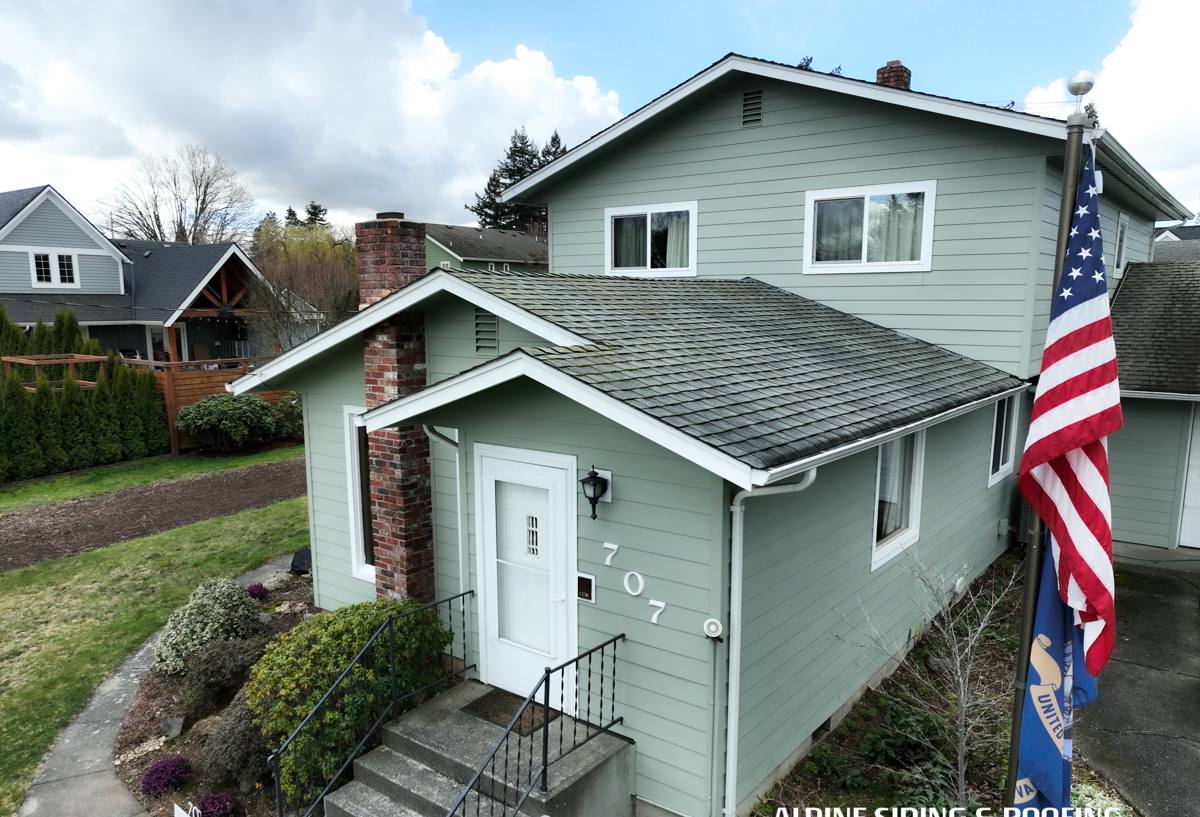
What a Correct Siding Installation Actually Involves
Siding installation is often talked about like it's just fastening panels to a wall. In a climate like this one, the panels are the last and least important part of the system. What actually keeps water out — and keeps a home dry for decades instead of years — is everything underneath and around them.
The Weather-Resistive Barrier and Flashing
Every wall needs a continuous weather-resistive barrier (WRB) behind the siding, lapped correctly so water sheds downward and outward, never into a seam. Around every window, door, and penetration, flashing has to be integrated with that barrier in the right order — not caulked over as an afterthought. In a driving-rain climate, wind can push water sideways and upward under panels that aren't properly lapped or flashed, so these details matter more here than in calmer regions.
Fastening and Clearances
Fiber cement siding has specific fastener spacing, type, and embedment requirements, and getting them wrong shows up years later as cracking, popped nails, or water intrusion at every fastener hole. Ground clearance and clearance from roof lines, decks, and grade also matter — siding installed too close to the ground or to horizontal surfaces stays wet longer and starts absorbing moisture and hosting moss and algae well before the rest of the wall does.
Trim, Caulking, and Joints
Every butt joint, corner, and trim intersection is a potential entry point for water. Correct installation uses back-primed or factory-finished cut edges, proper joint treatment, and quality sealant only where sealant is actually the right detail — not as a substitute for correct flashing. Caulk is maintenance, not waterproofing; a wall that depends on caulk to stay dry will eventually leak.
Why We Install Only James Hardie Fiber Cement
We install one siding system: James Hardie fiber cement. Not vinyl, not LP SmartSide, not primed spruce or cedar, not other fiber cement brands. That's a deliberate standard, not a sales preference, and it comes directly from what this climate does to alternatives.
Vinyl expands and contracts with temperature swings, can warp or crack in wind-driven weather, and its seams and lap joints give salt-laden moisture places to work into over time. Wood siding — cedar or primed spruce — needs ongoing repainting and sealing to survive constant dampness and moss exposure, and once moisture gets behind a wood panel in a shaded, damp spot, rot follows. Engineered wood products like LP SmartSide perform reasonably well when perfectly maintained, but their long-term moisture resistance depends heavily on caulking and paint upkeep that many homeowners don't keep pace with, and any breach at a cut edge or fastener hole can lead to swelling.
James Hardie fiber cement is non-combustible, doesn't rot, and resists the swelling and softening that moisture causes in wood-based products. Its ColorPlus factory finish is baked on under controlled conditions rather than field-applied, which means better adhesion and color retention against UV and salt air than a job-site paint job. Hardie also engineers regional HZ5 product lines specifically for climates with sustained moisture exposure, which is exactly the profile Whatcom County homes deal with. Combined with a strong transferable warranty, it's the system we're willing to stand behind on homes that face this much sustained wet weather.
Our Installation Process for Happy Valley Homes
The process starts with an on-site look at the specific exposure your home faces — which walls take the worst of the driving rain, which sides stay shaded and damp longest, and where the existing siding or trim is already showing wear. From there:
- Remove existing siding and inspect the sheathing underneath for hidden rot or moisture damage before anything new goes up
- Repair or replace any compromised sheathing — covering over a wet wall with new siding just hides the problem
- Install a continuous weather-resistive barrier with correctly lapped and taped seams
- Integrate flashing at every window, door, and penetration before the barrier is closed up around it
- Install James Hardie panels or lap siding to manufacturer fastening and clearance specs, factory-primed edges out
- Detail trim, corners, and joints so water sheds away from every seam
- Final walk-through so you can see the completed work and ask questions before we consider the job done
Because we work this area regularly, we already know which details tend to fail first on homes exposed to this kind of weather, and we build the job around those failure points rather than treating every wall the same.
Signs Your Current Siding Is Losing the Battle
Homeowners in Happy Valley often notice a problem well before they call, but don't always connect it to the siding itself. Common signs worth acting on:
- Persistent moss or algae staining that returns within a season of cleaning
- Soft spots, bubbling, or visible swelling, especially near the ground or roofline
- Paint that's peeling or chalking faster than it used to
- Cracked or warped panels after a hard winter storm
- Rising heating bills that suggest the wall assembly behind the siding isn't sealing the way it should
Any of these is worth a look before it turns into sheathing damage, which costs far more to fix than siding alone.
Cost Factors for Siding Installation
Every home is different, but the factors that move the price on a Happy Valley siding job are fairly consistent:
| Factor | Why It Matters Here |
|---|---|
| Existing sheathing condition | Moisture-damaged sheathing found during tear-off needs repair before new siding goes on |
| Home size and wall complexity | More corners, dormers, and trim details mean more flashing and labor time |
| Siding profile chosen | Lap, panel, and shingle-style Hardie products carry different material and labor costs |
| Access and site conditions | Sloped lots, tree cover, and tight setbacks near the water can add setup and staging time |
| Trim and finish detail | Factory-finished ColorPlus trim vs. field-painted trim affects both cost and long-term upkeep |
We give a firm number after seeing the home in person — broad estimates over the phone don't account for what's actually happening behind the existing siding.
Choosing a Contractor Who Actually Works This Area
Siding crews that mostly work drier inland climates sometimes underbuild the moisture details this area demands, because they haven't had to answer for a failure caused by driving rain or sustained damp shade. When vetting a contractor for a Happy Valley home, it's worth asking directly:
- Do you install a full weather-resistive barrier and flashing system, or just replace panels over what's there?
- What's your experience with homes in this specific exposure — salt air, heavy rain, or persistent shade and moss?
- Which siding products do you install, and why did you choose them over the alternatives?
- What does your workmanship warranty cover, separate from the manufacturer's material warranty?
- Will you inspect the sheathing before installing, and what happens if you find damage?
A contractor who can answer these clearly, without hedging, is one who's actually thought through what this climate requires — not just someone who can hang panels on a nice day.
Living With Hardie Siding After Installation
One advantage of a correctly installed Hardie system is how little it asks of you afterward. There's no repainting cycle to keep up with the way there is with wood, and the factory finish resists the fading and chalking that field-applied paint shows first. Normal upkeep is simple: rinse off accumulated grime and moss spores once or twice a year, keep gutters clear so water isn't running down the wall face, and trim back vegetation that keeps a wall shaded and damp. That's a manageable routine compared to the sealing, caulking, and repainting that wood or engineered wood siding demands to hold up in this same climate.
If your Happy Valley home's siding is showing its age, or you're planning ahead rather than reacting to a problem, we're happy to take a look and walk you through what we'd recommend and why. Reach out for a free, no-pressure estimate — there's a form just below.