 Sudden Valley Siding
 Why Sehome Roofs Wear Out Differently
Sehome sits close enough to Bellingham Bay that salt-laden air is a real factor in how roofing materials age here, not just a talking point. Add Whatcom County's long stretch of driving rain from fall through spring, plus the shade and moisture that many Sehome lots hold onto because of mature trees and hillside terrain, and you get a roof environment that's tougher on materials than a lot of manufacturer warranties assume. Asphalt granules erode faster under salt exposure. Fasteners and flashing corrode sooner if they're not rated for it. And moss doesn't just sit on top of a roof looking bad — it holds water against the surface for months at a time, which is exactly the kind of slow, quiet damage that turns into a full replacement years earlier than it should.
None of this means Sehome homes need exotic materials or unusual construction. It means the roof has to be installed correctly for this specific climate, with the right underlayment, ventilation, and flashing details — not just built to the minimum code spec for a generic Pacific Northwest install.
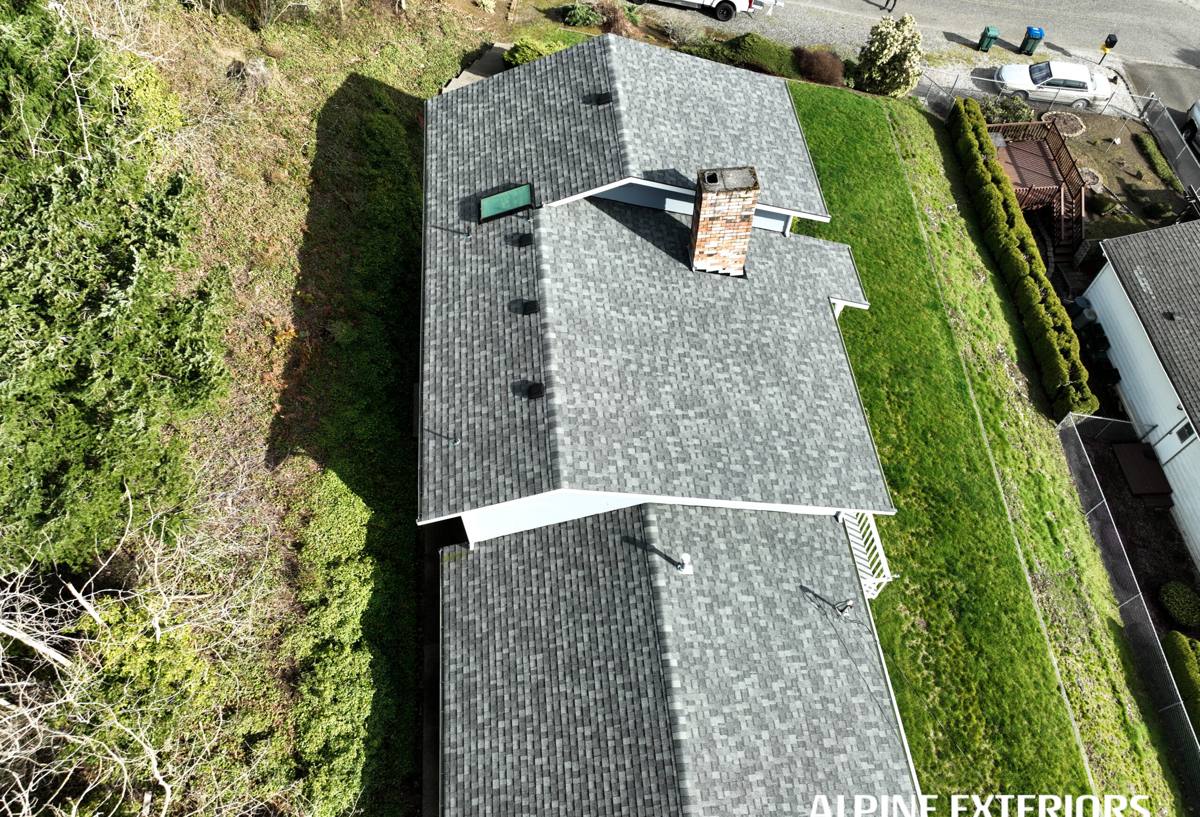
Repair or Replace: How to Tell
Not every roof problem in Sehome means a full tear-off. But there's a point where patching becomes a waste of money, and it's worth knowing where that line is before you spend on repairs that won't hold.
Signs a repair is still reasonable
- A localized leak tied to one flashing point or a single damaged section
- Isolated moss growth that hasn't yet caused shingle lifting or granule loss underneath
- A roof under 12-15 years old with otherwise sound decking
Signs it's time for full replacement
- Multiple leak points, or a leak that's already reached the decking or insulation
- Widespread granule loss, curling, or brittle shingles across most of the roof
- Moss and moisture staining that's spread across large sections, especially on north-facing or shaded slopes
- Soft spots, sagging, or visible rot when accessed from the attic
- A roof original to the home and past 20-25 years old, regardless of how it looks from the ground
An honest inspection should tell you which category you're in — and a contractor who's actually spent time on Sehome roofs will recognize the difference between surface moss and structural moisture damage faster than someone unfamiliar with the area.
What a Correct Roof Replacement Actually Involves
A roof replacement done right isn't just stripping old shingles and nailing down new ones. In a climate like ours, the steps you don't see matter as much as the material on top.
Tear-off and decking inspection
Every layer of old roofing comes off so the decking underneath can be checked directly. In Whatcom County, it's common to find soft or delaminated plywood around old flashing points, valleys, or anywhere moss has been sitting for years. That wood gets replaced before anything new goes down — covering rotten decking with new shingles just hides the problem.
Underlayment built for wind-driven rain
Given how often rain here comes in sideways rather than straight down, synthetic underlayment with proper lap and fastening patterns matters more than it would in a drier climate. Ice-and-water shield belongs at eaves, valleys, and any low-slope transitions where wind-driven rain and debris tend to collect.
Flashing that won't corrode early
Chimneys, skylights, vent pipes, and wall transitions are where most roof leaks actually start, not in the open field of shingles. Flashing gets replaced, not reused, and fastener choice accounts for the corrosion risk that comes with proximity to the bay.
Ventilation that keeps moisture moving
A roof deck that can't breathe traps moisture from the inside, which accelerates rot and shortens the life of the new roofing from underneath. Intake and exhaust venting get balanced as part of the job, not treated as an afterthought.
Material Choices for a Marine Climate
There's no single "best" roofing material for every home, but some hold up better than others under salt air, sustained rain, and heavy moss pressure. Here's how the common options compare for a Sehome install.
| Material | Moisture & moss behavior | Typical lifespan here | Trade-offs |
|---|---|---|---|
| Architectural asphalt shingle | Good with algae-resistant granules; needs periodic moss removal | 20-30 years | Best cost-to-performance balance; quality varies by manufacturer line |
| Standard 3-tab shingle | More prone to granule loss and moss anchoring | 15-20 years | Lowest upfront cost, shortest lifespan in this climate |
| Metal roofing | Sheds moisture fast; moss struggles to hold on | 40-50+ years | Higher upfront cost; noise and expansion detailing require correct installation |
| Cedar shake | Attractive but holds moisture and feeds moss/rot without diligent upkeep | Varies widely with maintenance | We're honest with clients that this is a high-maintenance choice in our rainfall pattern, not a low-upkeep one |
For most Sehome homes, a quality architectural shingle with algae-resistant granules hits the right balance of cost, appearance, and how well it stands up to moss and rain over time. Metal is worth considering for homeowners planning to stay long-term and wanting to minimize moss maintenance altogether.
How Our Process Works in Sehome
- On-site inspection. We walk the roof and attic, not just look from the ground, and check for the moisture and decking issues common to this area.
- Written estimate. Material options, scope, and price are laid out clearly — no vague allowances that turn into surprise add-ons later.
- Permitting. We handle the permit process required for roof replacement in the county so you don't have to track it down yourself.
- Tear-off and prep. Old roofing comes off, decking is inspected and repaired as needed, and the site is protected throughout.
- Installation. Underlayment, flashing, ventilation, and final roofing go down to spec, with attention to the details that matter most in wind-driven rain.
- Final walkthrough and cleanup. We inspect the finished roof with you and make sure the property is cleared of debris and nails before we consider the job done.
What Drives Roof Replacement Cost
Every roof is priced on its own specifics, but the factors below are what actually move the number up or down.
| Factor | Why it matters |
|---|---|
| Roof size and number of facets | More square footage and more valleys/hips mean more material and labor time |
| Pitch and access | Steep or hard-to-access roofs take longer and require more safety setup |
| Number of existing layers | Tearing off multiple old layers adds labor and disposal cost |
| Decking condition | Rot or soft spots found during tear-off mean plywood replacement, which is priced as it's discovered |
| Material selection | Standard shingle, architectural shingle, and metal carry different material and labor costs |
| Ventilation and flashing needs | Older homes often need ventilation upgrades or additional flashing work to meet current standards |
Broadly speaking, most full asphalt shingle replacements on a typical single-family home land in the mid-to-high five figures depending on size and complexity, with metal roofing costing more upfront but less over the life of the roof. A real number only comes from seeing your specific roof.
What to Look for in a Roofing Contractor Here
Whatcom County has no shortage of roofing companies, but not all of them work Sehome and the surrounding neighborhoods regularly enough to know how local moisture and moss patterns actually behave. A few things worth checking before you hire anyone:
- Washington state contractor license and current liability insurance, verifiable on request
- A written estimate that specifies underlayment type, flashing scope, and ventilation plan — not just "tear off and reroof"
- Willingness to inspect the attic, not just the roof surface, before quoting
- A clear plan for decking repair pricing if rot is found once tear-off starts
- Manufacturer certification for the shingle or metal system being installed, which affects warranty coverage
- References or completed work you can actually see, not just online reviews
A crew that's already worked roofs in Sehome and nearby Bellingham neighborhoods will spot moisture and moss issues faster because they've seen the same conditions repeatedly — that familiarity shows up in fewer surprises once the tear-off starts.
Keeping a New Roof Healthy After Installation
A correctly installed roof still needs some upkeep in this climate to hit its full lifespan.
- Clear gutters and downspouts at least twice a year so water isn't backing up under the roof edge
- Have moss treated or removed before it spreads, rather than waiting until it's visible from the street
- Trim back overhanging branches to reduce shade and debris buildup, both of which feed moss growth
- Schedule a quick visual inspection every couple of years, especially after major windstorms
These small habits are what separate a roof that hits 25-30 years from one that starts failing early, regardless of how well it was installed to begin with.
If your Sehome roof is showing its age or you just want an honest read on where it stands, we're glad to come take a look. The estimate is free, there's no pressure to move forward, and you'll get a straight answer about whether you need a repair or a full replacement.