 Sudden Valley Siding
 Deck Repair Built for the Sehome Area's Weather
Decks in the Sehome area and around Sudden Valley take a different kind of punishment than decks in drier parts of the country. Whatcom County's marine climate means long stretches of driving rain, persistent humidity, and a moss season that can run from early fall through late spring. Add in salt-laden air moving off the Salish Sea and Lake Whatcom's own damp microclimate, and you have conditions that go after wood, fasteners, and finishes from multiple directions at once. A deck that would last two decades in Eastern Washington can show real structural problems here in half that time if it wasn't built or maintained with this climate in mind.
We repair decks in this area regularly, and the failures we see are consistent enough that we can usually tell what's wrong before we even get a ladder out. That familiarity matters. Deck repair isn't just cosmetic work — done wrong, it hides problems instead of fixing them, and a deck is one of the few home features where a hidden problem can mean someone gets hurt.
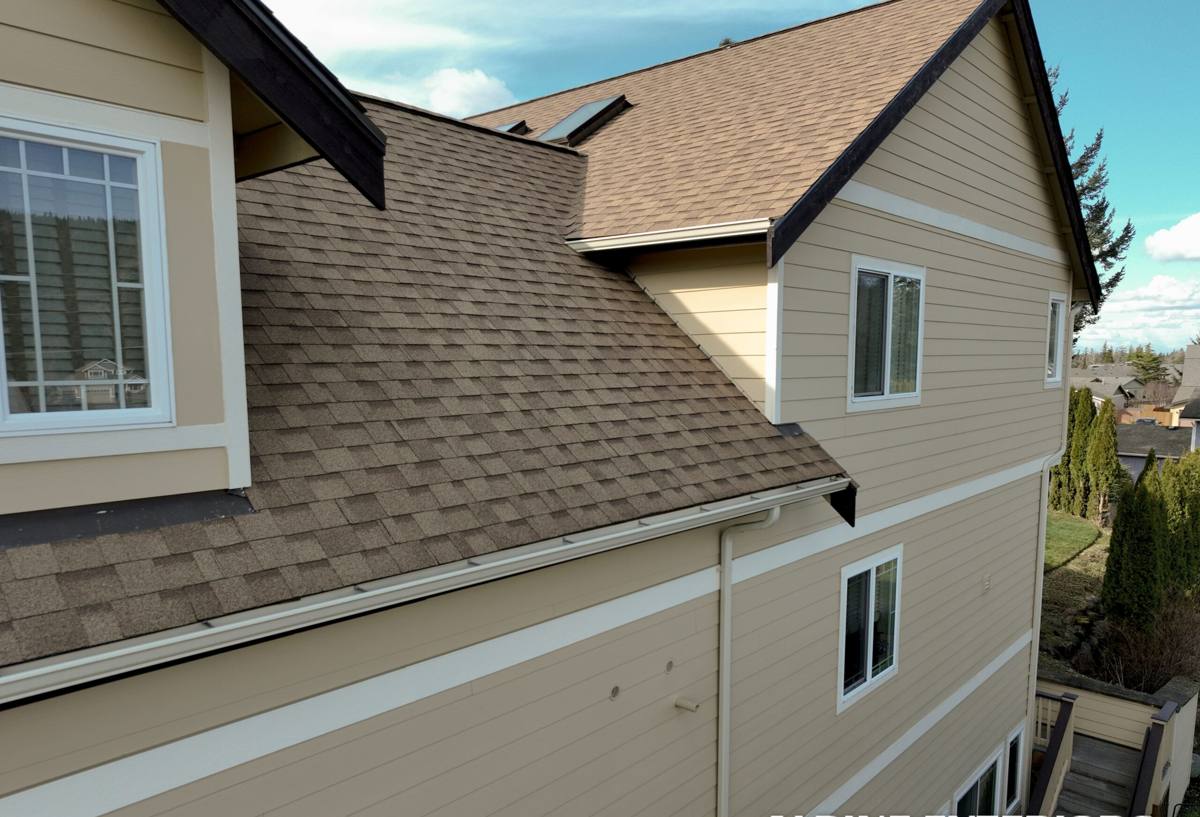
Why Local Decks Fail: The Climate Factors
Moisture That Never Fully Leaves
In a lot of the country, wood structures get a real dry season where trapped moisture has a chance to evaporate out. Here, that window is short. Ledger boards, joists, and post bases can stay damp for months at a stretch, which is exactly the condition wood rot and fastener corrosion need to take hold.
Moss and Organic Growth
Moss doesn't just look bad on decking boards and stair treads — it holds moisture against the wood surface, creates a slip hazard, and can work into seams between boards where it accelerates rot from the inside out. A long moss season means more months where this is actively happening rather than a short seasonal nuisance.
Salt Air and Metal Fatigue
Proximity to the Salish Sea puts a fine layer of salt into the air that settles on exposed decks. Over years, that accelerates corrosion on fasteners, joist hangers, and any exposed metal hardware — including hardware that was galvanized but not rated for coastal exposure. Corroded fasteners are one of the most common hidden failures we find during a repair inspection.
Signs a Deck Needs Repair, Not Just Cosmetic Attention
Homeowners often call about a soft board or a wobbly rail, but the real question is always whether the problem is cosmetic or structural. Here's how we sort that out on a typical visit.
| What You Notice | Likely Cause | Repair Category |
|---|---|---|
| Soft or spongy decking boards | Moisture trapped under board or in board core | Board replacement, sometimes joist inspection |
| Railing that flexes or wiggles | Loose or corroded post connections | Structural — priority repair |
| Deck feels bouncy underfoot | Undersized or compromised joists | Structural — priority repair |
| Gap or crack where deck meets house | Failing or improperly flashed ledger connection | Structural — priority repair |
| Dark staining or green film on boards | Moss, algae, or early rot | Cosmetic to moderate, worth catching early |
| Rust streaks near fasteners | Corroding hardware, often not coastal-rated | Hardware replacement, inspect surrounding wood |
The ledger board connection deserves special mention. It's the single most important structural point on most decks — it's what actually attaches the deck to the house — and it's also the point most exposed to the moisture cycle described above. A significant share of the deck collapses reported nationally trace back to a failed ledger connection. It's rarely dramatic beforehand; it's usually just quietly getting worse behind a piece of trim or flashing nobody's looked at in years.
What a Correct Repair Actually Involves
Deck repair gets treated as simple carpentry more often than it should. Swapping a rotted board for a new one is the easy part. Doing it correctly means understanding why that board failed in the first place, and making sure the fix doesn't just repeat the same failure in a few years.
Structural Inspection First
Before any board comes off, we check the ledger connection and flashing, the condition of joists and beams, post-to-footing connections, and railing post attachment. Surface repairs on top of a compromised structure are a waste of a homeowner's money and, worse, can create a false sense of security.
Matching the Fix to the Cause
A soft board caused by standing water needs a drainage fix, not just a new board — otherwise the replacement fails the same way. Rot at a ledger board usually means correcting the flashing detail, not just cutting out the bad wood. We treat the cause, not just the symptom.
Hardware Rated for This Climate
Given the salt air and moisture exposure common around Sudden Valley and the broader Whatcom County coastline, we use fasteners and joist hangers rated for wet, coastal-adjacent service — not standard interior-grade hardware. It costs a little more up front and saves the homeowner from doing this same repair again in five years.
Repair vs. Rebuild: How We Help You Decide
Not every deck problem calls for a full rebuild, and not every deck is worth patching. The honest answer depends on how much of the structure is affected versus how much is cosmetic.
| Factor | Leans Toward Repair | Leans Toward Rebuild |
|---|---|---|
| Ledger board condition | Solid, properly flashed | Rotted or improperly flashed |
| Extent of affected boards | Isolated boards or sections | Widespread soft spots across the deck |
| Framing (joists/beams) | Sound, no significant rot | Multiple compromised members |
| Age of the structure | Under 15 years, built to code | Older, unknown or outdated construction |
| Footings and posts | Stable, no settling or rot | Shifting, undersized, or deteriorated |
We'll walk you through where your deck falls on this table before we recommend anything. A repair that ignores a compromised frame just delays a bigger job — and usually makes it more expensive when it finally has to happen.
Our Deck Repair Process
- Inspection and assessment. We check structural connections first, then surface condition, and document what we find.
- Honest scope discussion. We tell you what's cosmetic, what's structural, and what can reasonably wait.
- Removal of compromised material. Rotted boards, corroded hardware, and failed flashing come out completely — we don't build over a bad connection.
- Correcting the underlying cause. Improved flashing, drainage, or ventilation gets addressed alongside the visible repair.
- Rebuild with climate-appropriate materials. Coastal-rated fasteners, proper flashing tape, and materials chosen for wet-climate performance.
- Final check. We test railings, stair connections, and decking for solid, even performance before calling the job done.
Wood, Composite, and What We Recommend
Both wood and composite decking can perform well here, but each comes with trade-offs worth understanding before a repair or partial replacement.
Pressure-treated wood is affordable and easy to repair in sections, but it needs regular cleaning and sealing to keep moss and moisture from getting a foothold — skipping that maintenance is the single biggest reason we see premature wood rot in this area. Composite decking resists moisture and moss better and needs less upkeep, but it comes at a higher upfront cost, and not all composite products handle years of damp, low-light conditions the same way — some are more prone to surface staining or mold growth in shaded, humid spots than others. We'll talk through what's actually on your deck now and what makes sense as a repair material, rather than pushing one product as a default answer.
Maintenance Checklist to Extend the Repair's Life
A repair done right can last a long time, but a little seasonal attention makes a real difference in a climate like this one.
- Sweep debris and standing leaves off decking boards regularly, especially in fall
- Clean moss and algae buildup before it stains or softens the wood surface
- Check that gaps between boards stay clear so water can drain instead of pooling
- Inspect the ledger board area and flashing once a year for gaps or staining
- Look at fasteners and hardware periodically for rust or loosening
- Reseal or re-stain wood decking on the manufacturer's recommended schedule
- Trim back vegetation that keeps the deck surface shaded and slow to dry
Why a Crew That Already Works This Area Matters
Deck problems around Sudden Valley and the Sehome area tend to share a common thread — moisture management, salt air exposure, and moss — and a crew that's repaired decks under these exact conditions spots the early warning signs faster than one working from a generic checklist. We know which hardware holds up here, which flashing details actually keep water out through a Whatcom County winter, and where builders elsewhere might over-treat a problem that's purely cosmetic or under-treat one that's genuinely structural. That local pattern recognition is what keeps a repair from turning into a repeat visit two years later.
If you've got a deck in or around Sehome that's showing soft spots, a wobbly rail, or just general wear from the weather, we're glad to take a look. We offer a free, no-pressure estimate — just fill out the form below and we'll get back to you with an honest read on what your deck actually needs.