 Sudden Valley Siding
 Board & Batten Siding Built for Sehome's Climate
Homes in and around Sehome sit in a stretch of Whatcom County where the weather doesn't do anything in half measures. Wind off the water carries salt and moisture into every exterior surface, driving rain comes in sideways more often than straight down, and the wet, shaded months stack up long enough that moss and algae get a real foothold on anything that stays damp. Board and batten siding is one of the most requested looks in this area right now — the vertical lines read as clean, modern, or classic farmhouse depending on the trim details — but the look only holds up if the material and the installation are matched to what this climate actually does to a wall.
We install board and batten as a specific job for Sehome-area homes, not a generic product we drop into any neighborhood. That distinction matters more with this profile than with most, because board and batten has more seams, more fastening points, and more vertical water paths than lap siding does. Done right, it's a durable, good-looking system. Done wrong, it's a moisture trap with a nice pattern on the outside.
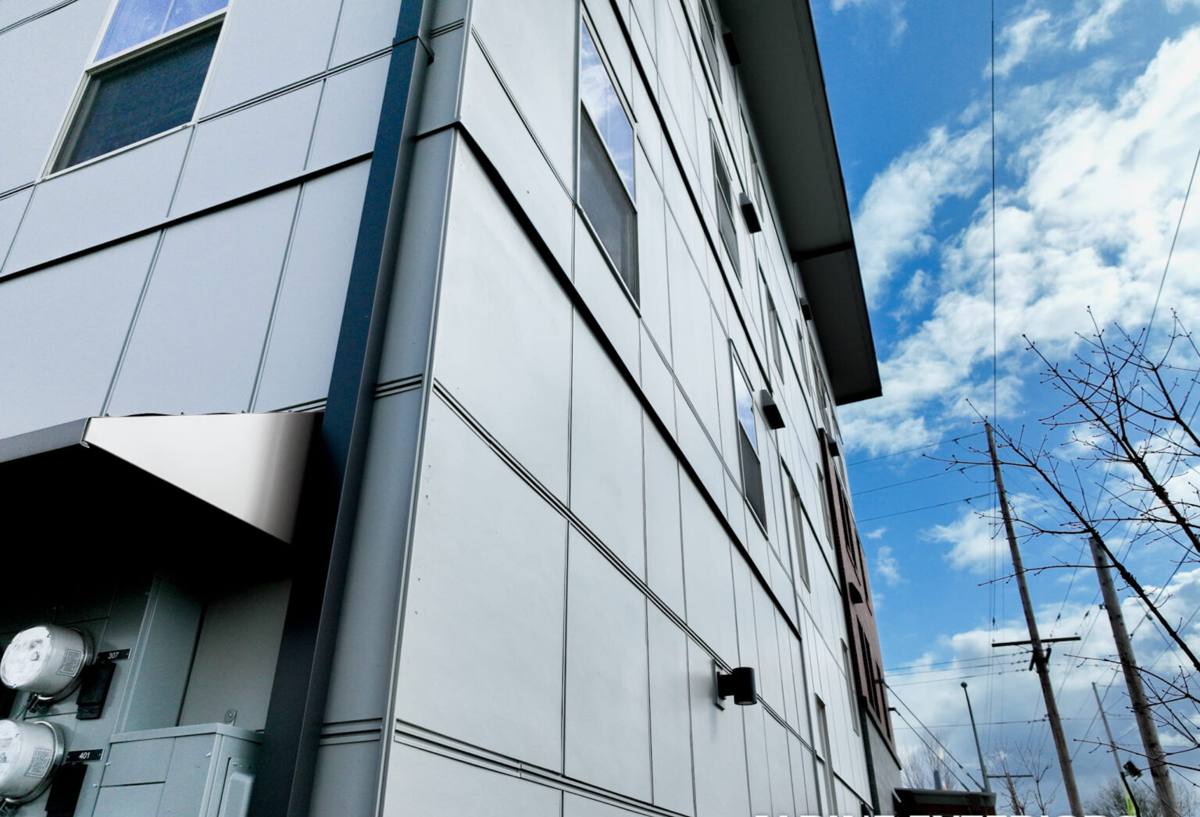
Why Board & Batten Needs Extra Care in This Climate
Board and batten is a two-layer system: wide vertical boards (or sheets) with narrower battens covering the seams between them. That seam-and-batten structure is exactly where local conditions cause the most trouble if the details are wrong.
Salt Air and Fastener Corrosion
Proximity to the water means airborne salt settles on every exterior surface, including fasteners. Battens are typically face-nailed or screwed directly through to the substrate, which means there are more exposed fastener heads on a board and batten wall than on most other siding profiles. Fasteners that aren't corrosion-rated for a marine-influenced environment will bleed rust streaks down the face of the siding within a few years and eventually lose holding strength.
Driving Rain and Vertical Seams
Vertical board-to-board seams, even when covered by a batten, are a more direct path for wind-driven rain than the shingled, overlapping seams of horizontal lap siding. When rain comes in at an angle — which it does regularly here — water gets pushed up and into any gap where the batten isn't sealed and flashed correctly at the top.
Moss, Algae, and Shaded Wall Sections
North-facing walls and anything shaded by mature trees or neighboring structures stay damp longer through the fall and winter. Moss and algae need exactly that — sustained moisture and low light — and they take hold on rough or porous surfaces faster than on a factory-sealed, smooth or lightly textured finish.
What a Correct Board & Batten Installation Involves
The visual pattern is the easy part. The parts that determine whether the siding lasts are mostly invisible once the job is done.
- Weather-resistive barrier and drainage plane — a continuous, correctly lapped water barrier behind the siding, with a drainage gap so any moisture that does get past the boards can find its way back out instead of sitting against the sheathing.
- Flashing at every horizontal break — window and door heads, transitions between siding and trim, and any place a batten terminates need proper flashing, not just caulk.
- Corrosion-rated fasteners — stainless or hot-dip galvanized fasteners sized and spaced to the manufacturer's specification, driven so they seat flush without crushing the material.
- Correct board and batten spacing — batten width and reveal sized for expansion and contraction so the boards aren't fighting each other as temperature and moisture swing through the seasons.
- Clearance at grade and hard surfaces — the bottom of the siding held up off decks, patios, and soil so splash-back moisture isn't sitting against the material.
- Factory-finished material — a pre-finished product holds paint and color far more consistently over time than field-painted siding, especially in a climate that gives paint very little time to fully cure between wet spells.
Why We Install Only James Hardie for Board & Batten
Board and batten is available in several materials — vinyl, engineered wood, primed spruce or cedar, and fiber cement — and we've made a deliberate call to install only James Hardie fiber cement on every board and batten job we take on, in Sehome or anywhere else in our service area.
Why We Don't Install the Alternatives
Vinyl board and batten looks the part from a distance but is a thin extruded panel that can warp or distort in direct sun and doesn't hold up well to impact in cold weather. Engineered wood and primed spruce or cedar options are lighter to install and often cheaper up front, but they rely on their factory coating and field-applied caulking to keep moisture out of a wood-based core — and wood-based cores that do take on moisture in a climate this wet are prone to swelling at the seams, exactly where board and batten has the most exposed joints. We're not saying these products fail on every install; we're saying the margin for error is thinner, the maintenance burden is higher, and the failure mode when things do go wrong is expensive to fix. Given the salt air and rain patterns here, we don't think that trade-off makes sense for our customers, so we don't offer it.
What Hardie Gets Right for This Application
James Hardie fiber cement is non-combustible, doesn't swell or rot when it takes on moisture, and comes with a factory-applied ColorPlus finish that's baked on and warranted separately from the substrate — which matters enormously for a vertical-seam profile with more exposed surface than lap siding. Hardie's HZ5 product line is engineered specifically for cold, wet, freeze-prone climates like the Pacific Northwest, and the company backs its siding with a strong transferable limited warranty when installed to their published specifications.
Board & Batten Material Comparison
| Factor | Vinyl | Engineered Wood / Primed Spruce | James Hardie Fiber Cement |
|---|---|---|---|
| Moisture behavior at seams | Can warp; seams shift with heat | Wood-based core can swell if moisture gets in | Doesn't swell or rot from moisture exposure |
| Finish durability | Color molded in but fades; can chalk | Relies on field or factory paint/primer | Factory-baked ColorPlus finish, separately warranted |
| Fire resistance | Combustible | Combustible | Non-combustible |
| Maintenance in this climate | Low but seams degrade over time | Repainting and caulk maintenance more frequent | Periodic wash; repainting only if not factory-finished |
| Typical warranty | Varies widely by manufacturer | Often shorter, product-only | Long-term, transferable limited warranty |
Our Process for a Sehome Board & Batten Project
We run the same disciplined process on every board and batten job, adjusted for the specific exposure of the house.
1. On-Site Assessment
We walk the exterior and note sun exposure, tree cover, wind direction, drainage patterns at the foundation, and the condition of the existing wall assembly. This is where we identify which walls are most at risk for driving rain and which are prone to shade-driven moss growth.
2. Substrate and Water Barrier Check
Before any siding goes up, we confirm the sheathing underneath is sound and that a continuous, properly lapped weather-resistive barrier with a drainage gap is in place. Existing damage gets addressed before new siding covers it up — new siding over a wet or rotten substrate just hides the problem.
3. Flashing and Trim Detail
We flash every window head, door head, and horizontal transition before the boards go on, and we plan batten spacing and reveal to match the specific James Hardie product being used.
4. Installation to Manufacturer Spec
Fastener type, spacing, and placement follow James Hardie's published installation guidelines exactly — this is what keeps the warranty valid and what keeps the wall performing in wind-driven rain.
5. Final Walkthrough
We walk the finished exterior with the homeowner, checking sightlines, seams, and trim details before calling the job complete.
Homeowner Checklist: Is Your Siding Ready for Another Wet Season?
- Do you see rust streaks running down from fastener heads or trim edges?
- Is there visible moss or algae buildup on north-facing or shaded wall sections?
- Are there gaps, cracks, or separation at vertical seams or battens?
- Does paint or finish look chalky, peeling, or inconsistent in color?
- Is the bottom edge of the siding sitting close to soil, mulch, or a hard surface?
- Have you noticed soft spots, swelling, or a change in texture on any board?
If you're checking more than one or two boxes, it's worth having the siding looked at before the wet season sets in again.
What This Means for Your Home
Board and batten is a great fit for a lot of Sehome-area homes — it works well with both older and newer architectural styles, and it holds up visually when it's installed with the right water management behind it. The mistake we see most often isn't a bad-looking installation; it's a good-looking installation that skipped the flashing, fastener, or drainage details that don't show up until a few wet seasons in. That's the part of the job that actually determines whether you're looking at decades of low-maintenance performance or a callback in five years.
If you're considering board and batten for your home, we're happy to walk the exterior with you, talk through what your specific exposure calls for, and give you a straightforward, no-pressure estimate. There's a form below — reach out and we'll take it from there.