 Sudden Valley Siding
 Why Roofs in Sehome and Sudden Valley Wear Differently
A roof in this part of Whatcom County doesn't fail the way a roof does in a dry inland climate. Homes around Sehome and out toward Sudden Valley deal with a specific combination of conditions: salt-laden air moving in off the Sound and the bay, long stretches of driving rain that comes in sideways during winter storms, and shaded, damp roof planes that stay wet for days at a time. None of these alone is unusual for the Pacific Northwest, but together they shorten the useful life of flashing, fasteners, and roofing material faster than most homeowners expect.
Salt air is corrosive to exposed metal — nail heads, flashing, gutter hangers, and vent caps all take the hit over years of exposure, even at a distance from open water. Driving rain finds the smallest gap in a roof system and pushes water uphill and sideways under shingles, which is why so many "mystery leaks" show up several feet from where the water actually entered. And moss doesn't just look bad — it holds moisture against the roofing material for months, works its way under shingle tabs, and lifts them just enough to let water in during the next storm.
What This Means for Repair Timing
Waiting until a leak shows up inside the house usually means the damage started months, sometimes years, earlier. A roof that looks fine from the ground can already have compromised flashing, saturated underlayment, or moss-lifted shingles that only reveal themselves once water finds a path to drywall or framing. Catching these issues during a dry stretch — rather than mid-storm — is almost always cheaper and less disruptive.
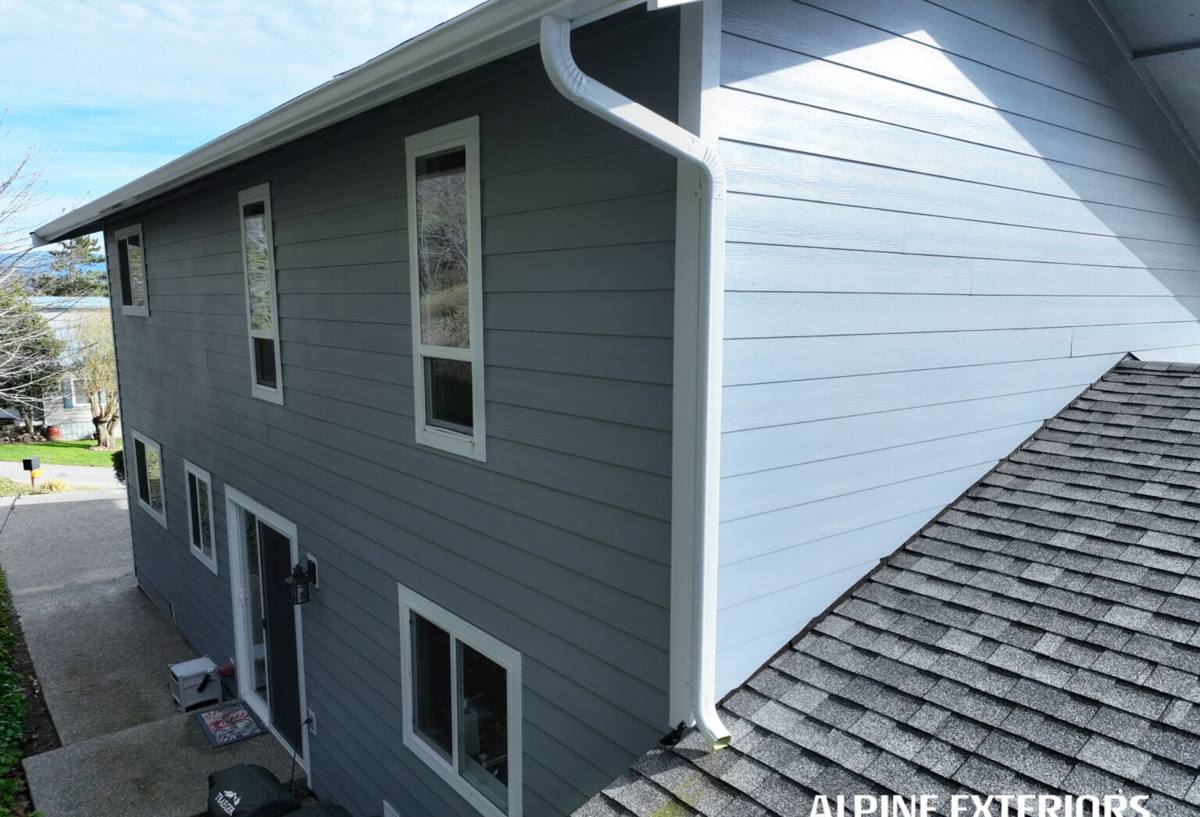
Common Roof Problems We See in This Area
Every roof is different, but certain issues show up again and again on homes in this stretch of Whatcom County. Knowing what to watch for helps you catch a problem while it's still a repair, not a replacement.
- Lifted or missing shingle tabs along the north- and shade-facing slopes, usually tied to moss growth
- Rusted or corroded flashing around chimneys, skylights, and roof-to-wall transitions
- Granule loss and thinning on south- and west-facing slopes from years of sun and wind-driven rain
- Clogged or sagging gutters that back water up under the first course of shingles
- Soft spots or staining on interior ceilings near exterior walls, often the first visible sign of a slow leak
- Nail pops and cracked pipe boot collars, which dry out and split faster with repeated wet-dry cycling
Most of these start small. A single lifted shingle or a cracked pipe boot is a straightforward repair. Left through another wet season, the same problem can mean replacing sheathing, insulation, and drywall — a very different job and a very different cost.
What a Correct Roof Repair Actually Involves
Diagnosis Before Anything Else
A repair that just patches the visible symptom without finding the actual entry point tends to fail again within a season or two. A proper diagnosis means getting on the roof (not just looking from the ground), checking the attic or interior for signs of moisture travel, and tracing water back to its real source — which is often several feet from where the stain or drip appeared inside the house.
Matching Materials and Technique to the Existing Roof
Repairs need to tie into the existing roofing system correctly — matching shingle type and exposure, integrating new flashing properly with the old, and using fasteners and sealants rated for exterior, long-term exposure rather than general-purpose products that break down under UV and moisture over time. A patch that isn't woven into the surrounding material correctly just creates a new place for water to collect.
Addressing the Cause, Not Just the Leak
If moss caused the lifted shingles, the repair should include moss removal and treatment, not just replacing the damaged section. If a clogged gutter backed water under the roofline, that gutter needs to be cleared and checked for proper pitch as part of the job. Fixing the symptom without addressing the cause is a short-term fix that costs more in the long run.
Repair or Replacement? How to Tell the Difference
Not every roof problem calls for a full replacement, and not every leak is fixable with a patch. Here's how we generally think through it:
| Situation | Usually a Repair | Usually a Replacement |
|---|---|---|
| Age of roofing material | Roof is under 15–20 years old (asphalt) with isolated damage | Roof is near or past its expected lifespan with widespread wear |
| Extent of the problem | Localized — one slope, one flashing detail, one leak point | Multiple slopes affected, or damage found in several unrelated areas |
| Granule loss / material condition | Granules present, shingles still flexible | Widespread granule loss, brittle or curling shingles |
| Underlying structure | Sheathing and framing are sound | Soft or rotted sheathing found under the roofing |
| History of repairs | First or second repair on this roof | Repeated repairs in the same areas over recent years |
An honest contractor will tell you when a repair is the right call, even if a replacement would be the bigger job. We'd rather do the smaller job correctly and earn the next call than push a replacement a roof doesn't need yet.
Our Process, From First Call to Cleanup
- Initial conversation — you describe what you're seeing (a stain, a drip, missing shingles after a windstorm), and we ask enough questions to know what to expect before we're on-site.
- On-roof and interior inspection — we physically inspect the roof surface, flashing details, and any interior areas showing signs of moisture, and take note of anything nearby that could be contributing (overhanging branches, clogged gutters, ventilation issues).
- Written scope and estimate — you get a clear explanation of what's actually wrong, what we recommend, and what it costs, before any work starts.
- The repair itself — matched materials, proper flashing integration, and attention to how water actually moves across your specific roof, not a generic patch.
- Cleanup and walkthrough — debris and old material removed, and we walk you through what was done and what to keep an eye on going forward.
Materials We Use — and Why
We use roofing materials and flashing components rated for sustained wet-climate exposure, matched as closely as possible to what's already on your roof so the repair blends structurally and visually rather than standing out as an obvious patch. For flashing and fasteners, we favor corrosion-resistant metals over standard galvanized options in this area specifically because of the salt-air exposure — the cost difference is modest, and the maintenance savings over a decade are real.
We're selective about sealants and adhesives too. Some products look fine going on but break down faster than the roofing material around them once they're exposed to years of UV and freeze-thaw cycling here — which means the "quick fix" ends up needing to be redone sooner than a slightly more labor-intensive, properly integrated repair. Our standard is to do the version of the repair that holds up through several wet seasons, not the version that looks finished on day one.
Moss, Algae, and Long-Term Roof Health
This region's long moss season — roughly fall through spring on shaded, north-facing roof planes — is one of the biggest long-term threats to roof lifespan here, and it's also one of the most preventable. Moss holds moisture against shingles, works into the gaps between tabs, and physically lifts material over time, which is exactly the kind of damage that turns a $300 repair into a $3,000 one if it's ignored for a few years.
Prevention Basics
- Keep overhanging branches trimmed back to reduce shade and debris buildup on the roof
- Clean gutters at least twice a year so water isn't sitting against the roof edge
- Have moss and algae growth removed using methods that don't damage the shingle surface (avoid aggressive pressure washing)
- Consider zinc or copper strips near the ridge on shaded slopes, which help suppress regrowth over time
- Schedule a roof check after major windstorms, not just once a year on a fixed schedule
None of this eliminates moss entirely — it's a fact of life in this climate — but staying ahead of it is far cheaper than repairing what it causes once it's been left alone for a few seasons.
Warning Signs Worth a Call
You don't need to climb on your own roof to know something's worth checking. Watch for these from the ground or inside the house:
- A new stain, discoloration, or sagging spot on a ceiling or upper wall
- Visible moss patches or dark streaking on shaded roof slopes
- Shingles you can see are curling, cracked, or missing after a windstorm
- Granules collecting in gutters or at downspout outlets
- Daylight visible through the attic roof deck, if you have attic access
- A musty smell in an upper room or closet that wasn't there before
Why Local Experience in This Area Matters
A roof repair crew that regularly works in Sehome and out toward Sudden Valley already knows how this specific stretch of Whatcom County treats a roof — which slopes hold moss longest, which older flashing details tend to fail first, and how much driving rain a given roof pitch actually needs to shed in a bad winter storm. That's not something you get from a general checklist; it comes from doing the work here, season after season. It also means we're not guessing at material choices — we know what holds up in this climate and what doesn't, and we'd rather tell you that upfront than sell you a repair that needs redoing in two years.
If you're seeing signs of a roof problem, or just want an honest opinion on whether it's a repair or something bigger, we're happy to take a look. Reach out for a free, no-pressure estimate using the form below — there's no obligation, and you'll get a straight answer about what your roof actually needs.