 Sudden Valley Siding
 Lake Whatcom Puts Different Demands on Siding Than a Dry Inland Lot
Homes around Lake Whatcom, including throughout Sudden Valley, sit in a microclimate that's wetter and shadier than a lot of Whatcom County. The lake itself keeps humidity elevated at ground level, tree cover on many lots blocks sun for hours a day, and the marine-influenced air moving through this part of Western Washington carries more moisture than it does further inland. Add a long stretch of the year where surfaces simply don't dry out between rain events, and you get siding conditions that punish anything with a weak moisture tolerance or a coating that can't stand up to repeated wet-dry cycling.
That combination — persistent dampness, shade, and driving rain off the water — is exactly the profile that produces moss growth, coating failure, and swelling at panel edges on products that aren't engineered for it. It's also why we don't treat a Lake Whatcom siding job the same way we'd treat one on an open, sunny lot on the other side of town. The material and the install both have to account for what this specific setting does to a wall assembly year after year.
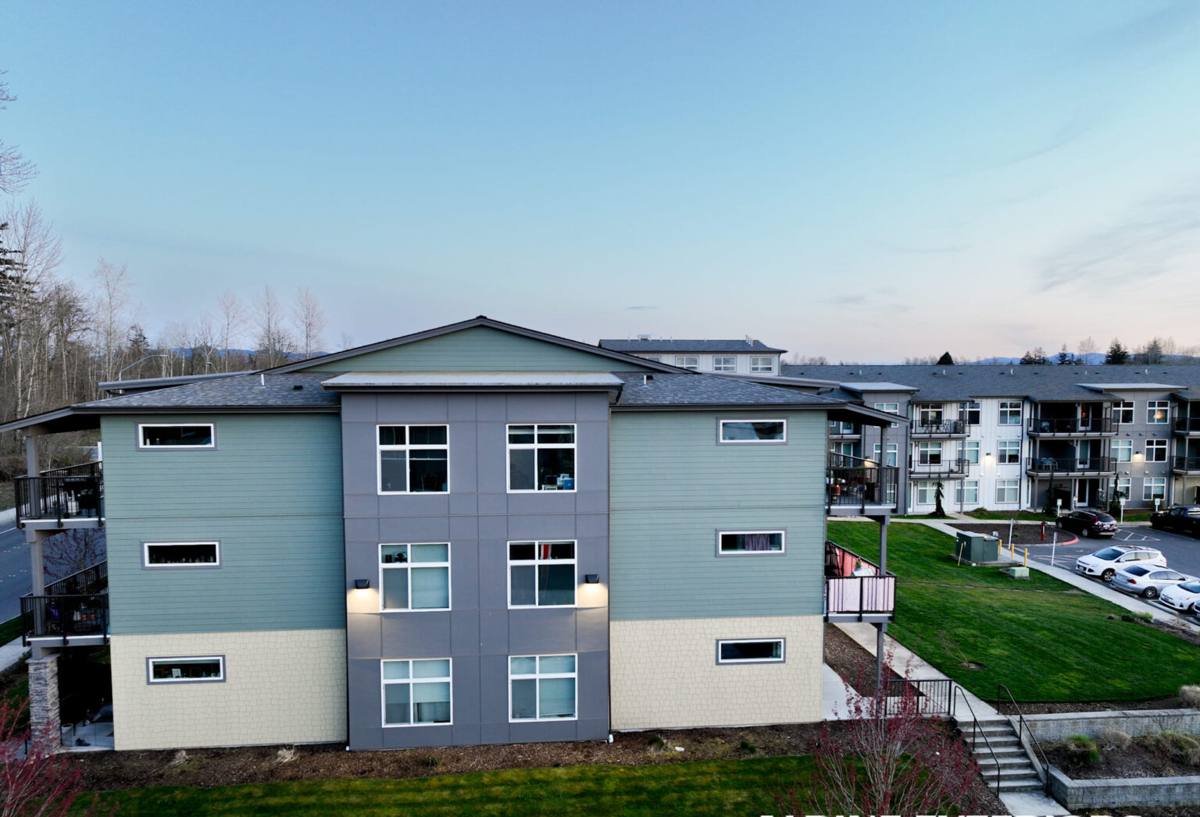
What Fiber Cement Actually Solves Here
Fiber cement is a mix of Portland cement, sand, and cellulose fibers, pressed and cured into a rigid board. Unlike wood-based siding, it doesn't absorb water into its core the way engineered wood or untreated cedar can, and it doesn't feed mold or rot the way organic materials do when they stay damp. That matters directly on a shaded Lake Whatcom lot, where north-facing walls or sections tucked under fir and cedar canopy may stay damp for days after a storm passes.
We install James Hardie fiber cement exclusively — we don't run LP SmartSide, vinyl, Cemplank, Allura, or bare cedar or spruce siding on any job. That's a deliberate standard, not a sales preference. Engineered wood products rely on treated surfaces and sealed edges to keep moisture out; once a cut edge or nail penetration goes unsealed in a damp environment like this one, water finds its way in and the core can swell or delaminate. Vinyl doesn't rot, but it flexes and gaps with temperature swings and doesn't hold up structurally the way a rigid cement board does against wind-driven rain. Fiber cement doesn't have that vulnerability — there's no organic core to protect, which is one less failure point on a lot that stays wet as long as these do.
Why James Hardie Specifically
Not all fiber cement is manufactured or finished the same way. Hardie's HZ5 product line is engineered for the freeze-thaw and moisture-cycling conditions typical of the Pacific Northwest, and the ColorPlus factory finish is baked on under controlled conditions rather than field-applied. That matters in a place like Lake Whatcom: a field-applied paint job is only as good as the weather and prep conditions on the day it's sprayed, and repainting siding on a shaded, hard-to-access lakefront or wooded lot is not a job most homeowners want to repeat every several years. A factory finish backed by Hardie's own coating warranty removes that variable.
Moss, Algae, and the Long Wet Season
Whatcom County's moss season runs long — realistically most of the year on shaded, north-facing, or tree-covered walls. Moss and algae themselves don't destroy fiber cement, but they hold moisture against the surface longer than bare siding would, and they're a sign that a wall isn't drying out between rain events. On wood-based products, that same moisture retention is what accelerates rot at seams and cut edges. Fiber cement gives you a material that can tolerate that extended damp exposure without the same structural consequence, but a smart installation still reduces how much moss gets a foothold in the first place.
- Adequate clearance between siding and grade, mulch beds, or landscaping so splash-back and soil moisture don't sit against the bottom course
- Proper drainage plane and rainscreen gap behind the siding so any moisture that reaches the wall can escape instead of being trapped
- Correctly flashed and caulked butt joints, corners, and penetrations — the majority of moisture and moss problems we find start at a poorly sealed joint, not through the field of the panel
- Trim and fascia detailing that sheds water away from the wall instead of channeling it down the face of the siding
- Attention to any section of wall shaded by mature trees, where drying time is longest and coatings work hardest
What a Correct Installation Looks Like
Fiber cement performs the way it's supposed to only when it's installed to Hardie's published specifications — this is a product where installation quality determines whether the warranty is even valid, and where cut corners show up as problems within a few wet seasons rather than immediately.
| Install Element | Why It Matters on a Lake Whatcom Lot |
|---|---|
| Rainscreen / drainage gap | Lets bulk water and trapped humidity behind the siding escape instead of sitting against wall sheathing |
| Correct fastener pattern and blind-nailing where called for | Prevents fastener corrosion and panel movement under constant wet-dry cycling |
| Sealed and painted cut edges | Factory finish only protects the face — every field cut needs to be sealed the same day to keep moisture out |
| Proper minimum clearance to grade, roofs, and decks | Keeps splash-back and standing moisture off the bottom courses where most rot starts |
| Flashing at windows, doors, and penetrations | Directs driving rain off the lake away from the wall assembly instead of behind it |
Our Process for a Lake Whatcom Job
We start with a walk of the exterior to identify shaded and high-exposure sections separately, since they don't always need the same detailing. We check existing sheathing and framing condition where old siding comes off — on older Sudden Valley homes, that's often where we find out whether previous siding was doing its job. From there we install the drainage plane, trim, and flashing before a single piece of Hardie board goes up, because those layers are what actually keep water out; the siding itself is the visible layer, not the only line of defense.
Panels, fasteners, and joint treatment follow Hardie's installation manual for our climate zone, and every cut edge gets sealed before the board goes on the wall — not after, and not left bare. We don't shortcut clearances at grade or roof lines to save time, because that's exactly where we see the earliest problems on lakefront and wooded lots.
Why a Crew That Already Works This Area Matters
A contractor who mostly works drier, sunnier neighborhoods can install fiber cement correctly by the book and still miss the details that matter specifically on a shaded Lake Whatcom lot — where to add extra clearance, which walls need closer joint sealing, how tree cover changes drying time on one side of a house versus the other. A crew that's done multiple jobs in Sudden Valley has already seen how this microclimate treats siding over several seasons, not just on install day. That experience shows up in fewer callbacks for moss buildup, joint failure, or moisture intrusion down the road.
Upkeep Once It's Installed
Fiber cement is low-maintenance compared to wood-based siding, but "low-maintenance" doesn't mean zero-attention, especially in a damp, shaded environment like this one.
- Rinse siding periodically to keep moss and algae from building up on shaded or north-facing walls
- Keep gutters clear so overflow doesn't run down the face of the siding
- Trim back tree branches and shrubs that keep a wall section shaded and slow to dry
- Re-caulk joints and penetrations if you notice cracking or gaps — sealant has a shorter service life than the siding itself
- Walk the exterior after major storms to check for impact damage or loosened trim, since driving rain off the lake finds weak points fast
What This Costs to Do Right
Pricing depends on square footage, how much of the existing wall assembly needs repair before new siding goes on, trim complexity, and access — lakefront and sloped lots around Sudden Valley are sometimes harder to stage than a flat in-town lot. We won't quote a number without seeing the house, but we're upfront that doing the drainage plane, flashing, and sealed-edge detailing correctly costs more up front than a bare-minimum install. That difference is what keeps the wall performing in a climate that doesn't give siding much of a break.
If you're weighing a siding replacement on a Lake Whatcom or Sudden Valley home, we're glad to take a look and walk you through what your specific lot needs — shade, exposure, and existing wall condition all factor in. Reach out for a free, no-pressure estimate using the form below.