 Sudden Valley Siding
 Asphalt Shingle Roofing Built for the Lake Whatcom Basin
Homes around Lake Whatcom and the Sudden Valley community sit in a pocket of the county that takes a particular kind of beating year after year. Marine air moving inland off the Sound keeps everything damp for months at a stretch, driving rain comes in sideways off the water during winter storms, and the tree canopy around the lake means shade, needle litter, and a moss season that can run from October into May. Asphalt shingle roofs handle all of that well when they're installed correctly for this climate. They fail early, streak, and lose granules fast when they're installed the way a roof gets installed in a drier part of the state.
This page covers what an asphalt shingle roof needs to hold up in Lake Whatcom specifically, what a correct installation involves, and how we approach the work when we're up on a roof in this neighborhood.
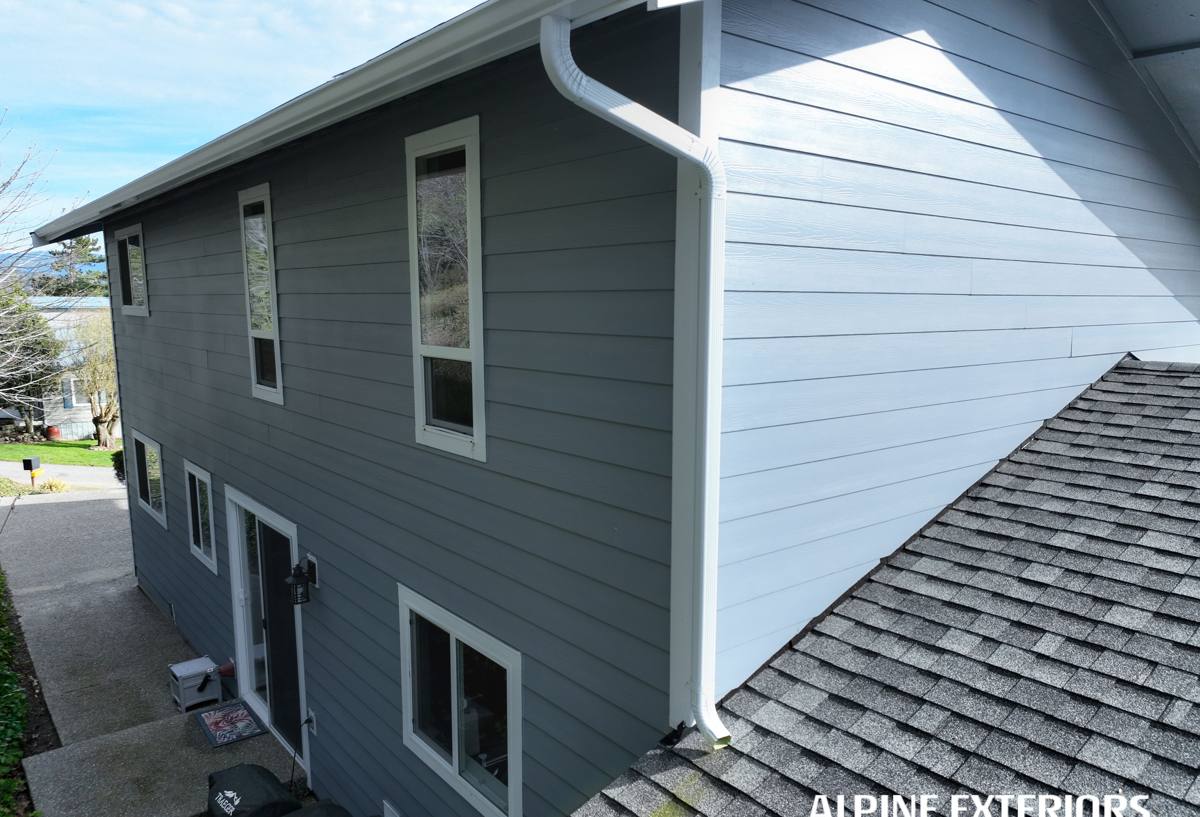
Why This Climate Is Hard on Shingle Roofs
Moss, Shade, and Moisture Retention
Lake Whatcom's tree cover is a mixed blessing. It's part of what makes the area attractive, but it also means shingles stay damp longer after every rain, and moss and moss spores have an easier time taking hold. Once moss establishes itself in a shingle mat, it holds water against the surface, lifts shingle edges, and works its way under tabs over a couple of seasons. Left alone, that's a slow but steady path to leaks — not because the shingle itself failed, but because moisture had a place to sit.
Wind-Driven Rain Off the Lake
Storms moving across Lake Whatcom pick up speed with nothing to slow them down before they hit the shoreline properties and the higher ground around Sudden Valley. That means rain doesn't just fall on a roof here, it gets pushed sideways and upward under the shingle edge, especially at eaves, valleys, and any place two roof planes meet. A shingle roof built for calmer conditions can get away with lighter flashing and underlayment choices. One built for Whatcom County's driving rain can't.
Marine Air and Long Wet Stretches
The persistent damp that comes with living near the Sound and the lake means asphalt shingles rarely get a long dry stretch to fully shed moisture, and metal components — nails, flashing, vents — are exposed to more corrosion-friendly conditions than you'd see further inland. None of this rules out asphalt shingles as a roofing choice. It just means every layer under the shingles has to be chosen and installed with this specific climate in mind.
What a Correct Asphalt Shingle Installation Includes Here
Underlayment and Water Barrier
We treat synthetic underlayment as the baseline, not an upgrade, on every roof we install in this area. In vulnerable spots — eaves, valleys, low-slope sections, and around any roof penetration — we add self-adhering ice-and-water membrane. Whatcom County doesn't see the ice dams of a true cold climate, but the same membrane does double duty here: it seals nail penetrations and gives the roof a second line of defense against wind-driven rain that gets past the shingle surface.
Ventilation That Actually Works
A shingle roof needs balanced intake and exhaust ventilation to let the attic breathe. In a damp climate like this one, poor ventilation doesn't just shorten shingle life from the underside — it also raises the odds of trapped moisture, mildew, and premature sheathing rot. We check existing ventilation on every re-roof and correct it when it's inadequate, rather than just re-covering a roof that was never breathing properly in the first place.
Flashing at Every Transition
Step flashing at walls, counterflashing at chimneys, and properly woven or metal valleys matter more here than in a drier region, because wind-driven rain finds any gap in a transition. We replace flashing as part of a re-roof rather than reusing old pieces — reused flashing is one of the more common causes of "mystery leaks" we get called out to fix on roofs that are otherwise in decent shape.
Shingle Choice for a Shaded, Damp Lake Property
Not every asphalt shingle product is built the same way, and the differences matter more on a shaded, moss-prone lot than they do on an open, sunny one.
| Shingle Type | Best Fit For | Trade-Offs to Know |
|---|---|---|
| 3-tab shingle | Budget-conscious re-roofs, secondary structures | Shorter lifespan, less wind resistance, no algae-resistant option in most lines |
| Architectural (laminate) shingle | Most Lake Whatcom homes | Higher upfront cost than 3-tab, but better wind rating and thicker mat holds up longer under moss and moisture |
| Algae-resistant (AR) architectural shingle | Shaded lots near the lake or tree line | Copper- or zinc-infused granules resist streaking longer; still needs periodic cleaning, not a permanent fix |
| Impact-resistant (Class 4) shingle | Homes wanting extra durability against falling debris | Higher material cost; may qualify for insurance discounts, worth confirming with your carrier |
For most homes around the lake, we point owners toward an algae-resistant architectural shingle. It costs more than a basic 3-tab up front, but it's the product least likely to have us back out for a moss-related repair inside five years.
Our Process for a Lake Whatcom Roof
- On-site inspection of the existing roof, decking, flashing, and attic ventilation — not just a look from the ground.
- Honest assessment of whether the roof needs full replacement, a section repair, or ongoing maintenance.
- A written estimate that breaks out materials, underlayment, flashing, and labor, so you know what you're paying for.
- Tear-off to bare decking (we don't install new shingles over old ones — it traps moisture and hides deck damage).
- Decking repair or replacement where moisture has done damage, before anything new goes down.
- Ice-and-water membrane at eaves, valleys, and penetrations, then synthetic underlayment across the field.
- New flashing at every wall, chimney, and valley transition.
- Shingle installation to manufacturer nailing and exposure specs — this is where a lot of wind and rain failures actually start, at rushed or under-nailed installs.
- Final walk-through with photos of anything now hidden under the finished roof, plus a review of your warranty paperwork.
Repair or Replace? How We Actually Decide
Not every roof around Sudden Valley needs a full replacement, and we'll tell you when it doesn't. A localized leak from a single failed flashing point, a patch of wind-lifted shingles after a storm, or moss buildup on an otherwise sound roof are usually repair situations. What tips a roof into replacement territory is widespread granule loss, shingles that are brittle or cracking across multiple slopes, decking that's soft or delaminating under more than one section, or a roof that's simply reached the end of its rated life while showing multiple smaller problems at once. We'll walk you through what we find and why we're recommending one path over the other — we don't push a full replacement when a repair will genuinely hold.
Maintenance That Extends Roof Life Here
A correctly installed shingle roof still needs periodic attention in this climate. Homeowners who stay on top of a few basics get noticeably more life out of the same roof than those who don't.
- Keep gutters clear of needles and leaf litter so water has somewhere to go besides under the shingle edge.
- Have moss treated and gently removed before it spreads past a few shingles — don't pressure wash it, which strips granules.
- Trim back overhanging branches to cut down on shade, debris, and moss spore contact.
- Check the attic once a year for signs of moisture, staining, or inadequate airflow.
- After major windstorms off the lake, do a visual check for lifted or missing shingles rather than waiting for a leak to show up inside.
- Schedule a professional roof inspection every few years, even when nothing looks obviously wrong.
What a Roof Costs Around Lake Whatcom
Exact pricing depends on roof size, pitch, layers to remove, and how much decking repair is needed, but the factors below are the ones that move the number most on homes in this area.
| Factor | Why It Matters Here |
|---|---|
| Roof pitch and access | Steeper roofs and lake-view homes with limited access take longer and require more safety setup |
| Number of existing layers | Older homes with two layers of shingles need a full tear-off, adding labor and disposal cost |
| Decking condition | Moisture-related rot found under old shingles adds material and labor to replace bad sheathing |
| Shingle grade selected | Algae-resistant and impact-resistant lines cost more per square than basic 3-tab |
| Valley and flashing complexity | Homes with multiple roof planes or dormers need more flashing work, which is labor-intensive to do right |
We put all of this in writing before any work starts, so there are no surprises once the tear-off begins.
Why It Matters That We Already Work in Lake Whatcom
A crew that already services Sudden Valley and the Lake Whatcom shoreline knows which slopes hold moss longer, which lots stay shaded most of the year, and which flashing details tend to fail first when a storm rolls in off the water. That local pattern recognition shows up in small decisions — where we add extra membrane, which shingle line we recommend, how we size ventilation — that a crew unfamiliar with this specific microclimate might not think to make. It also means we're not far away if a warranty question or a storm-related issue comes up after the job is done.
If your roof is showing moss, granule loss, or you just want an honest read on how much life it has left, we're happy to take a look. Fill out the form below for a free, no-pressure estimate on your Lake Whatcom home.