 Sudden Valley Siding
 Why Happy Valley Decks Wear Differently Than Decks Inland
A deck in Happy Valley doesn't fail the same way a deck in a dry climate fails. Out here, the damage is almost always moisture-driven, and it shows up in a fairly predictable order: moss and algae on the boards first, soft spots at the ledger and stair stringers second, and corroded or backed-out fasteners last. Long stretches of driving rain keep decking wet for days at a time, salt-laden air moving inland off the Sound accelerates corrosion on anything metal, and a moss season that can run from fall through spring means organic growth gets a real foothold before most homeowners notice it.
None of that means a deck is doomed. It means repair work here has to account for constant re-wetting, not just visible rot. A patch that would hold up fine in a drier region can fail within a season in Whatcom County if it doesn't address how water actually moves through and off the structure.
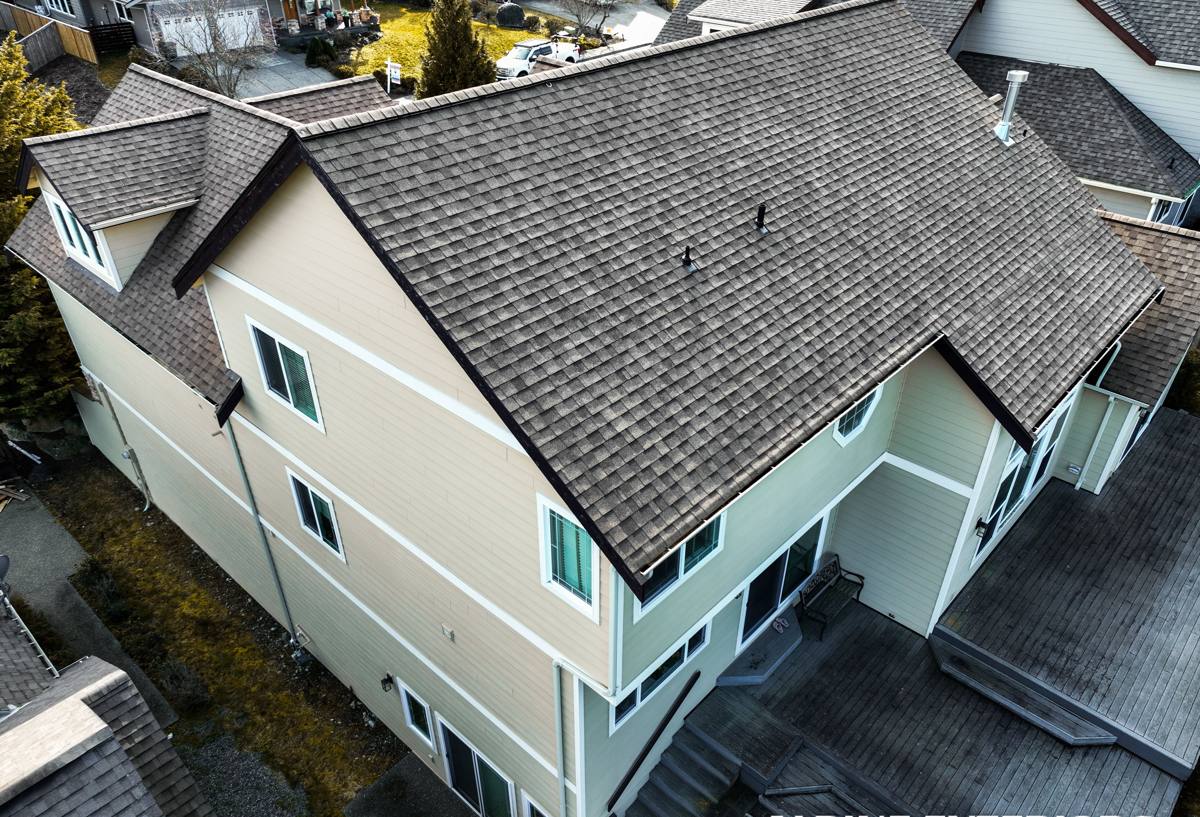
Signs a Happy Valley Deck Needs Repair
Most decks give warning signs well before they become unsafe. The problem is that a lot of those signs get written off as cosmetic when they're actually structural in the making. Here's what we look for, and what you can check yourself:
- Boards that feel spongy or flex underfoot, especially near the house or at stair landings
- Dark staining or a persistent green/black tint that doesn't scrub off with normal cleaning
- Gaps opening up between the ledger board and the house siding or trim
- Rust streaking below fastener heads or joist hangers
- Railings that wiggle side to side rather than staying rigid
- A musty smell coming from underneath the deck, especially after a stretch of rain
Any one of these on its own might just need attention this season. Two or three together usually means water has already gotten past the surface and into the framing.
What a Correct Deck Repair Actually Involves
It starts underneath, not on top
A repair that only replaces visibly damaged boards but ignores the framing underneath is a temporary fix. Before we touch decking material, we get underneath and check the ledger board attachment, joist condition, and any flashing at the house connection. This is the single most common place we find hidden rot in this area, because it's the one spot where the deck meets the building envelope and water has the most opportunities to collect.
Fastener and hardware condition
Older decks in wetter climates often still have galvanized fasteners and hangers that were adequate when installed but are undersized for today's pressure-treated lumber chemistries, which are more corrosive to standard galvanized steel. Repair work is the right time to upgrade to stainless steel or heavy hot-dip galvanized, coated hardware rated for ACQ-treated lumber, particularly on ledger bolts, joist hangers, and any structural connector.
Moisture management, not just replacement
Swapping a rotted board for a new one without adjusting drainage just buys a little time. Proper repair includes checking board spacing for drainage, confirming joist tape or flashing is present where boards meet framing, and making sure the ledger has a drip edge or flashing kicking water away from the house rather than behind the decking.
Common Problems We See on Happy Valley Decks
| Problem | Typical Cause | What Repair Involves |
|---|---|---|
| Soft or spongy decking | Trapped moisture between boards or under debris | Board replacement, improved spacing/drainage |
| Ledger board rot | Missing or failed flashing at house connection | Flashing repair, ledger sistering or replacement |
| Rusted fasteners/hangers | Standard galvanized hardware with modern treated lumber | Hardware upgrade to stainless or rated coated steel |
| Loose or wobbly railings | Post rot at the base or undersized post attachment | Post base repair, blocking, and re-anchoring |
| Persistent moss/algae film | Extended shade, low airflow, long wet season | Cleaning, and sometimes re-grading nearby landscaping for airflow |
Repair vs. Replacement: How We Help You Decide
Not every deck problem calls for a full tear-off, but not every deck is worth patching either. The honest answer usually comes down to how much of the structural framing is still sound.
| Factor | Leans Toward Repair | Leans Toward Replacement |
|---|---|---|
| Framing condition | Joists and ledger are solid, damage is at the surface | Multiple joists or the ledger show rot |
| Age of structure | Under 15-20 years, built to a reasonable standard | Older deck nearing or past typical service life |
| Extent of damage | Isolated boards or a single problem area | Damage spread across most of the deck surface |
| Code compliance | Railings, stairs, and spacing already meet current code | Structure predates current guardrail/attachment code requirements |
We'll tell you plainly if we think repair is the right call, and we'll tell you just as plainly if we think you'd be spending real money to delay a replacement you'll need in a few years anyway.
Our Deck Repair Process
- On-site inspection. We check the deck from above and below — decking, framing, ledger, posts, railings, and stairs — and note anything that's cosmetic versus structural.
- Written scope and estimate. You get a clear breakdown of what needs to happen and why, not just a total number.
- Repair work. We address framing and moisture issues first, then decking, railings, and hardware, matching materials as closely as practical.
- Final check. We walk the deck with you, test railings and stairs, and confirm drainage and flashing details before we consider the job done.
Because a lot of the real damage on a Sudden Valley-area deck is hidden until you get underneath it, we don't quote sight-unseen over the phone for anything beyond a very simple board swap. It's not worth guessing on a job where the framing condition changes the whole scope.
Materials We Use, and Why
For structural repairs — joists, blocking, ledger sistering — we use pressure-treated lumber rated for ground contact where it's in a wet-prone location, paired with fasteners and hardware compatible with that treatment chemistry. Mismatched hardware is one of the more common causes of premature failure we find on repair calls, and it's an easy thing to get wrong if a repair is done piecemeal over the years by different hands.
For decking surface, we'll work with what you already have if it's a reasonable match, or talk through wood versus composite if you're replacing a larger section. Composite decking holds up well against moss and moisture with less ongoing maintenance, but it comes at a higher material cost and needs correct spacing and fastening to perform as intended — installed wrong, it can trap moisture just as easily as wood. Wood decking costs less up front and is easier to spot-repair board by board, but it needs regular cleaning and refinishing to keep moss and rot at bay in this climate. Neither is the "right" answer for every deck; it depends on your budget, how much upkeep you want to do, and how much of the deck is being touched.
Maintenance Checklist Between Repairs
A repaired deck lasts a lot longer with a little seasonal attention. This is the same list we'd give a homeowner regardless of who did the repair:
- Sweep debris and standing leaves off the deck surface regularly, especially in fall
- Clean moss and algae off boards before it builds a heavy film — a stiff brush and appropriate cleaner is usually enough
- Check underneath once a year for new staining, soft spots, or hardware corrosion
- Keep gutters and downspouts clear so roof runoff isn't dumping onto or near the deck
- Re-seal or re-stain wood decking on the manufacturer's recommended schedule, not just when it looks faded
- Trim back vegetation that's shading the deck and keeping it damp longer than the rest of the yard
Why a Crew That Already Works Happy Valley Matters
Deck repair isn't complicated in theory, but doing it right in a maritime Pacific Northwest climate means understanding how water, salt air, and a long moss season interact with a specific structure over years, not just what a board looks like on the day you call. A crew that regularly works in and around Sudden Valley has already seen how ledger flashing tends to fail on homes in this area, which hardware corrodes fastest, and which shaded, low-airflow spots on a lot grow moss the quickest. That local pattern recognition shortens the inspection, sharpens the estimate, and means less chance of a repair getting revisited in two years because a root cause got missed.
We also stand behind repair work with straightforward answers if something comes up after the job — not a runaround, and not a sales pitch for services you didn't ask about.
If your deck has soft boards, rust streaks, a persistent moss problem, or just feels less solid than it used to, we're happy to take a look. Estimates are free and there's no pressure to move forward — you'll get an honest read on whether you're looking at a repair or something bigger, in plain language, before you decide anything.