 Sudden Valley Siding
 New Roof Installation for Geneva Homes on Lake Whatcom
The Geneva community sits right up against Lake Whatcom, a stone's throw from Sudden Valley, and that lakefront position is exactly why roofs out here wear differently than roofs ten miles inland. Homes get a steady mix of moisture off the water, shade from mature evergreens, and long stretches of the year where a roof simply doesn't get a chance to dry out between rain events. A new roof installation in this pocket of Whatcom County isn't a one-size-fits-all job — it has to account for how wet this microclimate stays and how much organic growth it invites.
We install new roofs for homeowners throughout Geneva and the surrounding Sudden Valley area, and this page walks through what actually goes into doing that job right, not just what it costs to slap shingles on a deck.
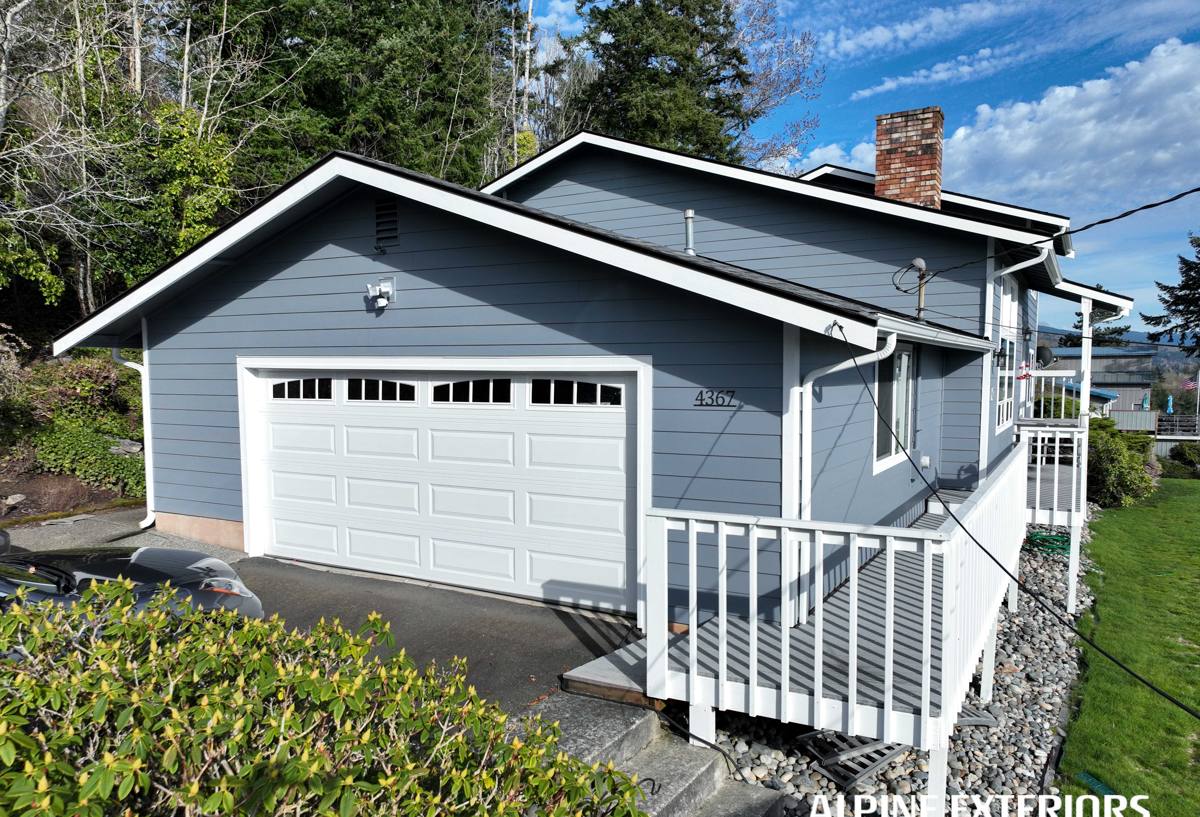
Why Local Climate Drives Roofing Decisions Here
Three things define roofing conditions around Lake Whatcom and Sudden Valley, and they all show up in how we spec and install a new roof:
Salt Air and Marine Moisture
Whatcom County sits close enough to Puget Sound and the Salish Sea that homes throughout the region deal with a steady dose of marine-influenced air — moisture-laden, mildly corrosive, and hard on exposed metal. Fasteners, flashing, and vent components that aren't rated for that exposure corrode faster than they should, which is one of the more common causes of a roof failing years ahead of schedule.
Driving Rain
This isn't gentle, straight-down rain most of the year. Wind off the lake and through the valley pushes rain sideways against roof planes, valleys, and any place two roof surfaces meet. A roof that's only built to shed water straight down will eventually let wind-driven rain find its way under shingles at the edges, valleys, and penetrations.
A Long Moss Season
Tree cover, lake humidity, and shaded north-facing slopes give moss a long window to establish itself — often nine months of the year or more. Moss isn't just cosmetic. It holds moisture against the roofing material, lifts shingle edges as it grows, and shortens the lifespan of whatever's underneath it if it's never addressed.
None of this means Geneva homes need exotic materials. It means the installation details — underlayment, flashing, ventilation, and fastener choice — have to be treated as load-bearing decisions, not afterthoughts.
Signs a Geneva Roof Needs Replacement, Not Another Patch
A lot of roofs in this area get repaired two or three times before anyone seriously looks at full replacement. That's not always wrong, but there's a point where patching stops making financial sense. Common signs we see on inspection calls in this neighborhood:
- Granule loss heavy enough that you can see bare asphalt mat in the gutters or downspouts
- Moss established in patches across multiple slopes, not just isolated spots
- Soft or spongy decking felt underfoot in the attic, especially near valleys or eaves
- Daylight visible through the roof deck from inside the attic
- Repeated leaks in different locations after previous patch repairs
- Shingles cupping, curling, or losing their seal along ridges and edges
- A roof that's 20+ years old on asphalt composition, regardless of visible condition
If you're only seeing one or two of these, a repair might still be the right call. If you're seeing several at once, that's usually the point where continuing to patch costs more over time than doing the job once, correctly.
What a Correct New Roof Installation Actually Involves
"New roof" gets used loosely. A lot of installs are really just a re-cover or a rushed tear-off with shortcuts on the parts nobody sees once the shingles go down. Here's what we consider non-negotiable for this climate.
Full Tear-Off and Deck Inspection
We remove the old roofing down to the deck rather than layering over it. That's the only way to actually see the plywood or plank decking underneath, which matters here because moisture intrusion often does its damage from below, not above. Any soft, delaminated, or rotted decking gets replaced before anything new goes on — installing new roofing over a compromised deck just guarantees an early second failure.
Ice-and-Water Barrier at the Vulnerable Points
Eaves, valleys, and roof-to-wall transitions get self-adhering waterproof underlayment, not just standard felt. These are the spots where wind-driven rain and any winter freeze-thaw cycling put the most stress on a roof system, and they're the first places a marginal install leaks.
Synthetic Underlayment Across the Field
Over the rest of the deck, synthetic underlayment gives a more reliable secondary water barrier than old-style felt, and it holds up better through the length of a wet Whatcom County winter while the crew is actively working on the roof.
Balanced Ventilation
Intake at the eaves, exhaust at the ridge, sized to move air through the attic space. Poor ventilation traps moisture under the deck, which accelerates rot and gives mold and moss-friendly conditions a head start from the inside out. This is one of the most commonly skipped steps on cut-rate installs because it doesn't show on the surface.
Corrosion-Resistant Flashing and Fasteners
Given the marine air here, we use flashing and fasteners rated to hold up to that exposure rather than standard-grade hardware that's cheaper but corrodes faster. Flashing at chimneys, skylights, sidewalls, and valleys is where most roof leaks actually originate — it's worth doing with the right materials the first time.
Moss-Resistant Details
Where it makes sense, we install zinc or copper strips near the ridge on shaded slopes, which help suppress moss regrowth over time as rain washes trace metal down the roof plane. It's not a permanent fix on its own, but it meaningfully extends the interval between moss treatments.
Comparing Roofing Materials for This Climate
There's no single "best" roofing material — the right choice depends on your home's exposure, budget, and how much maintenance you want to take on. Here's how the common options actually perform under Geneva and Sudden Valley conditions:
| Material | Moss/Moisture Resistance | Driving-Rain Performance | Maintenance | Typical Lifespan |
|---|---|---|---|---|
| Architectural asphalt shingle | Moderate — needs periodic moss treatment on shaded slopes | Good with correct underlayment and flashing | Low to moderate | 25–30 years |
| Standing seam metal | Very good — sheds moisture fast, little surface for moss to grip | Excellent | Low | 40–50+ years |
| Cedar shake | Poor without diligent upkeep — organic material invites moss and rot in shade | Good when properly installed | High | 20–30 years with upkeep |
| Composite/synthetic shake | Good — engineered to resist moisture absorption | Good | Low to moderate | 30–50 years |
We don't push one product on every home. On heavily shaded, north-facing roof planes near the lake, we're often steering homeowners away from natural cedar specifically because the moisture and shade combination shortens its life here faster than in drier parts of the county — not because the material is bad, but because this particular site condition works against it. Metal or a quality architectural asphalt with proper ventilation is usually the more durable, lower-maintenance call for shaded Geneva lots.
Our Installation Process, Start to Finish
- On-site inspection. We walk the roof and attic, check the deck condition, ventilation, and flashing points, and take photos of anything that affects the scope.
- Written estimate. You get a clear breakdown of material, labor, and any deck repair contingencies before work starts — no surprise change orders for things we could have caught up front.
- Material delivery and site protection. Landscaping, siding, and gutters get protected before tear-off begins.
- Tear-off and deck inspection. Old roofing comes off, decking is inspected board by board, and any needed repairs are done before underlayment goes down.
- Underlayment and flashing installation. Ice-and-water barrier at vulnerable points, synthetic underlayment across the field, new flashing at every penetration.
- Roofing material installation. Installed to manufacturer specification for wind and rain exposure, not just "close enough."
- Ventilation and final details. Ridge and soffit ventilation confirmed, moss-suppression strips installed where applicable.
- Final walkthrough and cleanup. Magnetic sweep for stray fasteners, full debris haul-off, and a walkthrough so you know exactly what was done and what to expect going forward.
Living With a New Roof: Moss and Debris Maintenance
A correctly installed roof still needs a little seasonal attention in this climate — that's just the reality of living near Lake Whatcom under tree cover. A short annual routine keeps a new roof performing the way it's designed to:
- Clear needles, leaves, and debris from valleys and behind chimneys at least once a year, more often under heavy fir or cedar cover
- Keep gutters and downspouts flowing freely so water isn't backing up under the roof edge
- Watch shaded, north-facing slopes for early moss growth and treat it before it establishes rather than after
- Trim back overhanging branches to reduce shade and debris load on the roof
- Schedule a visual roof check after major windstorms, since driving rain and wind are what expose any flashing or seal issue fastest
None of this is heavy maintenance, but skipping it is how a well-installed roof still ends up with an early moss problem or a slow leak nobody notices until there's water staining inside.
Why a Crew That Already Works in Geneva Matters
Roofing crews that mostly work drier, more exposed parts of Whatcom County don't always build in the same margin for shade, moisture, and moss that a lakefront job needs. A crew that regularly works the Geneva and Sudden Valley area already knows which roof orientations need extra ventilation, which slopes are worth zinc strips, and how local permitting and inspection typically go for this part of the county. That familiarity shows up in fewer callbacks and a roof that's actually built for the site it's on, not a generic spec sheet.
What Affects the Cost of a New Roof Here
We won't quote a number without seeing the roof, but these are the factors that actually move the price on a Geneva-area installation:
| Factor | Why It Matters |
|---|---|
| Roof size and pitch | Steeper roofs and larger square footage require more material, labor, and safety setup |
| Number of layers to remove | Tear-off of multiple existing layers adds labor and disposal cost |
| Deck condition | Rotted or soft decking found during tear-off requires replacement before new roofing goes on |
| Material choice | Asphalt, metal, and composite shakes carry different material and installation costs |
| Roof complexity | Valleys, dormers, skylights, and chimneys each add flashing work and time |
| Access and site conditions | Steep lots, mature tree cover, or limited driveway access near the lake can affect setup and staging |
Broadly, a straightforward asphalt shingle replacement on an average-sized home tends to run in the low-to-mid five figures, with metal or more complex rooflines pushing higher. The only way to get a real number is a site visit — anything quoted sight-unseen should be treated as a rough placeholder, not a bid.
Warranty and Documentation
A new roof installation should come with two layers of coverage: a manufacturer's material warranty covering defects in the shingles or roofing product itself, and a workmanship warranty from the installing contractor covering the installation. Ask any contractor you're vetting to show both in writing, and confirm whether the workmanship warranty is transferable if you sell the home — that's a detail worth having documented rather than assumed.
If your Geneva-area roof is showing its age or you're just trying to plan ahead of the wet season, we're happy to take a look and give you a straight, no-pressure estimate. Use the form below to schedule a time that works for you.