 Sudden Valley Siding
 Why Metal Roofing Makes Sense for Geneva Homes
Geneva sits in one of the wetter corners of Whatcom County, and the roof over your head takes the brunt of it. Homes here deal with driving rain that comes in sideways off the water, a moss season that can stretch from October through May, and salt-tinged air that slowly works on anything metal, wood, or fastener that isn't rated for it. Asphalt shingles can be made to work, but they're fighting an uphill battle in this environment — they absorb moisture, they're a favorite landing spot for moss spores, and their lifespan gets shortened by the freeze-thaw cycles and constant damp that Whatcom County winters bring.
Metal roofing was built for exactly this kind of climate. It sheds water fast, it doesn't give moss the organic surface it needs to take hold, and a properly coated panel shrugs off the salt air that eats through lesser materials over time. That doesn't mean any metal roof will do — the metal, the coating, the fasteners, and the installation details all matter, and getting any one of them wrong shows up as rust streaks, leaks, or premature failure five or ten years down the road instead of thirty or forty.
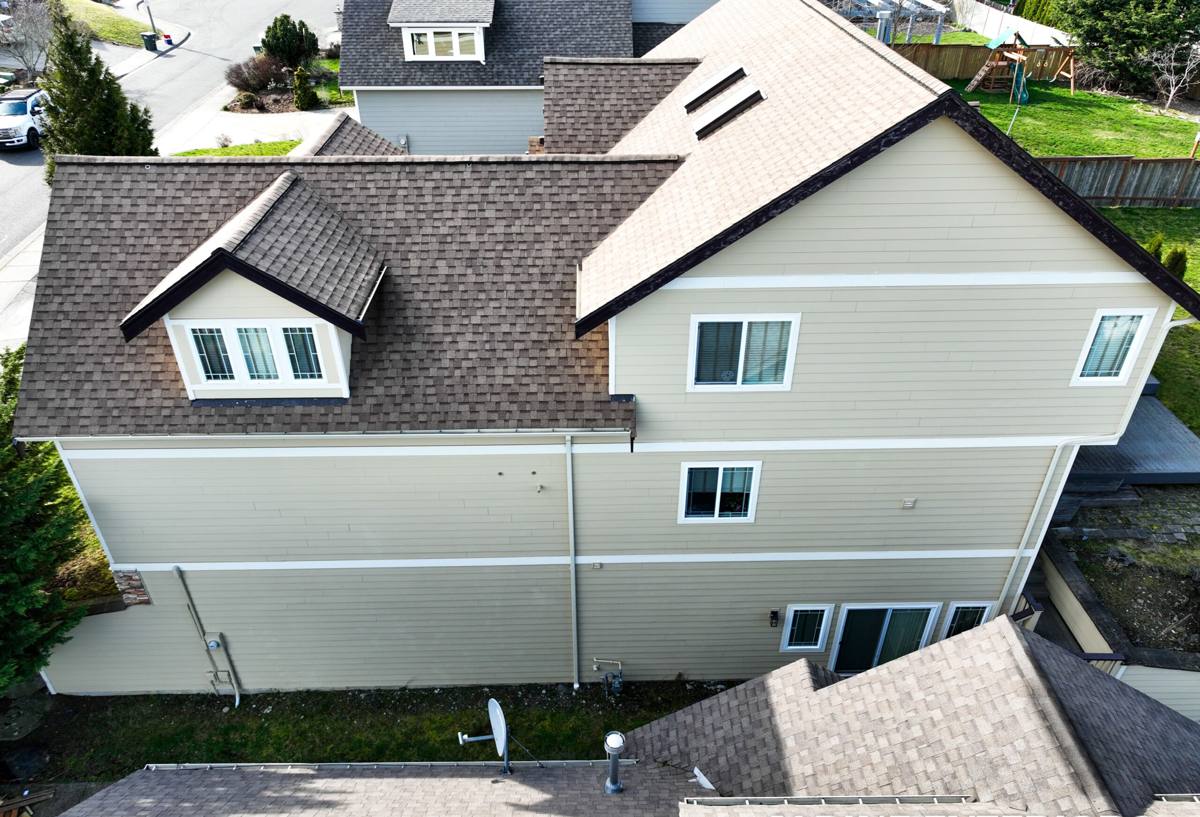
What Geneva's Climate Actually Demands
Moisture Load
Geneva gets a steady diet of rain for much of the year, and roofs here rarely get a long stretch to fully dry out between storms. That constant dampness is what drives moss growth and slowly degrades underlayment and fasteners that aren't built for it. A roof system here needs to move water off fast and keep it from sitting in valleys, behind chimneys, or around vent penetrations.
Moss and Organic Growth
Moss doesn't just look bad — it holds moisture against the roof surface, lifts shingle edges, and works its way into seams. On a metal roof, moss has almost nothing to grip onto if the panels are clean, properly lapped, and free of debris traps. The design of the roof — how ridges, valleys, and low-slope sections are detailed — matters as much as the material itself.
Salt Air Exposure
Homes near the water in Whatcom County deal with airborne salt that accelerates corrosion on unprotected metal. This is why coating quality and fastener selection aren't optional upgrades here — they're the difference between a roof that looks the same in year 20 and one that's showing rust streaks by year 8.
Metal Roofing Materials: What We Recommend and Why
Not all metal roofing is the same, and the differences matter more in a climate like Geneva's than they would somewhere dry and mild. Here's how the common options stack up for this specific setting:
| Material/Coating | Corrosion Resistance Here | Typical Lifespan | Notes for Geneva |
|---|---|---|---|
| Galvalume steel (standing seam) | Very good with proper coating | 40-60 years | Our default recommendation for most Geneva homes; handles rain and salt air well when properly finished |
| Painted steel (exposed fastener) | Good, fastener-dependent | 25-40 years | Lower upfront cost, but exposed fasteners need periodic checking and eventual re-torquing or replacement |
| Aluminum | Excellent | 40-60+ years | Doesn't rust by nature; a strong choice for homes closer to the water, at a higher material cost |
| Copper | Excellent | 50-100 years | Premium option; develops a natural patina, no coating to fail, but a significant cost jump |
For most homes in the Geneva area, a Galvalume standing seam system hits the right balance of durability, appearance, and cost. Homes with more direct water exposure or owners planning to stay long-term sometimes lean toward aluminum for the extra peace of mind on corrosion.
What a Correct Installation Actually Involves
Underlayment
In a climate that stays wet as long as Whatcom County's does, the underlayment beneath the metal is doing real work, not just serving as a backup. We use synthetic underlayment rated for the exposure, with self-adhered ice-and-water membrane at eaves, valleys, and any low-slope transitions where water is most likely to back up.
Fasteners and Flashing
This is where a lot of corner-cutting happens on cheaper installs. Standard fasteners will rust and fail well before the panels do if they're not matched to the metal and rated for coastal-adjacent exposure. Flashing at chimneys, skylights, and wall transitions needs to be formed and lapped correctly — this is the single most common source of roof leaks we get called out to fix, on metal or any other material.
Panel Layout and Ventilation
Panels need to run with proper overlap and expansion allowance so temperature swings don't cause oil-canning or fastener stress over time. Attic ventilation also matters more than most homeowners realize — a poorly vented attic traps moisture that condenses on the underside of the roof deck, which can cause problems no roofing material can fully prevent from below.
How Our Process Works
- On-site assessment: We inspect the existing roof, decking condition, ventilation, and any trouble spots (valleys, chimney flashing, moss buildup) before recommending anything.
- Material and system selection: Based on your home's exposure and budget, we walk through panel profile, coating, and color options.
- Tear-off or overlay decision: Metal can sometimes be installed over existing shingles if the deck is sound, but we'll tell you honestly when a tear-off is the right call instead of the easy one.
- Deck repair: Any soft or water-damaged decking gets replaced before a single panel goes on — installing over compromised decking just guarantees a future problem.
- Underlayment and flashing installation: This is the part that determines whether the roof performs for 10 years or 40.
- Panel installation: Panels are run, fastened, and sealed to spec, with careful attention to valleys and penetrations.
- Final walkthrough: We go over the finished roof with you, including what maintenance (if any) it will need going forward.
Cost Factors Homeowners Should Understand
Metal roofing costs more upfront than asphalt shingles, and it's worth understanding why before comparing quotes.
| Factor | Impact on Cost |
|---|---|
| Panel material (steel vs. aluminum vs. copper) | Largest single cost driver; steel is most affordable, copper is a premium |
| Roof pitch and complexity | Steeper roofs and more valleys/penetrations increase labor time |
| Tear-off vs. overlay | Tear-off adds disposal and labor cost but avoids hiding deck problems |
| Underlayment and flashing spec | Upgraded ice-and-water membrane and quality flashing add cost but are not optional in this climate |
| Panel profile (standing seam vs. exposed fastener) | Standing seam costs more but has fewer long-term maintenance points |
We'll never recommend cutting corners on underlayment or flashing to hit a lower number — those are exactly the details that determine whether the roof holds up to Geneva's rain and moisture over the decades it's supposed to last.
Maintenance: What Metal Roofing Actually Needs
One of the real advantages of metal roofing in this climate is how little ongoing maintenance it requires compared to shingles — but "little" isn't "none." A short annual checklist keeps a metal roof performing the way it should:
- Clear debris (needles, leaves, small branches) from valleys and around penetrations before fall rains set in
- Check gutters and downspouts for clogs that can cause water to back up under eave flashing
- Look for any moss or algae starting on north-facing slopes or shaded areas and address it early
- Inspect fastener heads and sealant at penetrations every couple of years, especially on exposed-fastener systems
- Trim back overhanging branches that keep sections of roof shaded and damp longer than the rest
Common Problems We Get Called to Fix
Most of the metal roofing issues we see in the Geneva area trace back to a handful of recurring causes: fasteners that weren't rated for the exposure and started rusting early, flashing that was bent to fit rather than properly formed, underlayment that was skipped or under-specified to save money, and panels installed without accounting for thermal movement. None of these are flaws in metal roofing as a material — they're installation shortcuts that show up years later as leaks, streaking, or loose panels. It's one of the main reasons the installer matters as much as the product.
Why Hiring a Crew That Already Works in Geneva Matters
Roofing decisions in Whatcom County aren't one-size-fits-all. A crew that mostly works drier inland areas may not think twice about a fastener spec or underlayment detail that matters a lot more here, where roofs stay wet longer and salt air is part of the equation. Working regularly in and around Sudden Valley and the Geneva area means we've seen how roofs in this specific setting age — which details hold up and which ones cause callbacks — and we build that into every job instead of relying on a generic spec sheet.
Local also means accountability. We're not driving in from out of the area for one job and disappearing — we're a call away if a question comes up after the install, and that matters for a roof that's meant to last decades.
Get a Straight Answer for Your Roof
If you're weighing metal roofing for your Geneva home, we're happy to take a look, walk you through what your specific roof needs, and give you an honest read on options and cost — no pressure, no upsell. Fill out the form below for a free estimate.