 Sudden Valley Siding
 Fiber Cement Siding in Columbia: Built for This Climate, Not Just Any Climate
Columbia homes sit in one of the more demanding siding environments in Whatcom County. Between salt-laden air, long stretches of driving rain, and a moss season that can run most of the year, exterior cladding here works harder than it does in drier parts of the state. Siding that performs fine in Spokane or Eastern Washington can fail early in Sudden Valley if it wasn't chosen and installed with this specific climate in mind.
This page covers what fiber cement siding needs to do for a Columbia home, what a correct installation actually involves, and why we only put James Hardie products on the houses we work on. If you're comparing siding options or getting quotes for a home in this neighborhood, this is the information that actually matters.
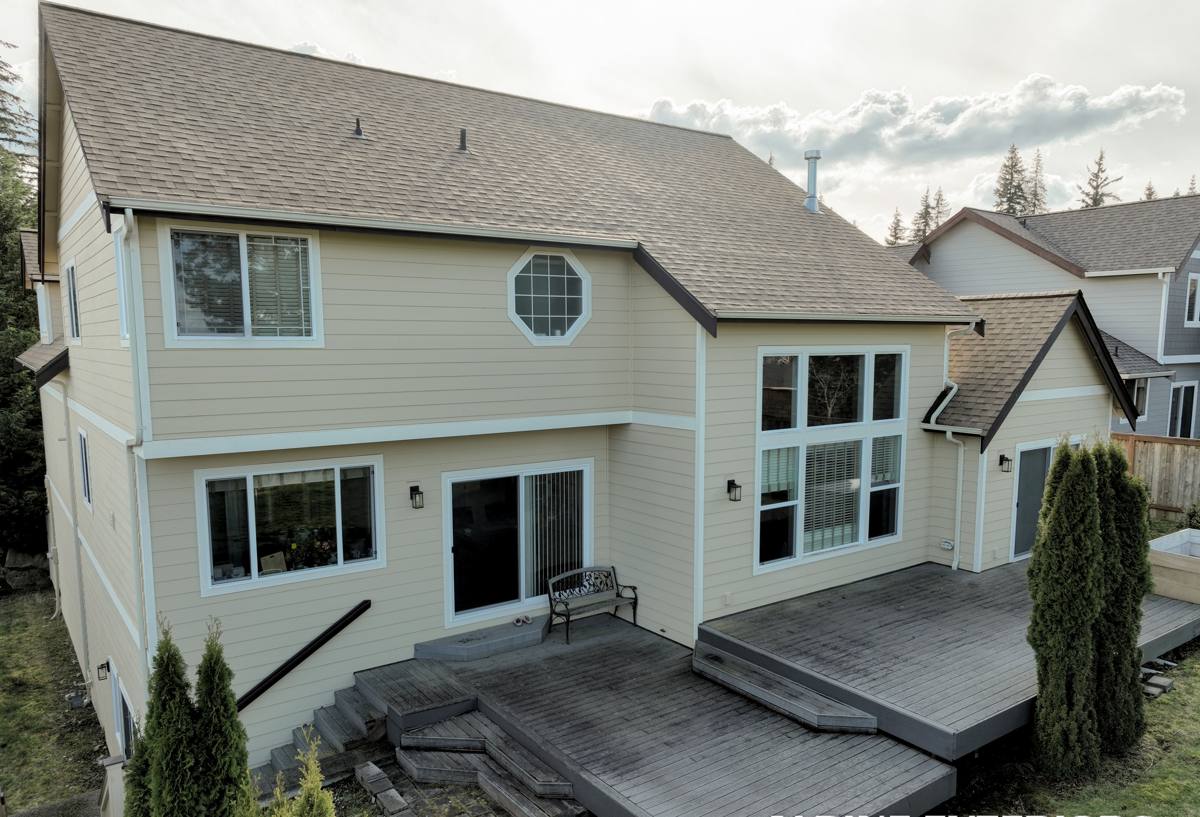
What Salt Air, Rain, and Moss Actually Do to Siding
Every siding material degrades differently depending on what it's exposed to. In Columbia and the surrounding Sudden Valley area, three factors do most of the damage over time:
Salt Air and Corrosion
Salt-carrying air accelerates corrosion of fasteners, flashing, and any exposed metal trim. Cheaper or improperly coated fasteners can start rusting years before the siding itself shows wear, which leads to staining and eventually loose panels.
Driving Rain and Water Intrusion
Wind-driven rain doesn't just fall straight down — it gets pushed sideways into laps, seams, and penetrations. Siding systems that rely on caulk alone at joints, rather than proper flashing and drainage planes, tend to let moisture behind the cladding over years of this kind of exposure.
Moss, Algae, and Prolonged Dampness
A long moss season means siding surfaces stay damp longer between dry-outs. Organic growth on siding isn't just cosmetic — sustained moisture at the surface accelerates paint failure on wood-based products and can work its way into any seam or cut edge that isn't sealed correctly.
None of this means siding is doomed in Columbia. It means the material and the installation both have to be chosen to handle sustained wet exposure, not just occasional weather.
Why We Only Install James Hardie Fiber Cement
We made a decision years ago to install James Hardie fiber cement exclusively, and we don't install vinyl, LP SmartSide, cedar, primed spruce, or other fiber cement brands. That's not a marketing position — it's a standard we hold because of how these products actually perform in a climate like this one over a 20-30 year timeframe.
Non-Combustible Core
Hardie's fiber cement is made primarily from cement, sand, and cellulose fiber, which makes it non-combustible. That matters everywhere, but it's a meaningful factor for homeowners in wooded, semi-rural settings like Sudden Valley.
Climate-Engineered Product Lines
Hardie engineers its siding for specific climate zones — HZ5 for colder, wetter regions like the Pacific Northwest. That means the formulation is built to resist moisture-related damage in exactly the conditions Columbia sees, rather than being a one-size-fits-all product.
ColorPlus Factory Finish
Hardie's ColorPlus finish is baked on at the factory under controlled conditions, which gives more consistent, durable color than field-applied paint. In a climate where surfaces stay damp for extended periods, a factory finish holds up better than paint applied on-site in variable weather.
Warranty Backing
Hardie backs its products with a strong, transferable warranty — a real consideration if you plan to sell the home down the road, since it can carry over to the next owner rather than resetting or voiding at transfer.
We won't install products that require homeowners to accept more maintenance burden, more moisture risk, or a weaker warranty structure just to save money upfront. Hardie is the one product line that meets our standard for this climate.
What a Correct Fiber Cement Installation Involves
Fiber cement siding is only as good as the installation behind it. Most siding failures we get called out to inspect aren't a material problem — they're a workmanship problem. A correct job in a wet, wind-driven climate like Columbia's includes:
- A properly lapped weather-resistive barrier behind the siding, not just a single layer of house wrap taped at seams
- Flashing at every window, door, and roof-to-wall intersection, installed to shed water outward and downward
- Correct fastener type and spacing per Hardie's installation instructions — not generic nails or screws
- Proper clearance between the bottom of the siding and grade, decks, patios, and roof lines to prevent wicking
- Caulked and sealed joints only where Hardie's specifications call for sealant — not as a substitute for flashing
- Correct panel and joint spacing to allow for the material's normal expansion and contraction
- Painted or factory-finished cut edges, since exposed raw edges are a common entry point for moisture
Skipping any one of these steps can look fine for a year or two, then show up as staining, buckling, or rot behind the siding five or ten years later — often after the crew that installed it is long gone.
Comparing Siding Options for a Columbia Home
| Material | Moisture Behavior in This Climate | Maintenance | Typical Lifespan |
|---|---|---|---|
| James Hardie Fiber Cement | Engineered for wet, coastal-influenced climates; resists moisture-related swelling | Occasional washing; factory finish reduces repainting | 30+ years with correct install |
| Vinyl Siding | Doesn't absorb water but can warp, crack in impacts, and gaps open at seams over time | Low, but panels can't be spot-repainted to match as they fade | 15-25 years |
| Cedar / Wood Siding | Attractive but vulnerable to prolonged dampness, rot, and moss growth without diligent upkeep | High — regular refinishing and moisture inspection | Varies widely with maintenance |
| LP SmartSide / Engineered Wood | Wood-based core is more moisture-sensitive than fiber cement at cut edges and seams | Moderate to high; edge sealing is critical | 20-30 years with diligent maintenance |
This isn't a knock on any of these products in the right application. It's why, for a climate that stays wet as long as this one does, we've standardized on the material that gives homeowners the least ongoing worry.
Our Process, Start to Finish
For a Columbia home, our process generally looks like this:
- On-site assessment — we look at existing siding condition, moisture damage, trim, and flashing details specific to your home
- Product and color selection — choosing the right Hardie line and ColorPlus finish for your home's exposure and style
- Written estimate — a clear scope covering removal, water management upgrades, and installation
- Prep and installation — including weather barrier, flashing, and fastening done to Hardie's specifications
- Final walkthrough — checking seams, caulking, and trim details before we consider the job done
Cost Factors for Fiber Cement Siding in This Area
| Factor | Why It Matters Here |
|---|---|
| Extent of existing water damage | Homes with years of moisture exposure often need sheathing repair before new siding goes on |
| Trim and flashing detail work | More window, door, and roofline intersections mean more labor to flash correctly |
| Home size and wall complexity | Multiple stories, dormers, and cut-up wall lines add material waste and labor time |
| Siding profile and finish | Lap width, panel style, and ColorPlus color selection affect material cost |
| Access and site conditions | Sloped lots and limited staging areas around Lake Whatcom properties can add setup time |
We give straightforward, written estimates rather than vague ranges, because every Columbia home's exposure and existing condition is different.
Why a Crew That Already Works in Sudden Valley Matters
A contractor who regularly works Columbia and the broader Sudden Valley area already understands how homes here are exposed to weather off the lake, how moss builds up on north-facing walls, and where driving rain tends to find its way behind poorly detailed trim. That local pattern recognition shows up in the details — where extra flashing gets added, which wall sections need closer attention to drainage, and how a home should be sequenced during a wetter stretch of the year. It's the difference between a crew following a generic installation manual and one applying that manual with real judgment about this specific climate.
Keeping Your Siding Performing After Installation
Correctly installed Hardie siding is low-maintenance, but "low" isn't "none." A periodic rinse to knock off moss and grime, keeping gutters clear so water doesn't sheet down walls, and a visual check of caulking at trim joints every year or two will keep the system performing the way it's designed to for decades in this climate.
If you're weighing siding options for a home in Columbia or elsewhere in Sudden Valley, we're glad to walk your property, point out anything specific to your home's exposure, and give you a straightforward, no-pressure estimate.