 Sudden Valley Siding
 Why Bellingham Homes Put Extra Demands on Siding
Bellingham sits close enough to Puget Sound and Bellingham Bay that salt-laden air is a real factor for exterior materials, not a theoretical one. Add in Whatcom County's driving winter rain, the humidity that lingers under tree cover in neighborhoods near Lake Whatcom and Sudden Valley, and a moss season that can run from fall through spring, and you have a climate that punishes siding that can't handle sustained moisture exposure. Wood-based products swell, rot, and delaminate under those conditions faster than most homeowners expect. This is the environment fiber cement was engineered for, and it's why we install it exclusively rather than offering a menu of siding materials.
None of this means Bellingham is an extreme climate compared to, say, a coastal storm zone. It's a moderate marine climate that's simply consistent — long stretches of damp, mild weather rather than short bursts of severe weather. Consistency is actually harder on siding than the occasional big storm, because it's the cumulative moisture cycling — wet, damp, wet again — that breaks down materials that aren't built to shed water for years on end.
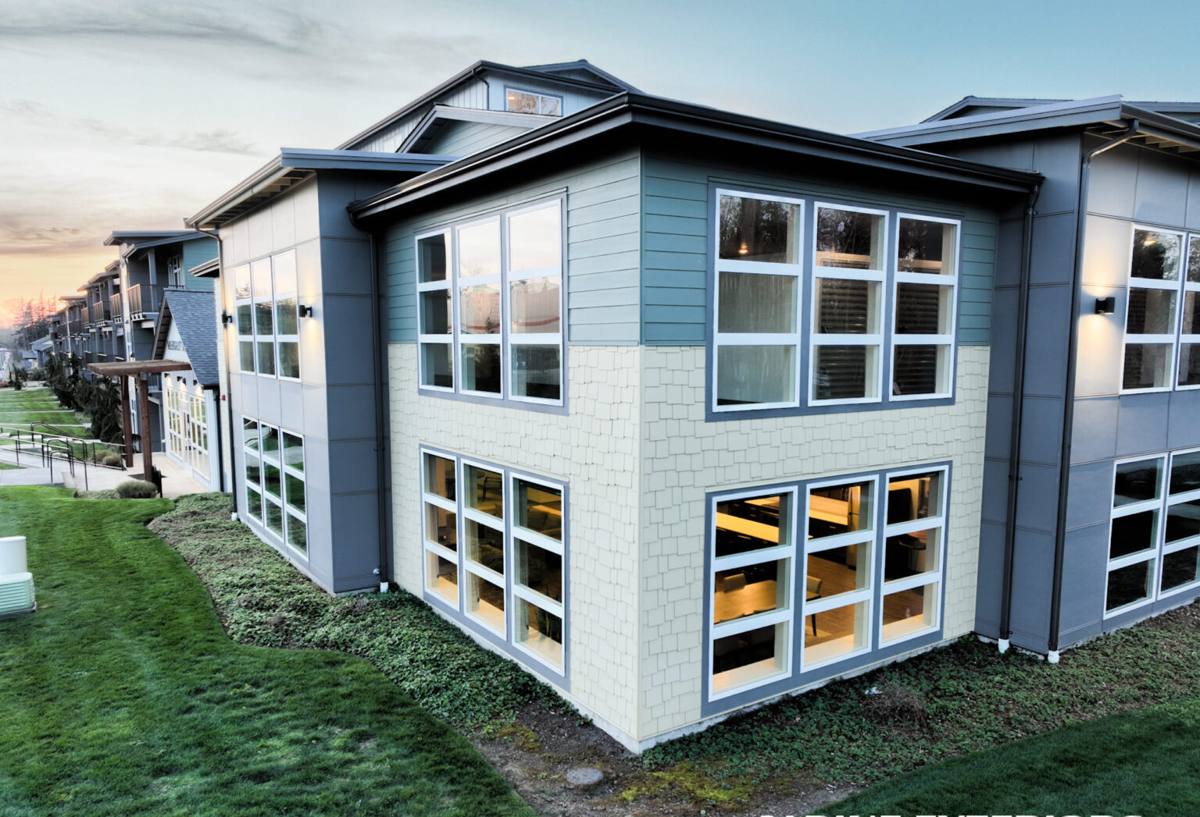
What Fiber Cement Actually Solves Here
Fiber cement is a blend of cement, sand, and cellulose fiber, engineered to be dimensionally stable in exactly the wet-dry cycling that defines a Bellingham winter. It doesn't absorb water the way wood or wood-composite products do, it doesn't support the kind of moss and mildew growth that thrives on organic siding surfaces, and it holds paint or factory finish far longer than wood substrates because it isn't expanding and contracting with every rain event.
- Resists moisture absorption that leads to swelling, cupping, and rot
- Non-combustible, which matters given regional wildfire smoke and ember exposure in dry summer stretches
- Holds factory-applied finish through repeated wet-dry cycling without the chalking or peeling common on painted wood
- Doesn't feed moss and mildew growth the way organic siding materials can
- Stands up to wind-driven rain when the flashing and water-management details behind it are done correctly
That last point matters as much as the material itself. Fiber cement is only as good as its installation — a fact we'll come back to throughout this page.
The James Hardie Product Lines We Install
We install James Hardie fiber cement exclusively — no LP SmartSide, no vinyl, no Cemplank or Allura, no primed spruce or cedar. That's a deliberate standard, not a limitation of what we're capable of installing. Hardie is the only fiber cement manufacturer offering climate-engineered product formulations (their HZ5 and HZ10 lines) matched to regional moisture and freeze-thaw conditions, backed by a factory finish system and a warranty structure we're comfortable standing behind on a Whatcom County roof.
| Product | Typical Use | Why It Fits Bellingham |
|---|---|---|
| HardiePlank lap siding | Primary wall cladding, most homes | Most common profile locally; wide color range in ColorPlus factory finish |
| HardiePanel vertical siding | Accent walls, gables, modern facades | Clean lines for contemporary remodels; pairs well with board-and-batten detailing |
| HardieTrim boards | Corners, fascia, window/door trim | Matches plank expansion behavior, avoids mismatched trim failure at joints |
| HardieSoffit panels | Eaves and overhangs | Resists the damp, shaded conditions common under mature tree cover |
ColorPlus factory-applied finish is worth calling out specifically for this area: it's baked on and cured before the boards ever reach the jobsite, which gives far more consistent, longer-lasting color performance than field-applied paint over fiber cement or wood. In a climate where a house can go weeks without a fully dry day, that head start matters.
What a Correct Installation Actually Involves
The single biggest reason fiber cement fails early isn't the material — it's installation shortcuts. A correct job in this climate includes:
- Proper starter strip and clearance at the foundation line, keeping siding off grade, decks, and roof lines to avoid wicking moisture
- Weather-resistive barrier installed and lapped correctly behind the siding, not just present but shingled to actually shed water downward
- Flashing at every penetration — windows, doors, hose bibs, light fixtures — installed before the siding goes on, not caulked over afterward
- Correct fastener placement per Hardie's published fastening schedule, avoiding both under-fastening (wind pull-through) and over-driving (cracked boards)
- Expansion gaps at butt joints and trim intersections, sized and caulked per manufacturer spec rather than tight-fit for appearance
- Field-touch-up paint matched to ColorPlus at cut edges and fastener heads, sealing the one place factory finish doesn't reach
Skip any one of these and you get the failure modes people associate with siding in general — moisture intrusion behind the cladding, cracked boards at corners, streaking below poorly lapped joints — that get blamed on the material when the real cause was the install.
How Our Process Works, Start to Finish
1. On-site assessment
We walk the exterior, check existing siding and sheathing condition, look at moisture exposure by elevation (north and west walls typically take the worst of it here), and identify any rot or water damage that needs addressing before new siding goes on.
2. Written scope and product selection
You get a specific plan: which Hardie products, which profile, which ColorPlus color, and what trim details apply to your home — not a vague allowance.
3. Tear-off and substrate repair
Old siding comes off, sheathing is inspected, and any water-damaged framing or sheathing is repaired before house wrap and flashing go back on. This step gets skipped by crews in a hurry; it's the step that determines whether the new siding lasts.
4. Weather barrier and flashing
House wrap, window and door flashing, and penetration flashing go in per manufacturer sequencing, lapped to shed water down and out.
5. Siding installation
Boards are hung to Hardie's fastening and clearance specs, with expansion gaps and trim details built in from the start rather than adjusted after the fact.
6. Final detailing and walkthrough
Caulking, touch-up paint at cut edges, and a walkthrough so you know what was done and what maintenance (if any) it needs going forward.
Comparing Your Options for This Climate
| Material | Moisture Behavior Here | Maintenance Burden | Long-Term Cost Picture |
|---|---|---|---|
| James Hardie fiber cement | Dimensionally stable, sheds water well when installed correctly | Low — occasional wash, no repainting for years | Higher upfront, lowest lifetime cost |
| Vinyl siding | Doesn't rot but can warp/buckle in temperature swings; seams are moisture entry points | Low, but limited repair options if damaged | Lower upfront, shorter practical lifespan |
| Wood or engineered wood (LP SmartSide) | Absorbs moisture at cut edges and joints; vulnerable in sustained damp conditions | High — regular repainting and edge sealing | Lower upfront, higher recurring maintenance cost |
| Cedar | Natural but moisture-sensitive; needs consistent sealing/staining to resist rot and moss | Highest — ongoing sealing and moss treatment | Variable, often highest lifetime cost in wet climates |
We're not going to tell you every one of those products is a bad choice in every situation — vinyl and engineered wood have their place. But given the moisture load this area sees for months at a stretch, we made a professional call to standardize on the one material system that holds up here with the least ongoing intervention, and stand behind that with our own labor warranty on top of Hardie's product warranty.
What Drives Cost on a Bellingham-Area Job
| Factor | Why It Matters |
|---|---|
| Substrate condition | Hidden rot behind old siding adds repair scope you can't price until tear-off |
| Home size and wall complexity | More corners, gables, and penetrations mean more trim and flashing labor |
| Product mix | Plank vs. panel vs. trim-heavy designs price differently |
| Access and site conditions | Sloped lots, tree cover, and tight setbacks common around Lake Whatcom add labor time |
| Color and finish | Standard ColorPlus colors vs. custom field-painted options affect both cost and long-term performance |
We won't quote a number without seeing the house, but we'll walk you through exactly which of these factors apply to your project so the estimate isn't a mystery.
What to Ask Before Hiring Anyone for This Job
- Do you install to the manufacturer's published fastening and clearance specifications, and can you show me the spec sheet?
- What's your process for flashing windows, doors, and penetrations before siding goes on?
- Do you inspect and repair sheathing during tear-off, and how is that priced if damage is found?
- Is your crew factory-certified or trained on the specific Hardie products you're installing?
- What does your labor warranty cover, separate from the manufacturer's product warranty?
- Can you explain why you'd recommend one product line over another for my specific elevation and exposure?
A contractor who can answer all of these without hesitation has done this enough times to know where the mistakes happen.
Why Local Experience in This Specific Area Matters
Siding installation isn't identical everywhere in Whatcom County. A crew that already works in and around Bellingham and the Lake Whatcom corridor has a working sense of which elevations take the worst weather on a given lot, how tree cover changes drying time after a rain, and where moss tends to establish first. That's not something you get from a manufacturer spec sheet — it comes from having done the tear-offs and seen what the old siding looked like after ten or twenty years in this specific climate. It also means faster response if a warranty question or minor repair comes up later, rather than chasing down a crew that was only in town for one job.
Maintenance and Warranty Once It's Installed
One of the practical advantages of Hardie fiber cement with ColorPlus finish is how little ongoing maintenance it asks for. A periodic rinse to keep moss and organic growth from taking hold, a visual check of caulking at trim joints every year or two, and prompt attention to any impact damage is generally the extent of it — no repainting cycle, no annual sealing. James Hardie backs the material and finish with its own warranty terms, and we back our installation labor separately, which matters because most siding failures we get called out to inspect trace back to installation detail, not the board itself.
If you're weighing a siding project in Bellingham or anywhere around Sudden Valley and want a straight answer about what your home actually needs, we're glad to take a look and put together a free, no-pressure estimate.