 Sudden Valley Siding
 Composite Decking for Ferndale, Washington Homes
Ferndale sits close enough to Bellingham Bay and the Nooksack River lowlands that its outdoor structures take a different kind of beating than a deck built inland. Salt-tinged air off the Salish Sea, long stretches of driving rain through fall and winter, and a moss season that can run eight months or more all work on wood and fasteners in ways that show up as cupping, soft spots, and green film within just a few seasons. Composite decking was built to shrug off exactly that combination, but only when it's specified and installed correctly for this climate. This page covers what a Ferndale composite deck actually needs, what a correct installation looks like, and how our process works from first estimate to finished deck.
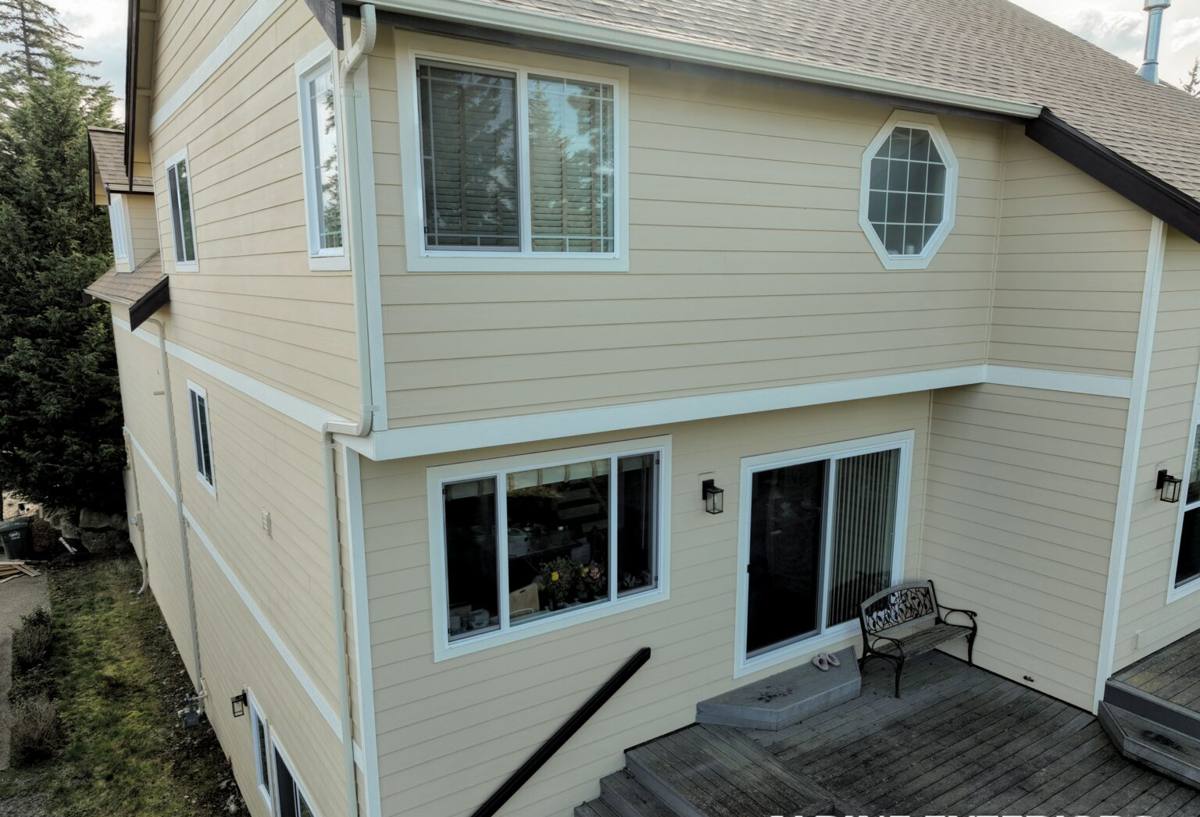
What Whatcom County Weather Does to a Deck Over Time
Every material on an exterior deck is fighting the same three things here: moisture that doesn't dry out quickly, salt-laden air that accelerates corrosion on hardware, and shaded, damp conditions that favor moss and algae. None of these are dramatic on their own, but they're relentless.
Moisture that lingers
Ferndale doesn't get one big storm and then a dry stretch — it gets weeks of low-grade rain, overcast skies, and high humidity. Decking boards that can't shed water quickly stay damp at the surface and in the gaps between boards, which is where rot, mold, and slip hazards start. Framing underneath is even more exposed, since it rarely gets direct sun to dry out between rain events.
Salt air and hardware
Being close to the bay means airborne salt reaches inland further than people expect, especially with the prevailing winds. Standard fasteners, brackets, and ledger hardware corrode faster in this environment. A deck that looks fine on the surface can have compromised structural connections underneath if the wrong hardware was used.
Moss and algae
Whatcom County's moss season isn't a minor cosmetic issue — moss holds moisture against the board or joist it's growing on, and on a shaded, north-facing deck it can establish itself in a single wet season. Once moss gets a foothold in a board's fastener holes or a joist's cut end, that spot stays wet nearly year-round.
Why Composite Decking Fits This Climate — With Caveats
Composite decking (a blend of wood fiber and recycled plastic, usually with a protective cap) doesn't rot, splinter, or need annual staining the way real wood does, which is a real advantage in a climate that punishes wood decking. But composite isn't maintenance-free, and it isn't automatically correct for every application. It still needs proper drainage underneath, the right fastener system, and adequate airflow — skip any of those and you can trap moisture against the substructure even though the boards themselves are holding up fine.
The honest trade-off homeowners should know going in: composite costs more upfront than pressure-treated wood, and if it's ever damaged (a burn mark, a deep gouge), you can't sand and refinish it the way you can wood — you replace the board. In exchange, you're not restaining every couple of years, and you're not dealing with splinters, cupping, or the slow rot that Whatcom County's wet winters cause in untreated or poorly maintained wood.
Comparing Decking Materials for a Ferndale Property
| Factor | Pressure-Treated Wood | Composite (Capped) | PVC |
|---|---|---|---|
| Upfront cost | Lowest | Mid-to-high | Highest |
| Moisture/rot resistance | Requires ongoing sealing | Strong, cap sheds water | Excellent, fully synthetic |
| Moss/algae resistance | Poor without treatment | Good, smoother caps resist growth | Very good |
| Maintenance | Annual staining/sealing | Periodic washing | Low |
| Expansion/contraction | Moderate | Moderate — needs proper gapping | Higher — needs experienced installer |
| Typical lifespan | 10-15 years before major repair | 25-30 year warranties common | 25-30+ years |
PVC has its own strengths, but it's also more sensitive to installation error — improper gapping or fastening in temperature swings can cause visible buckling. Composite hits a practical middle ground for most Ferndale homeowners: strong moisture and moss resistance without the installation sensitivity of full PVC.
What a Correct Composite Deck Installation Involves
The boards get most of the attention, but the framing and drainage details underneath are what determine whether a composite deck lasts its full warranty period in this climate or starts having problems in year six or seven.
Joist protection
Wood joists under composite decking still need to be protected from the moisture that inevitably gets past the boards. Joist tape over the top of each joist keeps standing water from soaking into the wood at the exact point where fasteners penetrate — one of the most common failure points we see on decks that weren't built with this climate in mind.
Ledger board and flashing
Where the deck attaches to the house, proper flashing is non-negotiable in a climate with this much sustained rain. A poorly flashed ledger board is a slow leak into the house framing that can go unnoticed for years.
Fastener selection
Given the salt exposure this area gets, we use corrosion-resistant, coated fasteners rated for coastal or treated-lumber contact — not generic hardware store screws. This matters more here than in drier, inland parts of the state.
Board spacing and drainage
Composite boards need consistent gapping for water to drain through rather than pool on the surface. Too tight, and water sits; too wide, and you get an uneven, unsafe walking surface. This gets adjusted slightly for the temperature at time of install, since composite expands and contracts with heat.
Substructure ventilation
Low decks or decks built close to grade need enough airflow underneath to let the substructure dry between rain events. In a climate that rarely gives you a long dry stretch, this is one of the details that separates a deck that lasts from one that develops hidden rot in the framing while the surface still looks new.
Our Process, Start to Finish
- On-site assessment: We look at sun exposure, drainage patterns, existing framing condition, and how close the site is to prevailing weather and salt exposure.
- Material selection: We walk through composite options and trade-offs honestly, including where a different material might genuinely serve the homeowner better.
- Structural check: Existing framing gets inspected for rot, undersized joists, or inadequate ledger attachment before any new decking goes down.
- Build: Joist protection, correct fastener systems, proper flashing, and consistent board spacing, built to manufacturer specs so warranties stay valid.
- Walkthrough: We go over basic care for the specific board line installed, since capped and uncapped composites have slightly different care needs.
Choosing the Right Composite Board for a Ferndale Yard
Not all composite decking is built the same, and the right choice depends on how exposed the deck is to sun, shade, and moisture.
Capped vs. uncapped composite
Capped composite has a protective polymer shell around the wood-fiber core, which resists moisture absorption, staining, and fading far better than uncapped composite. In a climate with this much sustained rain and moss pressure, we generally steer homeowners toward fully capped boards — the small cost difference pays for itself in reduced maintenance over the life of the deck.
Color and heat
Darker composite boards absorb more heat in direct sun and can be noticeably warmer underfoot, but they also tend to hide moss and algae staining better on shaded decks. Lighter boards stay cooler but show organic staining more visibly, which matters on decks that don't get much direct sun — common on tree-covered or north-facing Ferndale lots.
Surface texture
A more textured, wood-grain finish improves slip resistance in wet conditions, which matters given how often deck surfaces here are wet from rain rather than pool splash or spilled drinks. Smoother finishes look clean but can get slick faster once moss spores or algae film start to build.
Maintenance Reality: What Composite Still Needs Here
Composite is genuinely lower-maintenance than wood, but "low-maintenance" isn't "no-maintenance," especially in a climate with a long moss season.
- Sweep debris and standing organic matter (leaves, needles, seed pods) off the surface regularly — trapped debris is what gives moss and algae something to root into.
- Wash the deck surface periodically with a soft-bristle brush and mild soap and water; avoid pressure washing at close range, which can damage the cap layer on some boards.
- Keep gutters and downspouts near the deck clear so overflow isn't dumping extra water directly onto the decking or framing.
- Check that furniture and planters aren't sitting in one spot long enough to trap moisture underneath.
- Inspect fastener heads and board ends once a year for any early corrosion or lifting, especially after a rough winter.
Before You Hire a Ferndale Deck Contractor
A composite deck is a significant investment, and installation quality determines whether it performs the way the manufacturer's warranty assumes it will. Before signing a contract, it's worth confirming a few things:
- Does the contractor use joist tape and manufacturer-approved fastening systems, not just whatever's cheapest?
- Will they inspect and address existing framing condition, not just build over it?
- Do they carry current licensing and insurance for work in Whatcom County?
- Can they explain, in plain terms, why they'd recommend one board line over another for your specific site conditions?
- Do they register the manufacturer's warranty properly on your behalf after installation?
Why Local Experience Matters for This Job
A crew that already works in Ferndale and the surrounding Sudden Valley area knows which yards sit in near-constant shade, which lots catch the worst of the wind and salt air off the bay, and which drainage patterns cause water to pool against a house rather than away from it. That local knowledge shapes real decisions — how much ventilation a substructure needs, whether extra flashing is warranted at a particular ledger connection, which board finishes actually hold up on a shaded, moss-prone lot versus a sunny one a mile away. A contractor unfamiliar with Whatcom County's specific rain patterns and moss pressure is more likely to build to a generic spec rather than to what this climate actually demands over a 20-30 year composite warranty period.
If you're planning a new deck or replacing an aging wood one, we're happy to walk the site, talk through honest material options for your specific yard, and give you a straightforward, no-pressure estimate. There's no cost or obligation — just a clear look at what your project actually needs. Use the form below to get started.