 Sudden Valley Siding
 Deck Replacement in Deming Is a Different Job Than It Looks Like
Deming sits in the Nooksack River valley, tucked under heavy conifer cover on the road toward Mt. Baker. That setting is beautiful, but it's rough on a deck. Between the tree canopy, the river-valley humidity, and a wet season that stretches from fall into spring, decks out here take on moisture in ways a deck in a drier, more open part of Whatcom County never will. A straightforward board-for-board swap that might work fine elsewhere often isn't enough here — the framing underneath, the flashing where the deck meets the house, and the drainage under the structure all need to be addressed at the same time, or the new deck fails the same way the old one did.
We treat deck replacement in Deming as a full system job: substructure, connection to the house, surface material, and drainage, evaluated together. That's the only way a deck actually holds up through repeated wet winters and the long moss season that follows.
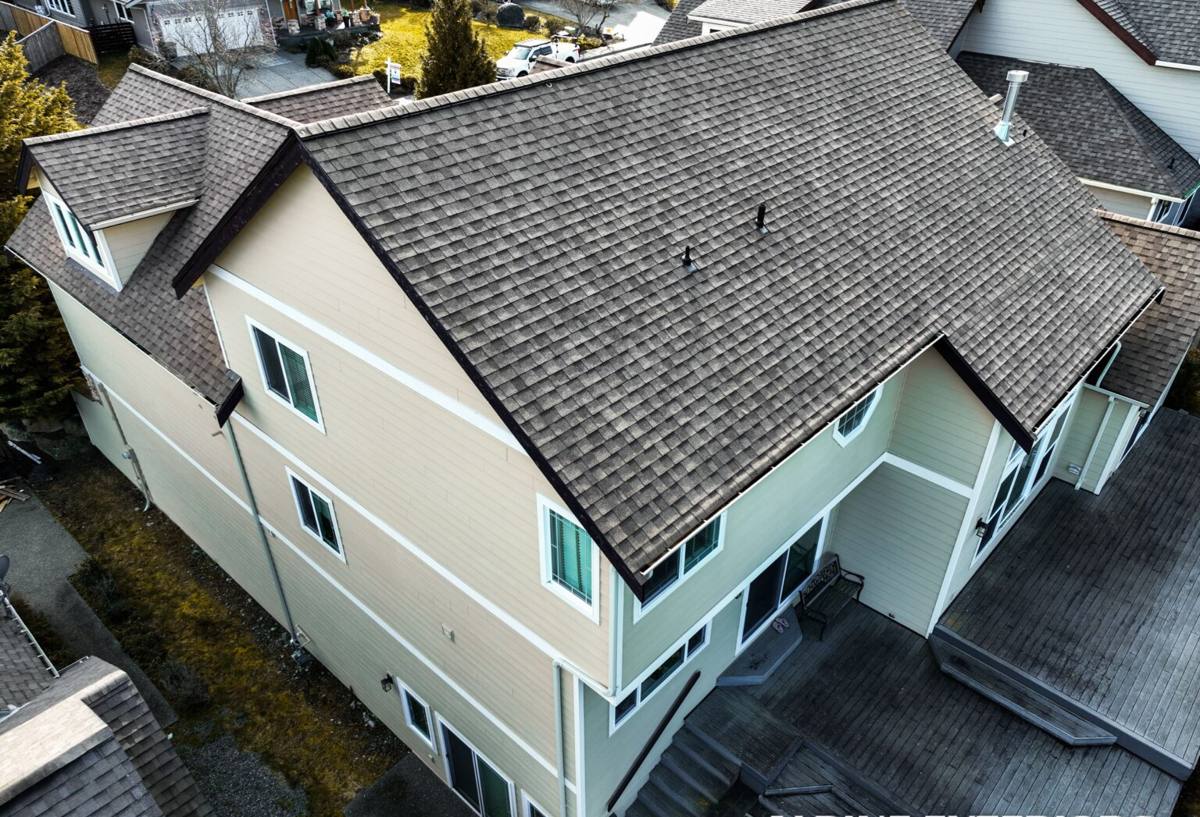
Why Decks Fail Out Here
Almost every deck we tear out in this area shows the same handful of problems, and they're almost never about the decking boards themselves:
- Ledger board rot — where the deck attaches to the house. If it wasn't flashed correctly when built, water gets behind the ledger and rots both the ledger and the rim joist it's bolted to.
- Undersized or corroded fasteners and hardware — joist hangers, bolts, and screws that weren't rated for exterior/ground-contact exposure rust and lose holding strength over years of damp weather.
- Moss and algae buildup on the deck surface — shade from surrounding trees keeps boards damp longer after every rain, which accelerates rot in untreated or poorly sealed wood and makes the surface slick and dangerous.
- Poor ventilation and drainage under the deck — low clearance, dense vegetation, or graded soil that traps water near the footings, which speeds up post rot and can shift footings over time with repeated freeze-thaw cycles in colder stretches.
None of these are exotic problems. They're what happens when a deck built for a milder or drier climate gets left to weather a Whatcom County winter for fifteen or twenty years without anyone addressing the structure underneath.
Signs Your Deck Needs Replacing, Not Patching
Not every tired-looking deck needs full replacement — but a lot of the decks we get called out for in Deming are past the point where patching makes sense. Use this as a rough gut check before you decide:
- Boards feel spongy, spring underfoot, or you can push a screwdriver into the wood without much resistance
- The ledger board area shows staining, soft wood, or gaps where it meets the house siding
- Support posts have visible rot at the base, especially where they meet concrete footings
- Railings wobble or flex when leaned on
- Persistent moss or black-green staining returns within weeks of cleaning
- Multiple fasteners are rusted, popped, or missing entirely
- The deck was built more than 20 years ago and hasn't had structural work since
One or two of these can sometimes be repaired in place. Three or more, especially anything involving the ledger or the posts, usually means the smarter money is a full replacement rather than chasing repairs on a structure that's already compromised.
What a Correct Deck Replacement Actually Involves
Framing and Footings
The substructure is where a deck's real lifespan is decided. In Deming's soil and moisture conditions, footings need to sit below frost depth and bear on solid, well-drained ground rather than soft or organic-heavy soil common under tree cover. We use pressure-treated framing rated for ground contact where posts meet grade, and we size joists and beams for your actual span and load — not just whatever matched the old deck.
Ledger Flashing
This is the single most important detail on any attached deck in a climate this wet. Correct ledger flashing directs water away from the house rather than letting it wick behind the ledger board. We flash it properly every time, even when it adds a step the old deck clearly skipped.
Decking Surface and Fasteners
Whatever material you choose, it gets installed with corrosion-resistant, exterior-rated fasteners and proper spacing for drainage and airflow between boards — tight, poorly spaced boards trap moisture and organic debris (needles, leaves, pollen) that feeds moss growth.
Railings and Guardrails
Most jurisdictions, including Whatcom County, require guardrails once a deck surface is roughly 30 inches or more above grade, along with baluster spacing that prevents a small child from passing through. We build to code as a baseline, not an upsell.
Choosing the Right Decking Material for This Climate
There's no single "best" decking material — there's the right material for your budget, your maintenance appetite, and how shaded and damp your specific site is. Here's how the common options actually compare in a Nooksack valley setting:
| Material | How it handles this climate | Maintenance | Typical lifespan |
|---|---|---|---|
| Pressure-treated wood | Affordable, but absorbs moisture readily in shaded, damp yards; needs sealing to resist moss and rot | Annual cleaning and re-sealing recommended | 10–15 years with upkeep |
| Cedar | Naturally rot-resistant and handles moisture better than treated pine, but still greys and needs sealing in a shaded, wet lot | Periodic cleaning and staining/sealing | 15–20 years with upkeep |
| Composite decking | Resists moisture absorption and doesn't rot; still needs cleaning to keep algae and moss from growing on the surface film | Occasional washing, no staining/sealing | 25+ years, manufacturer-warrantied |
| PVC decking | Fully synthetic, essentially immune to moisture damage; performs well in heavy shade and constant dampness | Occasional washing | 25+ years, manufacturer-warrantied |
In heavily shaded, tree-covered lots — common around Deming — we often steer homeowners toward composite or PVC precisely because they don't give rot a foothold the way wood can when a deck rarely gets direct sun to dry out.
Cost Factors: What Actually Changes the Price
We don't quote by square foot alone, because two decks the same size can cost very differently depending on site conditions. The honest range for a full replacement typically runs from a modest wood rebuild to several times that for a large composite or PVC deck with custom railings — the biggest swing factors are these:
| Factor | Why it matters |
|---|---|
| Decking material chosen | Composite and PVC cost more upfront than wood but reduce long-term maintenance costs |
| Deck height and grade access | Higher decks and difficult site access (common on sloped, wooded lots) increase framing and footing work |
| Extent of substructure damage | Rotted ledger, posts, or joists found during tear-off add repair scope beyond the original estimate |
| Railing style and stair count | Custom railings and multiple stair runs add labor and material beyond a simple rectangular deck |
| Permit and inspection requirements | Attached decks generally require a county permit and inspection, which adds time but is non-negotiable |
Our Process, Start to Finish
- On-site assessment — we inspect the existing deck, ledger connection, posts, and footings to determine what's actually salvageable versus what needs to go.
- Design and material selection — we walk through decking options, railing style, and layout based on your budget and how the space gets used.
- Permitting — we handle the Whatcom County permit application for attached decks so the paperwork isn't on you.
- Demolition — full removal of the old deck, including anything hidden underneath that turns out to be compromised.
- Framing and flashing — new footings, framing, and correct ledger flashing installed to code.
- Decking and railings installed — surface material and railings finished per the agreed design.
- Final walkthrough and inspection — we review the finished deck with you and coordinate the county inspection sign-off.
Permits and Code Basics for Whatcom County Decks
Most attached decks in unincorporated Whatcom County — which includes Deming — require a building permit, and inspections typically happen at the footing stage and again at final completion. Detached, low-height decks without a roof are sometimes exempt, but it's worth confirming rather than assuming. Skipping the permit process on an attached deck isn't just a legal risk — it means nobody independently verified that your ledger flashing, footing depth, and framing meet code, which matters even more in a climate that's unforgiving of shortcuts. We pull the permit and coordinate inspections as a standard part of the job, not an add-on.
Keeping Your New Deck Looking Right
Whatever material you choose, a little seasonal upkeep goes a long way in this climate:
- Sweep off needles, leaves, and debris regularly, especially in fall — trapped organic matter feeds moss and holds moisture against the surface
- Rinse or gently wash the deck surface a couple times a year to interrupt algae and moss before it takes hold
- Keep gutters and downspouts near the deck clear so runoff isn't dumping extra water onto or under the structure
- For wood decks, plan on resealing or staining every 1–3 years depending on sun/shade exposure
- Check railings and stair connections once a year for looseness, especially after a hard freeze
Why Hire a Crew That Already Works in Deming
A lot of deck problems we see trace back to work that was done to a generic spec rather than for this specific valley — flashing details skipped because "it doesn't rain that much," or footings poured shallow because the crew wasn't accounting for local frost depth. We work this stretch of Whatcom County regularly, so we already know how shaded, tree-covered lots behave, what kind of drainage problems show up on sloped ground near the river, and what actually holds up through a full wet season here rather than just looking good the first summer. That local familiarity shows up in the details — the ones that determine whether your new deck is still solid in fifteen years or back on our tear-out list in five.
If your deck is showing its age, or you just want an honest read on whether it's a repair or a replacement, we're happy to take a look. Fill out the form below for a free, no-pressure estimate.