 Sudden Valley Siding
 Decks Built for Deming's Weather, Not Just Deming's View
Deming sits back in the Nooksack River valley, tucked under heavy evergreen cover on the way up the Mount Baker Highway. It's a beautiful spot to put in a deck — and a tough one to keep a deck standing up straight in. Between the driving rain that rolls in off the Sound, the salt-tinged marine air that reaches this far inland, and a moss season that can run eight or nine months a year under all that shade, a deck built to a generic spec sheet starts failing here years before it should. We build decks specifically for that reality, not around it.
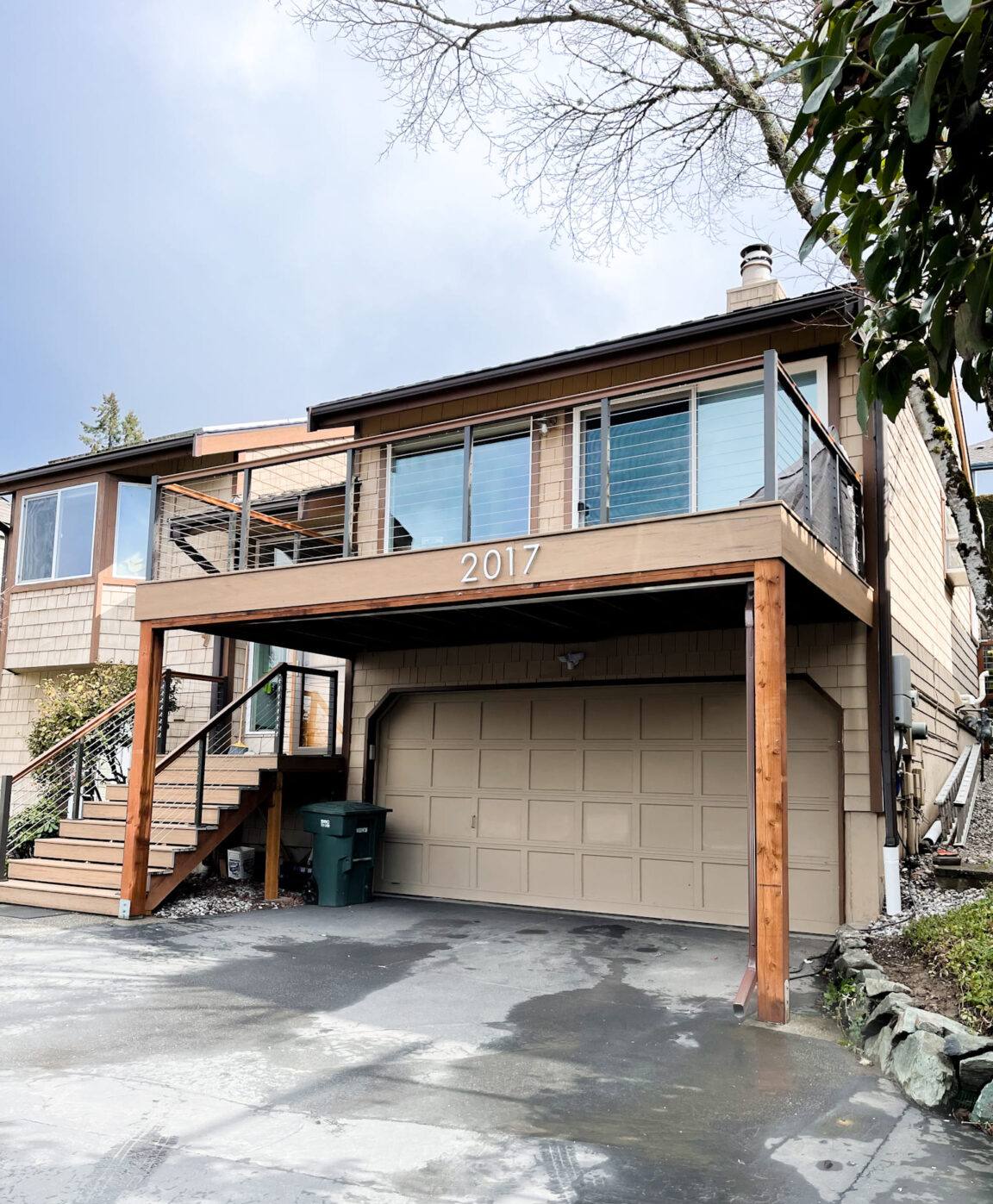
What This Climate Actually Does to a Deck
Driving rain and standing moisture
Wind-driven rain in Whatcom County doesn't fall straight down — it gets pushed sideways into ledger boards, stair stringers, and the undersides of rail posts. On a lot with tree cover and limited afternoon sun, like most of what we see around Deming, that moisture doesn't dry out between storms. It sits. Wood that sits wet against wood, or wet against metal, is where rot and corrosion start — usually in places you can't see until a board fails underfoot.
Salt-laden marine air
Even well inland from the water, Whatcom County gets a steady dose of moist, salt-tinged air pushing in from the Sound. It's subtle compared to a beachfront lot, but over years it accelerates corrosion in cheap fasteners, uncoated brackets, and the screws holding a railing together. A deck that looks fine from ten feet away can have rusted-through hardware quietly doing the actual structural work.
Moss, algae, and shaded lots
Deming's wooded lots keep decks shaded most of the day for a good part of the year, which is great for the yard and rough on lumber. Moss and algae take hold on any decking surface that stays damp and shaded, and once established they hold moisture against the wood or composite, turn the deck slick underfoot, and are genuinely difficult to remove without damaging the surface underneath.
What a Correctly Built Deck Requires Here
None of the above means a deck can't hold up in Deming — it means the build has to account for it from the ground up, not get patched after the fact. A correct deck build in this climate includes several things that are easy to skip and expensive to fix later.
Ledger flashing done right
The ledger board — where the deck attaches to the house — is the single most common failure point we find on decks we're asked to repair or replace. It needs proper metal flashing that sheds water away from the house band board, not caulk alone, and not flashing tape used as a substitute for actual flashing. Get this wrong and water works its way behind the siding, not just into the deck framing.
Footings sized for our soil and frost depth
Footings need to be sized and set to local frost depth and soil conditions, not poured to whatever minimum looked close enough. Undersized or shallow footings are one of the more common reasons a deck develops a noticeable lean, bounce, or gap at the house within a few years of being built.
Fasteners and hardware that won't corrode away
Every structural connector, joist hanger, and fastener should be rated for ground contact and exterior exposure — hot-dip galvanized at minimum, stainless steel where two dissimilar metals meet or where a connection will be hard to inspect later. This is not the place to save a few dollars; corroded hardware is invisible until something moves.
Joist protection and real drainage
Joist tape over the top of every joist keeps standing water from soaking into end grain and fastener holes, which is exactly where rot starts on an otherwise sound frame. Framing also needs to be laid out so water actually drains off the structure instead of pooling under the decking boards where nobody sees it happening.
Choosing Decking Material for a Deming Lot
There's no single right answer for every yard — it depends on how much shade and moisture your specific lot deals with, and how much upkeep you actually want to sign up for. Here's how the common options compare on a shaded, damp, Whatcom County property:
| Material | Moss/Moisture Resistance | Maintenance | Typical Lifespan |
|---|---|---|---|
| Pressure-treated pine | Fair — absorbs moisture, needs sealing | Annual cleaning and re-sealing | 10-15 years |
| Cedar | Good natural resistance, but still organic | Periodic cleaning and oil/stain | 15-20 years |
| Capped composite | Very good — won't rot, resists moss staining | Occasional wash, no sealing or staining | 25-30 years |
| PVC decking | Excellent — fully synthetic, non-organic surface | Occasional wash | 25-30+ years |
We'll walk you through the honest trade-offs for your specific yard rather than push one product line. Cedar looks and feels great and takes stain beautifully, but on a shaded, low-airflow lot it needs more consistent attention to keep moss from getting a foothold in the grain. Capped composite and PVC cost more upfront but hold up with far less maintenance in exactly the conditions Deming throws at a deck year-round. Pressure-treated lumber underneath is standard practice regardless of which decking surface you choose — the substructure has different structural requirements than the walking surface does, and mixing that up is how corners get cut.
Permits, Guardrails, and Whatcom County Requirements
Most decks built above a certain height off grade require a building permit through the county, along with guardrails at a minimum height once the walking surface is elevated enough to need one. Stair geometry, baluster spacing, and the strength of the ledger attachment to the house are all inspected items, not optional details left to judgment on site. We handle the permit process as part of the job — pulling the permit, scheduling inspections, and building to what the inspector will actually sign off on — so you're not the one tracking down paperwork or guessing at what code requires.
How We Approach a Deck Build in Deming
- Site visit and assessment — we look at sun exposure, drainage patterns, existing grade, and how the deck will tie into your house before we design anything.
- Design and material selection — sized to how you'll actually use the space, with a decking material recommendation based on your lot's shade and moisture, not a default upsell.
- Permitting — we pull the permit and coordinate inspection scheduling with the county so the timeline stays predictable.
- Footings and framing — footings set to proper depth, ledger flashed correctly, joists taped and hung with corrosion-rated hardware throughout.
- Decking, railing, and stairs — installed to the layout and spacing that will pass final inspection and hold up over the long term, not just look right on day one.
- Final walkthrough — we go over the finished deck with you, including exactly what maintenance it will and won't need going forward.
Keeping a Deming Deck Looking Good for the Long Haul
A well-built deck still needs some seasonal attention in this climate — how much depends heavily on the material you chose going in. A basic maintenance routine for a shaded, wet-climate lot looks like this:
- Sweep debris and needles off the decking regularly — trapped organic matter under leaves is where moss growth typically gets its start
- Wash the surface at least once a year with a deck cleaner rated for your material; a pressure washer on wood decking should be used carefully on a low setting so it doesn't tear up the grain
- Check and clear the gaps between boards so water and debris don't pack in and hold moisture against the frame below
- Inspect the ledger flashing and any visible hardware yearly for rust staining or gaps in the caulking around it
- Re-seal or re-stain wood decking on the schedule the product actually calls for — skipping a cycle in this climate shows up fast
- Trim back overhanging branches where possible to get more sun and airflow onto the deck surface
What Drives the Cost of a New Deck
Every deck quote is specific to the job, but the same handful of factors move the number up or down on most of the projects we build in and around Deming:
- Size and shape — total square footage and how many angles, levels, or curves are built into the design
- Height above grade — taller decks need more substantial footings, framing, and guardrails, and usually a stair system
- Decking material — pressure-treated, cedar, composite, and PVC sit at noticeably different price points, as shown above
- Site access and grade — a sloped, wooded, or hard-to-reach lot takes more labor to build on than a flat, open one
- Railing and stair details — custom rail systems and multiple stair runs add both material and labor
- Permit and inspection requirements — larger or taller decks can require engineering beyond a standard permit
We'll give you straight numbers for your specific project after we've actually walked the site — anyone quoting a deck price sight unseen is guessing, and that guess tends to change once work starts.
Why It Matters That We Already Work in Deming and Sudden Valley
A crew that only shows up in this part of Whatcom County once in a while doesn't have a real feel for which lots hold water longest, which corners of a yard never see direct sun, or how fast moss actually moves in on a shaded deck out here. We work this area regularly, which means we're not learning the local conditions on your project — we already know what a deck in Deming or Sudden Valley needs in order to hold up, and we build to that standard starting with the first footing, not as a fix once something has already started to fail.
If you're planning a new deck or replacing one that's past its prime, we're happy to come take a look and put together a straightforward, no-pressure estimate — just fill out the form below.