 Sudden Valley Siding
 Why Siding Choice Matters More Here Than Most Places
Cordata and Sudden Valley sit in a part of Whatcom County that asks more of an exterior wall than most of the country ever will. You've got salt-laden air drifting in off the Sound and Bellingham Bay, long stretches of driving, wind-pushed rain that gets forced sideways into every seam and joint, and a wet season that stretches long enough for moss and algae to get a real foothold on anything that stays damp. Add the temperature swings between summer sun and winter dampness, and you have a climate that is genuinely hard on siding — not in a dramatic way, but in the slow, cumulative way that shows up five or ten years later as soft trim, peeling paint, or streaked, mossy walls.
That's the backdrop for every siding decision we make on a Cordata or Sudden Valley home. It's also why we don't install several products that work fine in drier climates but struggle here. We install James Hardie fiber cement siding exclusively, and this page is about what that means specifically for homes in this part of Whatcom County — not a generic pitch, but the real factors that matter for your address.
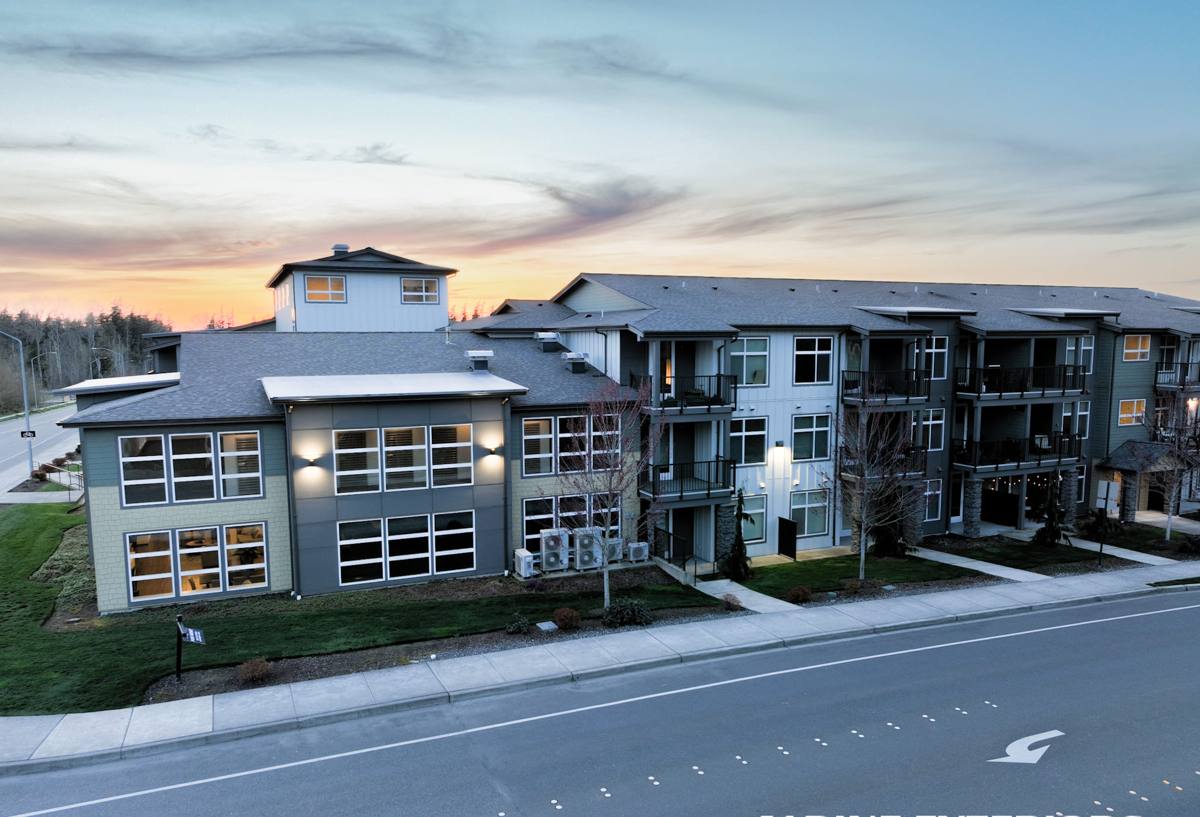
What the Local Climate Actually Does to Siding
Salt Air
Proximity to marine air means airborne salt settles on exterior surfaces and accelerates corrosion of fasteners, staples, and any exposed metal trim. It also degrades some paint and coating systems faster than manufacturers' inland test data would suggest, which is part of why factory-applied, baked-on finishes hold up better here than field-applied paint.
Driving Rain
Wind-driven rain doesn't just fall on siding — it gets pushed up and under laps, into fastener holes, and behind trim that isn't sealed correctly. A siding system's real performance in this area comes down almost entirely to how well the water management behind it — the weather-resistive barrier, flashing, and drainage gaps — was installed, not just the siding panel itself.
Moss and Algae Season
Whatcom County's wet months run long, and any siding that stays damp for extended periods becomes a host for moss, algae, and mildew growth, especially on north-facing walls and shaded sides of a home near trees. Some siding materials absorb and hold moisture in their surface, which feeds that growth. Others shed water and dry faster, which slows it down considerably.
Why James Hardie Fits This Climate
James Hardie fiber cement is engineered specifically around the fact that different U.S. regions punish siding differently. The HardieZone system splits products into HZ5 (for freeze-prone regions) and HZ10 (for hot, humid, and moisture-heavy climates) formulations — Whatcom County falls into the HZ10 category, meaning the boards used here are engineered for sustained moisture exposure rather than freeze-thaw cycling.
Fiber cement itself is non-combustible and doesn't rot, swell, or delaminate the way wood-based products can when they take on repeated moisture. The ColorPlus finish — Hardie's factory-applied color system — is baked on in a controlled environment and backed by its own finish warranty, which matters here specifically because a coating that's cured properly under controlled heat resists salt-air fading and chalking better than a coat of paint applied on-site in variable weather.
None of that means Hardie is maintenance-free. It means the maintenance burden shifts from "repaint every few years" to "keep it clean and caulked," which is a meaningfully lighter lift for a homeowner over a 20-30 year span.
What a Correct Installation Actually Involves
The siding material is only half the equation. Most of the failures we get called out to fix on other contractors' work — anywhere in Whatcom County, not just Cordata or Sudden Valley — trace back to installation shortcuts, not the product itself. A correct Hardie install on a home exposed to this climate involves:
- A continuous, properly lapped weather-resistive barrier behind the siding, with no gaps at seams or penetrations
- Rainscreen or drainage gap furring where the wall assembly calls for it, so any water that gets behind the siding has somewhere to drain and dry
- Correct fastener type, length, and placement per Hardie's published installation instructions — not generic siding nails
- Proper flashing at every window, door, and roof-wall intersection, installed before the siding goes on, not caulked over after
- Manufacturer-specified clearances at grade, decks, and roof lines so the bottom edge of the siding never sits in standing water or snow
- Factory-cut and factory-primed edges wherever possible, with field cuts sealed per spec rather than left raw
- Correct caulking at butt joints and trim intersections using a sealant rated for the exposure, not general-purpose caulk
Skip any one of these and the siding can still look fine going up — the problems show up two, five, or ten winters later, usually as trapped moisture, stained trim, or fastener corrosion that's expensive to trace back to its source.
Where We See the Most Local-Specific Mistakes
The two spots we most often find installation shortcuts on homes in this climate are around window flashing and at the bottom starter course near grade. Both are places where driving rain concentrates and where a few extra minutes of correct flashing work makes the difference between a wall that stays dry and one that slowly rots from the inside out.
Our Process for a Cordata or Sudden Valley Project
1. On-Site Assessment
We walk the exterior, check the current siding and sheathing condition, look at drainage and grading around the foundation, and note anything — tree cover, wind exposure, north-facing walls — specific to your lot that affects the plan.
2. Tear-Off and Sheathing Check
We remove the old siding down to the sheathing and inspect for hidden rot or moisture damage before anything new goes up. This is often the first time a homeowner sees what's actually been happening behind their old siding.
3. Water Management Layer
We install the weather-resistive barrier, flashing, and drainage gap system correctly before a single piece of Hardie board goes on. This layer does more for long-term performance than the siding itself.
4. Hardie Installation to Spec
Boards, fasteners, and joints are installed per James Hardie's published instructions for our HardieZone category, with attention to the two failure points noted above — window flashing and bottom clearances.
5. Final Inspection and Walkthrough
We walk the finished exterior with you, check caulk lines and trim details, and go over basic care so the siding performs the way it's designed to for the decades ahead.
Comparing Siding Options for This Climate
| Material | Moisture Behavior | Maintenance | Fit for Salt Air / Long Wet Season |
|---|---|---|---|
| James Hardie fiber cement | Does not rot or swell; engineered HZ10 formulation for wet climates | Occasional wash; recaulk over time | Strong — factory finish resists fading and moss buildup |
| Vinyl | Doesn't absorb water but can warp, crack, or fade with UV and temperature swings | Low, but damage often means full panel replacement | Moderate — can look chalky/faded faster in salt air |
| Cedar | Absorbs moisture; prone to rot without diligent upkeep | High — regular sealing, staining, or painting | Weak in sustained wet seasons without constant maintenance |
| LP SmartSide (engineered wood) | Treated to resist moisture but still wood-based; sensitive to installation gaps | Moderate to high; edge sealing is critical | Moderate — performs well only with strict installation discipline |
This is why we standardized on one product rather than offering all of these: we'd rather install one system correctly, to spec, every time, than offer a menu of materials with very different long-term outcomes in this specific climate.
Warranty and What It Actually Covers
James Hardie backs its siding with a non-prorated limited warranty on the substrate, plus a separate finish warranty on ColorPlus factory-applied color. Warranty coverage is generally transferable to a subsequent homeowner within the coverage period, which matters if you sell the home — it's one less thing a buyer's inspector flags. Warranty terms are tied to correct installation per Hardie's specifications, which is another reason installation quality isn't optional — it's what keeps the warranty valid in the first place.
What to Ask Before You Hire a Siding Contractor Here
- Do you install to James Hardie's published fastening and flashing specifications, or a generalized method?
- Will you inspect and document sheathing condition before installing new siding?
- What drainage or rainscreen approach do you use behind the siding on this climate?
- Are you a factory-trained or preferred Hardie installer, and what does that involve?
- What's included in your workmanship warranty, separate from the manufacturer's material warranty?
Any contractor working regularly in Cordata or Sudden Valley should be able to answer these without hesitation — these are basic, climate-driven questions, not gotchas.
Why Local Experience Matters for This Job
A crew that only occasionally works in Whatcom County can install Hardie siding by the book and still miss the details that matter here — how far to hold the bottom course off grade given our rainfall patterns, where moss pressure is worst on a given lot, how much drainage gap a shaded, tree-covered wall actually needs versus a sun-exposed one. Working Cordata and Sudden Valley regularly means we've seen how houses in this specific microclimate actually perform over time, not just how a spec sheet says they should.
Caring for Your Siding After Installation
- Rinse siding with a garden hose once or twice a year to clear salt residue and organic buildup
- Keep gutters clear so overflow doesn't run down and sit on siding surfaces
- Trim back trees and shrubs that shade walls and slow drying after rain
- Inspect caulk lines at trim and joints every couple of years and recaulk as needed
- Address any impact damage or chips promptly so the factory finish stays sealed
None of this is heavy upkeep — it's the difference between letting the material do the job it's engineered for and letting small issues compound over a wet season.
If you're weighing siding options for a home in Cordata or Sudden Valley, we're happy to take a look and walk you through what your specific house needs — no pressure, no generic sales pitch. Fill out the form below for a free estimate.