 Sudden Valley Siding
 Fiber Cement Siding for Cordata Homes
Cordata sits in the stretch of Whatcom County where marine air off Bellingham Bay meets long stretches of driving rain and a moss season that can run most of the year. Homes here take a different kind of beating than siding fifty miles inland: constant moisture cycling, salt-laden air working at fasteners and finishes, and shaded north walls that stay damp long after the rain stops. Fiber cement siding, installed correctly, is one of the few cladding systems built to shrug off all three at once. This page is about what that actually looks like on a Cordata house — not a generic rundown of fiber cement in the abstract.
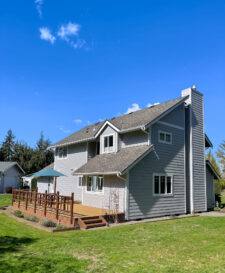
What This Climate Actually Does to Siding
Before talking about the product, it helps to understand the failure modes we're designing against. Three things drive most of the siding problems we see in this part of Whatcom County:
- Salt air corrosion: proximity to the bay means airborne salt settles on exposed surfaces and accelerates corrosion of fasteners, flashing, and any exposed metal trim.
- Driving rain: wind-driven rain doesn't just wet a wall, it pushes water sideways into laps, seams, and joints that aren't designed to shed water in that direction.
- Extended moss and mildew season: shaded, north- and west-facing walls stay damp for weeks at a time, which is exactly the environment moss, algae, and mildew need to take hold on a painted or unsealed surface.
Any siding product can be made to look good on install day. The real test is what it looks like in year eight, after that many wet seasons.
Why Some Materials Struggle Here
Wood-based products (primed spruce, cedar) absorb moisture at cut edges and end grain, and that's where rot starts — often invisibly, behind the paint film. Vinyl doesn't rot, but it flexes and gaps at seams over time, giving wind-driven rain a path behind the cladding. Engineered wood products like LP SmartSide use resin-treated strand board that resists moisture better than raw wood, but it's still a wood-fiber product at its core, and any breach in the factory coating exposes that vulnerability. None of these are automatically doomed in this climate — but they all require more vigilant maintenance here than they would in a drier region, and that maintenance burden is the trade-off we ask homeowners to weigh honestly.
Why We Install Only James Hardie
We standardized on James Hardie fiber cement for every job we do, including here in Cordata, for reasons specific to this climate:
- Non-combustible core: Hardie board is roughly 90% Portland cement and sand — it doesn't burn, swell, or rot from moisture exposure the way wood-based products can.
- Climate-engineered product lines: Hardie's HZ5 formulation is engineered for cold, wet, freeze-prone climates like the Pacific Northwest, with a moisture and impact profile matched to this kind of weather.
- ColorPlus factory finish: a baked-on finish applied and cured in a controlled factory environment, which resists fading and moss/mildew staining far better than field-applied paint — and it's not something you can replicate by having a crew paint boards on site after the fact.
- Transferable warranty: a strong, well-documented warranty that follows the house, which matters when a home changes hands.
We don't say this to knock every alternative outright — vinyl, LP SmartSide, and cedar all have legitimate uses and honest advocates. We say it because we've drawn a line for our own crew: we only put our name on a product we're confident will still look right after a decade of this specific weather, and that's Hardie.
What a Correct Fiber Cement Job Involves
The material is only half the equation. A huge share of the siding failures we get called out to inspect aren't material failures — they're installation failures. In a wet, salt-air climate, installation details matter more, not less.
The Details That Actually Matter
| Detail | Why It Matters Here |
|---|---|
| Weather-resistive barrier + rainscreen gap | Gives wind-driven rain that gets behind the cladding a way to drain and dry instead of sitting against the sheathing |
| Flashing at every penetration and transition | Salt air accelerates corrosion on unprotected metal and fastener heads; correct flashing keeps water off them |
| Proper fastener spacing and type | Corrosion-resistant fasteners driven per manufacturer spec avoid the "nail pop" and streaking common with generic fasteners |
| Correct board clearance at grade and roof lines | Keeps siding out of standing water and splash-back zones where moss and staining start first |
| Sealed and caulked joints at trim, corners, and penetrations | Cuts off the entry points where driving rain finds its way behind the surface |
Skip any one of these and you can end up with a warranty claim on paper that doesn't cover a real-world failure, because the failure traces back to installation, not material.
Our Process on a Cordata Home
- On-site assessment: we walk the exterior, check existing siding and sheathing condition, identify moisture-prone walls (typically north- and west-facing), and look at existing flashing and drainage.
- Tear-off and sheathing check: once old siding is off, we inspect sheathing for hidden rot or moisture damage before anything new goes up — this is often where problems from the old siding show up.
- Weather barrier and rainscreen installation: a proper drainage plane goes in before a single piece of Hardie board is hung.
- Hardie board installation to manufacturer spec: correct fasteners, spacing, clearances, and flashing at every transition.
- Trim, caulking, and final detailing: the seams and joints that keep driving rain out get sealed correctly the first time.
- Final walk-through: we go over the finished work with the homeowner before calling the job done.
Why a Crew That Already Works Cordata Matters
Siding installation isn't one-size-fits-all across Whatcom County. A crew that's used to installing in a dry inland climate can do everything "by the book" and still miss the details that matter most near the bay — the extra attention to flashing at salt-exposed corners, the rainscreen detailing on shaded walls, the fastener choices that hold up against corrosive air. A crew that already works this area knows which walls on a typical Cordata lot need the most attention before the first board goes up, because they've seen what happens when those details get skipped on a house down the street.
Maintenance: What Ownership Actually Looks Like
Hardie siding is low-maintenance, not no-maintenance. In this climate, a simple annual routine keeps it performing the way it's designed to:
- Rinse the exterior annually (a garden hose is usually enough) to clear salt residue and organic buildup before it stains.
- Check caulking at trim and penetrations every year or two, and re-caulk any joints that have cracked or pulled away.
- Keep gutters and downspouts clear so water isn't sheeting down the siding face.
- Trim back vegetation and tree cover that keeps a wall shaded and damp longer than it needs to be.
- Address any moss or algae growth early with a gentle wash rather than letting it establish.
Cost Factors Homeowners Should Understand
| Factor | Why It Affects Price |
|---|---|
| Existing sheathing condition | Hidden rot found during tear-off adds repair scope before new siding goes up |
| Home size and wall complexity | More corners, penetrations, and transitions mean more flashing and detail work |
| Board profile and trim selection | Lap width, panel style, and trim details affect material cost and labor time |
| Access and site conditions | Steep lots, limited access, or extensive removal of old material affect labor hours |
| Rainscreen and drainage upgrades | Adding or improving a drainage plane behind the siding is worth the added cost in this climate |
We don't quote fiber cement jobs off a square-footage rule of thumb, because the variables above swing the number too much to be honest that way. A walk-through gives a real number.
Signs Your Current Siding May Already Be Failing
- Soft or spongy spots when pressed, especially near the bottom of walls or below windows
- Persistent moss or algae staining that comes back within weeks of cleaning
- Visible gaps or separation at seams and corner trim
- Peeling or bubbling paint, particularly on shaded walls
- Rust streaking below fasteners or trim
Any of these on a Cordata home is worth a look before another wet season passes — problems in this climate compound quickly once moisture finds a way behind the cladding.
If you're weighing a siding replacement or just want an honest read on what your current exterior needs, we're happy to walk the property and give you a straight answer — no pressure, no upsell. Use the form below to request a free estimate.