 Sudden Valley Siding
 Composite Decking Built for Cordata's Climate
Cordata sits in one of the wettest corners of Washington, and any deck built here has to earn its keep through nine months of rain, moss growth, and the damp marine air that rolls in off Bellingham Bay. A deck that looks good on installation day but traps moisture underneath, cups at the boards, or grows a green film by the second winter isn't doing its job. Composite decking, installed correctly for this climate, solves most of the problems that wood decks in Whatcom County eventually run into.
This page covers what composite decking actually needs to hold up in Cordata specifically — not a generic overview, but the framing, drainage, and material decisions that matter for homes dealing with driving rain, long moss seasons, and salt-tinged air off the water.
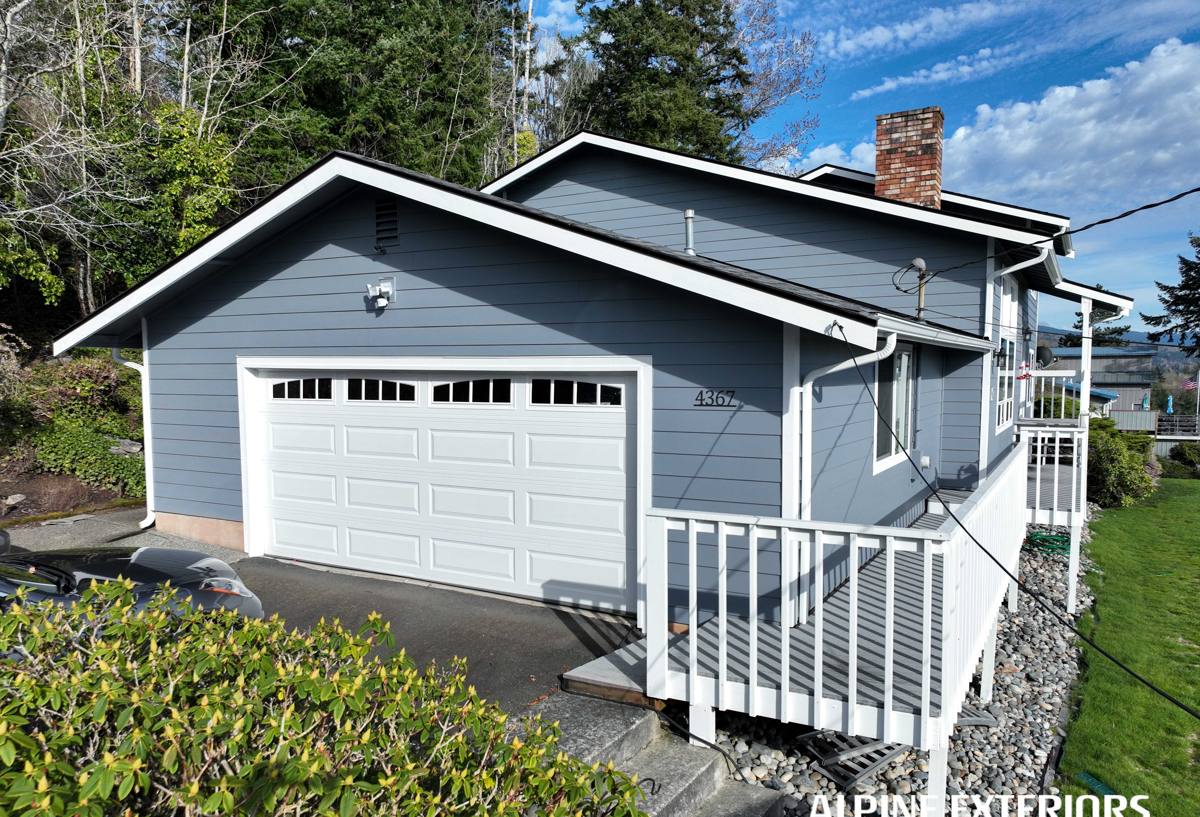
What This Climate Does to a Deck
Whatcom County's marine climate is mild, but mild doesn't mean gentle on building materials. Cordata homes see long stretches of saturated ground, low winter sun that leaves shaded deck areas damp for days at a time, and wind-driven rain that gets up under boards and into fastener holes if the substructure wasn't built with drainage in mind.
Moisture and the Long Moss Season
Moss doesn't need standing water to take hold — it needs shade, moisture, and time, and Cordata's tree cover and overcast winters supply all three. On a wood deck, moss growth traps moisture against the board surface and accelerates rot from the top down. On composite decking, moss is mostly a surface and traction issue rather than a structural one, but it still needs airflow underneath and around the boards to dry out between rain events, or it becomes a slick, unattractive film that regular sweeping won't fully remove.
Driving Rain and Wind Exposure
Storms coming off the water don't just fall straight down — they drive rain sideways into fascia boards, stair stringers, and any gap where end grain or fasteners are exposed. That's where composite decking earns its reputation: the boards themselves don't absorb water the way wood does. But the ledger board connection, joist protection, and any exposed cut ends still need to be treated correctly, or moisture finds its way into the framing underneath a perfectly good composite surface.
Salt Air and Material Fatigue
Cordata's proximity to Bellingham Bay means homes here get a light but steady dose of salt-laden air, which accelerates corrosion on exposed metal fasteners and hardware. It's a slower process than what a house right on the water deals with, but over years it matters — especially on railing brackets, screws, and any hidden fastening systems that aren't rated for coastal exposure.
What a Correct Composite Deck Install Actually Involves
A lot of composite decking problems we get called out to fix in this area aren't material failures — they're installation shortcuts. The board itself is only part of the system.
Substructure and Ventilation
Composite boards need a framing system built to the manufacturer's spacing requirements, which are usually tighter than what wood decking allows because composite has different flex characteristics. Just as important in a climate like ours is airflow underneath the deck — joists and beams need room to breathe and dry out, not sit trapped against damp soil or overgrown landscaping.
Joist Protection
Wrapping joists in a protective tape barrier keeps water from wicking into the top of the lumber where deck screws penetrate — the single most common point of hidden rot on decks in wet climates. Skipping this step doesn't show up as a problem for a year or two, which is exactly why it gets skipped by crews cutting corners.
Fastening Systems
Hidden fastener clip systems give composite decking its clean, screw-free surface look, but they have to be rated for the board profile being used and installed at the correct spacing to prevent board movement during temperature swings. In a marine climate, we also pay attention to fastener corrosion resistance — stainless or coated hardware rated for coastal exposure, not standard interior-grade screws.
Drainage at the Ledger and Stairs
Where the deck meets the house, proper flashing keeps driving rain from working its way behind siding and into the wall assembly. This is one of the most common failure points we find on older decks in this area, composite or wood, and it's worth checking even on a deck that's just getting new boards rather than a full rebuild.
Comparing Your Decking Options
Homeowners in Cordata usually narrow it down to a few real choices. Here's how they stack up for this specific climate, honestly:
| Material | Upfront Cost | Maintenance in This Climate | Realistic Lifespan |
|---|---|---|---|
| Pressure-treated wood | Lowest | Annual cleaning, periodic staining/sealing, moss removal | 10–15 years before major repair or replacement |
| Cedar | Moderate | Regular sealing to resist moisture and moss; sensitive to shade and standing water | 12–18 years with consistent upkeep |
| Uncapped composite | Moderate-High | Low, but surface can absorb moisture at cut edges without proper sealing | 15–20 years |
| Capped composite (PVC shell) | Highest | Occasional wash-down; no staining or sealing | 20–25+ years, backed by manufacturer warranty |
For most Cordata homes, capped composite is the best fit for the climate — it resists the moisture absorption that drives moss growth and board decay, and it doesn't require the seasonal maintenance rhythm that wood demands. Uncapped composite is a reasonable middle-ground option on a tighter budget, but the cut ends and edges need attention during installation since they're more exposed to moisture uptake than a fully capped board.
Our Process for a Cordata Composite Deck
We approach every composite deck project in this neighborhood the same structured way:
1. On-Site Assessment
We look at drainage around the existing footprint, shade patterns that will affect moss and drying time, and the condition of any existing framing if this is a resurface rather than a new build.
2. Framing and Structural Check
Ledger connection, joist spacing, and footing condition get inspected before any composite board goes down. A beautiful deck surface over compromised framing is a problem waiting to surface.
3. Moisture Management Build-Out
Joist tape, proper ledger flashing, and drainage planning underneath the deck — the parts that don't show once the project is finished but determine how it holds up through Whatcom County winters.
4. Board Installation
Boards go down per manufacturer spec, with attention to expansion gaps, fastener spacing, and consistent seams — details that affect both appearance and how the deck handles temperature and moisture swings over time.
5. Final Walkthrough
We go over basic care with the homeowner — what to expect from the material, how to keep moss from becoming a slip hazard, and what (if anything) needs periodic attention.
What Composite Decking Actually Needs From You
Composite is a low-maintenance product, not a no-maintenance one. In a climate like Cordata's, a little seasonal attention goes a long way toward keeping a deck safe and good-looking:
- Sweep debris and standing leaves off the deck regularly through fall — trapped organic matter feeds moss growth
- Wash the surface with a soft-bristle brush and mild soap once or twice a year to remove moss film and pollen buildup
- Check railing hardware and fasteners periodically for corrosion, especially on decks closer to the water
- Keep gutters and downspouts near the deck clear so runoff isn't dumping extra water onto or under the deck surface
- Trim back landscaping that's shading the deck and slowing how quickly it dries after rain
- Avoid pressure-washing at high PSI directly into board seams, which can force water into the substructure
Why Local Installation Experience Matters
Composite decking manufacturers publish installation specs, but applying them correctly to Whatcom County conditions is a different skill than following a generic instruction sheet. A crew that already works in Cordata and the greater Sudden Valley area knows which yards drain poorly, which areas hold shade and moss longer into spring, and how to detail joist protection and flashing for a climate that gets more rain than most of the country. That local pattern recognition is what prevents the slow, hidden problems — trapped moisture, corroded fasteners, moss creep — that don't show up until a few winters in.
If you're weighing composite decking for a Cordata property, we're happy to walk the site, look at drainage and sun exposure, and talk through material options honestly — including where a lower-cost option makes sense and where it doesn't for your specific yard. The estimate is free and there's no pressure attached to it — fill out the form below and we'll get in touch.