 Sudden Valley Siding
 Why Decking Takes a Beating in Deming and Around Sudden Valley
Deming sits back in the Nooksack River valley, under heavy tree canopy, with the kind of Whatcom County weather that never really dries out for long. A deck out here doesn't fail because of one big storm. It fails from the slow, steady stuff: months of dampness that never fully evaporates before the next rain arrives, shade that keeps boards wet longer than they should be, and organic growth that gets a foothold and doesn't let go. If you've replaced deck boards before, or you're planning a new deck and want it to actually last, it helps to understand what you're up against first.
Constant Moisture and Driving Rain
Western Washington rain isn't usually violent, but it is persistent. Decking in this area spends a large part of the year sitting damp, which is hard on any material that can absorb water, swell, cup, or rot from the inside out. The problem is rarely the rain itself — it's what happens in the hours and days after, when water sits in joints, fastener holes, and end grain instead of shedding off.
Tree Cover, Shade, and Moss
Deming's forested lots are part of what makes the area appealing, but shade is not a deck's friend. Boards that stay shaded most of the day dry slower, and slow-drying wood surfaces are exactly what moss, algae, and mildew need to establish. Once moss gets a grip on a wood deck, it holds moisture against the board surface and accelerates whatever rot process is already underway underneath.
Marine Air and Humidity Swings
Across greater Whatcom County, the marine air pushing in off the Sound keeps humidity elevated even between rain events. Deming, being inland and more forest-sheltered, gets a slightly different version of this — less direct salt exposure than a lakefront or waterfront property might see, but more of the shade-driven dampness that comes from tree cover trapping moisture close to the ground. Either way, decking here is dealing with sustained humidity, not just occasional wet weather.
Why Composite Decking Holds Up Better Here
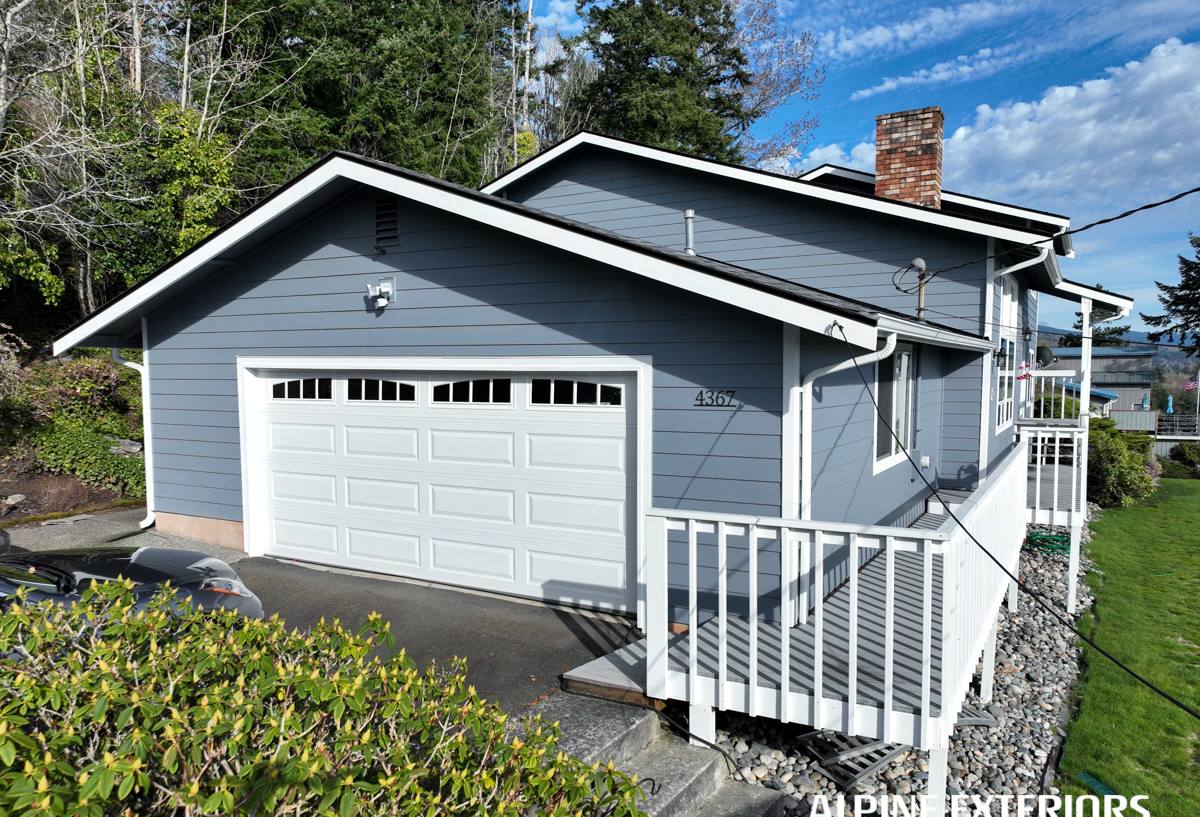
Composite decking was built to solve exactly this kind of problem. Because it's made from a blend of wood fiber and plastic (and in capped composite products, a protective outer shell), it doesn't absorb water the way solid wood does, doesn't need annual staining or sealing to stay protected, and resists the surface breakdown that gives moss and mildew something to cling to. For a Deming property dealing with shade and sustained moisture, that's a meaningful upgrade over refinishing a wood deck every year or two.
It's also more forgiving of the maintenance gaps that happen in real life. Not everyone gets around to re-staining a deck on schedule, and a wood deck that misses a season or two of upkeep in this climate can start showing real damage. Composite doesn't carry that same penalty for a missed maintenance year.
Where Composite Still Has Real Trade-offs
We're not going to oversell it. Composite decking generally costs more upfront than pressure-treated wood, it can get hot underfoot in direct summer sun (less of an issue under Deming's tree cover, more relevant on open lots), and lower-grade or uncapped composite products can still take on moisture at cut ends or in poor installations. The material solves specific problems — moisture absorption, staining, and organic growth — it doesn't remove the need for correct structural work underneath it. A composite deck built on a poorly framed or poorly flashed substructure will still have moisture problems; they'll just show up as trapped water and hidden rot in the framing instead of visible damage on the board surface.
Decking Material Comparison for This Climate
| Material | Moisture/Rot Resistance | Moss & Mildew Resistance | Annual Upkeep | Typical Lifespan |
|---|---|---|---|---|
| Pressure-treated wood | Moderate — treatment protects against rot but wears off over time | Low — needs regular cleaning and sealing to resist growth | Sanding, staining, or sealing every 1-2 years | 10-15 years with consistent upkeep |
| Uncapped composite | Good — resists rot, but exposed fibers can still absorb some moisture | Moderate — better than wood, can still stain or grow surface mildew | Periodic cleaning, no staining or sealing | 15-25 years |
| Capped composite | Very good — protective shell blocks moisture absorption | Good — smooth cap resists staining and growth better than uncapped | Occasional rinsing and light cleaning | 25-30 years, often with a longer manufacturer warranty |
| PVC decking | Excellent — no wood fiber content to absorb moisture | Very good — non-porous surface resists organic growth well | Minimal — occasional rinsing | 25+ years |
For most Deming and Sudden Valley homes, capped composite hits the practical middle ground: real moisture and moss resistance without the highest price point of full PVC decking. We'll walk through the honest cost and performance difference for your specific project rather than push whatever has the best margin.
What a Correct Composite Deck Installation Actually Involves
The decking material only does part of the job. Most deck failures we get called out to look at — composite or wood — trace back to what's underneath the boards, not the boards themselves.
Framing and Joist Spacing
Composite boards have manufacturer-specified span ratings, and those ratings are usually tighter than what's acceptable for solid wood decking. Framing built for a wood deck, or framed without checking the specific product's spec sheet, can leave joists too far apart for the composite boards being installed, which shows up later as flexing, bounce, or long-term sagging.
Fastening Method
Hidden fastener systems, which clip boards from the side rather than screwing through the face, are the standard for a clean composite install. They avoid the small screw-hole openings that face-fastening leaves behind — openings that, in a climate this wet, become entry points for moisture and eventually for the algae and mildew that gets its start in damp fastener holes.
Flashing at the Ledger Board
Where a deck attaches to the house, the ledger board and its flashing are doing the most important waterproofing work on the entire structure. Deck ledgers without proper flashing are one of the most common sources of hidden rot we find in this region, because water running off the house wall gets directed straight into the band joist and framing instead of away from it. This is invisible from on top of a finished deck, which is exactly why it gets skipped on rushed jobs.
Airflow Underneath the Deck
Ground clearance and airflow underneath the deck structure matter as much in a shaded, damp climate as flashing does. A deck built low to the ground, over poorly draining soil, or boxed in without any ventilation gaps will trap humidity underneath it regardless of what decking material is on top.
How We Approach a Composite Decking Project in Deming
- Walk the site and assess existing structure (for replacements) or grading and drainage (for new builds)
- Check ledger condition, framing spacing, and structural connections against the composite product's actual span and fastening requirements
- Remove old decking and correct any framing or flashing issues found underneath before new material goes down
- Install or repair ledger flashing so water is directed away from the house structure
- Install composite decking with the manufacturer-specified fastening system and expansion gaps
- Finish edges, fascia, stairs, and railings to match the rest of the structure
- Final walk-through to confirm drainage, board spacing, and fastening before we call it done
Keeping a Composite Deck Clean Through a Long Moss Season
Composite decking cuts down on maintenance, it doesn't eliminate it. In a climate where moss season can run most of the year, a little routine care keeps a composite deck looking and performing the way it should.
- Sweep off leaves and organic debris regularly, especially in fall and under tree cover
- Rinse the deck surface a few times a year to clear pollen, dirt, and early moss growth before it sets in
- Use a soft-bristle brush and a cleaner rated for composite decking — avoid pressure washing at close range, which can scar the surface
- Keep planters, pots, and furniture with rubber feet elevated slightly or moved periodically so moisture doesn't collect underneath them
- Trim back overhanging branches where possible to reduce shade and improve airflow across the deck surface
- Check gutters and downspouts near the deck so runoff isn't draining directly onto or under it
Mistakes We Commonly Find on Older Decks in This Area
When we're called out to look at a deck that's failing early, a handful of issues show up again and again in this climate: missing or inadequate ledger flashing, decking boards installed tight against the house siding with no gap for water to escape, joist spacing that doesn't match the decking product's actual span rating, and face-screwed boards where water has been sitting in the screw holes for years. None of these are dramatic mistakes at the time they're made — they're just corners cut on the parts of the job nobody sees once the decking is down. In a climate that stays damp as long as this one does, those shortcuts show up faster than they would somewhere drier.
Why It Matters That We Already Work in Deming and Sudden Valley
A crew that only occasionally works this part of Whatcom County has to relearn the local conditions on every job. We already know what a deck facing heavy tree cover in the Nooksack valley needs versus one built more in the open, what ledger flashing failures typically look like on homes of a certain age out here, and how much shade and drainage actually vary from one Deming lot to the next. That familiarity means fewer surprises mid-project and a deck built to handle the specific conditions of your property, not a generic install plan.
If you're weighing a new composite deck or replacing a tired wood one, we're happy to take a look and give you a straightforward, no-pressure estimate — just fill out the form below and we'll set up a time to walk the site with you.