 Sudden Valley Siding
 Window Installation Built for Columbia's Climate
Homes in the Columbia area near Sudden Valley face a specific combination of weather stress that most window installers never have to think about. You're close enough to open water to catch salt-laden air, you sit under a marine layer that pushes driving rain sideways into window frames for months at a stretch, and the shaded, moisture-heavy conditions here mean moss and algae get a foothold on any surface that stays damp too long. Windows are one of the first places all three of those factors show up as real problems — fogged glass, soft trim, sticky sashes, and frames that look fine from the curb but are rotting from the inside out.
Whatcom County's weather doesn't punish a window all at once. It's a slow accumulation of small exposures — a poorly sealed nailing flange here, a missing drip cap there — that adds up over a decade into a window that leaks, drafts, and eventually needs to be replaced years before it should. Correct installation is what stands between a window that lasts 20-plus years and one that fails at year eight.
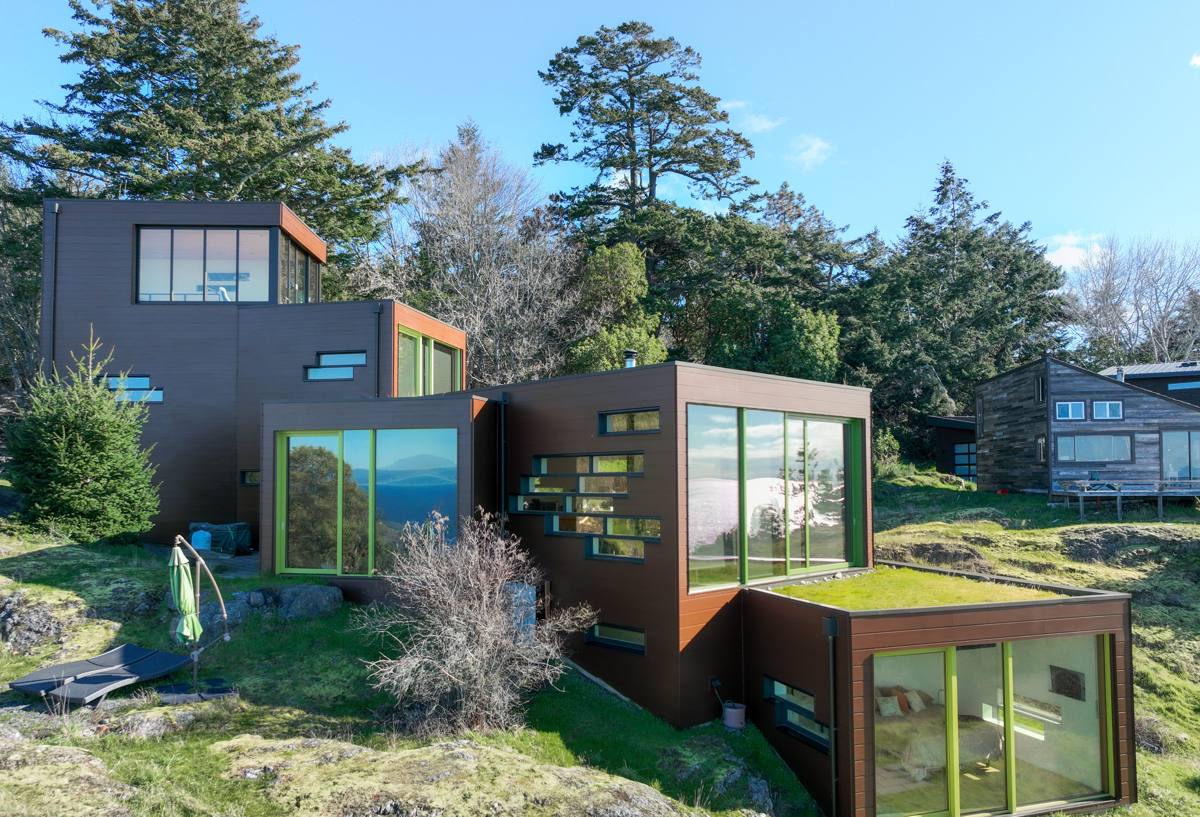
What Columbia Homes Actually Need From Their Windows
We install a lot of windows in and around Sudden Valley, and the Columbia area has its own pattern of problems we watch for. It's not identical to what we see on more exposed waterfront lots, and it's not identical to what we see further inland — it's a specific mix of shade, moisture, and salt exposure that shapes what a correct install looks like here.
Salt Air and Metal Components
Salt-laden air accelerates corrosion on anything metal — hardware, screws, flashing, and older aluminum frames. Over years, this shows up as pitting, sticky locks, and hardware that seizes up. We favor corrosion-resistant fasteners and flashing on installs in this area, and we're upfront that even the best hardware benefits from an occasional rinse-down if your home catches a lot of air off the water.
Driving Rain and Wind-Driven Water
Rain that falls straight down is easy to manage. Rain that gets pushed sideways by wind is what actually gets past a poorly installed window. It finds gaps at the corners of the frame, works under improperly lapped flashing, and wicks into the wall cavity where nobody sees it until there's a stain on the drywall or soft spot on the sill. This is a flashing and sequencing problem more than a product problem — it's about how the window is tied into the wall's water management system, not just what brand of window you buy.
Moss, Algae, and Prolonged Moisture
Shaded lots and long wet seasons mean moss and algae get established fast on any surface that doesn't dry out between rains. On windows, that usually shows up on horizontal trim, sills, and the tops of frames where debris and moisture sit. Left alone, that constant dampness breaks down caulking and, eventually, wood trim underneath it. Detailing sills and trim so water sheds cleanly — rather than pooling — matters more here than it would in a drier climate.
Signs Your Columbia Home's Windows Need Attention
- Fogging or a hazy film between the panes of double-pane windows — a sign the seal has failed
- Drafts you can feel near the frame even when the window is fully closed and locked
- Wood trim or sills that feel soft, spongy, or show dark staining
- Visible moss or algae growth on horizontal sills or trim
- Windows that are difficult to open, close, or lock — often a sign the frame has shifted or swollen
- Paint or finish that's peeling or bubbling specifically around the window opening, not elsewhere on the wall
- Noticeable temperature difference near windows compared to the rest of the room
- Visible daylight or gaps at the corners of the frame from outside
What a Correct Installation Actually Involves
Window installation quality is decided by steps most homeowners never see, because they happen before the new window is anywhere near the opening. A window that looks identical to a neighbor's can perform completely differently depending on how it was flashed and sealed.
Removal and Opening Inspection
We remove the old window carefully and inspect the rough opening before anything new goes in. This is the point where hidden rot, old water damage, or failed flashing gets found — and it needs to get fixed now, not covered up. Installing a new window over a compromised opening just hides the problem behind new trim for a few years.
Flashing and Water Management
Flashing tape and pan flashing get installed in a specific shingle-style sequence so water is always directed outward and downward, never trapped behind the window. This is the step that matters most for a climate with as much driving rain as this one gets, and it's also the step that's easiest to rush or skip.
Setting, Shimming, and Sealing
The window gets set plumb, level, and square, shimmed at the right points so it isn't relying on the frame screws alone to hold its shape, and sealed with the correct sealant at both the interior and exterior — not just a bead of caulk around the outside trim.
Insulation and Interior Finish
The gap between the window frame and the rough opening gets insulated properly — not overpacked, which can bow the frame, and not left empty, which creates a draft and condensation path. Interior and exterior trim goes back on clean, with attention to how it sheds water on the outside.
Choosing Windows for This Climate
There's no single "best" window brand — the right choice depends on your home's exposure, your budget, and how much maintenance you want to take on. What we can speak to honestly is how different frame materials tend to hold up under salt air, prolonged moisture, and the temperature swings this region sees.
| Frame Material | How It Handles This Climate | Maintenance |
|---|---|---|
| Vinyl | Doesn't corrode from salt air, handles moisture well, good energy performance | Low — occasional cleaning |
| Fiberglass | Very stable through temperature and moisture swings, strong long-term durability | Low — occasional cleaning |
| Wood | Classic look, but needs consistent upkeep in a wet, mossy climate to prevent rot | High — regular painting/sealing |
| Aluminum | More prone to corrosion and condensation in salt air and cold snaps | Moderate — watch for pitting |
| Wood-clad (wood interior, metal/vinyl exterior) | Combines interior warmth with better exterior weather resistance | Low to moderate |
We're happy to walk through the tradeoffs for your specific home during an estimate rather than push one material for every job — a shaded, moisture-heavy lot and a more open, sun-exposed lot in the same neighborhood can reasonably call for different choices.
Energy Performance in a Marine Climate
Whatcom County doesn't see extreme heat, but it does see persistent damp cold and wide day-to-night temperature swings, especially in the shoulder seasons. Double-pane windows with a quality low-E coating and an argon or krypton gas fill are the practical standard for this climate — they cut down on both heat loss and condensation on the interior glass, which is a common complaint in older single-pane or failed-seal windows during our colder, wetter months. If you're replacing windows anyway, this is the point where upgrading glass package pays for itself over time in comfort and lower heating costs, not just looks.
Our Installation Process
- On-site assessment: we look at your current windows, the condition of the openings, and any specific exposure concerns for your lot
- Free, no-pressure estimate: a clear written estimate with product options and pricing, no upsell pressure
- Scheduling: we plan around weather windows where possible, since openings are exposed during the swap
- Removal and opening inspection: old window comes out, opening gets inspected and any rot or damage is addressed before moving forward
- Flashing, setting, and sealing: new window is flashed, set, shimmed, and sealed to manage water correctly
- Interior and exterior finish work: trim goes back on clean, insulation gaps are filled properly
- Final walkthrough: we check operation, look, and seal with you before calling the job done
Why Hire a Crew That Already Works Columbia
A crew that already works this area isn't guessing about how to handle salt exposure, driving rain, or moss-prone shaded lots — we've seen how these specific conditions play out on real homes here over time, not just in a training manual. That matters when it comes to flashing details, material choices, and knowing what warning signs to look for during removal that a crew from outside the region might miss entirely. It also means we're not learning Whatcom County's weather patterns on your project.
We're also straightforward about scope. If your window opening has hidden rot or water damage, we'll tell you before we button it up, not after. And if a lower-maintenance material makes more sense for your home's exposure than what you originally had in mind, we'll say so, even if it's not the most expensive option on the table.
What to Ask Any Window Contractor
- How do you flash and seal windows specifically for driving rain and wind-driven water?
- What happens if you find rot or damage in the rough opening once the old window is out?
- What frame materials do you recommend for a home with my sun/shade exposure, and why?
- What's included in your warranty — both the manufacturer's and your own installation warranty?
- Do you carry current licensing and insurance, and can you provide proof?
- Can I see examples of window installation work you've completed in this area?
If your windows in the Columbia area are drafty, fogged, sticking, or just old enough that you're wondering whether it's time, we're glad to take a look. Reach out for a free, no-pressure estimate using the form below and we'll walk you through what we see and what your options are.