 Sudden Valley Siding
 Siding Repair in Columbia: Built for Sudden Valley's Climate
Homes in the Columbia area of Sudden Valley sit in one of the more demanding micro-climates in Whatcom County. Salt-tinged marine air moves inland off the Sound, driving rain comes in sideways for months at a stretch, and the tree cover that makes this part of the county so livable also means shade, standing moisture, and a moss season that can run seven or eight months out of the year. Siding here doesn't fail because it's old — it fails because it was never detailed for this combination of conditions in the first place, or because a prior repair patched the symptom instead of the cause.
We work in Columbia regularly, which matters more than it sounds. A siding repair done right in this pocket of Sudden Valley looks different from a repair done in a drier, more exposed part of the county, and a crew that hasn't seen how moisture actually moves through these homes will often fix the visible damage and miss the reason it happened.
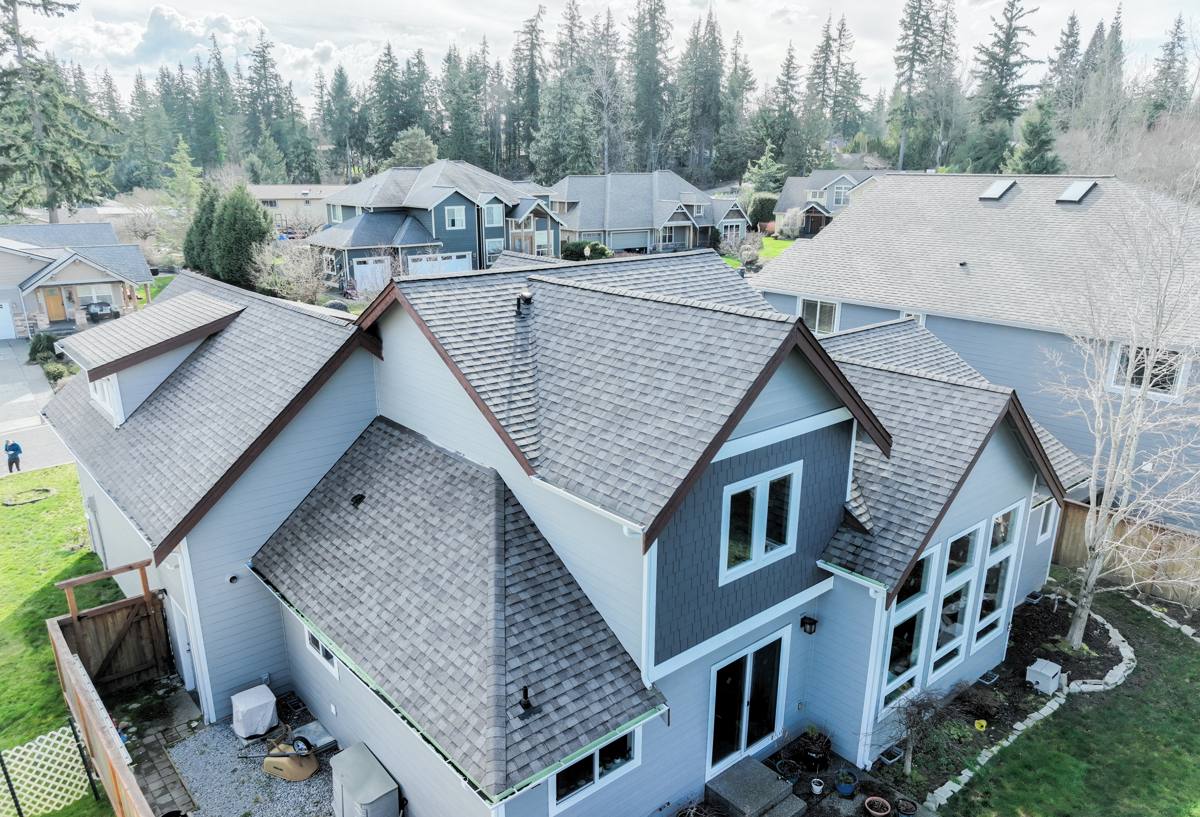
Warning Signs It's Time to Call a Siding Repair Crew
Siding damage in this climate rarely shows up as a sudden failure. It creeps in over one or two wet seasons, and by the time it's obvious from the driveway, there's usually more going on behind the panel than what you can see. Homeowners in Columbia should watch for:
- Soft or spongy spots when you press on siding near the bottom courses, corners, or below windows
- Paint that's bubbling, peeling, or failing faster in one section than the rest of the house
- Persistent moss or dark green-black staining that comes back within weeks of being cleaned
- Visible gaps, cracks, or separation at seams, corner boards, and trim joints
- A musty smell near exterior walls, especially in a room that backs up to a shaded or north-facing side
- Siding that's warped, bowed, or pulling away from the wall in one localized area
- Caulk lines that have shrunk, cracked, or disappeared around windows, doors, and penetrations
Any one of these on its own might be minor. Two or three together, especially clustered in one area, usually means water has been getting behind the siding for a while.
What a Correct Siding Repair Job Involves
A repair that just replaces the damaged board and moves on is the most common shortcut we see, and it's the reason so many homes need the same repair again two winters later. Doing it correctly takes a few extra steps that don't show up in a quick estimate but make the difference in a wet climate like this one.
Finding the Real Cause First
Before anything gets replaced, the damaged section needs to come off far enough to see what's underneath — the house wrap or weather-resistive barrier, the flashing, and the framing. Rot at the bottom of a wall section is often a symptom of a flashing gap, a grade that slopes toward the house, a gutter that's been overflowing onto the wall below it, or a missing kick-out flashing at a roof-to-wall intersection. Replace the siding without correcting that source and the repair is temporary by design.
Matching Board Profile and Finish
Siding repairs stand out visually more than any other exterior repair when the replacement piece doesn't match the reveal, profile, or finish of the surrounding boards. On a factory-finished product, matching color and sheen correctly matters as much as matching the board width — a mismatched patch is the fastest way to make a repair look like a repair instead of just part of the house.
Flashing and Water Management
Every seam, corner, and penetration in the repaired area needs to be properly flashed and lapped so water sheds outward, not into the wall assembly. In a location that gets sustained, wind-driven rain, this detail is not optional — it's the difference between a repair that lasts the life of the siding and one that fails again in the same spot.
Repair, Patch, or Replace? How to Think About the Decision
Not every damaged area needs a full re-side, but not every problem is a simple patch either. The right call depends on how much of the wall is affected and what's found once the damaged boards come off.
| Approach | Best For | What to Watch For |
|---|---|---|
| Spot patch (single board or small section) | Isolated, recently-caused damage with sound sheathing underneath | Only appropriate if the underlying cause has also been fixed — otherwise it recurs |
| Section or wall-face replacement | Damage concentrated on one elevation, often the side that takes the most driving rain | Requires careful color and profile matching to the rest of the house |
| Full re-side | Widespread moisture damage, siding original to an older home, or repairs needed on multiple elevations | Higher upfront cost, but resets the clock with consistent material and warranty on the whole house |
As a general rule: if damage shows up in more than one area of the house, or if what we find behind the siding suggests the moisture problem is systemic rather than local, we'll tell you honestly rather than talk you into a patch that won't hold.
Why We Repair With James Hardie Fiber Cement
When a repair calls for new siding material — whether it's a few boards or a full elevation — we use James Hardie fiber cement exclusively. It's not the only siding product on the market, but it's the one we've standardized on because of how it holds up to exactly the conditions Columbia homes deal with: sustained moisture, moss and algae exposure, and freeze-thaw swings through the winter months.
Fiber cement doesn't absorb water the way wood-based products can, and it won't support rot the way an untreated substrate will. Hardie's ColorPlus factory finish is baked on under controlled conditions rather than field-painted, which means a repaired section can be color-matched from Hardie's own product line rather than hand-mixed on site. The HZ5 product line is engineered specifically for the kind of wet, marine-influenced climate found here in western Washington. And because Hardie backs its material with a strong, transferable warranty, a repair done with matching Hardie product keeps that coverage intact rather than creating a patchwork of different materials and different warranty terms on one house.
Our Process for Columbia Siding Repairs
- Inspection. We look at the damaged area and the surrounding siding, not just the spot you called about — hidden damage rarely stays isolated.
- Diagnosis. We identify the actual water source: flashing, grading, gutters, caulk failure, or a manufacturing or installation issue with the original siding.
- Honest scope and estimate. You get a clear explanation of what needs to happen and why, including whether a patch is genuinely sufficient or whether we'd be doing you a disservice recommending one.
- Correction of the cause. Flashing, wrap, or drainage issues get fixed as part of the repair, not left for later.
- Replacement with matched material. New James Hardie boards are installed to manufacturer spec, with proper fastening, clearances, and sealant.
- Final check. We walk the repaired area with you before we consider the job done.
Why a Crew That Already Works Columbia Matters
Siding repair is one of those jobs where local experience shows up in the details. A crew that's worked on homes throughout Sudden Valley has already seen how the tree canopy shades certain elevations longer into the day, how driving rain tends to hit from a particular direction here, and how moss tends to establish itself faster on north- and west-facing walls in this part of Whatcom County. That's not something you can look up — it's pattern recognition built from doing the work here repeatedly.
It also means faster, more accurate diagnosis. When we see a specific type of staining or a particular pattern of board separation, we usually already have a good idea what's happening behind it before we pull the first board, because we've seen the same thing on other homes nearby dealing with the same rain exposure and moss pressure.
Keeping Repaired Siding Looking Right Through the Wet Season
Once a repair is done correctly, a little regular attention keeps it that way:
- Keep gutters clear so overflow doesn't run down the wall below them, which is one of the most common causes of repeat siding damage
- Trim back vegetation and tree limbs that keep siding shaded and damp — reducing shade is one of the most effective ways to slow moss regrowth
- Rinse moss and algae off with a soft wash rather than a pressure washer, which can force water behind panels and seams
- Re-caulk seams and penetrations as they age rather than waiting for a gap to become a leak
- Walk the exterior once a year, ideally before the wet season sets in, and address small issues before winter rain finds them
If you're seeing warning signs on your Columbia home, or you just want an honest read on whether a repair or something more is the right call, we're happy to take a look. Fill out the form below for a free, no-pressure estimate.