 Sudden Valley Siding
 Storm Damage Roofing in a Bellingham Climate
Bellingham sits where Pacific storm systems come ashore off the Salish Sea, and that shapes what "storm damage" actually looks like on a local roof. It's rarely a single dramatic event. More often it's wind-driven rain working into a weak spot during a fall or winter blow, followed by weeks of gray, damp weather that lets the problem grow before anyone notices a stain on the ceiling. Add in the salt-laden air off Bellingham Bay, which accelerates corrosion on exposed fasteners and metal flashing, and a long moss season fed by shade and moisture that holds against shingles for months at a time, and you get a roofing environment that punishes shortcuts.
We're a Whatcom County crew working out of Sudden Valley, and we see the same failure patterns repeat across Bellingham roofs year after year. This page covers what storm damage actually does to roofs in this climate, what a correct repair looks like, and how we handle the work from first call to final walk-through.
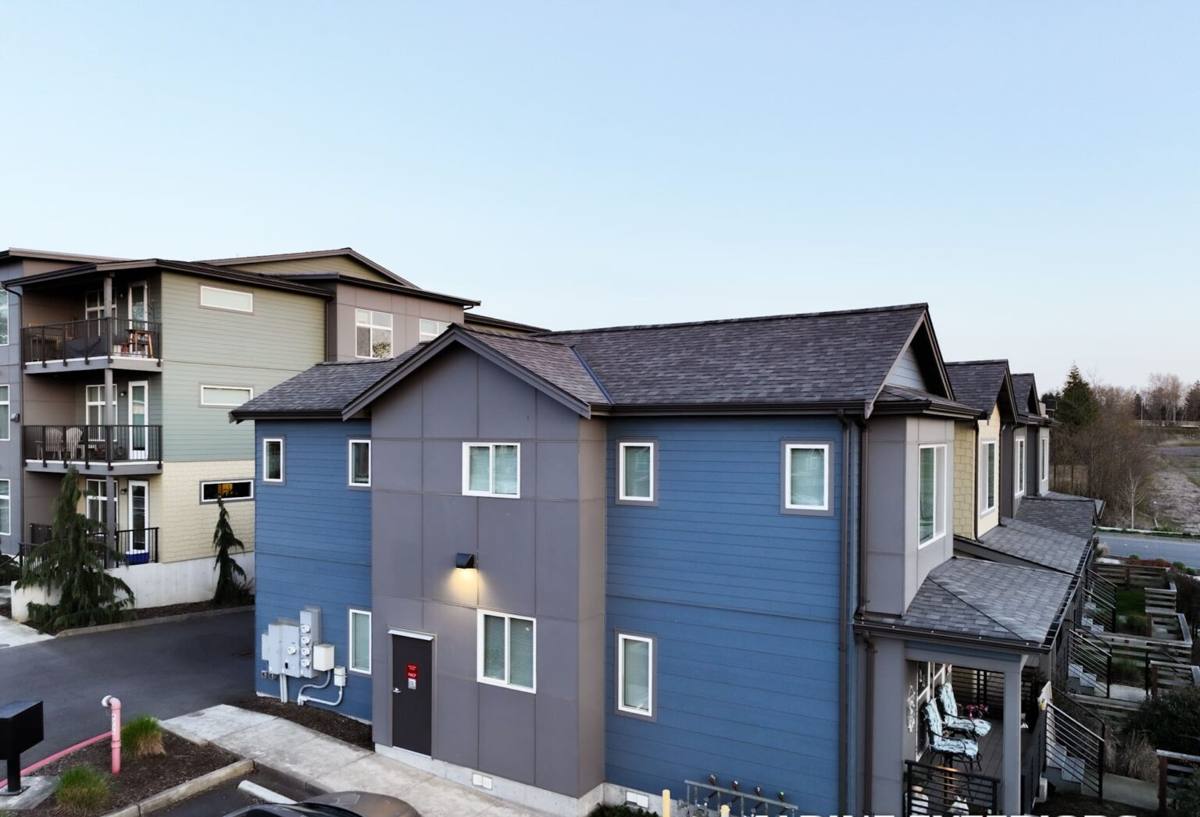
What Bellingham Storms Actually Do to a Roof
Wind-Driven Rain, Not Just Wind
Straight-line wind gusts off the Strait of Georgia and Bellingham Bay don't usually rip whole roofs apart the way a Midwest tornado might. What they do is push rain sideways and uphill under shingle tabs, around ridge caps, and through any gap in flashing that would never leak in a calm rain. A roof that's been fine for years can suddenly start leaking after one bad windstorm simply because the storm found an existing weakness and forced water into it.
Salt Air and Metal Fatigue
Homes closer to the bay deal with airborne salt that speeds up corrosion on nails, flashing, gutter hangers, and any exposed metal roofing components. Corroded fasteners back out over time, and pitted flashing seams open up — both are common causes of leaks that get blamed on "the storm" when the storm was really just the last straw on hardware that had been weakening for years.
Moss, Shade, and Trapped Moisture
Whatcom County's tree cover and long wet season mean moss gets a real foothold on north-facing slopes and shaded valleys, Sudden Valley included. Moss holds moisture against the roof surface, lifts shingle edges as it grows, and channels water sideways instead of letting it shed downhill. During a storm, a moss-covered section is far more likely to leak than a clean one, because the moss has already been prying at the shingles for months.
Signs You Have Storm Damage (Even Without an Obvious Leak)
- Missing, cracked, or curled shingles, especially on the side of the roof that faces prevailing weather
- Granules collecting in gutters or at downspout outlets after a storm
- Lifted or bent flashing around chimneys, skylights, and roof-to-wall transitions
- Soft or discolored ceiling patches that appear a few days after a windy, rainy stretch
- Gutters pulling away from the fascia, which lets water run behind the drip edge instead of into the gutter
- Visible daylight through the attic decking, or damp insulation near the roofline
- Moss buildup that's thickened noticeably, particularly on shaded sections
Some of these are urgent, some can wait for a scheduled repair. The point of an inspection is telling the difference before it costs you a ceiling.
What a Correct Storm Damage Repair Involves
Inspection Before Any Repair
We start on the roof, not the ceiling. A stain inside the house tells you water got in somewhere upstream, but the entry point is often several feet away from the stain because water travels along the decking before it drips through. We check the whole roof plane — shingles, flashing, ridge, valleys, penetrations — not just the spot that's obviously damaged, because storm wind rarely damages only one shingle.
Matching the Repair to the Damage
A handful of lifted shingles is a different job than a compromised valley or a flashing failure around a chimney. We repair what's actually broken rather than defaulting to a bigger job than the roof needs — but we also won't patch over a flashing problem with sealant and call it done, because that kind of fix tends to fail again in the next storm.
Flashing and Fastener Attention
Given how much local damage traces back to corroded or loosened metal, any storm repair we do includes a real look at flashing condition and fastener integrity in the repair area — not just the shingles on top. Replacing shingles over failing flashing just delays the next leak.
Moss and Debris Cleared Honestly
If moss contributed to the damage, we clear it as part of the repair rather than leaving it to keep working on the new materials. We don't push aggressive pressure-washing that can drive water under shingles or strip granules — moss removal on a roof needs a gentler, more deliberate approach than on a driveway.
Our Process, Start to Finish
- Contact and initial questions — we ask what you're seeing (leak location, when it started, any recent storm) so we show up prepared.
- On-site inspection — a full look at the roof, not just the reported problem area, including attic access if there's an active leak.
- Temporary protection if needed — if a section is actively letting water in, we tarp or seal it to stop further damage before scheduling the full repair.
- Written scope and estimate — what we found, what we recommend, and why, in plain terms.
- Repair work — matched to the actual damage, with attention to flashing and fasteners, not just surface shingles.
- Final walk-through — we show you what was done and what to keep an eye on going forward.
Repair vs. Full Re-Roof: How We Help You Decide
| Factor | Points Toward Repair | Points Toward Re-Roof |
|---|---|---|
| Age of roof | Under 12-15 years | Nearing or past typical service life |
| Extent of damage | Localized to one section or slope | Spread across multiple areas |
| Underlying decking | Solid, dry when exposed | Soft, rotted, or repeatedly wet |
| History of leaks | First or isolated incident | Recurring leaks in different spots |
| Moss/algae condition | Light, surface-level | Heavy, long-term, shingle degradation |
Most storm calls end up being repairs, not full replacements. We'll tell you honestly which category your roof falls into rather than steering toward the bigger job.
Why a Crew That Already Works Bellingham and Sudden Valley Matters
Storm damage repair rewards local knowledge in ways a lot of homeowners don't expect. A crew that already works Whatcom County roofs knows which neighborhoods take the brunt of the wind off the bay, which shaded valley lots grow moss fastest, and which flashing details tend to fail first in this specific mix of salt air, rain, and tree cover. That's not something you get from a roofer passing through the area after a big regional storm.
Working out of Sudden Valley also means we're not driving in from Seattle or another metro area to handle a Bellingham storm call — we're already close, which matters when a leak is active and every day of delay means more water finding its way into decking and insulation.
What We Won't Do
We won't sell a full roof replacement to fix a localized flashing leak, and we won't apply a quick sealant patch over a problem that needs actual flashing work — that combination just shows up again in the next storm. We also won't recommend materials or installation shortcuts that trade short-term savings for higher long-term maintenance in this climate; a repair that doesn't account for moss regrowth or salt-air corrosion isn't really a repair, it's a delay.
Storm Damage Repair Checklist for Bellingham Homeowners
- Photograph visible damage from the ground if it's safe to do so, before and after any storm
- Check attic space for damp insulation or daylight at the roofline after major wind events
- Clear debris from gutters and downspouts so water isn't backing up under the roof edge
- Note when a leak started relative to a specific storm — it helps narrow down the cause
- Don't walk on a wet or moss-covered roof yourself — leave the inspection to someone with the right footing and gear
- Get damage assessed promptly; a small flashing gap left through another wet season usually gets worse, not better
If a recent storm has you wondering what's going on up on your roof, we're glad to take a look. We offer free, no-pressure estimates for Bellingham and Sudden Valley homeowners — just fill out the form below and we'll get back to you.