 Sudden Valley Siding
 Why Bellingham Roofs Wear Differently Than Roofs Inland
A roof over a home near Bellingham and Sudden Valley works harder than a roof of the same age fifty miles east. Three things drive that: salt-laden air coming off the Salish Sea, driving rain that hits shingles sideways during winter storms, and a moss season that can run eight or nine months out of the year. None of these are dramatic events by themselves. It's the accumulation — years of damp shade under fir and cedar canopy, wind-driven water finding the smallest gap in a flashing detail, and organic growth that holds moisture against the roof surface — that separates a roof that makes it to 25 years from one that needs attention at 15.
New roof installation done right for this area isn't just "put shingles on a house." It's a set of decisions about materials, ventilation, flashing, and underlayment made specifically for a climate that stays wet longer than most of the country, with enough wind events each winter to test every seam.
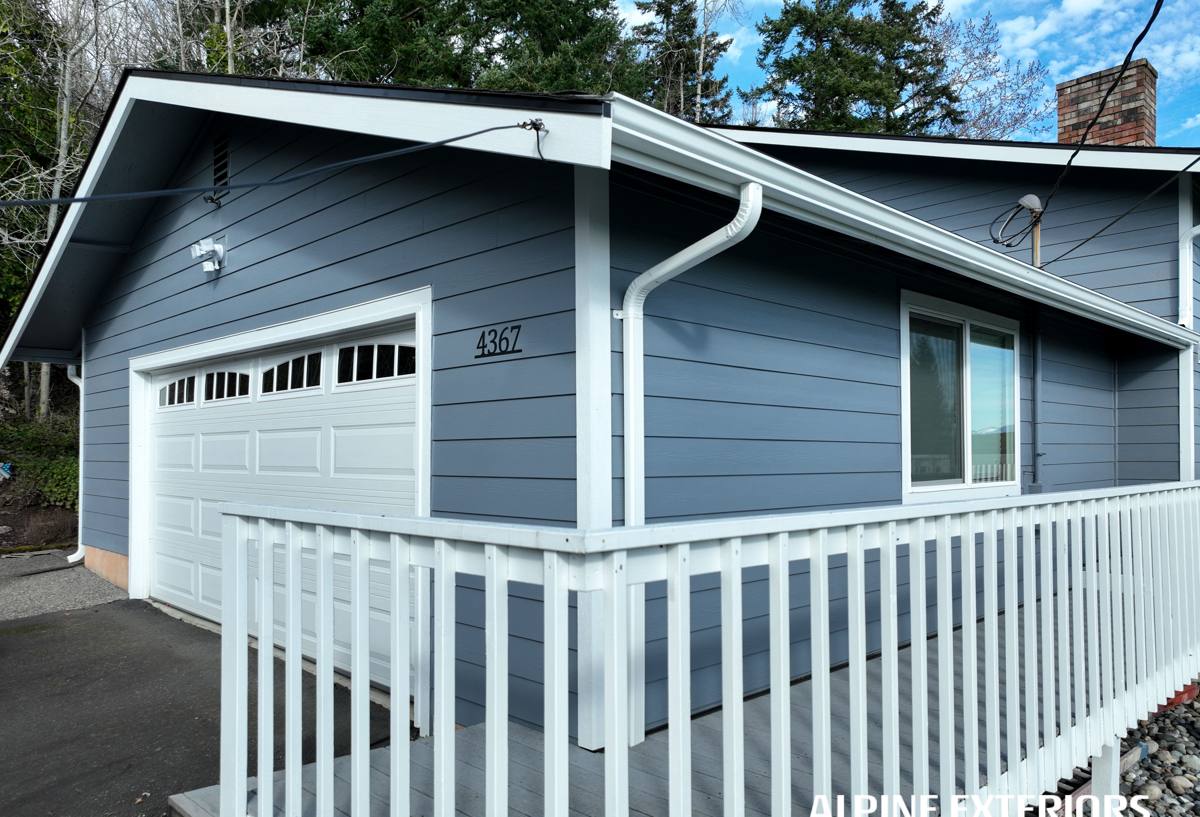
What Correct Installation Actually Involves
A new roof is only as good as what's underneath it. Homeowners rarely see the layers that matter most, which is exactly why a lot of roofs fail early — the visible shingle looks fine while the deck, underlayment, or flashing underneath was never installed to hold up to Whatcom County weather.
Deck Inspection and Repair
Before anything new goes down, the roof deck gets inspected for soft spots, delamination, or water staining from the old roof. Any plywood or OSB that's compromised gets replaced — not covered over. Skipping this step is one of the most common corners cut in cheap roof jobs, and it's invisible until the new roof starts sagging or leaking from underneath.
Underlayment Built for Wet Climates
In a region with this much annual rainfall, the underlayment matters as much as the shingle. We use synthetic underlayment rated for extended UV and moisture exposure, and in vulnerable areas — eaves, valleys, low-slope sections — self-adhered ice-and-water membrane rather than standard felt. That membrane is what keeps wind-driven rain from working its way up under the shingle course during a hard winter blow.
Flashing at Every Transition
Chimneys, skylights, sidewalls, and valleys are where roofs actually fail. Step flashing, counter-flashing, and valley metal have to be installed in the correct sequence with the shingle courses, not just caulked and hoped for. Caulk is a maintenance item, not a waterproofing strategy — it dries out and cracks, and a roof that depends on it will leak eventually.
Ventilation That Matches the Attic
A roof with poor intake and exhaust ventilation traps moisture in the attic, which in this climate turns into condensation, mold, and premature deck rot from the inside out. Balanced ventilation — enough soffit intake to match ridge or roof-vent exhaust — is part of a correct installation, not an upsell.
Choosing a Roofing Material for This Climate
There's no single "best" roofing material — the right choice depends on the home's roof pitch, budget, how much shade and moss exposure the roof gets, and how long the owner plans to stay in the house. Here's how the common options actually compare for a Bellingham-area home:
| Material | Moss/Algae Resistance | Wind & Rain Performance | Typical Lifespan | Relative Cost |
|---|---|---|---|---|
| Asphalt shingle (architectural) | Moderate — improves with zinc/copper strips | Good when properly nailed and sealed | 25–30 years | $ |
| Asphalt shingle (3-tab) | Lower — thinner mat holds moisture longer | Fair, more vulnerable in high wind | 15–20 years | $ |
| Standing seam metal | High — smooth surface sheds moss easily | Excellent | 40–50+ years | $$$ |
| Synthetic/composite shingle | Good | Very good | 30–40 years | $$ |
Architectural asphalt shingle remains the most common choice for good reason — it balances cost, appearance, and performance well when installed correctly. Metal is worth the higher upfront cost for homeowners planning to stay long-term or with heavy tree cover, since it sheds moss and needle debris far better than any shingle. We'll walk through the trade-offs for your specific roof rather than push one product across every job.
Moss and Salt Air: The Maintenance Factor Nobody Mentions
Moss doesn't just look bad — it holds water against the shingle mat, lifts shingle edges as it grows, and works its roots into the granule surface. On shaded roofs around Sudden Valley, moss can establish within a year or two of a roof going untreated. A correct new installation includes zinc or copper control strips near the ridge, which release trace metal ions with every rain and suppress moss growth for years without chemical treatment.
Salt air off the Sound is a slower, quieter problem — it accelerates corrosion on exposed metal fasteners, flashing, and vent components. We spec fasteners and flashing rated for coastal exposure rather than the cheapest galvanized option, because replacing corroded flashing under an otherwise good roof is a repair nobody wants to pay for twice.
Our New Roof Installation Process
1. Inspection and Honest Estimate
We start on the roof, not in a sales conversation. We check the deck, existing ventilation, flashing points, and note anything driving moss or moisture problems specific to your lot — tree cover, shade patterns, roof pitch. The estimate reflects what your roof actually needs.
2. Tear-Off and Deck Prep
Full tear-off to the deck, disposal of old material, and repair of any damaged sheathing. We don't install a new roof over an old one — layering hides problems instead of fixing them.
3. Underlayment, Flashing, and Ventilation Installed First
Every waterproofing layer goes down before the finish material, in the sequence that manufacturer warranties actually require.
4. Installation to Manufacturer Spec
Nailing pattern, exposure, and fastening are done to the shingle or panel manufacturer's specification — not a faster shortcut pattern. This is what keeps material warranties valid and keeps the roof performing in wind events.
5. Final Walkthrough and Cleanup
Magnetic sweep for stray fasteners, gutter and yard cleanup, and a walkthrough where we show you the completed work and explain anything you should keep an eye on going forward.
Signs Your Roof Needs Replacement, Not Another Repair
Not every roof problem calls for a full replacement. But there's a point where repeated patching costs more over a few years than doing the job once. Signs it's time to talk about a new roof rather than another repair call:
- Granules collecting heavily in gutters or at downspout outlets
- Shingles that are curling, cupping, or visibly balding in patches
- Daylight visible through the roof deck from inside the attic
- Moss coverage that returns within months of cleaning
- Multiple past repairs in different areas of the same roof
- Roof is at or past 20–25 years old (for asphalt) with no major upgrades
- Soft spots or spongy feel when walked on by a roofer
Permits, Codes, and Working Around the Weather
Roofing work in Whatcom County requires a permit for most full replacements, and inspections confirm the work meets current building code — including ventilation and ice-and-water membrane requirements in vulnerable areas. We handle the permit process as part of the job rather than leaving it to the homeowner.
Timing matters here more than in drier climates. We plan installations around forecasted dry windows and keep the roof deck protected with dry-in materials if weather shifts mid-project, so an open roof is never left exposed overnight during a wet stretch.
Why Local Experience in Bellingham and Sudden Valley Matters
A crew that only occasionally works this area will spec a roof the same way they would for a dry inland climate — because that's what they're used to. A crew that works Bellingham and Sudden Valley regularly already knows which roofs need extra ice-and-water membrane at the eaves, which lots have enough tree cover that moss-control strips are worth the added cost from day one, and which flashing details tend to fail first under this area's wind-driven rain. That local pattern recognition is the difference between a roof that's installed to a generic standard and one installed for the actual conditions it has to survive.
What a New Roof Typically Costs
Cost depends on roof size, pitch, number of penetrations (chimneys, skylights, vents), current deck condition, and material choice. As a general range, asphalt shingle replacement on an average single-family home in this area typically falls in the low-to-mid five figures, with metal roofing running higher due to material and labor. The only way to get an accurate number is a roof-specific inspection — square footage alone doesn't capture pitch, tear-off complexity, or deck repair needs.
If your roof is showing its age or you're planning ahead rather than waiting for a leak, we're happy to walk the roof with you and give you a straightforward, no-pressure estimate — just fill out the form below.