 Sudden Valley Siding
 Composite Decking Built for Barkley's Climate
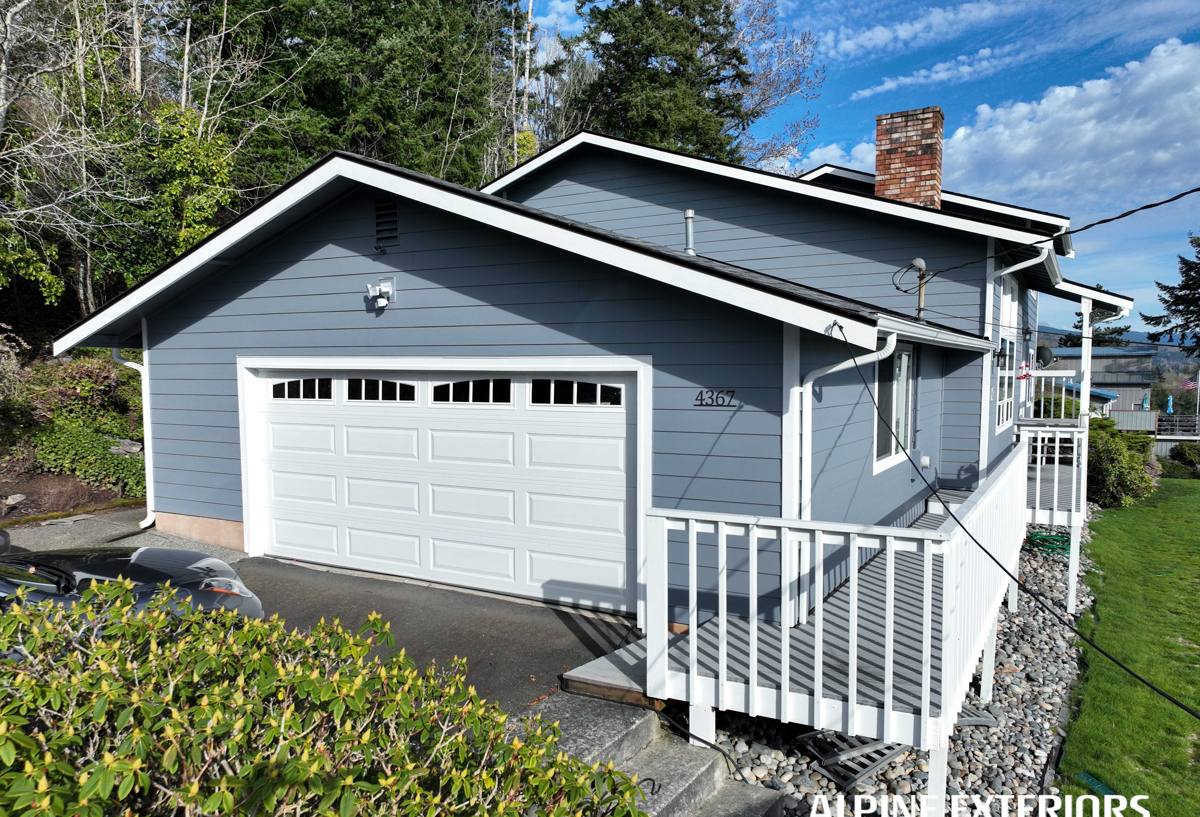
Homes in and around Barkley sit close enough to the water and the tree line that decks here take a beating most inland decks never see. Salt-laden air off the bay works its way into fasteners and framing hardware. Driving rain off winter storms finds every gap in a poorly flashed ledger board. And the long, gray moss season that stretches from October through April coats anything horizontal in a slick green film if it isn't built to shed water and dry out fast. A deck that looks fine in a showroom photo can still be the wrong deck for this stretch of Whatcom County if it wasn't designed with those three things in mind.
Composite decking has become the go-to choice for homeowners here precisely because it holds up to that combination better than most wood species without the yearly upkeep. But "composite" isn't one product — board composition, capping method, and substructure choice all change how a deck performs in salt air and standing moisture. This page covers what actually matters for a composite deck built in Barkley, not a generic overview of the material.
Why Barkley's Conditions Change the Job
Salt Air and Fasteners
Proximity to the water means airborne salt settles on every exposed surface, including screws, joist hangers, and structural connectors. Standard zinc-coated hardware corrodes faster in that environment than it would ten or twenty miles inland. We spec stainless steel or heavy-duty coated fasteners rated for coastal exposure on every composite deck we build in this area — it costs a bit more upfront and it's the difference between a substructure that lasts and one that starts rusting through in five or six years.
Driving Rain and Water Management
Wind-driven rain doesn't just fall on a deck, it gets pushed sideways into ledger connections, under railing posts, and behind any trim that isn't properly flashed. A composite deck that looks finished but skipped proper ledger flashing or a sloped drainage path will trap water against the house band board — and that's a rot problem hiding behind decking that itself will never rot. The composite boards can be doing their job perfectly while the framing underneath fails because water management was an afterthought.
Moss Season and Board Surface
Whatcom County's wet season is long, and shaded or north-facing decks in Barkley can stay damp for days at a stretch. Smooth-faced composite boards without a textured or embossed cap can turn slippery under a layer of moss and algae film. Board selection matters here — a heavily embossed, slip-resistant cap surface with tight board spacing for airflow underneath makes a real difference in how much moss actually takes hold and how safe the deck feels underfoot in January.
What a Correct Composite Deck Build Involves
A composite deck is only as good as what's underneath it. Here's what we consider non-negotiable on every install:
- Pressure-treated or composite substructure framing spaced and sized to the manufacturer's span tables — not stretched to save material
- Stainless or coastal-rated hardware throughout, including hidden fastener clips, joist hangers, and ledger bolts
- Proper ledger board flashing with a weather-resistant barrier between the house and the deck framing
- Positive slope away from the house for water drainage, even on low-profile decks
- Joist tape or a comparable moisture barrier on top of framing members to slow water intrusion into the wood substructure
- Adequate ventilation gaps between decking boards and beneath the structure so the space can dry out between rain events
- Manufacturer-approved fastening method for the specific board profile — grooved-edge hidden fastener systems, face-screwed boards, or a hybrid depending on the product
Skipping any one of these doesn't usually show up right away. It shows up in year three or four, as soft spots near the ledger, rust streaks bleeding through board seams, or a substructure that needs to be torn out and rebuilt under decking that still looks brand new on top.
Choosing the Right Composite Board for This Area
Not every composite product is built the same way, and the differences matter more here than in a drier inland climate.
| Feature | Why It Matters in Barkley |
|---|---|
| Full PVC or capped composite shell | Fully encapsulated boards resist moisture absorption better than early-generation composites with exposed wood-plastic edges, which matters with our rain volume |
| Embossed, textured cap surface | Reduces slip risk when moss and algae film form during the wet season |
| Color and heat considerations | Darker boards can get hot in rare summer sun but generally hide moss shadowing and water spotting better than very light tones |
| Manufacturer warranty terms | Coastal and high-moisture climates can affect what's covered — worth confirming fade, stain, and mold coverage specifics before you commit to a product |
| Board profile (grooved vs. square edge) | Grooved-edge boards with hidden fasteners give a cleaner look and fewer surface penetrations for water to enter |
We don't push a single brand as the only option. What we push is matching the board's real-world moisture performance to what this climate actually does to a deck, and being straight with homeowners about the trade-offs between upfront cost and long-term maintenance for each tier of product.
Substructure: The Part Nobody Sees But Everyone Should Care About
Composite decking's biggest selling point is that the boards themselves won't rot, splinter, or need refinishing. But the framing underneath is still almost always wood, unless a homeowner specifically upgrades to a composite or aluminum substructure system. That framing is exposed to the same rain and salt air as everything else, just hidden from view. We treat substructure protection as part of the composite decking job, not an optional add-on — because a deck with flawless boards on top of a compromised frame is still a failing deck, just a slower one to show it.
For decks close to grade or in shaded, slow-to-dry spots common around Barkley's tree cover, we'll often recommend a composite or PVC substructure option outright. It costs more initially but removes the wood-rot variable from the equation entirely, which matters more here than it would on a sunny, well-ventilated lot.
Our Process for a Barkley Composite Deck
1. On-Site Assessment
We walk the site, check drainage patterns, note sun and shade exposure, and look at how close the deck sits to grade or to mature trees that will drop debris and hold moisture. This is also when we check the existing ledger connection and framing if it's a replacement job.
2. Design and Product Selection
We talk through board options, color, and substructure choice based on what the site actually needs — not a one-size-fits-all package. Homeowners get a clear breakdown of what's included and why.
3. Permitting
Deck work in Whatcom County typically requires a permit depending on size, height, and attachment to the structure. We handle that process so it's not left to the homeowner to sort out.
4. Framing and Flashing
This is where most of the long-term durability gets decided. Proper ledger flashing, hardware selection, and structural spacing happen before a single composite board goes down.
5. Decking Installation
Boards go down per manufacturer spec, with attention to expansion gaps, fastener spacing, and drainage slope.
6. Final Walkthrough
We walk the finished deck with the homeowner, cover basic care, and answer questions about what to expect through the first wet season.
Maintenance: What Composite Actually Needs Here
Composite decking is low-maintenance, not no-maintenance, especially in a climate with a real moss season. A short annual routine keeps a well-built composite deck performing the way it should:
- Sweep debris — leaves, needles, and seed pods — off the deck regularly through fall, since trapped organic matter holds moisture against the boards
- Rinse or lightly scrub with a soft brush and mild soap a couple of times a year to prevent moss and algae buildup, especially on shaded sections
- Avoid pressure washing at close range or high PSI, which can damage the board's cap layer over time
- Check railing posts and stair connections annually for any looseness, since coastal moisture can work fasteners loose faster than in drier climates
- Keep gutters and downspouts near the deck clear so runoff isn't dumping extra water directly onto or under the structure
Why a Crew That Works Barkley Regularly Matters
A contractor who builds decks across a wide range of climates treats every job the same way. A crew that works this specific stretch of Whatcom County knows which lots stay shaded and damp longest into spring, which framing details actually hold up against salt air over a decade, and which board finishes hide moss shadowing versus which ones show it right away. That's not marketing — it's the accumulated result of dealing with the same rain, the same salt exposure, and the same moss season on deck after deck in this area.
It also means faster, more accurate estimates. We're not guessing at how a site will drain or how much sun a deck will realistically get through the year — we've seen enough similar lots nearby to know what to expect and to design around it from the start.
Common Mistakes We See on Older or DIY Decks
When we're called out to inspect or replace an existing deck in the area, a handful of issues show up again and again:
- No ledger flashing, or flashing that was installed but not properly integrated with the house's weather-resistant barrier
- Standard hardware instead of coastal-rated fasteners, showing rust streaks within a few years
- Boards installed with insufficient spacing, trapping moisture and accelerating moss growth
- Substructure framing set too close to grade with no ventilation, keeping the wood damp for weeks at a time
- Composite decking installed over a substructure that was already compromised before the new boards went down
Most of these aren't visible until they've caused real damage, which is why the framing and flashing stage of a build matters as much as the board selection itself.
Get a Straightforward Estimate
If you're planning a new composite deck or replacing an aging one in the Barkley area, we're happy to take a look and give you an honest read on what the site needs — no pressure, no upsell on features that don't apply to your home. Fill out the form below for a free estimate and we'll get back to you to schedule a time to walk the site.