 Sudden Valley Siding
 Siding Installation in Alger: Built for This Corner of the Pacific Northwest
Alger sits in a corner of the Pacific Northwest where the weather doesn't do anything halfway. Homes here take on salt-laden air moving in off the water, months of driving rain, and a moss season that seems to start earlier and last longer every year. That combination is hard on siding — any siding — and it's the reason a "good enough" installation somewhere drier simply doesn't hold up out here. Our crew works this area alongside our home base in Sudden Valley, over in Whatcom County, and we install siding in Alger the way this specific climate actually requires, not the way a national crew passing through might do it.
This page is about one job, done right, in one area: full siding installation for homes in and around Alger. Not a repair patch, not a re-side of just the street-facing wall — a complete system installed to the manufacturer's specifications, with the flashing, fastening, and drainage details that matter far more here than they would in a dry inland climate.
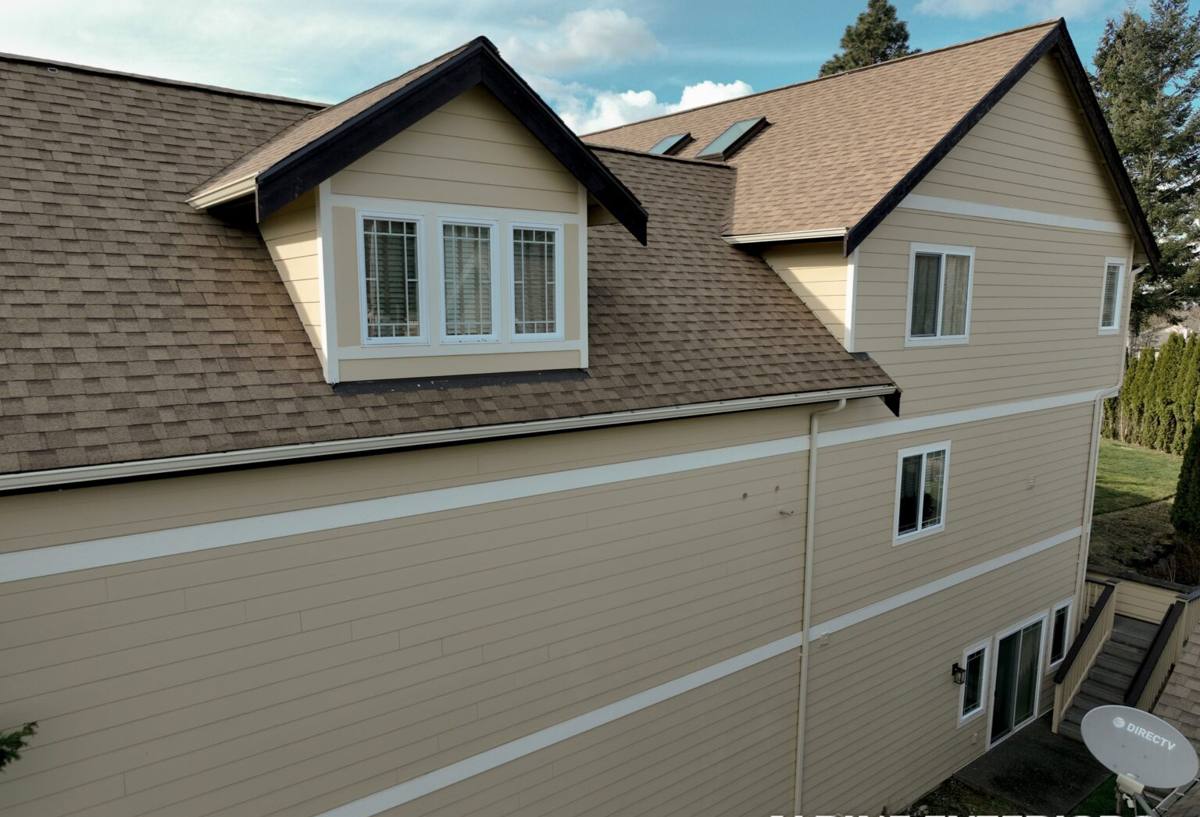
What Alger's Climate Actually Does to Siding
Three things drive almost every siding failure we see in this area:
Salt Air
Being this close to the water, homes in the Alger area pick up airborne salt even without a direct waterfront view. Salt accelerates corrosion on fasteners and trim, and it breaks down cheap paint films faster than inland exposure ever would.
Driving Rain
Wind-driven rain doesn't just wet the surface of a wall — it tests every seam, joint, and penetration. Siding that isn't flashed and lapped correctly will eventually let water behind it, and once water gets behind siding in this climate, it rarely dries out on its own before the next storm arrives.
Moss and Algae Season
Shade, moisture, and mild temperatures for much of the year make Alger and the surrounding Sudden Valley area prime territory for moss and algae growth on north-facing and shaded walls. Porous or poorly finished siding gives moss something to hold onto; a dense, factory-finished surface gives it far less to grip.
What a Correct Installation Involves
A siding installation is only as good as what's underneath it and how it's fastened, flashed, and lapped. We treat every Alger project as a full system install, not a cosmetic swap.
Tear-Off and Sheathing Inspection
We remove the old siding rather than install over it. That's the only way to actually see the sheathing, check for rot or water staining, and confirm the wall is sound before anything new goes on it. Covering a problem wall with new siding just delays the repair — and makes it more expensive later.
Weather-Resistive Barrier and Flashing
A correctly lapped weather-resistive barrier, properly integrated window and door flashing, and a drainage gap where called for are what actually keep water out — the siding itself is the last line of defense, not the only one.
Fastening to Manufacturer Spec
Fastener type, spacing, and placement are specified by the manufacturer for a reason, and those specs change based on exposure and climate zone. We follow them, not a shortcut version.
Why We Install Only James Hardie Fiber Cement
We standardized on James Hardie siding for every home we side, including in Alger, and we don't install vinyl, LP SmartSide, Cemplank, Allura, primed spruce, or cedar. That's a deliberate professional standard, not a sales pitch.
Non-Combustible
Fiber cement doesn't burn, which matters to us and to insurers regardless of how close a specific home sits to wildland vegetation.
Built for This Climate Zone
Hardie's HZ5 product line is engineered specifically for wetter, more humid climates like ours — it's formulated to resist moisture-related damage in a way general-purpose fiber cement isn't.
ColorPlus Factory Finish
The factory-applied ColorPlus finish is cured under controlled conditions, which gives it far better resistance to fading, chipping, and the kind of surface breakdown that lets moss and algae get a foothold — a real advantage in a climate that stays damp and shaded much of the year.
Warranty That Actually Transfers
Hardie backs its siding with a long, non-prorated limited product warranty, plus a separate finish warranty on ColorPlus color, and that coverage transfers to a new owner if the home sells. That's worth something in a market where buyers ask about the exterior.
Why We Don't Install Vinyl, LP SmartSide, or Cedar Here
We get asked about these regularly, and we're straightforward about it.
Vinyl is inexpensive and low-maintenance in the right climate, but it expands and contracts with temperature swings, can crack on impact, and doesn't hold up at seams and corners the way a properly installed fiber cement system does when driving wind-rain events roll through.
LP SmartSide is a wood-strand product with an engineered resin treatment, and it performs reasonably well when it's installed and maintained exactly to spec — but it's still wood-based, and wood-based siding is more sensitive to sustained moisture exposure than fiber cement, which matters a great deal in a place with this much sustained damp weather.
Cedar and primed spruce can look great, but they demand an ongoing maintenance schedule — re-staining or repainting on a real cycle — to keep moisture out, and they're combustible. In a climate with this much rain and moss pressure, that maintenance burden shows up fast if it's skipped even one season.
None of this means those products are junk. It means we made a standard for our own crews and stand behind it, and Hardie fiber cement is what we're willing to warranty our workmanship against.
Our Installation Process for Alger Homes
- On-site assessment. We look at the existing siding, sheathing condition, trim, flashing, and any moisture damage before we quote anything.
- Written scope and product selection. We walk through Hardie plank profiles, panel options, and ColorPlus colors, and put the full scope in writing.
- Tear-off and sheathing repair. Old siding comes off, and any damaged sheathing gets replaced, not patched over.
- Weather barrier and flashing installation. This is the step that determines whether the wall stays dry for the next thirty years, and we don't rush it.
- Hardie installation to spec. Correct fastening, spacing, and lapping, following manufacturer instructions for our climate zone.
- Trim, caulking, and final detailing. The small details at corners, penetrations, and transitions are where most siding failures actually start.
- Walkthrough. We go over the finished job with the homeowner before we consider it done.
Cost Factors for Siding Installation in Alger
Every home is different, so we don't quote a number until we've seen the house — but these are the factors that actually move the price:
| Factor | Why It Matters in Alger | Effect on Cost |
|---|---|---|
| Tear-off vs. re-side | Full removal is needed to check sheathing for the rain and moisture damage common in this area | Adds labor, but avoids covering existing problems |
| Sheathing/framing repair | Long-term moisture exposure and past leaks are common findings once old siding comes off | Variable — depends on what's found underneath |
| Home size and stories | More wall area and higher work (ladders, staging) take more time | Scales roughly with square footage |
| Trim and detail complexity | Homes with more corners, dormers, and window trim need more flashing and cutting | Increases labor hours |
| Product line (HZ5 planks vs. panels) | Plank profiles and panel siding install differently and price differently | Moderate difference |
| ColorPlus color selection | Factory-finished color avoids a separate field-painting cost and extends finish life in this climate | Often cost-neutral versus field paint over time |
Signs Your Alger Home May Need New Siding
- Moss or algae staining that comes back within a season of cleaning it
- Paint that's peeling, bubbling, or needs repainting more often than every several years
- Soft spots, warping, or visible gaps at seams, corners, or trim
- Siding that feels damp or spongy to the touch after a stretch of dry weather
- Visible fastener corrosion or staining running down from nail heads
- Rooms with exterior walls that feel damp, musty, or drafty
Any one of these on its own might be minor. Several at once, especially on a shaded or weather-exposed wall, usually means it's time for a real assessment rather than another round of cleaning and touch-up paint.
Why a Local Crew Matters for This Job
Siding installation isn't a generic task that performs the same everywhere. A crew that already works Alger and the Sudden Valley area knows how this specific climate behaves on a wall — where moss actually collects, how much wind-driven rain a given exposure takes, and which details tend to fail first when they're skipped. That local pattern recognition is worth more than a lower bid from a crew that installs the same way whether the job is in a coastal Pacific Northwest microclimate or a dry inland town three states over. It's also the difference between a crew that answers the phone the next time this area gets a real windstorm and one that's already moved on to the next region.
If you're weighing a siding project for a home in or around Alger, we're glad to take a look and give you a straightforward, no-pressure estimate — fill out the form below and we'll get in touch.