 Sudden Valley Siding
 New-Construction Windows Are a Different Job Than a Replacement
When people call us about "new windows," they're often thinking about replacement — pulling an old window out of an existing opening and setting a new one in its place. New-construction windows are a different animal. They come with a nailing flange (or "nail fin") built around the frame, and they get installed into a rough opening on a house that's still open to the framing, before siding goes on. That's the situation for a new build in Alger, an addition that's growing the footprint of an existing Sudden Valley home, or a full re-side where we're stripping a wall down to the studs anyway and taking the opportunity to do the window opening right instead of working around an old frame.
The advantage of doing it this way is real: with the wall open, we control the entire water path — sheathing, weather-resistive barrier, flashing, and the window itself — as one continuous system instead of patching a new window into old, sometimes questionable, flashing. Done correctly, a new-construction window install is the most weathertight way to get glass into a wall. Done carelessly, it's also the fastest way to build a leak path directly into your framing, because there's no old flashing layer to catch a mistake.
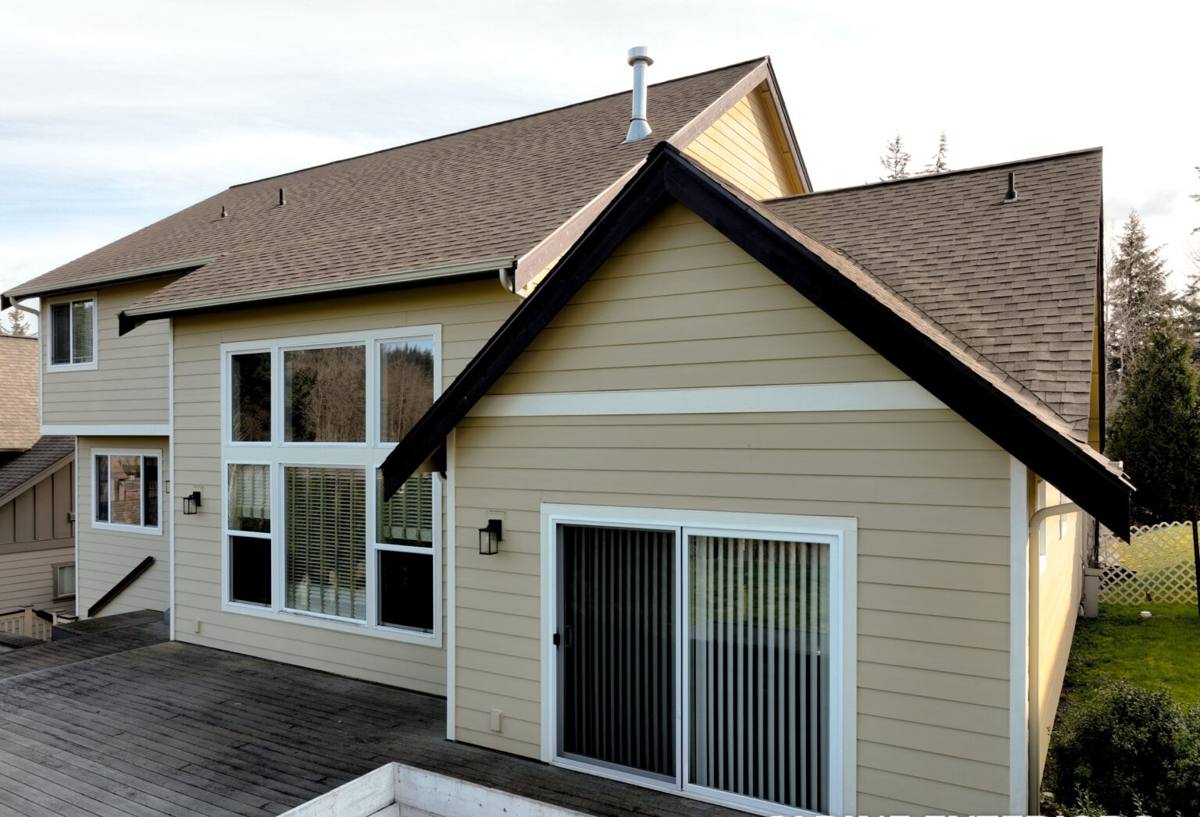
What Alger and Sudden Valley Homes Actually Deal With
Whatcom County's marine climate isn't gentle on window openings. Homes in and around Alger and Sudden Valley sit close enough to the water and the tree cover that three things show up on almost every job we do out here:
- Salt-laden air that accelerates corrosion on exposed fasteners, hinges, and any metal flashing that isn't properly lapped or coated.
- Driving, wind-driven rain that doesn't just fall straight down — it gets pushed sideways into window heads and sills, which is exactly the direction most amateur flashing jobs fail to protect against.
- A long moss and algae season from the shade, humidity, and tree canopy common to this area, which holds moisture against sills, trim, and siding butt joints far longer than a drier climate would.
None of that means you need exotic materials. It means the ordinary steps — correct flashing order, a continuous weather-resistive barrier, proper sealant selection, and sills that shed water instead of trapping it — have to actually be followed, every time, because this climate finds every shortcut eventually.
Why This Matters More at New Construction
On a replacement job, an old window that's held up for 20 years tells you a lot about what worked. On new construction, there's no track record yet — the flashing detail you build today is what that opening will live with for the next few decades. That's why we treat the rough opening prep as the most important part of the job, not the window unit itself.
Choosing a Window for New Construction Here
Frame material matters more in a wet, salty, moss-prone climate than most manufacturers' brochures let on. We steer homeowners toward materials that hold up with low maintenance rather than ones that look good on day one and start showing problems in year five.
| Frame Material | Moisture / Salt Air Behavior | Maintenance | Typical Cost Position |
|---|---|---|---|
| Vinyl | Won't rot or corrode; performs well in coastal air when properly installed | Low — occasional cleaning | Most affordable |
| Fiberglass | Excellent dimensional stability, very good moisture and salt resistance | Low | Mid to upper-mid |
| Wood-clad | Good performance if cladding stays intact, but any breach exposes wood to rot in this climate | Higher — cladding joints and sills need periodic inspection | Higher |
| Aluminum | Prone to corrosion and condensation issues in cold, wet, salt-exposed conditions unless thermally broken | Moderate to high | Varies |
We don't push one brand over another as a rule — the frame material and installation detail matter far more than the label on the sticker. What we do avoid is any window whose warranty or design assumes a dry, low-salt climate, because that assumption doesn't hold true out here.
What a Correct New-Construction Installation Involves
Flashing Sequence
Water management on a new-construction window comes down to layering materials so each one sheds water onto the layer below it, working from the bottom up: sill pan flashing first, then the window's nailing flange integrated with the weather-resistive barrier at the jambs, and finally head flashing that laps over the top of the barrier — never under it. Reversing that order, even in one spot, creates a place for water to get behind the wall assembly instead of running off it.
Sill Pan and Sloped Sills
A sill pan under the window creates a dedicated drainage plane and a backup path if any water does get past the glazing or flange over the years. Combined with a sill that's slightly sloped to the exterior, this is the single detail that does the most to keep driving rain from pooling at the bottom corners — historically the first place a window opening fails.
Weather-Resistive Barrier Integration
The house wrap or building paper has to be cut, lapped, and taped around the opening in a specific order so it works with the window flange rather than against it. A weather-resistive barrier that's just stapled flat over the opening and slit afterward is a common shortcut we see on jobs we're asked to fix — it looks fine until the first real windstorm pushes rain sideways into that seam.
Fasteners and Sealant
In salt air, fastener choice isn't cosmetic. We use corrosion-resistant fasteners rated for coastal exposure, and we're selective about sealant — the wrong sealant chemistry against certain frame materials can fail to bond or degrade early, which just relocates the leak point instead of eliminating it.
Our Process on an Alger or Sudden Valley Job
- Site visit and rough opening review — we confirm sizes, framing condition, and any structural or code items specific to your build (new-construction egress and energy code requirements vary by room and jurisdiction).
- Window selection walkthrough — frame material, glazing package, and grille options matched to the home's exposure and your budget, not a one-size pitch.
- Sill pan and flashing plan — laid out before a single window is set, so every opening on the house follows the same sequence.
- Installation — sill pan, window, flange integration with the weather-resistive barrier, head flashing, and fastening, opening by opening.
- Sealant and trim — exterior sealant at the appropriate joints, interior air-sealing, and trim work sized for the eventual siding profile.
- Final water-management check — we walk every opening before siding closes it in, because that's the last point where a flashing mistake is easy to fix.
Mistakes We Get Called to Correct
Most of the window callbacks we see in this area trace back to a handful of repeat problems, usually from a crew moving fast on a build schedule:
- Head flashing installed under the weather-resistive barrier instead of over it
- No sill pan, or a sill pan that isn't sealed at the corners
- Sealant used as a substitute for proper flashing laps rather than a supplement to them
- Fasteners that aren't rated for coastal/salt exposure, corroding within a few years
- Window openings framed slightly out of square, forcing the installer to compensate with excess shims and sealant instead of correcting the opening
Living With Windows in a Moss-Prone Climate
Even a correctly installed window needs a little seasonal attention in Whatcom County's climate. This isn't about the window failing — it's about keeping moss, algae, and standing moisture from shortening the life of trim, sills, and finishes around it.
- Rinse sills and exterior trim during the wetter months to keep moss and algae from taking hold
- Check that weep holes (on vinyl and fiberglass frames) stay clear of debris and moss so water can drain out
- Inspect exterior sealant lines annually — UV and moisture cycling will eventually ask for a re-bead at high-exposure openings
- Keep nearby vegetation trimmed back so window walls get some sun and airflow, which slows moss growth
- Watch for any soft spots in wood trim or cladding around the frame — caught early, these are a small fix instead of a rot repair
Why a Crew That Already Works This Area Matters
Flashing details that work fine in a dry inland climate aren't automatically adequate for wind-driven rain off the water and a moss season that runs much of the year. A crew that installs windows in Alger and around Sudden Valley regularly has already seen which details hold up here and which ones come back as callbacks. That's not a marketing point — it shows up in things like sill pan use as standard practice rather than an upsell, fastener selection suited to salt air, and a flashing sequence that assumes wind-driven rain rather than straight-down rain. It's also why we're comfortable saying no to shortcuts that might work in a milder climate but don't hold up in this one.
Cost Factors to Expect
New-construction window pricing depends on more than just the unit price. The main variables we walk through with homeowners are window count and size, frame material, glazing package (including any upgrades for energy performance in our climate), the complexity of the rough openings, and trim/casing work. We won't quote a job sight unseen, but we're glad to give you honest ranges once we've looked at the plans or the openings in person, and we'll tell you plainly where a cheaper option is a fair trade-off and where it isn't.
If you're planning new-construction windows for a build or addition in Alger or Sudden Valley, we're glad to walk the site, look at your plans, and put together a straightforward, no-pressure estimate — use the form below to get started.