 Sudden Valley Siding
 Why Decks in Alger and Sudden Valley Wear Out Faster Than People Expect
Homeowners in Alger and Sudden Valley often come to us thinking their deck has another five years left, only to find rot has already reached the framing. It's not bad luck — it's the climate. Whatcom County's combination of near-constant damp air, driving rain off the water, and a moss season that can run from October through May puts more moisture stress on an exposed wood structure than almost anywhere else in the state. A deck here isn't just weathering sun and foot traffic like it might in a drier region; it's fighting a slow, steady saturation cycle almost year-round.
Salt-laden air moving inland, combined with rain that rarely lets a deck fully dry out between storms, accelerates corrosion on fasteners and hardware long before the visible decking boards look bad. By the time boards start cupping or graying unevenly, the ledger board, joists, or post bases underneath may already be compromised. That's why we treat deck replacement in this area as a structural project first and a cosmetic one second.
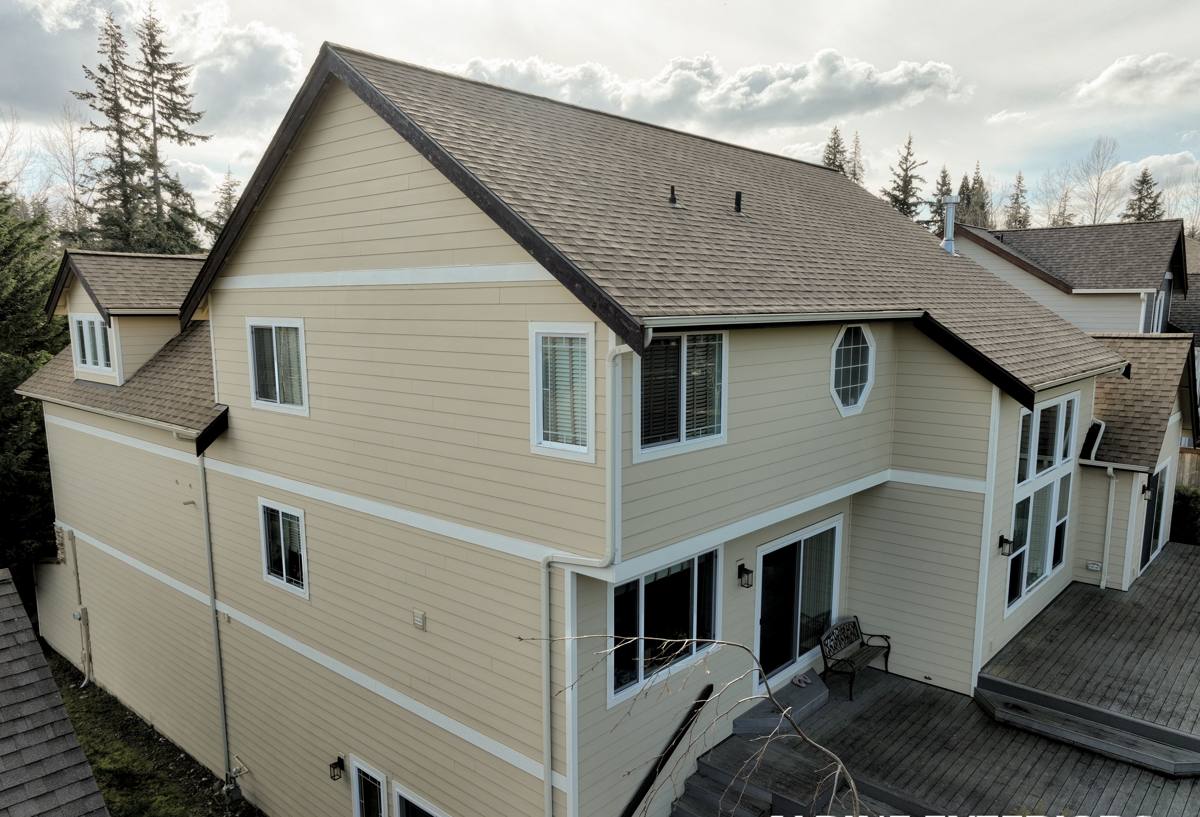
Repair or Replace? Reading the Signs Correctly
Not every deck needs a full replacement, but a lot of decks we're called out to inspect have gone past the point where patching makes sense. Here's how we sort it out.
- Soft or spongy spots underfoot, especially near the house or stair stringers
- Fasteners that have rusted, bled orange stains into the wood, or backed out
- Gaps opening up between the ledger board and the house siding or trim
- Moss or dark green-black growth that returns within weeks of cleaning
- Visible sagging between joists or a railing that flexes more than it should
- Wood that's gray and fuzzy on the surface but crumbles when probed with a screwdriver
One or two of these on an otherwise sound deck might mean targeted repair. Several at once, or any sign of rot at the ledger connection or support posts, usually means the structure has been compromised long enough that replacement is the honest recommendation. We'll always tell you which situation you're in rather than defaulting to the bigger job.
What a Correct Deck Replacement Actually Involves
A deck replacement done right in this climate isn't just swapping old boards for new ones. The parts you don't see are what determine whether the new deck lasts 10 years or 25.
Ledger Board and Flashing
The ledger board — where the deck attaches to the house — is the single most common failure point we find on older decks here. If it was installed without proper flashing, or with flashing that's since failed, water has likely been running behind it into the house rim joist for years. Every replacement we do includes new structural flashing and, where the siding allows it, integration that sheds water away from the house rather than trapping it against the ledger.
Footings and Posts
Ground contact in this region stays wet for extended stretches. We check footing depth and condition against current frost and load standards, and we use post bases that keep wood posts off the concrete and out of standing water rather than embedding them directly.
Framing and Joist Protection
Bare-cut joist tops and ends are where rot typically starts, even on treated lumber, because the treatment doesn't penetrate a fresh cut. We seal cut ends and use joist tape or an equivalent flashing over the top of the joists before decking goes down, so the fastener penetrations aren't sitting in a wicking path for water.
Fasteners and Hardware
Given the salt air moving through this part of the county, we use stainless or heavily coated fasteners and connectors rated for coastal exposure — not the standard hardware that's fine 50 miles inland but corrodes early here.
Decking Material Options Compared
Every material handles this climate differently. There's no single "best" choice — it depends on how much upkeep you want to do and how long you plan to stay in the house.
| Material | How It Handles Our Climate | Maintenance | Typical Lifespan |
|---|---|---|---|
| Pressure-treated wood | Needs consistent sealing to resist moss and rot; performs best with good airflow underneath | Annual cleaning, re-seal every 1-2 years | 10-15 years |
| Cedar | Naturally rot-resistant but still needs finish maintenance in constant damp; grays without upkeep | Clean and treat every 1-2 years | 15-20 years |
| Composite | Handles moisture and moss much better than wood; some early-generation boards can still absorb water at cut edges | Periodic washing, no sealing | 25-30 years |
| PVC/capped polymer | Best moisture resistance of the group; sheds moss growth more easily than any wood product | Occasional washing | 30+ years |
We don't push one product line as a default. Composite and capped polymer decking have gotten a lot more dimensionally stable in recent years and, given how much moss pressure this area sees, they genuinely cut down on the scrubbing and re-sealing cycle. But there are homeowners who want the look and feel of real wood and are willing to do the maintenance — that's a legitimate choice too, as long as it's made with clear eyes about the upkeep.
Our Deck Replacement Process
1. On-Site Assessment
We walk the deck with you, probe the framing at the ledger, posts, and joist ends, and tell you honestly what we find — including if repair is a reasonable option instead of full replacement.
2. Design and Material Selection
We talk through decking material, railing style, and any layout changes, then put together a written scope so there are no surprises about what's included.
3. Permitting
Deck replacements involving structural changes typically require a permit from the local building department. We handle that process and build to current code for footings, guardrail height, and stair geometry.
4. Demolition and Structural Inspection
Once the old decking and railing are off, we get a real look at the ledger, framing, and posts. If we find hidden rot or damage beyond what was visible during the walk-through, we'll show you before proceeding — not after the invoice.
5. Rebuild
New flashing, framing, hardware, decking, and railing go in to spec, with attention to drainage and airflow underneath so the new structure doesn't repeat the old deck's moisture problems.
6. Final Walkthrough
We check railing stability, stair spacing, fastener finish, and drainage before calling the job done, and go over basic care for whatever material you chose.
What Drives the Cost of a Deck Replacement
Deck replacement costs vary widely based on size, material, and how much structural work is needed underneath. Rather than quote a number that won't fit your situation, here's what actually moves the price.
| Cost Factor | Why It Matters |
|---|---|
| Deck size and layout complexity | Multiple levels, angles, or built-in features add labor and material |
| Decking material chosen | Composite and PVC cost more upfront than wood but less over time |
| Condition of the substructure | Rotted framing, posts, or footings found during demo add cost but aren't optional to fix |
| Ledger and flashing work | Proper flashing integration with existing siding can add labor depending on siding type |
| Railing and stair requirements | Code-compliant railing height and baluster spacing affects material and labor |
| Site access | Sloped lots or limited equipment access around the house add time |
We give a written estimate after the on-site assessment, not before, because guessing at hidden framing condition over the phone does nobody any favors.
Living With Your New Deck: Maintenance in This Climate
Whatever material you choose, a few habits make a real difference in how long a deck lasts here.
- Sweep debris and standing leaves off the deck regularly, especially in fall — trapped organic matter feeds moss and holds moisture against the boards
- Keep gutters and downspouts clear so runoff isn't dumping directly onto or near the deck
- Check railing posts and stair connections once a year for movement or fastener corrosion
- For wood decking, re-seal on the schedule recommended for the product — skipping a year in this climate shows up fast
- Address any moss regrowth early with a wash rather than letting it establish and hold moisture against the surface
- Keep planters and furniture feet elevated slightly so water can drain out from underneath them
Why It Matters to Hire a Crew That Already Works in Alger and Sudden Valley
A deck built to a generic spec sheet without accounting for local exposure is a deck that will need attention again sooner than it should. Crews who work regularly in Alger and Sudden Valley know which corners of a property tend to hold moss longest, which fastener grades actually hold up against the salt air moving through this part of Whatcom County, and where local building departments tend to have questions during permitting. That familiarity shows up in fewer callbacks and a deck that's built for the conditions it will actually face, not a textbook average.
It also means we're not learning on your project. We've seen what fails first on decks in this specific area — usually the ledger flashing and the joist tops — and we build every replacement to address those failure points from day one rather than waiting for them to become a problem again in a few years.
If your deck is showing its age or you're just not sure whether it's a repair or a replacement situation, we're happy to take a look and give you a straight answer. Use the form below to request a free, no-pressure estimate.