 Sudden Valley Siding
 Decks in Alger Face a Tougher Climate Than the Plans Admit
A deck built from a standard big-box plan set assumes dry framing lumber, moderate rain, and fasteners that won't see much corrosion. Alger doesn't offer any of that. This corner of Whatcom County sits close enough to the water that salt-laden air reaches fasteners, flashing, and hardware year-round, while winter and spring bring long stretches of driving rain that finds every gap in a poorly built ledger or rail connection. Add a moss season that can run from fall through spring on any shaded or north-facing surface, and you have a structure that ages differently here than it would inland.
None of this means a deck in Alger has to be high-maintenance or short-lived. It means the details that don't matter much in a drier climate — fastener grade, flashing sequence, board spacing, ventilation underneath — matter a great deal here. Get them right once and the deck holds up for decades. Skip them and you're looking at soft ledger boards, rusted hardware, and slick, moss-covered decking within a few seasons.
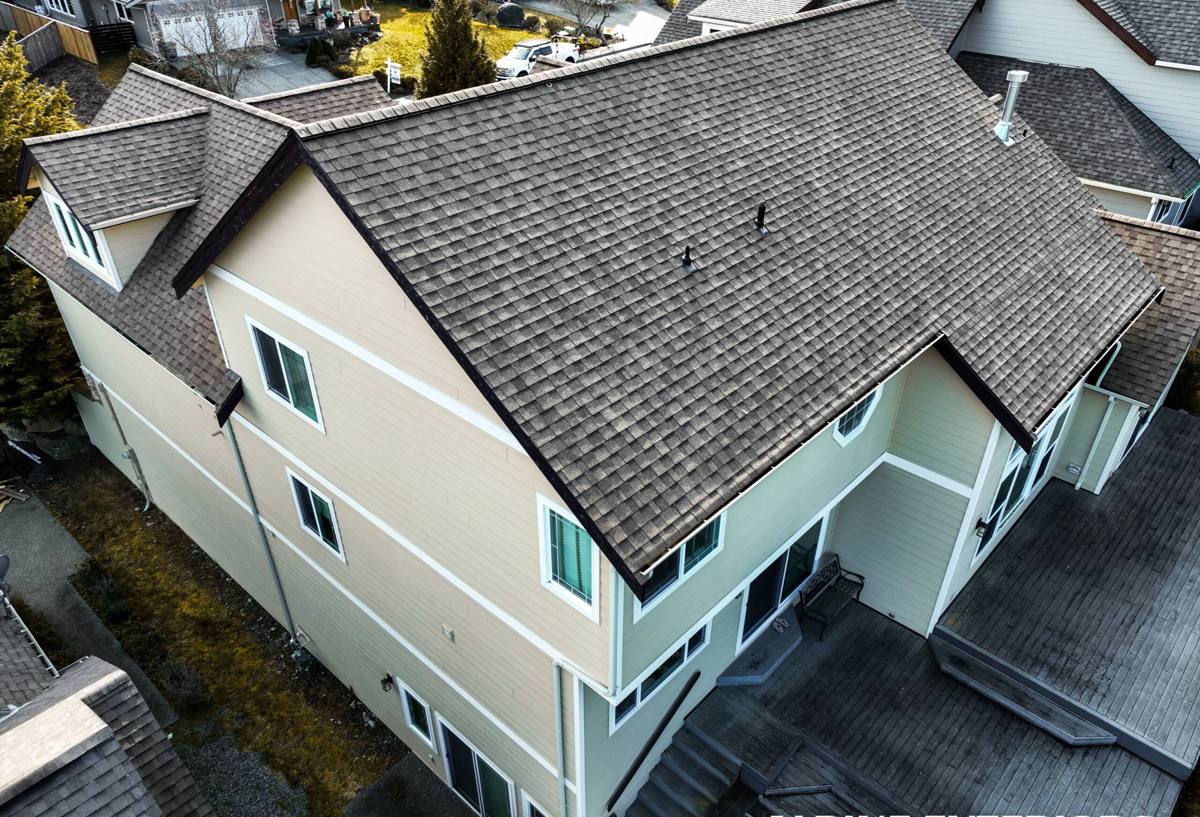
What a Deck Built for This Area Actually Needs
We build every custom deck around a handful of non-negotiables that come directly from what we see fail on older decks throughout Whatcom County:
- Corrosion-resistant fasteners and hardware — stainless or heavy hot-dip galvanized rated for coastal exposure, not the mill-grade coated screws that start rusting within a couple of winters near salt air.
- Proper ledger flashing — a correctly lapped, sealed ledger connection where the deck meets the house, since this is the single most common point of hidden rot on decks we're called out to repair.
- Airflow underneath the deck — enough clearance and drainage grading below the frame so moisture doesn't sit and feed rot or moss growth in the crawl space it creates.
- Board spacing sized for drainage, not just looks — gaps that actually shed the volume of rain this area gets, rather than the tightest gap that looks good in a photo.
- Footings set below frost depth and on solid, well-drained soil — undersized or poorly placed footings are a common cause of the sag and bounce we see on decks that are otherwise in decent shape.
These aren't upgrades we upsell — they're what a deck needs to actually last in this climate. A deck missing any one of them will still look fine on install day, which is exactly why the shortcuts are so common.
Choosing Decking Material for Salt Air and Rain
Wood vs. Composite vs. PVC
There's no single right answer here — it depends on how much upkeep you want to do and what you're trying to match. What matters is picking a material with your eyes open to how it behaves in this specific climate, not just how it looks on day one.
| Material | How It Handles Salt Air & Rain | Moss/Mildew Behavior | Maintenance | Typical Lifespan |
|---|---|---|---|---|
| Pressure-treated lumber | Good if properly sealed and re-sealed; fasteners need to be corrosion-rated | Prone to moss and algae in shaded areas without regular cleaning | Annual cleaning, re-stain/seal every 2-3 years | 15-20 years with upkeep |
| Cedar | Naturally rot-resistant but still needs sealing near salt air | Moderate; benefits from airflow and periodic cleaning | Re-stain/seal every 2-3 years | 15-25 years with upkeep |
| Composite decking | Very good; doesn't absorb moisture the way wood does | Can still grow surface mildew/algae film, but doesn't rot | Periodic washing, no staining/sealing | 25-30+ years |
| PVC decking | Excellent; fully moisture-resistant board | Least prone to organic growth of the group | Occasional washing | 25-30+ years |
Composite and PVC cost more up front but remove the recurring sealing cycle entirely, which is worth factoring into the real cost over 10-15 years, not just the install invoice. Wood costs less initially and can look great, but only if the maintenance schedule actually gets kept — in a climate with this much rain and moss pressure, a skipped season or two shows fast.
Rail, Post, and Baluster Materials
Rail systems take the brunt of driving rain because they're the most exposed part of the structure. We steer clients toward composite, aluminum, or properly detailed cedar rail systems over untreated dimensional lumber rails, since rail posts are a common early failure point when water sits in end-grain cuts at the top of the post.
Framing, Footings, and Code Requirements
Whatcom County permitting and inspection requirements apply to most new decks and many significant deck rebuilds, particularly anything attached to the house or built above a certain height. We handle the permit process as part of the job rather than treating it as an extra step, because an unpermitted deck can become a real problem at resale or insurance time.
On the structural side, three things get the most attention on our builds:
- Ledger attachment — bolted (not just nailed) to the house framing with correct flashing integration, not just caulk over a gap.
- Footing depth and bearing — set to local frost depth requirements and sized for the actual load of the deck, not a one-size-fits-all footing.
- Joist spacing and hardware — sized to the decking material chosen, since composite and PVC boards often call for tighter joist spacing than solid wood.
Moss and Drainage: The Long-Term Maintenance Picture
Moss season is the part of deck ownership here that catches people off guard. It's not just a cosmetic issue — moss holds moisture against the board surface and turns a deck genuinely slippery, which matters on stairs and near doorways. A deck designed with airflow underneath, gaps sized for real drainage, and shade patterns considered during layout will fight moss far better than one that wasn't.
Simple habits extend a deck's life regardless of material:
- Sweep debris (leaves, needles) off the deck surface regularly, especially in shaded corners where moisture lingers longest.
- Rinse or lightly scrub moss and algae film off boards a couple of times a year, before it builds up.
- Keep gutters and downspouts near the deck clear so runoff isn't dumping directly onto the structure.
- Check the underside periodically for standing water, soft framing, or blocked drainage paths.
Our Process for Alger Deck Projects
Site Visit and Design
We walk the site in person — grade, drainage direction, sun and shade exposure, and how the deck ties into the house — before recommending a material or layout. A design that ignores drainage and shade patterns is a design that fights moss and rot from day one.
Proposal and Permitting
You get a clear written scope and pricing before anything starts. If the project needs a permit, we pull it and coordinate inspections as part of the job, not as a separate hassle for you to manage.
Build and Inspection
Framing and flashing details get done to code first, then decking, rail, and finish work. Inspections happen at the appropriate stages rather than being treated as a formality at the end.
Walkthrough
We walk the finished deck with you, cover basic care for whatever material you chose, and answer questions before we consider the job done.
Signs Your Current Deck Needs Repair or Replacement
Not every deck problem means starting over. A quick self-check can tell you whether you're looking at a repair or a rebuild:
- Soft, spongy, or discolored decking boards, especially near the house or in shaded areas
- Rusted, streaking, or loose fasteners and hardware
- Visible gap, crack, or movement where the ledger meets the house
- Noticeable bounce, sway, or sagging in the deck surface or rail
- Persistent moss or algae buildup that returns quickly after cleaning
- Wobbly or loose railing and posts
- Standing water underneath the deck after rain instead of it draining away
If you're only seeing one or two of these and the framing underneath is sound, a repair is often enough. Multiple items on this list — particularly ledger movement or soft framing — usually point to a rebuild being the more honest recommendation.
Why Hire a Crew That Already Works in Alger
Deck-building fundamentals are the same everywhere, but the details that determine whether a deck lasts 10 years or 30 years in this specific climate come from experience with this specific climate. A crew that mostly builds inland, in drier conditions, doesn't have the same instinct for where moss will collect, how much drainage a board gap actually needs here, or which fastener grades hold up against salt air over time.
We work throughout Whatcom County, including Alger and the surrounding Sudden Valley area, and we build every deck around the conditions this region actually produces — not a generic spec sheet. That means fewer surprises for you a few years in, and a deck that still looks and functions the way it should after several wet winters and moss seasons have had their say.
If you're planning a new deck or dealing with one that's showing its age, we're happy to take a look and give you a straightforward, no-pressure estimate. Fill out the form below and we'll get in touch to schedule a time that works for you.