 Sudden Valley Siding
 Why Acme Homes Wear Out Siding Differently
Acme sits back in the timber along the South Fork Nooksack corridor, close enough to Sudden Valley and Lake Whatcom to share the same weather pattern but shaded by tree cover that most of the county doesn't have. That combination changes how siding fails here. Homes out in the open dry off fast after a storm. Homes in Acme, tucked under fir and cedar canopy with limited afternoon sun on north and east walls, can stay damp for days after the same rain event. Moisture that lingers is what actually damages siding — not the rain itself.
Whatcom County's marine-influenced weather pushes moisture-laden air up the river valleys most of the year, and Acme catches its share of that pattern even well inland from the water. Add a long, mild moss season that starts earlier and ends later here than in drier parts of the state, and you've got a climate that's genuinely tough on the wrong siding product — and forgiving of almost nothing installed carelessly.
What We Actually See on Acme Houses
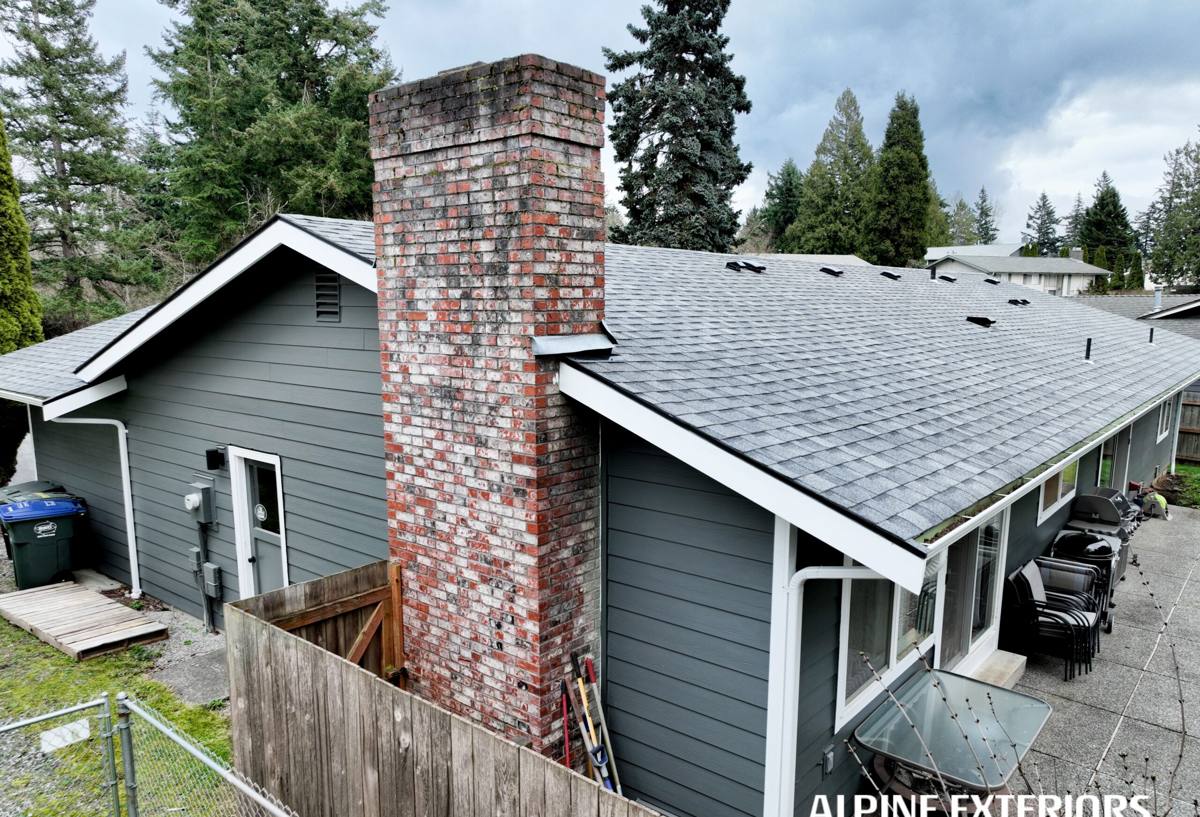
- Moss and algae staining concentrated on north- and west-facing walls under tree cover
- Soft, swollen siding at the bottom courses near grade, decks, and downspout discharge points
- Caulk failure and gapping at trim joints where old materials couldn't handle repeated wet-dry cycling
- Paint that's failed years ahead of schedule on sun-exposed south walls, while shaded walls stay grimy and green
- Fastener corrosion and rust streaking on older siding systems with exposed or undersized nails
What Correct Siding Installation Requires Here
"Correct" isn't a marketing word — it's a specific list of things that either happened during installation or didn't. In a climate like Acme's, skipping any one of them shortens the life of the siding by years, regardless of what material is on the wall.
The Non-Negotiables
- A continuous weather-resistive barrier installed and lapped correctly, with no gaps at penetrations
- Proper flashing at every window, door, and roof-to-wall transition, integrated with the barrier — not just caulked over
- Correct clearances from grade, roofing, and decks so the bottom edge of the siding isn't sitting in standing moisture
- Rainscreen or drainage gap where conditions call for it, so bulk water and vapor can actually get out from behind the cladding
- Manufacturer-specified fastening — the right nail type, length, and placement, not whatever was in the gun
- Factory-finished material wherever possible, so the weak point isn't a field-applied coat of paint
None of this is exotic. It's the baseline. But it's also exactly what gets shortcut when a crew is moving fast, working unfamiliar terrain, or installing a product that's more sensitive to field conditions than it looks on paper.
Why We Install Only James Hardie Fiber Cement
We don't install vinyl, LP SmartSide, or any of the other engineered-wood or composite products on the market. That's not a sales position — it's a standard we set because of what we see when we tear old siding off houses in this climate.
Vinyl moves. It expands and contracts with temperature swings, which means joints and fastening have to be done with real care, and it's a poor match for a climate where the wall assembly needs to breathe and dry. Engineered wood products perform well in dry, sunny regions, but they're wood-based at the core, and wood-based products are the ones most sensitive to sustained moisture exposure — exactly the condition Acme's tree cover creates on shaded walls. We're not saying these products are junk. We're saying that in a climate that stays damp longer than most of the country, the margin for error with moisture-sensitive materials is thinner than most homeowners realize until it's their siding.
James Hardie fiber cement is cement, sand, and cellulose fiber — non-combustible, dimensionally stable, and engineered specifically for climates like this one. Hardie's HZ5 product line is formulated for regions with sustained damp and freeze-thaw cycling, which describes Whatcom County well. The ColorPlus factory finish is baked on under controlled conditions, so the color layer isn't dependent on field weather or a crew's paint technique the day of installation.
| Factor | Fiber Cement (James Hardie) | Vinyl | Engineered Wood (LP-type) |
|---|---|---|---|
| Core material | Cement, sand, cellulose fiber | PVC plastic | Wood strand/fiber composite |
| Moisture behavior | Non-swelling, moisture-resistant core | Doesn't absorb, but traps moisture behind it | Core is vulnerable if moisture reaches it |
| Combustibility | Non-combustible | Combustible | Combustible |
| Finish | Factory-baked ColorPlus finish | Color molded through, fades over time | Factory-primed or field-painted |
| Field sensitivity | Low — tolerant of installer variance | Moderate — expansion/contraction needs care | Higher — edge sealing and joints are critical |
Our Installation Process for Acme Properties
Rural and semi-rural lots around Acme come with their own logistics — longer driveways, tree-line access, septic and well locations to work around, sometimes limited staging space. A crew that already works this area plans for that before the trucks show up, instead of losing a day figuring it out on site.
Step by Step
- On-site assessment — we walk the property, check sun exposure and tree cover wall by wall, and look at grading and drainage around the foundation
- Tear-off and sheathing inspection — old siding comes off and we check the sheathing underneath for rot or soft spots before anything new goes up
- Weather barrier and flashing — a new, continuous barrier goes on with correct flashing at every opening and transition
- Furring or rainscreen installation where the wall assembly and exposure call for it, to keep a drainage plane behind the siding
- James Hardie installation to manufacturer spec — correct fastener type and spacing, proper clearances at grade, decks, and roofing
- Trim, caulking, and touch-up using Hardie-compatible materials at cut edges and joints
- Final walkthrough with the homeowner, covering warranty registration and basic care
Areas That Need Extra Attention in Acme
Every Acme property is different, but a few conditions come up often enough to call out specifically.
Tree-Shaded Walls
North- and east-facing walls under conifer canopy dry slowest. These get the same rainscreen and clearance treatment as everywhere else, but we pay closer attention to caulk lines and trim details here because they're the first place moss and mildew take hold.
Grade and Drainage
Rural lots often have uneven or sloped grading. Siding installed too close to soil, mulch beds, or a deck surface will wick moisture no matter how good the material is. Correcting clearance during installation is one of the cheapest, most effective things we do.
Deck and Porch Transitions
Where siding meets a deck ledger, porch roof, or attached structure, flashing has to be integrated properly or that joint becomes the first failure point on the house. These transitions get specific attention during our process, not a bead of caulk at the end.
What Drives the Cost of a Siding Job in Acme
Every property is priced on its own specifics, but these are the factors that move the number most:
| Factor | Why It Matters |
|---|---|
| Tear-off scope | Removing failed siding and repairing damaged sheathing adds labor before new material goes up |
| Wall complexity | Dormers, multiple gables, and cut-up elevations take more time than flat wall runs |
| Access and staging | Long driveways, tree-line clearance, and limited flat ground affect equipment and material staging |
| Product selection | Hardie's lap, shingle, and panel lines carry different material and labor costs |
| Trim and detail work | Corner boards, fascia, and custom trim add labor beyond the field siding itself |
| Drainage plane needs | Rainscreen installation adds a step but pays off directly in a climate like this one |
Signs Your Acme Home Needs a Closer Look
- Soft or spongy siding when you press on it near the bottom courses
- Persistent green or black staining that returns within weeks of cleaning
- Paint that's peeling or bubbling rather than just fading
- Visible gaps or cracking at trim joints and corner boards
- Rising utility bills that suggest the wall assembly isn't performing the way it should
- Siding that's original to a home built more than 20-25 years ago
Why Hiring a Crew That Already Works Acme Matters
Whatcom County permitting, septic setbacks, and rural access conditions are all things a crew either already understands or has to learn on your job. A contractor who regularly works Sudden Valley and the surrounding Acme area already knows the moss patterns, the tree-cover microclimates, and the kind of drainage problems that show up on this type of lot. That familiarity shows up as fewer surprises, fewer change orders, and a job that accounts for local conditions from the estimate forward rather than the punch list back.
If your Acme home is due for new siding, or you're just not sure whether what's on the walls now is holding up the way it should, we're happy to come take a look. A free, no-pressure estimate gets you a straight answer about the condition of your current siding and what correct replacement would involve — use the form below to get started.