 Sudden Valley Siding
 Deck Repair Built for the Acme Area's Weather, Not a Generic Checklist
Acme sits back in the Whatcom County foothills, out past the more built-up parts of the county, but it shares the same weather pattern that wears down decks all over this part of Washington: damp, salt-tinged marine air pushing in off the Sound, driving rain for months at a stretch, and a moss season that can run well over half the year. A deck out here doesn't fail the way one does in a dry climate. It fails from the ground up and from the fastener out — quietly, until a board flexes underfoot or a railing post wiggles more than it should.
We already do exterior work throughout the Sudden Valley area and out to communities like Acme, so we're not guessing at what the climate does to a deck here — we're repairing the same failure patterns on a regular basis. This page is about deck repair specifically, not a full rebuild pitch, and not a generic "we fix decks everywhere" page. It's what we actually look for and actually do on decks in this part of Whatcom County.
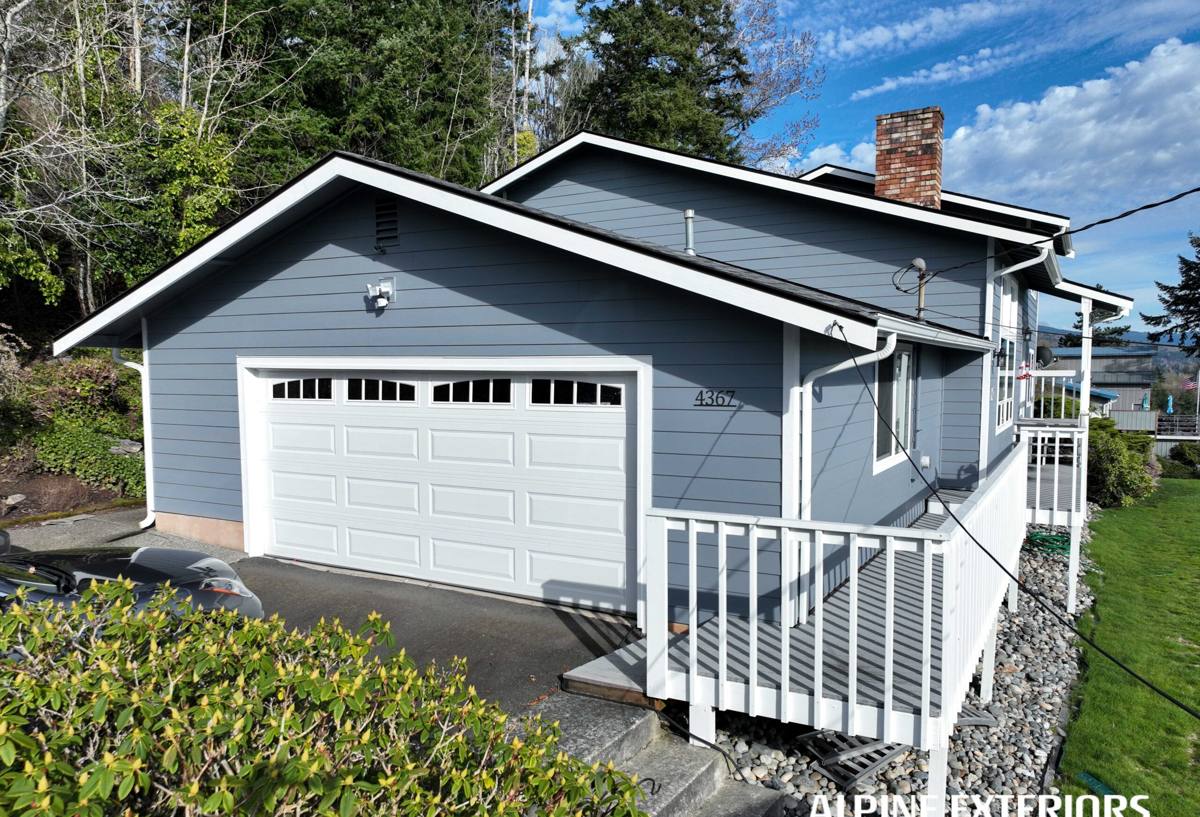
Why Whatcom County's Climate Is Hard on Decks
Moss and Trapped Moisture
Moss doesn't just look bad on a deck surface — it holds water against the wood and finish long after the rain has stopped, which is exactly the condition rot fungus needs to take hold. In shaded corners, under furniture, and along the north side of a house, moss can keep boards damp for weeks at a time during our long wet season. Left alone, that moisture works its way into fastener holes and board edges long before the surface shows obvious damage.
Driving Rain and the Ledger Connection
The single most important — and most commonly neglected — part of any deck is the ledger board, the framing member that bolts the deck to the house. Driving rain, especially wind-driven rain that hits a house at an angle, tends to find its way behind ledger boards that weren't flashed correctly or whose flashing has failed over time. Because this connection is hidden behind the decking and often behind siding, ledger rot is one of the most common problems we find that the homeowner had no idea existed.
Freeze-Thaw and Seasonal Swings
Whatcom County winters aren't brutal, but we do get cold snaps and the occasional hard freeze layered on top of already-saturated wood. Water that has soaked into a crack or a fastener hole expands when it freezes, widening the damage a little more each cycle. It's a slower process than what you'd see in a harsher climate, but over a decade or more it adds up, especially on older decks that were never sealed consistently.
Warning Signs a Deck Needs Repair — Not Just Cleaning
A pressure wash and a fresh coat of stain can make a tired deck look better without fixing what's actually wrong underneath. Here's what tells us a deck needs real repair work, not just cosmetic maintenance:
- A screwdriver sinks into a joist, ledger board, or post with light pressure — a sign of active rot
- Boards that feel spongy, bounce, or flex more than neighboring boards
- Railings or guardposts that move side to side, even slightly
- Rust streaking around fasteners, which often means the fastener itself is corroding from the inside
- Gaps opening up between the ledger board and the house, or daylight visible behind it
- Stair stringers that feel uneven or have visible splitting near the base
- Persistent dark staining or moss growth in the same spot every year, even after cleaning
- Cupped or crowned boards that used to lie flat
Any one of these on its own might be a minor fix. Several at once usually means the deck's structure has been absorbing moisture longer than the surface has let on.
What a Correct Deck Repair Actually Involves
Structural Framing First
Before anything cosmetic happens, we check the framing — ledger board, joists, beams, and posts — because repairing decking over a compromised structure just hides the problem for another season. This means probing suspect wood, checking the ledger's fastening and flashing, and confirming post-to-footing connections haven't shifted or rotted at grade.
Decking, Fasteners, and Railings
Individual boards get replaced rather than the whole surface where the framing underneath is sound. We pay close attention to fastener choice, since the wrong screw or nail in this climate is often what causes the staining and loosening homeowners notice first. Railings and guardposts get the same structural scrutiny as framing — a wobbly rail isn't a cosmetic issue, it's a safety one.
Flashing and Water Management
Where the deck meets the house is where almost every serious repair we do actually starts. Proper flashing at the ledger, along with attention to how water sheds off the deck surface and away from the foundation, is what keeps a repair from needing to be redone in a few years. We don't consider a repair finished until we've addressed how water moves across and off the structure, not just patched what's visibly damaged.
Repair or Replace? How We Actually Decide
Homeowners often assume any rot means a full rebuild. Sometimes that's true — but plenty of decks with real problems can be repaired properly if the damage is caught in the framing before it spreads. Here's roughly how we think through it:
| Factor | Repair Usually Makes Sense | Replacement Usually Makes Sense |
|---|---|---|
| Ledger board condition | Solid wood, isolated flashing failure | Widespread rot at the house connection |
| Framing (joists/beams) | One or two members affected, rest sound | Rot has spread across multiple framing members |
| Decking surface | Scattered bad boards, structure underneath is fine | Most boards cupped, splitting, or fastener-worn |
| Age of the deck | Under 15-20 years, built to reasonable standards | Original construction is outdated or undersized for current code |
| Cost of repair vs. rebuild | Repair scope is a fraction of full replacement cost | Repairs would touch most of the structure anyway |
We'll tell you honestly which side of that line your deck falls on. There's no benefit to us in talking a repairable deck into a full rebuild, and there's no benefit to you in patching a deck whose framing is genuinely gone.
Materials: Honest Trade-Offs for This Climate
Part of a correct repair is matching materials to how they actually perform in a wet, moss-prone climate — not just matching what's already there.
| Material | Moisture Behavior | Maintenance Needs | Trade-Off |
|---|---|---|---|
| Cedar | Naturally rot-resistant, but surface still needs sealing | Re-stain or re-seal every 1-2 years in this climate | Good look and feel, but ongoing upkeep is real |
| Pressure-treated lumber | Treated core resists rot well if cuts/holes are re-sealed | Periodic sealing, especially at cut ends and fastener holes | Cost-effective for framing; less refined appearance |
| Composite decking | Doesn't absorb water into the board itself | Occasional cleaning; less frequent than wood | Higher upfront cost; framing underneath still needs wood-level care |
We'll use what makes sense for the repair scope and your budget rather than pushing one product line. Where we do steer clients away from a material, it's about long-term maintenance burden or how forgiving it is of imperfect installation — never a claim that a product is defective.
Our Deck Repair Process
- On-site inspection — we probe framing, check the ledger connection, and look at drainage and grading around posts, not just the visible surface
- Honest assessment — we tell you what's structural, what's cosmetic, and where the line between repair and replacement actually sits for your deck
- Written scope and estimate — clear about what's being repaired, what materials we're using, and why
- Structural repair first — framing, ledger, posts, and footings get addressed before any surface work
- Decking, railings, and fastener work — replacing what needs replacing, matching what's staying
- Sealing and water management — flashing details and finish products appropriate for our wet season
- Final walk-through — we show you what was done and what to watch for going forward
Structural changes — a new ledger connection, replaced footings, or altered framing — typically require a permit in Whatcom County. We handle that process as part of the job rather than leaving it for you to sort out.
Why Hire a Crew Already Working the Sudden Valley and Acme Area
Deck repair isn't just carpentry — it's knowing how a specific climate attacks a specific structure. A crew that already works this part of Whatcom County has seen the same ledger flashing failures, the same moss buildup patterns, and the same fastener corrosion enough times to know what to check first instead of guessing. That familiarity shortens the inspection, sharpens the estimate, and means fewer surprises once repair work is underway.
It also matters for scheduling. Deck repair in a rainy climate has a real weather window — you don't want structural wood exposed during a multi-day storm system. A local crew can plan around that instead of working on a generic timeline that doesn't account for how the weather actually moves through this area.
Maintaining a Deck After Repair
A repaired deck still needs regular attention in this climate — repair isn't a one-time fix that removes the maintenance requirement.
- Sweep off moss, leaves, and debris regularly, especially in shaded areas and along the house
- Re-seal or re-stain wood decking on the schedule appropriate to the product used
- Check the ledger area and under-deck framing once a year for early signs of moisture
- Keep gutters and downspouts near the deck clear so runoff isn't draining onto or under it
- Tighten or replace any fasteners showing rust before they compromise the board around them
- Address small issues — a single loose board, a hairline gap at the ledger — before the next wet season, not after
If you're noticing any of the warning signs above, or it's just been a long time since anyone looked at the structure underneath your deck, we're happy to come take a look. The estimate is free, there's no pressure to move forward, and you'll get a straight answer about whether you're looking at a repair or something bigger.