 Sudden Valley Siding
 Custom Decks Built for the Acme Area's Weather, Not Against It
A deck built in the Acme area near Sudden Valley has to earn its keep differently than one built somewhere dry and flat. Between the driving rain that blows in for months at a stretch, the salt-laden marine air that moves through Whatcom County, and a moss season that can run from fall through spring, an outdoor structure here is under near-constant moisture pressure. That doesn't mean a deck can't last decades — it means it has to be designed and built with that pressure in mind from the footings up, not patched around later.
We work on decks in this part of Whatcom County regularly, which means we're not guessing at what holds up. We know which details matter here and which ones are cosmetic anywhere else but structural in a climate like this.
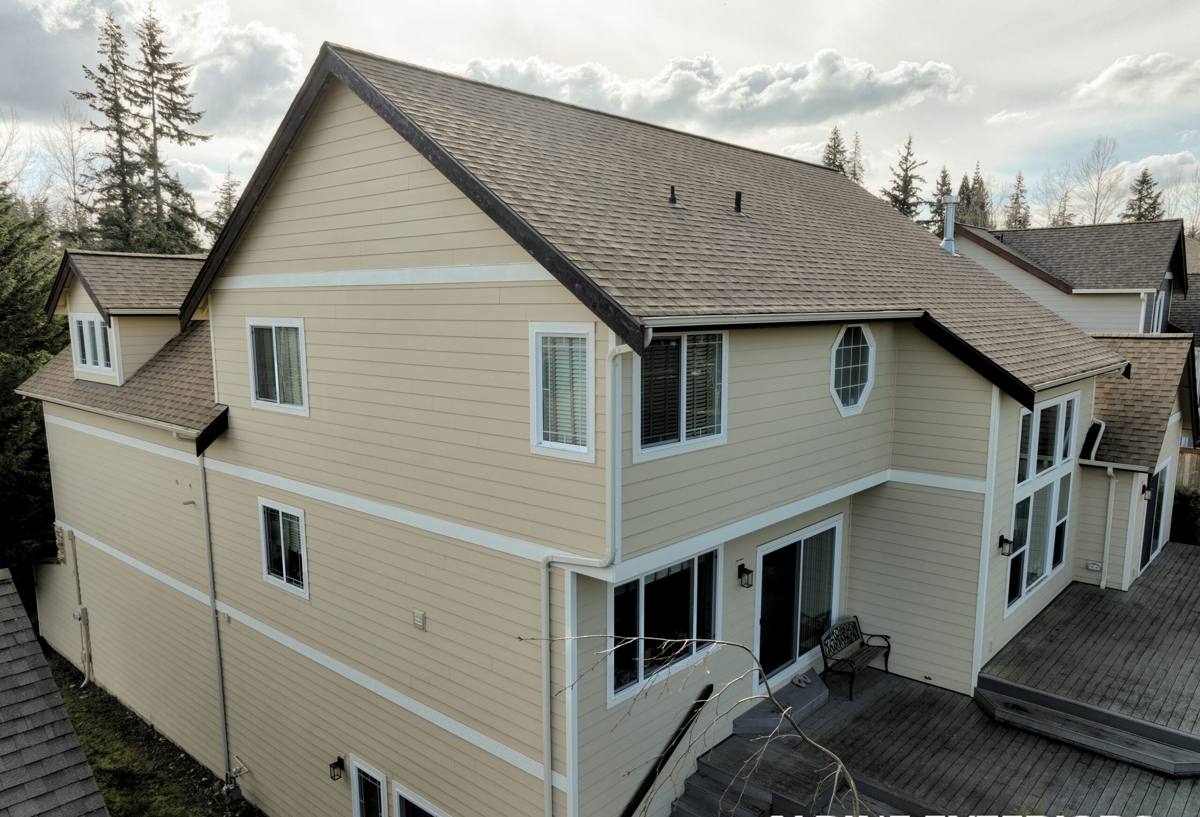
What This Climate Does to a Deck That Wasn't Built for It
Most deck failures we get called out to look at aren't dramatic — no one's deck collapses out of nowhere. They fail slowly, from moisture finding a way in and staying there. A few patterns show up again and again in this area:
- Ledger board rot where the deck attaches to the house, usually from missing or improperly lapped flashing that let rain track behind the siding for years before anyone noticed.
- Corroded fasteners and hardware — ordinary galvanized screws and joist hangers that weren't rated for the salt content in the air here start rusting from the inside of the wood outward, long before the boards themselves look worn.
- Moss buildup on horizontal wood surfaces, especially on the shaded, north-facing sides of a house or under tree cover, which turns a deck slick and, left alone, holds moisture against the wood fibers.
- Soft or spongy decking near the ground on low-clearance builds where there's not enough airflow underneath to let the structure dry out between storms.
None of these are unusual problems — they're the predictable result of building a deck the same way you'd build one somewhere drier. The fix isn't complicated, but it does have to be intentional.
What a Correctly Built Deck Requires Here
Ledger Attachment and Flashing
Where a deck ties into the house is the single most important detail on the whole structure, and it's the one most often shortcut on older or lower-bid builds. Done right, it means proper flashing that laps correctly with the house's water-resistive barrier or siding, lag bolts or through-bolts rated for the load (not just nailed on), and a gap or drainage path so water that does reach that joint has somewhere to go besides into the wall framing.
Footings on Sloped, Wooded Lots
A lot of lots in and around Acme and Sudden Valley aren't flat — they slope, they've got root systems nearby, and soil conditions can vary within the same yard. Footings need to go below frost depth and bear on stable soil, which sometimes means deeper or differently placed footings than a cookie-cutter deck plan would call for. Skipping this step is how you end up with a deck that shifts or develops a lean within a few winters.
Fasteners and Hardware
Given the salt air common to this part of Whatcom County, we don't treat fastener selection as an afterthought. Stainless steel or heavy hot-dip galvanized fasteners and structural connectors cost more up front than standard hardware, but standard hardware is exactly what shows up rusted and failing in the decks we get called to repair. This is one of the places where cutting a corner doesn't show up for a few years — and then shows up all at once.
Choosing Decking Material for This Climate
There's no single "best" decking material — there's a best material for your budget, your maintenance appetite, and how much sun or shade your deck actually gets. Here's how the common options actually perform in a wet, moss-prone climate:
| Material | Moisture & Moss Behavior | Maintenance | Typical Lifespan |
|---|---|---|---|
| Pressure-treated lumber | Resists rot when properly sealed, but moss and mildew will grow on the surface in shaded, wet spots without upkeep | Needs cleaning and re-sealing every 1-2 years | 15-20 years with upkeep |
| Cedar | Naturally rot-resistant and handles moisture well, but softer surface holds moss if not cleaned | Regular cleaning, periodic oil or sealant | 15-25 years with upkeep |
| Composite decking | Doesn't absorb water into the board itself; some early-generation composites held surface moisture and grew moss more readily than modern capped boards | Periodic washing, no sealing or staining needed | 25-30+ years, backed by manufacturer warranty |
| PVC decking | Fully synthetic, doesn't absorb moisture at all; least prone to moss when kept clean | Occasional washing | 25-30+ years, backed by manufacturer warranty |
Our default recommendation for shaded, tree-covered lots in this area is a capped composite or PVC board, simply because they don't give moss and mildew organic material to root into the way wood does. That said, plenty of homeowners want the look and feel of real wood, and cedar or treated lumber done right — with good airflow underneath and a cleaning routine — holds up fine here too. We'll walk through the honest trade-offs for your specific site rather than push one product line.
Railings, Stairs, and Code Requirements
Railings and stairs are where a lot of the safety risk on a deck actually lives, and they're also where moisture damage tends to show up first because balusters and stair stringers see more standing water than the deck field itself. Whatcom County follows the state building code for guard height, baluster spacing, and stair rise/run, and any deck more than 30 inches off grade needs a compliant guardrail. Beyond code minimums, we pay attention to how railing posts are anchored — through-bolted into blocking, not just toe-screwed into the rim joist — because that connection takes a lot of lateral load over the years, and a loose railing on a wet, elevated deck is a real fall hazard.
Our Process, From Estimate to Finished Deck
- On-site consultation. We look at your lot's slope, sun/shade exposure, drainage, and how the deck will tie into the house, and talk through material and layout options.
- Design and permitting. We put together a plan sized and engineered for your site, and handle the Whatcom County permit application and any required inspections.
- Footings and framing. Footings are set below frost depth on stable soil, and framing is built with fasteners and flashing rated for this climate — not generic hardware.
- Decking, railing, and stairs installed. Whatever material you've chosen, it's installed with the gapping, ventilation, and fastening details that keep it performing in wet weather.
- Final walkthrough and inspection. We review the finished deck with you, confirm it passes county inspection, and go over basic care for whatever material you chose.
Keeping a Deck Sound Through Moss Season
A well-built deck in this climate still needs some seasonal attention — the difference is that a properly built one needs maintenance, not repair. A simple annual routine goes a long way:
- Sweep debris and standing leaves off the deck surface regularly, especially in fall — trapped organic matter is what feeds moss growth.
- Wash the deck surface at least once a year with a deck-safe cleaner to remove algae and moss film before it establishes.
- Check gaps between boards periodically to make sure they haven't closed up with debris or swelling, which blocks drainage and airflow.
- Inspect railing posts and stair connections yearly for looseness or corrosion at the hardware.
- For wood decks, reapply sealant or stain on the manufacturer's recommended schedule — don't wait until it visibly needs it.
- Keep an eye on the area where the deck meets the house; that ledger connection is the first place to catch a problem early.
Cost Factors for a Custom Deck in the Acme Area
Every deck is priced around its own site conditions and material choices, so we won't quote a number without seeing the lot — but these are the factors that move the price up or down the most:
| Factor | Why It Affects Cost |
|---|---|
| Size and shape | More square footage and complex angles mean more material and labor |
| Decking material | Composite and PVC cost more up front than treated lumber but need far less upkeep |
| Height off grade and stairs | Taller decks need more substantial framing, footings, and guardrail; stairs add framing and material |
| Ground conditions and slope | Sloped or root-filled lots common in this area can require deeper or additional footings |
| Railing style | Cable, glass, and custom railing systems cost more than standard baluster railing |
| Permitting | County permit and inspection fees are part of any legal deck build |
Why a Crew That Already Works This Area Matters
A deck built for a dry climate and a deck built for the Acme area near Sudden Valley shouldn't look the same on paper, even if they look similar once finished. A crew that hasn't worked this stretch of Whatcom County before doesn't automatically know that standard fasteners corrode faster here, or that a shaded lot under conifers needs more airflow clearance underneath the decking, or how the local permitting process runs. Those aren't things you can fully make up for with a good general contractor — they're things you learn by building here, repeatedly, and by seeing what comes back years later needing repair. That's the experience we bring to every deck we build in this area, and it's why we build them to hold up, not just to look good on install day.
If you're thinking about a custom deck for your home in the Acme area near Sudden Valley, we're happy to come take a look at your site, talk through material options honestly, and put together a no-pressure estimate. There's no obligation — just use the form below to get started.