 Sudden Valley Siding
 Siding Built for the Yew Street Corridor
Homes along the Yew Street corridor near Sudden Valley sit in one of the more demanding microclimates in Whatcom County. The lots here are heavily wooded, many run along a slope down toward Lake Whatcom, and a good share of exterior walls stay shaded for long stretches of the year. That combination — shade, moisture, and limited sun exposure to dry things back out — is exactly what breaks down the wrong siding product faster than almost anything else in the Pacific Northwest.
Add in the marine-influenced air that moves through greater Whatcom County, driving rain that comes in sideways during winter storms, and a moss season that can stretch from October well into spring, and you have a climate that punishes any siding installed with shortcuts. This page is about what siding installation actually needs to look like for a Yew Street home, and why the details matter more here than they would in a drier part of the state.
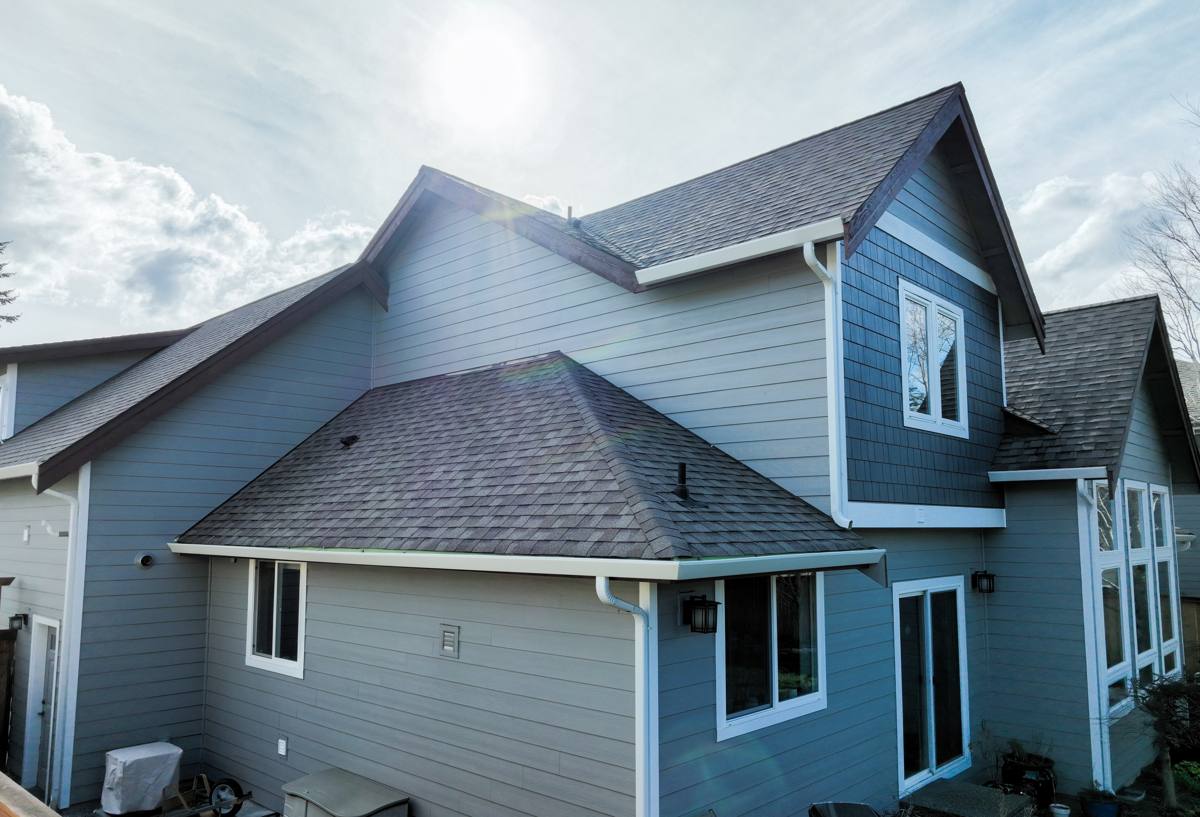
What Local Homes Are Up Against
Moisture That Doesn't Leave
On a lot with tree cover and lake-adjacent humidity, siding doesn't get the same drying window that an open, sun-exposed home gets. Wood-based products absorb moisture at seams, fastener holes, and butt joints, and if the wall assembly can't shed that water and dry out between storms, rot starts from the inside of the material outward — often invisible until the siding is already failing.
Moss and Organic Growth
Shaded, damp siding is a growing surface. Moss and algae take hold fastest on porous or textured materials, and on some products that growth actually degrades the surface over time, not just the appearance. A siding system needs a factory finish and a substrate that resists that growth, because scrubbing moss off degraded material only accelerates the damage.
Wind-Driven Rain
Storms moving through this part of Whatcom County don't always fall straight down. Wind-driven rain gets pushed up under laps, around trim, and into any gap in the water-resistive barrier. Correct flashing and lap geometry matter more here than in a calmer climate, because the assembly gets tested by sideways rain multiple times a season, not once a year.
What a Correct Siding Installation Actually Involves
"Siding installation" sounds simple, but the work that determines whether a wall stays dry for 30 years happens before a single board goes up and continues through details most homeowners never see once the job is finished.
Water-Resistive Barrier and Rain Screen
Every wall gets a properly lapped water-resistive barrier underneath the siding, and on shaded, moisture-heavy walls we install a rain screen — a drainage gap that lets any water that gets behind the cladding drain and the wall cavity breathe and dry. On a lot like the ones along Yew Street, that gap is not optional; it's the difference between siding that dries out after a storm and siding that stays damp against the sheathing for days.
Flashing and Trim Details
Windows, doors, roof-to-wall intersections, and deck ledgers are where the majority of siding failures actually start. Proper step flashing, head flashing with a drip cap, and correctly lapped house wrap at every penetration keep water moving out and away from the structure instead of pooling behind trim.
Fastening and Lap Exposure
Fiber cement has manufacturer-specified nailing patterns, minimum lap exposure, and fastener placement tolerances. Installed too tight, boards can't move with seasonal humidity changes and the finish can crack at the fastener. Installed with the wrong exposure, water can wick up into the lap. This is installer-sensitive work — the product performs exactly as well as the crew installing it.
Caulking and Sealant — Used Sparingly, Not as a Crutch
Sealant belongs at specific transitions, not smeared along every joint to compensate for a sloppy fit. Over-caulking traps moisture instead of letting it drain, which is a common shortcut that causes problems years down the road on a wet-climate home.
Why We Install Only James Hardie Fiber Cement
We standardized on James Hardie siding and don't install vinyl, LP SmartSide, Cemplank, Allura, or primed wood products — not because those products have no place in the market, but because of how they perform specifically in a climate like this one. Vinyl expands and contracts with temperature swings and can warp; engineered wood siding relies on a wood-strand substrate that is more sensitive to sustained moisture exposure than fiber cement; primed wood needs a maintenance cycle of repainting and caulking that most homeowners underestimate.
James Hardie fiber cement is non-combustible, engineered for moisture resistance, and available in HZ5 formulations built specifically for climates that see freeze-thaw cycles and sustained wet weather — which describes Whatcom County well. The ColorPlus factory finish is baked on under controlled conditions, which gives it more consistent resistance to moss, algae, and fading than a field-applied paint job, and it carries a strong transferable warranty that reflects the manufacturer's confidence in how the product holds up over decades, not just years.
We're not going to tell a homeowner that another product will fail on their house — that's not something we can honestly promise either way. What we can say is that after years of installing and maintaining siding in this specific climate, fiber cement from James Hardie is what we're willing to put our name on, and it's the only product we install.
Our Installation Process for a Yew Street Home
- Site walk and assessment — we look at sun exposure, tree cover, drainage patterns, and the condition of the existing wall assembly before quoting anything.
- Tear-off and sheathing inspection — old siding comes off and we check the sheathing underneath for rot or damage that needs to be addressed before new siding goes on.
- Water-resistive barrier and rain screen installation — house wrap is lapped correctly and a drainage gap is built in on shaded or moisture-prone elevations.
- Flashing at every penetration — windows, doors, roof lines, and any deck or porch attachment points get proper flashing before siding closes over them.
- Hardie panel or lap installation — installed to manufacturer nailing and exposure specifications, checked as we go, not just at the end.
- Trim, corners, and caulking — finished with factory-matched trim and sealant used only where it belongs.
- Final walk-through — we go over the finished job with the homeowner before calling it done.
What Siding Installation Costs Depend On
Every Yew Street home is different — square footage, wall complexity, tear-off scope, and existing damage all move the number. The table below covers the main factors that drive cost up or down, without pretending there's one flat price that applies to every house.
| Cost Factor | Why It Matters |
|---|---|
| Tear-off vs. new construction | Removing and disposing of failed siding, plus repairing any rotted sheathing underneath, adds labor before new siding can start. |
| Wall complexity | Dormers, multiple gables, and lots of window/door trim take more time per square foot than a simple rectangular wall. |
| Rain screen scope | Shaded, moisture-heavy elevations benefit from a full rain screen assembly, which adds material and labor over a standard install. |
| Panel vs. lap siding | HardiePanel and HardiePlank have different install methods and trim requirements that affect labor time. |
| Site access | Sloped, wooded lots common along the lake corridor can require more staging and hand-carrying of material than a flat, open lot. |
| Color and finish | Factory ColorPlus finishes cost more upfront than primed-for-paint boards but eliminate a full-house paint job later. |
Signs Your Siding Needs Attention
On homes in this microclimate, siding problems often show up as surface symptoms well before a wall is actually failing. Worth checking for:
- Soft or spongy spots when you press on the siding, especially near the bottom courses
- Persistent moss or algae that comes back within weeks of cleaning
- Paint that's peeling or bubbling rather than just fading
- Visible gaps, warping, or buckling at seams and corners
- Staining or discoloration below window sills and roof-to-wall intersections
- A musty smell in interior rooms along an exterior wall
- Siding that's more than 20-25 years old and has never been fully inspected
Any one of these on its own isn't necessarily an emergency, but a few of them together on a shaded, lake-adjacent home are worth a real inspection rather than a wait-and-see approach.
Living With Fiber Cement in a Moss-Prone Climate
James Hardie siding still needs basic upkeep here — nothing installed on a Whatcom County exterior is maintenance-free. Rinsing off moss and organic buildup once or twice a year, especially on shaded north- and west-facing walls, keeps the factory finish looking the way it should. Because ColorPlus is a factory-cured finish rather than a field-applied paint, it holds up to that cleaning far better than a repainted wood surface would, and it doesn't need the recaulk-and-repaint cycle that wood siding demands every several years.
Trimming back vegetation that shades and holds moisture against the wall, and keeping gutters clear so water isn't sheeting down the siding face, both go a long way toward keeping a Yew Street exterior looking good between the natural cleanings that come with living in a rainy climate.
Why Hiring a Crew That Already Works This Area Matters
A contractor who mainly works drier, sunnier parts of the state will size up a Yew Street home differently than a crew that installs siding in Sudden Valley regularly. Knowing which elevations sit in shade most of the day, how the local moss season behaves, and how wind-driven rain off the lake tends to hit a wall changes decisions about rain screen placement, flashing detail, and even where extra attention to drainage is worth the added step. That's not a marketing point — it's the difference between a crew guessing at a spec sheet and a crew that has seen how these details actually hold up on homes in this specific climate, season after season.
If your Yew Street home needs new siding, or you want a second opinion on whether your current siding is holding up the way it should, we're glad to take a look. A free, no-pressure estimate is a straightforward way to find out what your home actually needs — no obligation, just a clear read on where things stand.